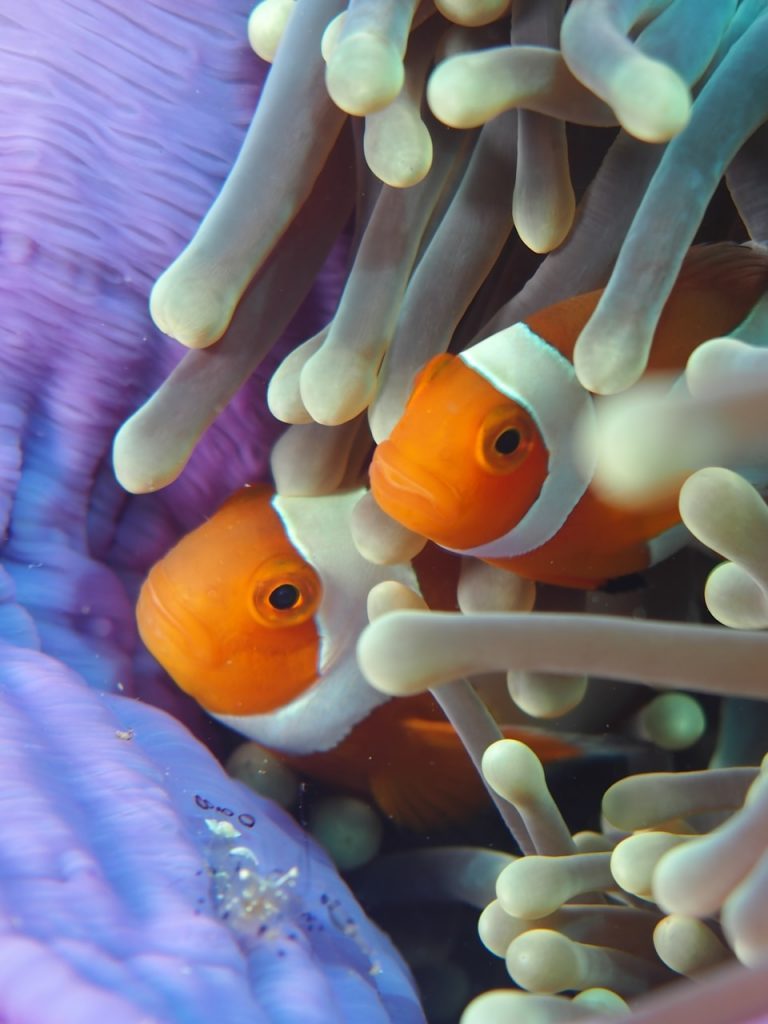
Clownfish hosting is one of the most watched reef behaviors. It can also confuse new keepers. Your pair may host fast, host odd items, or never host at all.
What “hosting” means, and what triggers it
Hosting is when a clownfish lives in close contact with a “home.” In nature, that home is often a sea anemone. The fish gains shelter and a safe sleeping spot. The host gains food scraps and better water flow.
Clownfish do not need a host to thrive in aquariums. They can live long lives without one. Hosting is also not guaranteed. Some fish ignore anemones for months.
Several factors influence hosting. Species matters a lot. Ocellaris and percula often accept many substitutes. Maroon and clarkii types can be pickier and rougher. Tank size and flow also change behavior.
Stress can delay hosting. New fish may hide in corners first. Give them stable light and routine feedings. Avoid constant rearranging of rock and coral. For clownfish basics, see our clownfish care guide.
- Expect hosting attempts after 2–8 weeks in a stable tank.
- Keep salinity at 1.025–1.026 and temperature at 25–26°C.
- Maintain nitrate under 20 ppm and phosphate under 0.10 ppm.
Choosing safe hosts: anemones, corals, and “fake” options
Anemones are the classic choice, but they are not beginner animals. Most need strong light, steady alkalinity, and mature tanks. A good rule is a tank age of 6 months or more. Aim for alkalinity 8–9 dKH and calcium 400–450 ppm.
Bubble tip anemones are common in home reefs. They often do well under moderate to strong LED lighting. Provide medium flow that makes tentacles sway. Use a covered intake and guarded powerheads. Wandering anemones can get shredded.
Some clowns host large-polyp corals instead. Frogspawn, hammer, and torch are frequent targets. This can stress the coral. Watch for retraction and torn tissue. If the coral stays closed for days, intervene.
Many fish choose “wrong” hosts like a powerhead guard or corner overflow. You can offer a soft substitute. A long-tentacle toadstool leather or a “clownfish nest” can redirect them. Learn more in anemone care basics and reef powerhead safety tips.
- Wait for a mature tank before adding an anemone.
- Quarantine fish first to reduce disease risk to the host.
- Use a mesh guard on pumps and overflow teeth.
How to encourage hosting without harming your reef
Start with the right pairing and space. Keep ocellaris or percula in 20 gallons or more. Provide a calm zone with lower flow. Place the host there. Clowns prefer an easy place to hover and sleep.
Use feeding to build a routine near the host. Feed small portions twice daily. Offer pellets or flakes in the morning. Offer frozen mysis or enriched brine at night. Add nori once or twice weekly for variety.
Avoid “forcing” contact with the host. Do not net the fish into an anemone. This can cause stings and panic. Let the fish explore on its own schedule. If it hosts a coral, protect the coral first.
Troubleshoot common issues with simple checks. If the anemone keeps moving, review light and flow. If the clown ignores it, check for bullying tankmates. If the coral is damaged, add a temporary divider. You can also move the coral to a frag rack for recovery.
- If the host wanders, lower flow and stabilize salinity swings under 0.001 per day.
- If clowns are aggressive, reduce mirror fights and keep hands out of the nest zone.
- If a coral stays closed, separate fish for 3–7 days and feed the coral lightly.
Clownfish hosting should be fun, not stressful. Focus on stable parameters and safe equipment. Choose a host that fits your tank age and lighting. With patience, many pairs settle into a natural routine.
Sources: Fautin & Allen, “Anemonefishes and Their Host Sea Anemones” (1992); Sprung, “The Reef Aquarium” Vol. 1–3; Borneman, “Aquarium Corals” (2001).
Was this helpful?
Related Posts
Best Reef Safe Cleanup Crew
The best reef safe cleanup crew includes hardy snails, selective scavengers, and a few specialty invertebrates matched to…
 By
By
Reef Safe Fish for Beginners
Discover the best reef safe fish for beginners, plus tank size, feeding, and compatibility tips for a peaceful…