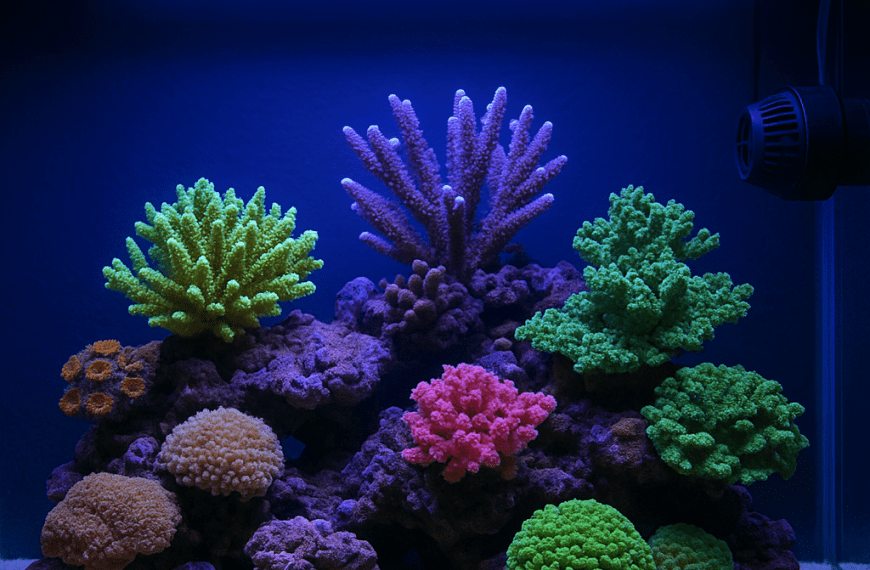
Getting Started With Coral Care
Bringing your first coral home is one of the most exciting milestones in the saltwater aquarium hobby. Corals add color, movement, and a sense of a living reef to your tank—but they also need stable conditions and patient care. This guide to coral care for beginners will walk you through the basics so your first frags can thrive, not just survive.
If you’re completely new to reefing, you may also want to review our beginner saltwater tank setup guide before adding corals, to ensure your system is ready.
Choosing Beginner-Friendly Corals
Not all corals are equally forgiving. As a new hobbyist, stick to hardy, low-demand species that tolerate small mistakes. These are often called “beginner corals” and usually fall into soft corals and some large-polyp stony (LPS) corals.
Good Starter Coral Types
- Soft corals: Zoanthids, mushrooms (Discosoma, Rhodactis), green star polyps (GSP), leathers (Sarcophyton, Sinularia).
- Hardy LPS: Duncan corals, candy cane (Caulastrea), hammer and frogspawn (Euphyllia) once you have some experience.
Avoid demanding small-polyp stony (SPS) corals like Acropora until you have months of stable parameters and some coral-keeping experience under your belt. For more detail on matching corals to your setup, see our best beginner corals list.
Water Parameters and Lighting Basics
Stable water chemistry is the foundation of coral health. Chasing “perfect” numbers matters less than keeping your parameters consistent within a reasonable range.
Target Water Parameters for Most Beginner Corals
- Temperature: 24–26°C (75–78°F)
- Salinity: 1.024–1.026 specific gravity
- pH: 8.0–8.4
- Alkalinity: 8–10 dKH
- Calcium: 400–450 ppm
- Magnesium: 1250–1350 ppm
- Nitrate: 2–15 ppm (avoid zero)
- Phosphate: 0.03–0.1 ppm
Tip: Test weekly at the same time of day and log your results. Trends are more important than single readings.
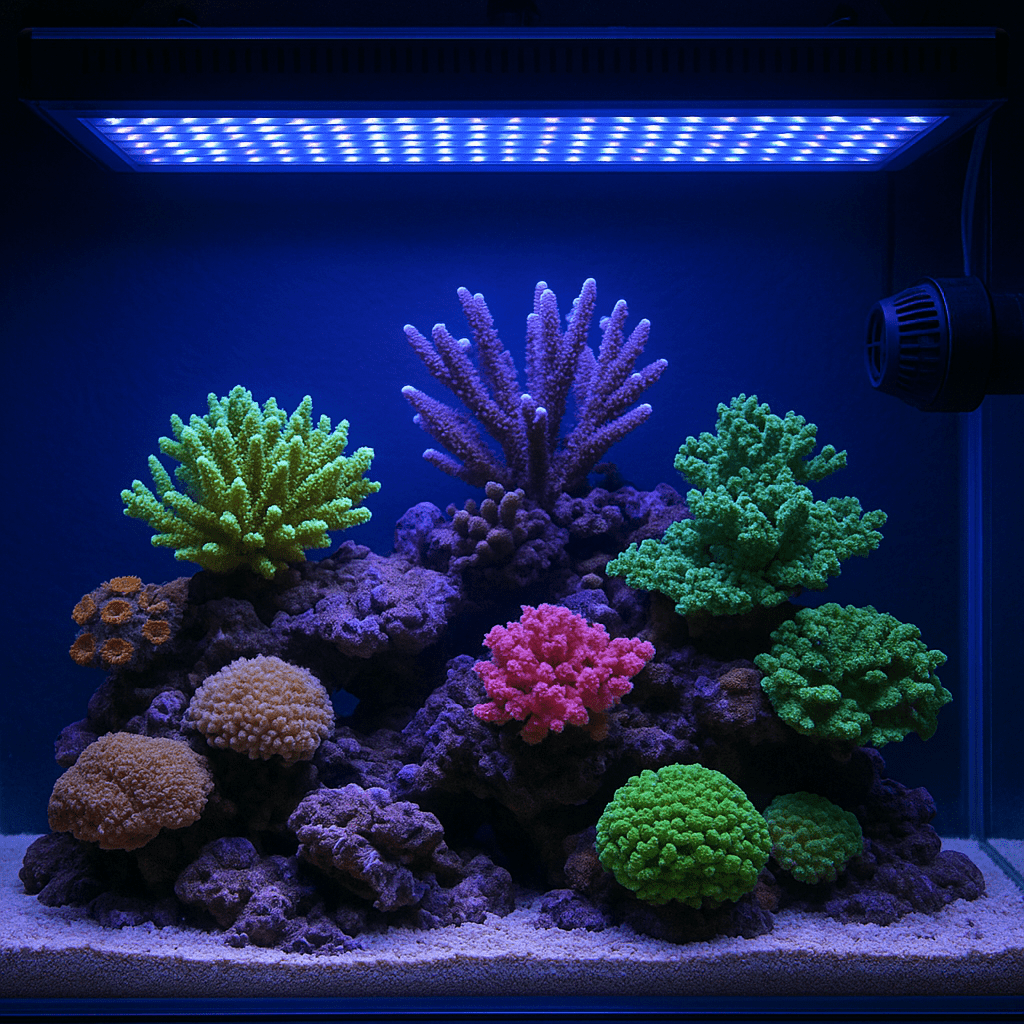
Lighting is the other major factor. Most beginner corals do well under moderate PAR (roughly 50–150). Modern LED reef lights are ideal, but even they can burn corals if ramped up too quickly.
- Start new lights at ~30–40% intensity and increase slowly over 2–3 weeks.
- Place light-loving corals higher on the rockwork and shade lovers lower or in partial shadow.
- Use a 8–10 hour main photoperiod with a gentle ramp up and down if your light allows.
Placement, Feeding, and Ongoing Care
Coral placement and flow matter as much as light and chemistry. Corals use water movement to bring food and oxygen to their tissues and to keep waste from settling.
Flow and Placement Tips
- Aim for gentle, indirect flow that makes polyps sway, not blast sideways.
- Keep stinging corals like Euphyllia and some LPS away from peaceful neighbors; they can extend sweeper tentacles at night.
- Leave room for growth—many corals can double in size in a year under good conditions.
Most beginner corals get much of their energy from light via their symbiotic zooxanthellae, but many also appreciate occasional feeding.
- Target feed LPS with small meaty foods (mysis, specialized coral foods) 1–2 times per week.
- Soft corals often do well with broadcast feeding of fine particulate foods.
- Turn off pumps briefly while feeding so food can settle on the coral.
Finally, practice good long-term husbandry:
- Perform regular 10–15% weekly or biweekly water changes.
- Quarantine or at least dip new corals to reduce pests.
- Inspect your reef at night with a flashlight to catch early signs of problems.
As your confidence grows, you can explore more demanding species and even try fragging. For your next step, read our guide to maintaining stable reef parameters so your corals have the consistency they need to flourish.
With patience, testing, and small, deliberate changes, your first coral garden can become a thriving mini-reef you’ll enjoy for years.
Sources
- Borneman, E. H. Aquarium Corals: Selection, Husbandry, and Natural History. TFH Publications.
- Delbeek, J. C., & Sprung, J. The Reef Aquarium series. Ricordea Publishing.
- Riddle, D. Articles on coral lighting and PAR, various reef aquarium publications.
Was this helpful?
Related Posts
Protein Skimmer Reef Tank Guide
Learn how a protein skimmer works, how to size one, and how to tune it for a cleaner,…
 By
By
Reef Aquarium Water Parameters
Learn the ideal reef aquarium water parameters, safe ranges, and how to keep salinity, alkalinity, nutrients, and pH…