Coral Care Guide: Building a Thriving Reef at Home
Keeping corals is one of the most rewarding parts of the saltwater aquarium hobby. Their colors, movement, and growth can turn a simple glass box into a living reef. This coral care guide will walk you through the essentials so you can keep your corals healthy, growing, and vibrant.
Water Parameters & Stability First
Corals are far less forgiving of swings in water quality than fish. Before you add your first frag, make sure your tank is fully cycled and stable. If you’re just getting started with reefing, you may want to review our Beginner Saltwater Tank Setup guide first.
Key Parameters for Most Corals
- Temperature: 24–26°C (75–79°F)
- Salinity: 1.025–1.026 specific gravity (35 ppt)
- pH: 8.0–8.4
- Alkalinity: 8–9.5 dKH
- Calcium: 400–450 ppm
- Magnesium: 1250–1400 ppm
- Nitrate: 2–15 ppm (not zero, but not excessive)
- Phosphate: 0.02–0.1 ppm
Test weekly and log your results. Corals respond best to consistency. Large, sudden changes—even toward “better” numbers—can cause stress, tissue loss, or color fading.
Reefer tip: Make small adjustments. Change no more than 10–15% of your water at a time, and avoid chasing perfect numbers day to day.
Lighting, Flow, and Placement
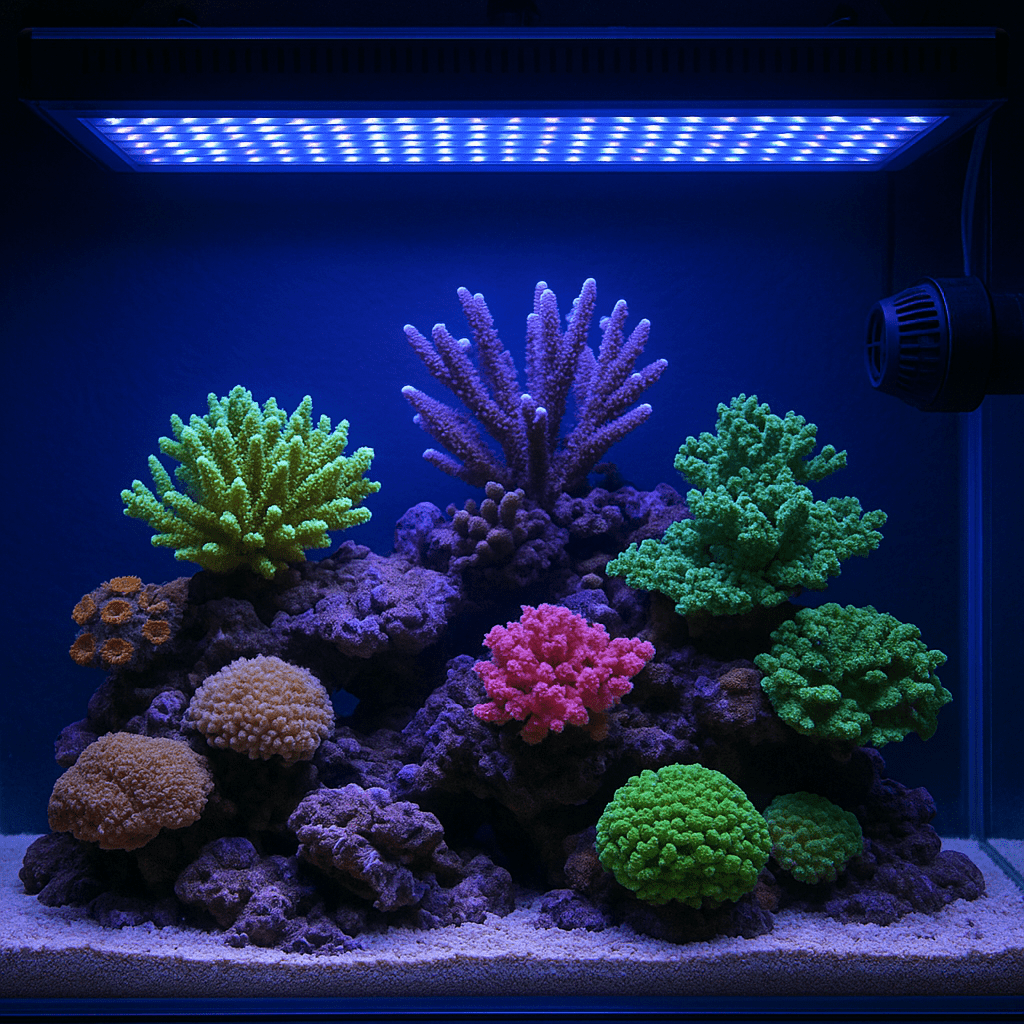
Light and water movement are the engines that power coral health. Different coral types (softies, LPS, SPS) have different needs, so match your lighting and flow to what you plan to keep.
Lighting Basics
- Spectrum: Blue-heavy LED or T5 spectrum (around 14–20K) supports coral photosynthesis and coloration.
- Intensity: Many soft corals do well at 50–150 PAR, LPS at 75–200 PAR, and SPS at 200–350+ PAR.
- Photoperiod: 8–10 hours of full light with a short ramp-up and ramp-down if your light allows.
Whenever you upgrade or change lights, acclimate corals slowly by reducing intensity and increasing it over 2–3 weeks.
Flow & Coral Placement
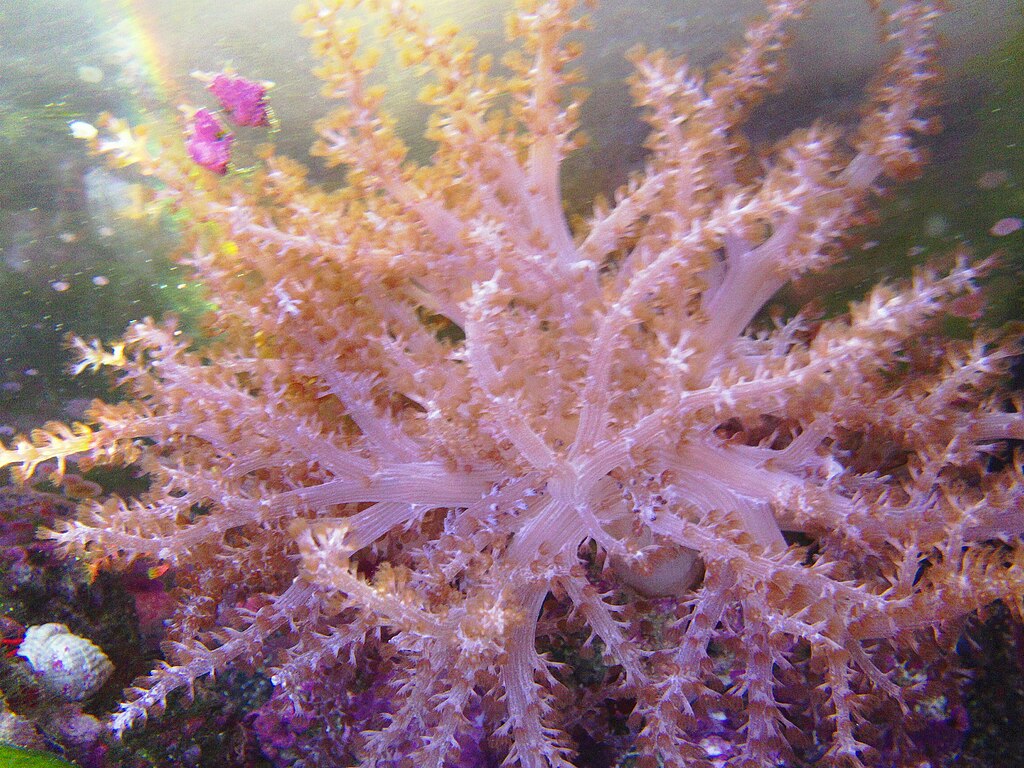
- Soft corals: Prefer gentle, random flow that makes them sway.
- LPS (e.g., hammers, torches): Moderate, indirect flow that keeps flesh moving but not whipping.
- SPS: Strong, turbulent flow to keep tissue clean and oxygenated.
Start new corals lower in the tank and move them up gradually as they adjust. Give aggressive corals (like euphyllia and some LPS) enough space for their sweeper tentacles. For more on matching corals with your system, see our Best Beginner Corals guide.
Feeding, Maintenance, and Long-Term Success
Most corals host zooxanthellae algae that provide much of their energy, but many benefit from supplemental feeding and clean, nutrient-balanced water.
Feeding Corals
- Target feed LPS and some softies 1–2 times per week with coral foods or finely chopped meaty foods.
- Turn off return and powerheads briefly while feeding so food can settle on polyps.
- Avoid overfeeding—excess food drives up nutrients and fuels algae.
Routine Maintenance
- Perform 10–15% weekly or biweekly water changes.
- Clean glass and remove nuisance algae before it spreads.
- Replace or recharge filtration media on schedule.
- Test and adjust alkalinity, calcium, and magnesium—especially in SPS-heavy tanks.
As your corals grow, you may need to add dosing for calcium, alkalinity, and magnesium instead of relying only on water changes. Our Reef Tank Maintenance Schedule article can help you plan consistent care.
With stable water, appropriate light and flow, and a steady maintenance routine, your corals will reward you with growth, color, and natural reef behavior. Take things slowly, observe often, and enjoy watching your reef mature over time.
Sources
- Borneman, E. H. Aquarium Corals: Selection, Husbandry, and Natural History. TFH Publications.
- Sprung, J. Corals: A Quick Reference Guide. Ricordea Publishing.
- Randy Holmes-Farley, “Reef Aquarium Water Parameters,” archived reef chemistry articles.
Was this helpful?
Related Posts
Protein Skimmer Reef Tank Guide
Learn how a protein skimmer works, how to size one, and how to tune it for a cleaner,…
 By
By
Reef Aquarium Water Parameters
Learn the ideal reef aquarium water parameters, safe ranges, and how to keep salinity, alkalinity, nutrients, and pH…