Dinoflagellates, or “dinos,” can turn a reef tank ugly fast. They form brown snot, trap bubbles, and irritate corals. The good news is most outbreaks can be controlled with a calm, measured plan.
How to confirm dinos and identify the type
Start with a simple ID step before you treat. Many issues look similar. Diatoms dust rocks and wipe off easily. Cyanobacteria peels in sheets and smells earthy. Dinos often look stringy and bubbly by afternoon.
Use a cheap microscope if you can. A $30–$60 scope helps a lot. Collect a small sample from the worst spot. Put it on a slide with tank water. Look for fast, darting cells or spinning shapes.
Common reef types include Ostreopsis, Amphidinium, and Prorocentrum. Ostreopsis often forms long strings and heavy bubbles. Amphidinium stays on sand and looks like a dusty mat. Prorocentrum can coat rock and glass.
Track when it appears each day. Many dinos fade at night. They return after lights ramp up. Note your nutrients and recent changes. Big swings often trigger blooms. Review your reef tank water parameters log.
- Take photos at the same time daily for seven days.
- Test nitrate and phosphate with reliable kits.
- Record light schedule, feeding, and any new additives.
Stabilize nutrients and outcompete dinos
Dinos love ultra-clean, low-competition systems. The first goal is stability. Aim for nitrate at 5–15 ppm. Aim for phosphate at 0.05–0.15 ppm. Avoid sudden drops from aggressive media or water changes.
If nutrients read zero, raise them on purpose. Feed a bit heavier for a week. Add more fish food, not more chemicals first. If needed, dose nitrate or phosphate slowly. Increase no more than 2 ppm nitrate per day.
Boost biodiversity to crowd dinos out. Add live phytoplankton daily for 10–14 days. Dose 5–10 ml per 10 gallons, depending on product strength. Consider adding copepods at night. Keep your skimmer on a lower, wetter setting.
Run carbon to reduce toxins from some species. Replace it every 5–7 days during a bloom. Keep pH steady, too. Target 8.1–8.4 if possible. Good aeration and outside air to the skimmer can help.
- Stop GFO and phosphate removers until phosphate is stable.
- Clean filter socks daily to export loosened mats.
- Keep alkalinity stable at 8–9 dKH during treatment.
Targeted tools: UV, blackout, and safe removal
Use targeted tools once nutrients are stable. UV sterilizers work best on free-swimming dinos. Ostreopsis and Prorocentrum often respond well. Amphidinium often responds poorly, since it stays in sand.
For UV sizing, aim for higher contact time. A common reef approach is 1–2x tank volume per hour. Use a slow flow rate through the UV. Run it 24/7 for at least 14 days. Clean the sleeve weekly for best output.
Manual removal helps every type. Siphon mats through a filter sock into a bucket. Return the water to the tank if needed. Do this right before lights out. Combine it with a short blackout, usually 48–72 hours.
During blackout, keep oxygen high. Point powerheads at the surface. Keep the skimmer running. Watch fish for heavy breathing. After lights return, ramp slowly over three to five days. Review your reef lighting guide settings.
- Run UV and carbon together for two weeks.
- Siphon daily for three to five days during peak bloom.
- Replace old bulbs yearly to maintain UV intensity.
Common mistakes include chasing “zero nutrients” and doing huge water changes. Another mistake is changing three things at once. Make one change, then observe for 72 hours. If corals look stressed, pause and reassess. Our quarantine for reef fish article can help prevent new pests too.
Most dino battles are won with patience and stability. Confirm what you have, then raise competition and keep parameters steady. Use UV and blackout as support tools, not the whole plan.
Sources: Borneman, E. (Aquarium Corals); Delbeek & Sprung (The Reef Aquarium, Vol. 1–3); Fenner, R. (The Conscientious Marine Aquarist)
Was this helpful?
Related Posts
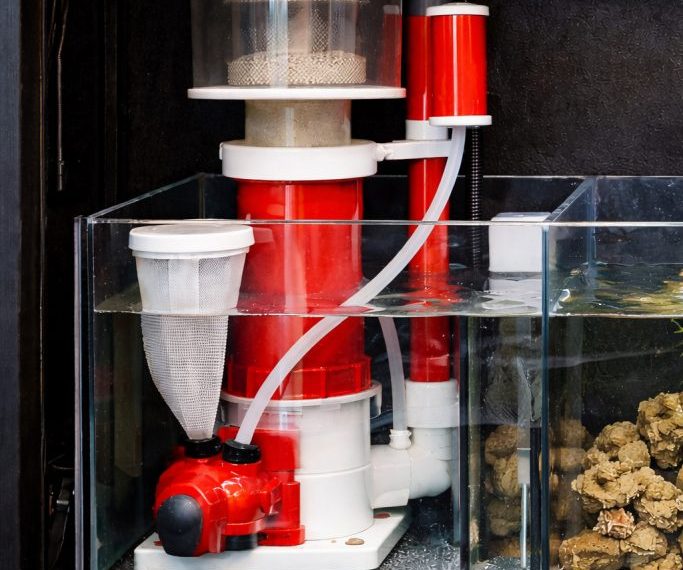
Protein Skimmer Reef Tank Guide
Learn how a protein skimmer works, how to size one, and how to tune it for a cleaner,…
 By
By
Reef Aquarium Water Parameters
Learn the ideal reef aquarium water parameters, safe ranges, and how to keep salinity, alkalinity, nutrients, and pH…