

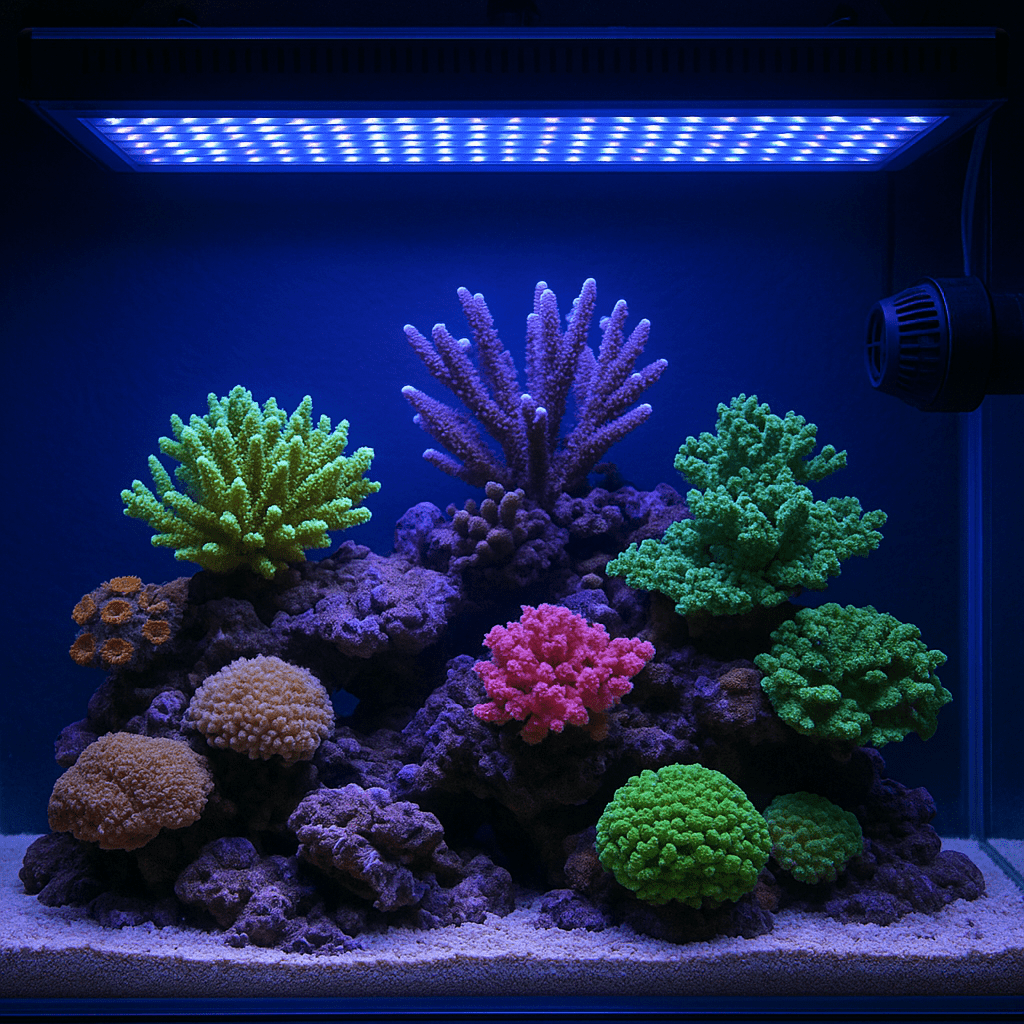
Dinos vs cyano identification starts with behavior, texture, and timing. Dinoflagellates often form snotty strings with trapped bubbles and return fast after lights come on. Cyanobacteria usually forms smooth or dusty sheets that peel away in mats. Correct ID matters because the best treatment for one can worsen the other.
Many reef keepers confuse dinos and cyano at first. Both can look brown, red, or rust colored. Both can trap bubbles. Both can cover sand, rocks, and coral bases. Yet they respond to different tank conditions and different fixes. This guide will help you tell them apart with confidence. You will learn what each pest looks like, how it behaves, what causes it, and how to treat it without making your reef less stable. We will also cover microscope clues, common mistakes, and a simple step by step process you can use before adding any chemical treatment.
Quick Reference Table
| Feature | Dinoflagellates | Cyanobacteria |
|---|---|---|
| Typical look | Snotty film or strings | Velvety or slimy sheet |
| Bubbles | Common on strings and mats | Common on surface of sheets |
| Daily pattern | Often fades at night, returns by day | Usually stays visible day and night |
| Texture | Mucus-like, stringy | Soft mat, dusty film, or peelable layer |
| Removal | Breaks apart into mucus clouds | Lifts in sheets or mats |
| Common trigger | Ultra-low nutrients, instability | Excess nutrients, dead spots, imbalance |
| Risk to livestock | Can be highly toxic | Usually less toxic, but still stressful |
| Best first step | Confirm ID and raise biodiversity | Improve flow and nutrient export balance |
What Are Dinos and Cyano?
Dinoflagellates are single-celled protists. Some species are harmless. Others become serious reef tank pests. Problem dinos often bloom in tanks with very low nitrate and phosphate. They thrive in systems with weak microbial competition. Some species release toxins. These toxins can irritate corals, snails, and even the reefer during cleaning.
Cyanobacteria is not algae either. It is photosynthetic bacteria. In reef tanks, it often appears as a red, maroon, brown, black, or dark green film. It spreads across sand and rock in sheets. Cyano often appears when nutrients are available but not balanced well. Low flow areas also encourage it. It can smother corals and trap detritus, but it is usually easier to manage than dinos once the root cause is corrected.
Because both pests are photosynthetic, they can look similar under reef lights. That is why visual clues alone should be used carefully. Behavior over a full light cycle tells you much more.
How to Identify Dinoflagellates
Dinos usually look brown, tan, golden, or rust colored. Some species look more translucent than cyano. Many reef keepers describe them as snotty. That is a useful clue. They often form slimy strings that stretch upward from sand or rock. Air bubbles get trapped in the slime. By afternoon, those strings can look dramatic.
Another strong clue is the daily cycle. Dinos often shrink back overnight. In the morning, the tank may look much cleaner. Then the coating returns after the lights ramp up. This pattern is common with several nuisance species. If you turkey baste the area, dinos often break into cloudy mucus and quickly resettle elsewhere.
Dinos also tend to appear in tanks with near-zero nutrients. If your test kits read undetectable nitrate and phosphate, be cautious. A very clean looking tank can still have a major dino issue. Snails may become inactive or die in some cases. Corals may stay closed despite otherwise stable parameters. Those signs raise suspicion for a toxic dino bloom.
How to Identify Cyanobacteria
Cyano usually forms a flatter layer than dinos. It can look dusty at first. Later, it becomes a smooth mat over sand, rock, or frag plugs. Colors vary. Red and maroon are common, but brown, black, and dark green also appear. Under strong flow, the edges may flutter slightly, but the growth usually stays attached as a sheet.
When you siphon cyano, it often peels away in broad pieces. That is a key difference. Dinos usually smear and string. Cyano often lifts like wet tissue. Bubbles can still form on top, especially late in the photoperiod. That is why bubbles alone do not confirm dinos.
Cyano is common in areas with low flow and trapped detritus. It often starts on the sand bed, around rock bases, or on the back wall. It may appear after overfeeding, skipped maintenance, old light bulbs, or a swing in nutrient export. Unlike dinos, cyano often persists overnight. It may thin slightly, but it usually does not vanish by morning.
Natural Habitat and Why These Pests Appear in Reef Tanks
Both dinos and cyano exist naturally in marine environments. On wild reefs, they are part of a huge microbial web. Grazers, currents, competing microbes, and changing nutrient inputs keep them in check. In our tanks, that balance is much smaller and easier to disrupt.
Dinos often exploit sterile conditions. Heavy nutrient stripping, oversized UV use without balance, aggressive media changes, and low biodiversity can create openings. Cyano often exploits accumulation. Detritus, poor flow, overfeeding, and weak export create rich zones where it can spread. In both cases, the bloom is usually a symptom. It points to an imbalance in the system rather than a single bad organism that appeared from nowhere.
That is why long term success comes from correcting conditions. Quick fixes can help. They rarely solve the underlying cause by themselves.
Step by Step Dinos vs Cyano Identification Guide
Use this process before treatment. It prevents many costly mistakes.
- Observe the growth in the morning. Then check again late afternoon.
- Look for a daily disappear and return pattern. That strongly suggests dinos.
- Use a turkey baster on a small patch.
- If it lifts in sheets, think cyano. If it strings and clouds, think dinos.
- Check tank placement. Dead spots suggest cyano. Ultra-clean systems suggest dinos.
- Test nitrate and phosphate with reliable kits.
- Very low or zero readings often align with dinos.
- Moderate nutrients with detritus buildup often align with cyano.
- Inspect snail and coral behavior.
- Unusual snail losses can happen with some dino blooms.
- If possible, use a microscope.
- Microscope confirmation is the best way to avoid misdiagnosis.
This process takes little time. It can save weeks of frustration.
Microscope Clues for Better Identification
A cheap hobby microscope can be a game changer. It is the fastest way to separate dinos from cyano. Cyanobacteria often looks like chains or threads of tiny cells. It appears more uniform and less mobile. Dinoflagellates are usually individual cells. Many species move with a spinning or darting motion.
Common pest dinos include Ostreopsis, Amphidinium, and Prorocentrum. Ostreopsis often appears oval and very active. Amphidinium is often seen crawling along surfaces more than swimming in open water. That matters because UV sterilizers help some species more than others. Cyano under a microscope lacks that distinct spinning dino motion.
If you cannot access a microscope, use behavior and tank conditions together. Never diagnose from color alone. Brown is not enough. Red is not enough. Texture and daily timing matter more.
Aquarium Setup Factors That Encourage Each One
Tank setup can tilt the balance. Dinos often show up in newer tanks, bare bottom systems, or tanks run very lean. Heavy use of GFO, carbon dosing, oversized skimming, or aggressive filter changes can strip nutrients too far. Dry rock systems may also have less microbial diversity early on.
Cyano often appears where flow is weak and waste settles. Fine sand beds can trap organics. Rock structures with blocked circulation create ideal pockets. Overpowered white lighting can worsen visible growth, but lighting alone rarely causes the problem. The bigger issue is usually excess organics or uneven nutrient handling.
Good aquascaping helps prevent both. Leave room around rockwork for flow. Avoid large dead zones behind structures. Keep export tools sized for the tank, not oversized for perfection. Reef tanks do better with balance than extremes.
Lighting Requirements and Their Role in Blooms
Neither dinos nor cyano needs a special reef-safe spectrum to appear. Both use light. Stronger light often makes them more obvious. If the bloom fades at night and surges under full intensity, that points toward a photosynthetic pest, but not which one by itself.
Blackouts can reduce both temporarily. They are more useful as a support tool than a cure. A short blackout may weaken dinos, especially when paired with UV and nutrient correction. It may also suppress cyano for a few days. If flow, nutrients, and maintenance stay unchanged, the problem usually returns.
Do not slash lighting without a plan. Corals still need stable light. Large swings can stress the reef and create more instability. If you reduce intensity, do it modestly and temporarily while fixing the root issue.
Water Flow and Nutrient Balance
Flow matters more for cyano than many hobbyists realize. Cyano loves calm areas where detritus settles. Increasing random flow often helps prevent mats from forming. Aim pumps so waste stays suspended long enough to reach filtration. Watch sand movement and coral response while adjusting.
Dinos are more tied to nutrient imbalance and weak competition. Raising nitrate and phosphate from zero to measurable levels often helps. Many reef keepers target a low but detectable range. Stable nutrients support competing algae, bacteria, and microfauna. That competition can crowd dinos out over time.
Do not chase numbers aggressively. Sudden nutrient spikes can trade dinos for cyano or hair algae. Make changes slowly. Test often. Stability beats speed in reef recovery.
Compatibility and Risk to Fish, Corals, and Invertebrates
Cyano is ugly, but it is usually more of a smothering problem. It can irritate coral tissue, block light, and trap debris around polyps. Fish usually tolerate it unless oxygen drops badly at night. Invertebrates may avoid heavy mats, but outright toxicity is less common.
Dinos can be much more dangerous. Some species produce toxins that irritate skin and airways during cleaning. They may kill snails or stress sensitive corals. Heavy blooms can coat zoas, LPS flesh, and SPS bases. If livestock declines while test results look fine, consider dinos seriously.
Wear gloves when handling either pest. Use eye protection during blowing or siphoning. Good room ventilation is wise, especially if you suspect Ostreopsis. Safety should never be an afterthought.
Common Problems
I Treated for Cyano but It Got Worse
This often happens when the real issue was dinos. Many cyano treatments lower microbial competition further. That can open more space for dinos. Recheck the daily pattern, nutrient levels, and texture. If nutrients are near zero and the growth returns fast after lights on, reassess your diagnosis.
I Raised Nutrients and Now I Have More Red Slime
This can happen during dino recovery. As the system leaves ultra-low nutrients, cyano may appear briefly. Keep changes gradual. Improve flow and manual removal. Do not crash nutrients again. The goal is balanced competition, not a sterile tank.
The Growth Has Bubbles, So Is It Definitely Dinos?
No. Both can trap bubbles from photosynthesis. Bubbles are a clue, not a diagnosis. Focus on texture, removal behavior, and overnight changes.
My Sand Looks Clean in the Morning but Dirty by Afternoon
That pattern strongly suggests dinos. Confirm with a sample under magnification if possible. Check nitrate and phosphate. Review recent media changes, carbon dosing, and export intensity.
How to Treat Dinos Safely
First, confirm the diagnosis. Then stop overcorrecting the tank. Raise nutrients slowly to detectable levels if they are bottomed out. Feed a bit more if needed. Reduce or pause aggressive phosphate removers if appropriate. Increase biodiversity through time, stable conditions, and possibly bacterial additions. Use UV if the species spends time in the water column. Siphon mats daily through a filter sock. Some reefers also use temporary blackouts.
Expect progress to be uneven. Dinos often improve in stages. Avoid major chemistry swings. The best results usually come from patience and consistency.
How to Treat Cyano Safely
Start with manual removal. Siphon mats during water changes. Increase random flow to dead spots. Clean detritus from the sand bed, sump, and rock shadows. Review feeding, filter maintenance, and export. Replace clogged mechanical filtration often. Keep nitrate and phosphate in a reasonable range without huge swings.
Chemical cyano treatments can work, but use them carefully. They are best saved for stubborn cases after root causes are addressed. Watch oxygen closely during treatment. Run extra aeration if needed. Removing the cause matters more than removing the symptom.
Frequently Asked Questions
Can dinos and cyano exist at the same time?
Yes. Mixed blooms are common. One may dominate the sand while the other coats rock. That is why microscope checks are so helpful.
Will a blackout cure dinos or cyano?
Usually no. It may reduce visible growth. It rarely fixes the root cause alone.
Should nitrate and phosphate be zero in a reef tank?
No. Zero nutrients often create instability. Low but detectable levels are usually safer for coral health and microbial balance.
Do snails eat dinos or cyano?
Some grazers may disturb light films. They rarely solve a bloom. Some dinos are toxic and can harm snails.
Is a microscope worth it for reef troubleshooting?
Yes. It helps with dinos, cyano, diatoms, and other mystery films. It is one of the best low-cost diagnostic tools in reef keeping.
Final Takeaway
Dinos vs cyano identification comes down to behavior, texture, and tank context. Dinos are often stringy, toxic, and tied to ultra-low nutrients. Cyano is usually mat-like, persistent, and tied to detritus and poor flow. Diagnose first. Then correct the conditions that allowed the bloom. That careful approach protects your corals and saves time.
Related reading: reef tank water parameters, how to lower phosphate in a reef tank, reef tank flow guide, new reef tank algae stages, best clean up crew for reef tank
Was this helpful?
Related Posts
Reef Tank Basics
Learn reef tank basics, from setup and cycling to lighting, flow, and water chemistry, so your first reef…
 By
By
Juvenile Orange Shoulder (acanthurus Olivaceus)
Juvenile orange shoulder tangs are bright, hardy, and reef safe, but they grow large and need a spacious…
[favorite_button]
My Bookmarks:
To see full list click here
[user_favorites user_id="" include_links="true" site_id="" post_types="" include_thumbnails="true" thumbnail_size="thumbnail" include_excerpt="false"]