

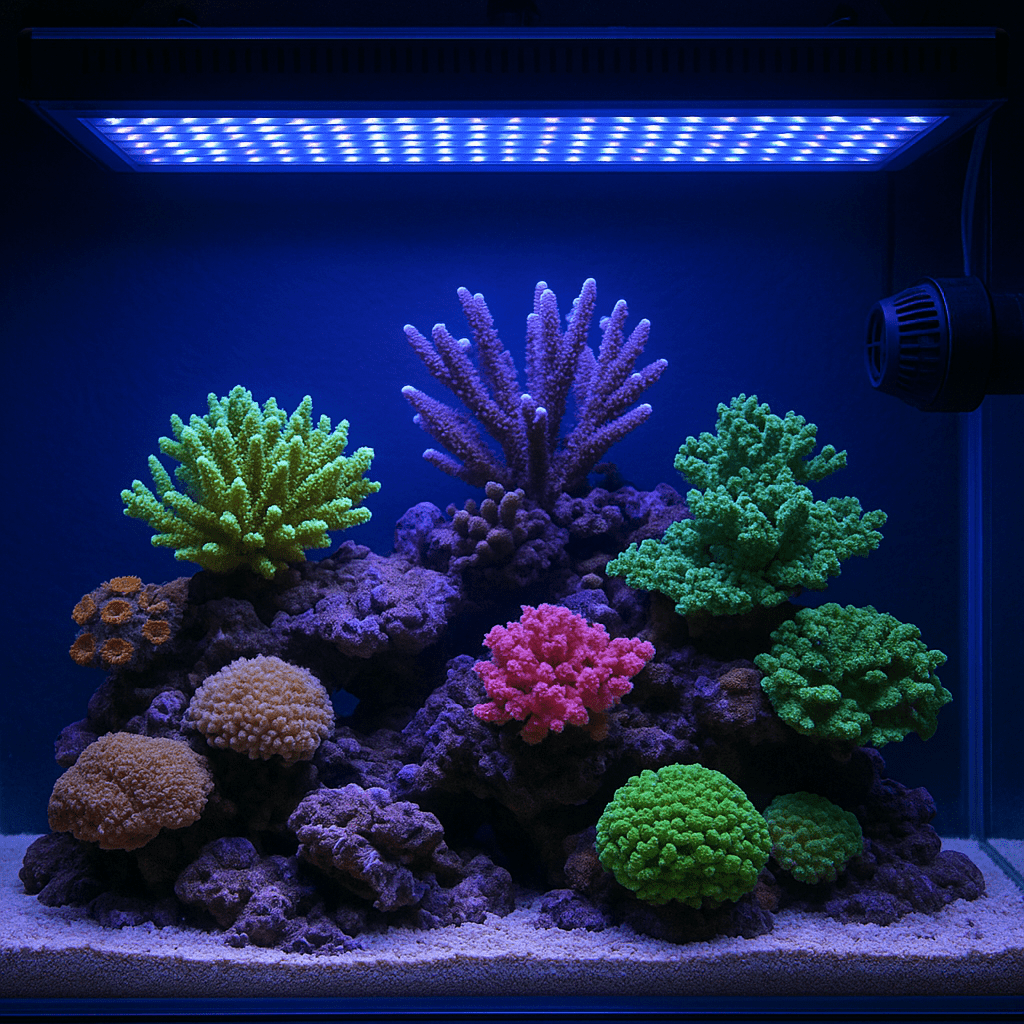
A dosing pump setup keeps calcium, alkalinity, and magnesium stable with less daily work. This guide explains how to choose, install, calibrate, and program a dosing pump for a reef tank, while avoiding the common mistakes that cause swings, precipitation, and coral stress.
Many reef tanks reach a point where hand dosing stops being practical. Coral growth increases demand. Daily consumption becomes less predictable. Missed doses can lead to unstable alkalinity and unhappy corals. A dosing pump solves that problem by adding small, measured amounts throughout the day. That steady approach is often safer than large manual additions. In this guide, you will learn how to size a dosing system, where to place lines, how to calculate daily demand, how to calibrate each head, and how to troubleshoot issues before they affect your reef. The goal is simple. Keep parameters stable and make your maintenance routine easier.
Quick Reference Table
| Topic | Best Practice |
|---|---|
| What to dose | Usually alkalinity, calcium, and magnesium |
| Most important parameter | Alkalinity stability |
| Testing before setup | Test daily for 3 to 7 days |
| Dosing schedule | Split daily dose into many small additions |
| Line placement | High-flow sump area, away from return pump intake if possible |
| Separate additives | Keep alk and calcium lines apart |
| Calibration | Calibrate each pump head with a graduated cylinder |
| Recalibration | Every 1 to 3 months, or after tubing changes |
| Common risk | Overdosing from bad programming or siphoning |
| Safety step | Use small reservoirs when possible |
This table covers the basics. The details matter, though. A dosing pump is only as accurate as your testing, calibration, and programming. Taking time during setup prevents many future problems.
What a Dosing Pump Does
A dosing pump adds liquid supplements in controlled amounts. Most reef keepers use it for two-part solutions. Those are alkalinity and calcium. Some also dose magnesium, trace elements, amino acids, or nitrate and phosphate solutions.
The biggest benefit is consistency. Corals use alkalinity and calcium all day. Manual dosing often adds a full day’s amount at once. That creates a spike. A pump can spread the same volume across many small doses. This keeps chemistry steadier. SPS corals often respond well to that stability.
Dosing pumps also reduce human error. You do not need to remember each daily addition. Still, automation does not remove the need for testing. It simply makes it easier to match your tank’s demand over time.
When Your Reef Tank Needs a Dosing Pump
Not every reef tank needs one right away. A new tank with few corals may only need regular water changes. That is often enough for soft coral and low-demand systems. As coral growth increases, demand rises too.
You should consider a dosing pump if alkalinity drops between tests, even with water changes. It also helps if manual dosing has become inconvenient. Tanks with stony corals, coralline algae, clams, or heavy coral growth usually benefit the most.
Watch your test results. If alkalinity falls consistently over several days, your tank is consuming carbonate faster than water changes replace it. That is the clearest sign. Calcium often declines more slowly. Magnesium usually changes the slowest. Start by tracking actual consumption before buying additives or programming a pump.
Choosing the Right Dosing Pump
There are many dosing pumps on the market. The best one is not always the most advanced. It needs to be reliable, easy to calibrate, and simple to program. For most reef tanks, a two-head or four-head unit works well.
If you only plan to dose alkalinity and calcium, two heads may be enough. A four-head model gives you room to add magnesium or trace elements later. Wi-Fi control is convenient. It is not required. Accuracy matters more than app features.
Look for replaceable tubing, clear calibration tools, and dosing schedules that allow many small doses per day. Quiet operation also matters if the tank is in a living space. Read long-term reviews, not just first impressions. Peristaltic tubing wears over time, so support and spare parts are important.
How to Measure Your Tank’s Daily Demand
Do not guess your dose. Measure it. This is the most important part of setup. Start by testing alkalinity at the same time each day for at least three days. Five to seven days is better. Do not dose during this test period unless levels become unsafe.
Record the drop. If alkalinity falls from 8.4 dKH to 7.8 dKH in 24 hours, your tank uses 0.6 dKH per day. Use a reef chemistry calculator to convert that demand into milliliters of your chosen supplement. Follow the product’s concentration, not a generic chart.
Repeat this process for calcium if needed. Many reef keepers set alkalinity first, then adjust calcium after a week of stable dosing. Magnesium is usually corrected manually, then maintained with occasional dosing. Stable testing habits matter here. Test kits, timing, and salinity all affect your numbers.
Step-by-Step Dosing Pump Setup Guide
1. Pick a safe mounting location
Mount the pump above the dosing containers if possible. This helps reduce siphoning risk. Keep it dry and away from salt spray. Make sure you can access the buttons or app during maintenance.
2. Label each line and container
Use clear labels for alkalinity, calcium, magnesium, or any other additive. This sounds basic, but it prevents costly mistakes. Never rely on memory once multiple clear liquids are involved.
3. Place dosing lines in a high-flow area
The sump is usually best. Dose into an area with strong water movement. This helps the additive mix quickly. Keep alkalinity and calcium output lines separated. If they drip too close together, they can react and form precipitation.
4. Prime the tubing
Run each head until liquid fills the line fully. Remove all air gaps. Air in the tubing can reduce accuracy. It can also delay the first few doses.
5. Calibrate each pump head
Use a graduated cylinder or measuring container. Most pumps ask you to run a head for a set time, then enter the actual volume delivered. Do this carefully. Even good pumps vary from head to head.
6. Program the daily dose
Enter your calculated daily amount. Split it across several doses. Many reef keepers spread alkalinity over 8 to 24 additions per day. Calcium can be scheduled between alkalinity doses. Avoid dosing both at the same exact time.
7. Test and fine-tune
Test alkalinity daily for the first week. Adjust slowly. If alkalinity still falls, increase the dose slightly. If it rises, reduce it. Small changes are safer than large corrections.
Aquarium Setup and Line Placement Tips
Your dosing pump works best when the whole setup is tidy and predictable. Use rigid tube holders or clips to secure line ends. Loose lines can move. They may dose outside the sump or into stagnant water. That creates both mess and chemistry issues.
Keep additive containers sealed when possible. This reduces contamination and evaporation. Alkalinity solutions can form crust around lids and tubing ends. Clean these areas often. If your sump water level changes a lot, avoid placing line ends under water. Submerged lines can back-siphon in some setups.
Tank size matters too. Small reef tanks react faster to mistakes. A 10 ml overdose in a nano tank can be serious. The same error in a large system may be minor. For that reason, small reservoirs are a smart safety choice on nanos and mixed reefs.
Programming Dosing Schedules the Smart Way
The best schedule is usually the most even one. Corals consume alkalinity continuously. Frequent small doses match that pattern better than one large addition. If your pump allows 24 doses daily, use that feature for alkalinity.
Calcium can also be split into several doses. Just keep it offset from alkalinity. For example, dose alkalinity on the hour and calcium at half past. Magnesium is less urgent. One or two doses daily is often enough.
Some reef keepers dose alkalinity at night to help offset normal nighttime pH drops. That can help, but stability matters more than chasing pH. If your pH is already acceptable, a balanced all-day schedule is usually simpler and safer. Avoid changing too many variables at once.
Common Problems
Why is my alkalinity still dropping?
The daily dose may be too low. Calibration may also be off. Recheck your test kit first. Then recalibrate the pump head. Inspect the tubing for wear or slipping. If coral growth increased recently, consumption may simply be higher now.
Why did my alkalinity rise too fast?
This often comes from a programming mistake. Check whether the dose was entered in milliliters per day or per event. Also inspect for siphoning. If the reservoir sits above the tank and the line lacks proper routing, liquid may continue flowing after the pump stops.
Why is there white buildup near the dosing line?
That is usually precipitation. It happens when alkalinity solution hits low-flow water or mixes too closely with calcium. Move the line to a stronger flow area. Separate the output points. Clean crusted ends regularly to maintain accuracy.
Why is the pump dosing inconsistently?
Check for air bubbles, worn tubing, clogged line ends, or loose fittings. Peristaltic tubing compresses over time. Old tubing loses accuracy. Recalibration helps, but replacement may be needed. Also make sure the additive has not crystallized inside the line.
What if I accidentally overdose?
Stop the pump immediately. Test alkalinity, calcium, pH, and salinity. Do not add more supplements until levels are understood. A water change may help. Large alkalinity spikes can stress or burn SPS corals. Respond calmly and avoid stacking multiple corrections too quickly.
Maintenance and Long-Term Success
A dosing pump is not a set-and-forget tool. It needs regular checks. Refill containers before they run dry. Inspect tubing weekly. Wipe off salt creep and additive residue. Recalibrate every one to three months, especially on heavily stocked reefs.
Retest your tank’s demand as corals grow. A dose that worked six months ago may now be too low. Seasonal changes can also affect evaporation, pH, and coral uptake. Keep a simple log of alkalinity results and dosing changes. Trends are easier to spot that way.
It also helps to pair dosing with strong basics. Maintain stable salinity. Keep magnesium in range. Use reliable test kits. Good dosing cannot fix poor overall husbandry. It works best as part of a stable reef system.
Frequently Asked Questions
Can I use a dosing pump on a nano reef?
Yes, but be extra careful. Small tanks are less forgiving. Use small reservoirs, conservative settings, and frequent testing during the first weeks.
How often should I calibrate my dosing pump?
Every one to three months is a good rule. Recalibrate sooner if you replace tubing, notice drifting parameters, or see inconsistent output.
Should I dose alkalinity at night?
You can, especially if you want to support nighttime pH. Still, an even schedule across the day often works just as well and is easier to manage.
Can I dose calcium and alkalinity together?
No. They should not enter the water at the same moment or same exact spot. Separate them in time and space to avoid precipitation.
Do I still need water changes if I use a dosing pump?
Yes. Dosing replaces specific consumed elements. Water changes help with trace balance, nutrient export, and overall system health.
Final Tips for a Stable Reef
Start simple. Dose only what your tank actually consumes. Test before adjusting. Make small changes. Recheck results after each change. That patient approach prevents most dosing disasters.
If you are still building your reef routine, these FancyReef guides can help: reef tank alkalinity guide, calcium in reef aquariums, reef tank water parameters, reef tank maintenance schedule, and how to frag corals.
A well-set dosing pump saves time, reduces swings, and supports healthier coral growth. Set it up carefully once. Then let consistency do the heavy lifting.
Was this helpful?
Related Posts
Blue Dot Jawfish (Opistognathus Rosenblatti)
Blue Dot Jawfish need cool water, deep sand, and a tight lid. Learn how to keep Opistognathus rosenblatti…
 By
By
Arc Eye Hawkfish (Paracirrhites arcatus)
Arc Eye Hawkfish care is simple in a stable tank. Learn tank size, feeding, reef safety, and shrimp…
[favorite_button]
My Bookmarks:
To see full list click here
[user_favorites user_id="" include_links="true" site_id="" post_types="" include_thumbnails="true" thumbnail_size="thumbnail" include_excerpt="false"]