

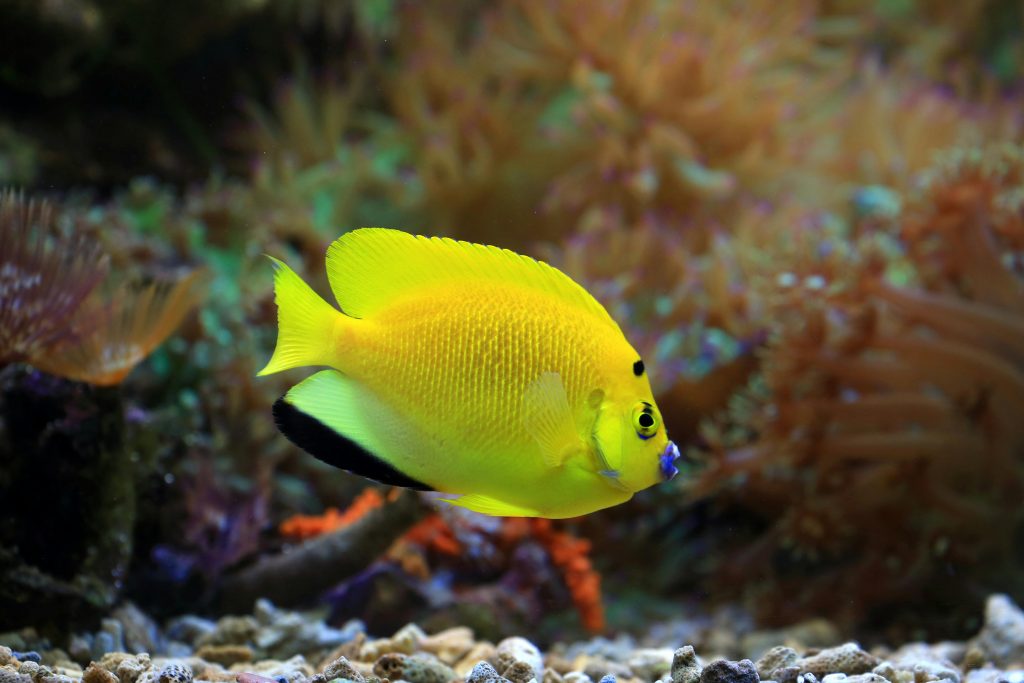
The Flagfin Angelfish, Apolemichthys trimaculatus, is a striking marine angelfish with bold yellow color and a dark eye patch. It is beautiful but not always beginner-friendly. This species needs a mature tank, stable water, and careful coral planning. Keepers who meet those needs can enjoy a hardy, active show fish.
This guide covers the real-world care of the Flagfin Angelfish in reef and fish-only systems. You will learn about tank size, diet, compatibility, reef safety, and common problems. Many hobbyists buy this fish for its color alone. That often leads to trouble later. A better plan starts with understanding its natural behavior and feeding habits. This angelfish can adapt well in captivity, but only when its environment is stable and spacious. If you are considering one for your display, this article will help you decide if it fits your setup and your livestock goals.
Flagfin Angelfish Quick Care Facts
| Common name | Flagfin Angelfish |
| Scientific name | Apolemichthys trimaculatus |
| Care level | Moderate |
| Temperament | Semi-aggressive |
| Diet | Omnivore with sponge-based needs |
| Minimum tank size | 125 gallons |
| Reef safe | With caution |
| Adult size | Up to 10 inches |
| Temperature | 75-79°F |
| Salinity | 1.024-1.026 |
| pH | 8.1-8.4 |
| Ideal nitrate | Below 20 ppm |
These quick facts are useful for planning, but they do not tell the whole story. Large angelfish need stable routines. They also need room to establish a territory. A cramped tank often leads to stress, aggression, and poor feeding response.
Natural Habitat
The Flagfin Angelfish occurs across the Indo-Pacific region. It is found around reef slopes, lagoons, and outer reef areas. Juveniles often stay in more sheltered zones. Adults move through deeper reef structures with caves and overhangs.
In the wild, this species spends much of its day picking at surfaces. It grazes on sponges, tunicates, algae, and small benthic organisms. That constant browsing behavior matters in captivity. It explains why newly imported specimens may ignore prepared foods at first. They are used to pecking all day, not eating one large meal.
Natural habitat also explains their comfort around rockwork. Flagfin Angelfish like visual cover. They do not thrive in bare, open aquariums. If the aquascape offers caves and shaded areas, they settle much faster. They also show more natural behavior.
Aquarium Setup
A 125-gallon tank is the practical minimum for one adult Flagfin Angelfish. Larger is better. A 150-gallon or bigger system gives more swimming room and reduces territorial pressure. This matters even more in reef tanks with other semi-aggressive fish.
Build the aquascape with plenty of live rock. Create caves, arches, and shaded retreat zones. Leave open water in the front and center for swimming. The goal is balance. Too much rock can limit movement. Too little rock can make the fish feel exposed.
Mature tanks work best. Avoid adding this species to a brand-new setup. Established biofilm and natural growth help with acclimation. Stable salinity and temperature are also critical. Sudden swings often trigger stress and disease. Use a tight lid if possible. Angelfish are not famous jumpers, but startled fish can launch.
Quarantine is strongly recommended. Observe feeding response before display placement. During quarantine, offer PVC shelters and dim lighting. That lowers stress and improves the odds of early feeding success.
Lighting Requirements
The Flagfin Angelfish has no special lighting demand of its own. Standard reef lighting or moderate fish-only lighting works well. What matters most is providing areas of shade. This species often prefers lower-light zones during acclimation.
In reef aquariums, your coral choices will usually dictate the light schedule. That is fine. Just make sure the angelfish can move into caves or overhangs when it wants to retreat. Newly introduced fish may hide often under bright LEDs. This is normal at first.
If the fish refuses food, reduce intensity for a few days. A calmer environment can help. Many keepers also have success feeding in lower light or just after lights ramp down. That approach often encourages shy new specimens to sample frozen foods and sponge-based preparations.
Water Flow
Moderate, varied flow is ideal. The fish should be able to cruise comfortably without fighting a constant blast. Strong random flow is fine in larger tanks, especially reef systems, but always provide calmer pockets behind rockwork.
Flow affects feeding behavior. If food gets blown away too quickly, a new Flagfin may struggle to eat. Turn down pumps briefly during feeding if needed. This is especially helpful during the first few weeks. Once established, many specimens become bold and competitive at mealtime.
Good flow also supports water quality. Large angelfish produce waste. Dead spots behind rock can trap detritus and raise nutrients. Keep circulation broad and consistent. Pair that with strong filtration and regular maintenance.
Feeding
Feeding is the most important part of Flagfin Angelfish care. This species is an omnivore, but sponge matter is a key part of its natural diet. Offer a varied menu from day one. A narrow diet often leads to poor body condition and weak color.
Start with frozen angel formulas that contain sponge. Add mysis shrimp, finely chopped clam, brine enriched with vitamins, and quality pellets. Dried algae can help, though it should not be the only plant item. Feed small portions two to three times daily. Frequent feeding suits their grazing nature.
New imports can be stubborn. Try clipped clam on the half shell, fresh sponge-based foods, or feeding near rock surfaces. Soaking foods in vitamins or garlic may help entice interest. Watch the belly line. A pinched stomach means the fish is losing condition. Act quickly if feeding remains poor after several days.
Once established, this fish usually becomes a strong eater. Keep variety high. That supports immunity and reduces coral-picking in some tanks.
Compatibility
The Flagfin Angelfish is semi-aggressive. It usually does well with tangs, larger wrasses, rabbitfish, and peaceful to moderately assertive community fish. Avoid housing it with very timid species that may be outcompeted at feeding time. Also avoid keeping it with other large angelfish in smaller tanks.
Reef safety is the big question. This species is not fully reef safe. Some individuals ignore corals for years. Others nip at fleshy LPS, zoanthids, clam mantles, and soft corals. Risk varies by specimen. Well-fed fish often behave better, but there are no guarantees.
If you want the best odds, keep it in a mixed reef with caution. Avoid combining it with high-value fleshy corals if you cannot accept some nipping. Invertebrates like shrimp and snails are usually ignored. Feather dusters and similar sessile invertebrates may be at risk.
For more stocking guidance, see reef fish compatibility guide, best reef safe angelfish, quarantine marine fish, and reef tank parameter guide.
Step-by-Step Acclimation Guide
Acclimation can make or break success with this species. Follow a simple, controlled process.
- Prepare a quarantine tank before the fish arrives.
- Match temperature slowly with a sealed bag float.
- Use drip acclimation for 30 to 45 minutes.
- Transfer the fish without adding store water.
- Keep lights dim for the first day.
- Provide hiding places with PVC or rock.
- Offer food within the first 12 hours.
- Test ammonia daily in quarantine.
- Observe breathing, waste, and skin condition.
- Move to the display only after stable feeding.
Do not rush this process. A fish that eats aggressively in quarantine has a much better chance in the display. If parasites appear, treat in quarantine, not in the reef tank.
Propagation and Breeding
Home breeding of the Flagfin Angelfish is extremely rare. There are no common hobbyist methods for routine captive propagation. Like many marine angelfish, they are pelagic spawners in nature. They release eggs into the water column. Larval care is difficult and highly specialized.
Can You Breed Them at Home?
For most hobbyists, the answer is no. The space, pairing, larval food culture, and rearing systems are beyond normal home setups. Public aquariums and advanced breeding facilities are better equipped for that work.
What Hobbyists Can Do Instead
The best contribution is supporting responsible collection and excellent husbandry. Buy healthy specimens. Quarantine them well. Keep them long term. A thriving fish in captivity is still a success story.
Common Problems
Why Is My Flagfin Angelfish Not Eating?
This is the most common issue. Stress is the usual cause. Shipping, bright lights, aggressive tankmates, or a bare quarantine tank can all suppress appetite. Offer sponge-based frozen foods first. Feed in low flow. Add visual cover. Check for rapid breathing or flashing, which may point to parasites.
Why Is It Nipping My Corals?
Some nipping is simply individual behavior. Hunger can make it worse. Increase feeding frequency and diet variety. If the fish targets one coral repeatedly, move the coral if possible. In some cases, removal of the fish is the only real fix.
Why Is the Color Fading?
Faded color often suggests stress, poor nutrition, or declining water quality. Test nitrate, salinity, and temperature stability. Improve diet with vitamins and sponge foods. Watch for bullying from tankmates. A fish that hides constantly may be under pressure.
Why Is It Breathing Fast?
Fast breathing can indicate ammonia, low oxygen, gill parasites, or severe stress. Test water immediately. Increase aeration. Inspect for signs of velvet or flukes. If symptoms worsen, treat in quarantine without delay.
Frequently Asked Questions
Is the Flagfin Angelfish reef safe?
It is reef safe with caution. Some specimens behave well. Others nip corals, clam mantles, or sessile invertebrates.
How big does a Flagfin Angelfish get?
Adults can reach around 10 inches. Most need a large tank to swim and establish territory.
What does a Flagfin Angelfish eat?
It needs a varied omnivore diet. Sponge-based angel foods are especially important. Add mysis, clam, pellets, and algae-based items.
Can I keep two Flagfin Angelfish together?
This is risky in home aquariums. Most hobbyists should keep only one unless the system is very large and carefully managed.
Is this a good beginner angelfish?
Not usually. It is better for hobbyists with stable systems, quarantine experience, and realistic expectations about coral nipping.
Final Thoughts
The Flagfin Angelfish is one of the most attractive large angelfish available to marine hobbyists. It also asks for more planning than many buyers expect. Give it a mature tank, excellent feeding, and a thoughtful stocking plan. In return, you get a bold centerpiece fish with real personality. If your reef contains prized fleshy corals, think carefully before adding one. If your system is spacious and stable, this species can become a long-term standout.
Was this helpful?
Related Posts
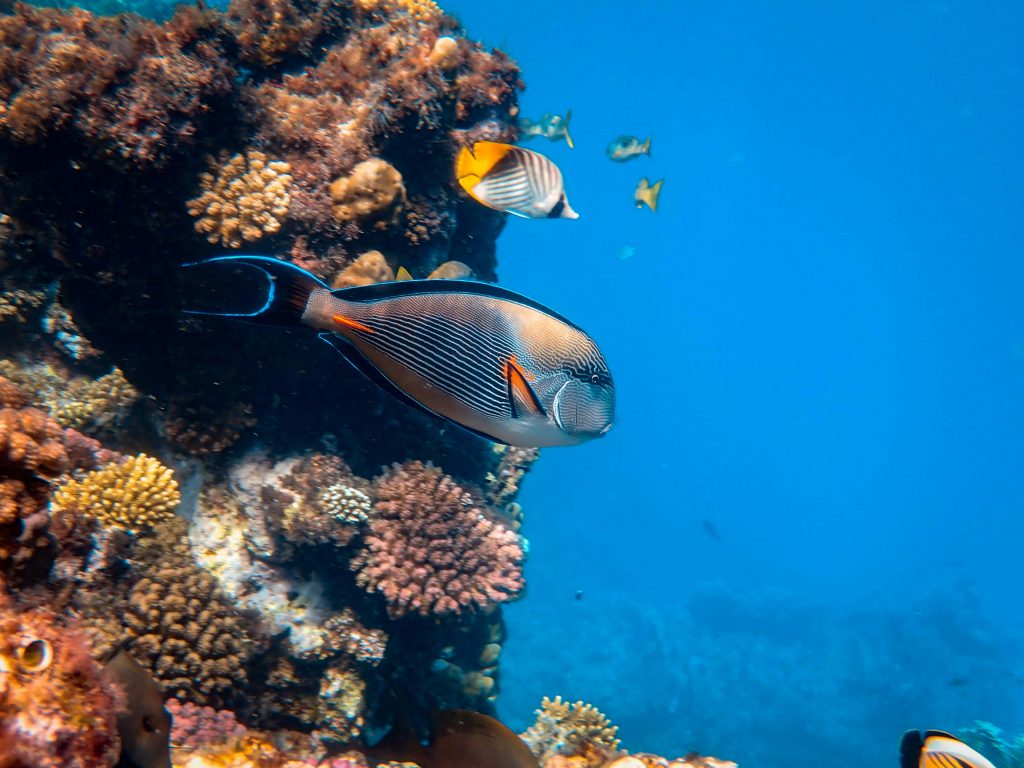
Sohal Tang (Acanthurus Sohal)
Sohal Tang care centers on space, heavy feeding, and aggression control. Learn tank size, diet, compatibility, and common…
 By
By
Reef Safe Fish Guide
Learn which reef safe fish work best in coral tanks, plus species to avoid, compatibility tips, and beginner-friendly…
[favorite_button]
My Bookmarks:
To see full list click here
[user_favorites user_id="" include_links="true" site_id="" post_types="" include_thumbnails="true" thumbnail_size="thumbnail" include_excerpt="false"]