

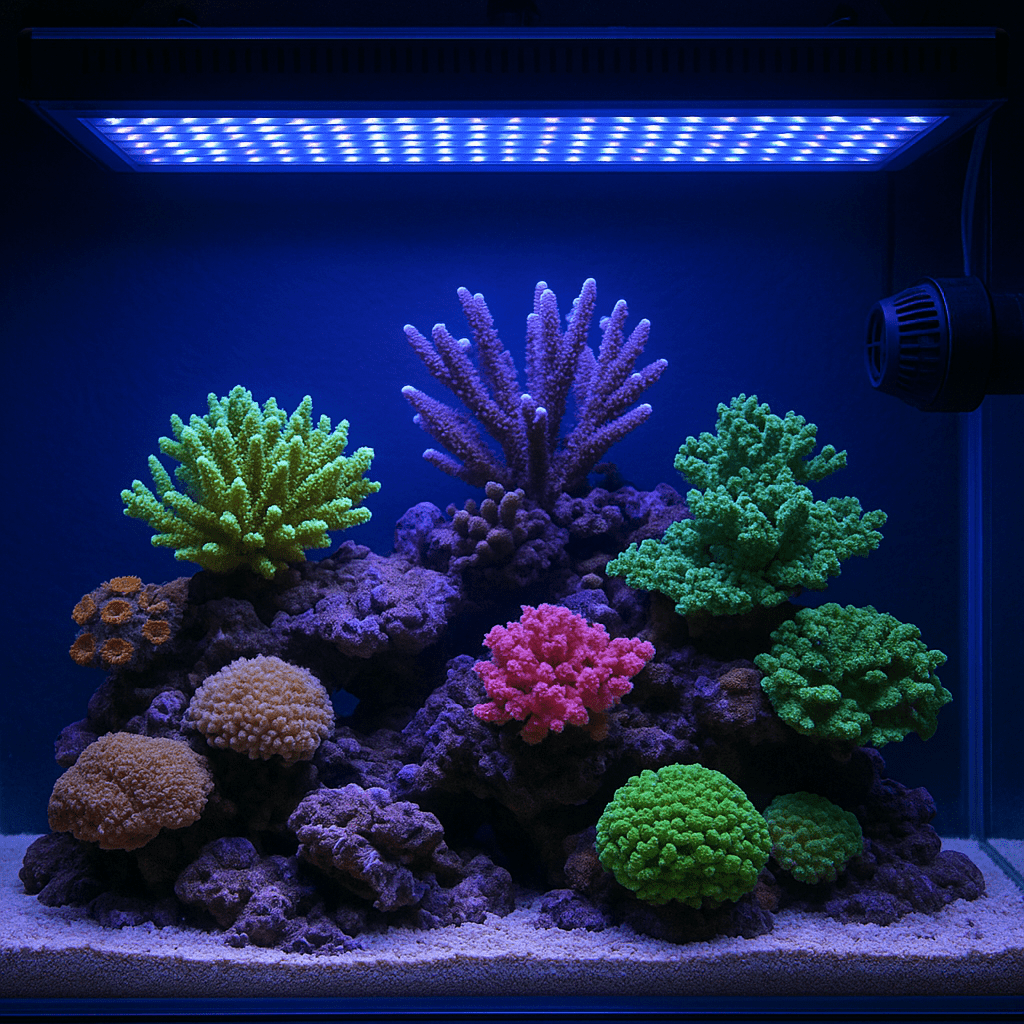
A saltwater water change removes waste, restores trace elements, and helps keep reef chemistry stable. The key is simple. Match salinity, temperature, and alkalinity closely. Then change water slowly and clean only what needs attention.
Many reef problems start with drifting water quality. Nitrate rises. Phosphate builds up. Detritus collects in low-flow areas. Corals lose color. Fish become stressed. A proper water change helps prevent those issues before they become serious. It is one of the most useful maintenance habits in reef keeping. In this guide, you will learn how to do a saltwater water change step by step. You will also learn how much water to change, how to mix new saltwater safely, and how to avoid common mistakes that shock fish or corals.
Saltwater Water Change Quick Reference
| Task | Best Practice |
|---|---|
| Water change amount | 10% weekly or 15–20% every two weeks |
| New water temperature | Match display tank within 1–2°F |
| Salinity | Match tank at 1.025–1.026 specific gravity |
| Mixing time | 2–24 hours with heater and circulation pump |
| RODI water | Always use for mixing saltwater |
| Alkalinity match | Keep within about 0.5–1.0 dKH if possible |
| When to vacuum sand | Lightly, only in dirty areas |
| Main goal | Export waste without causing parameter swings |
Why Water Changes Matter in a Saltwater Aquarium
Water changes do more than remove dirty water. They reset the system in small, helpful ways. Old tank water contains dissolved waste, excess nutrients, and organic compounds. Over time, those compounds stress fish and irritate corals. New saltwater dilutes that buildup.
Water changes also replace trace elements consumed by corals, coralline algae, and other invertebrates. Calcium, magnesium, and alkalinity support coral growth. Minor and trace elements support color and metabolism. A regular schedule helps maintain balance between dosing and natural consumption.
Even tanks with strong filtration still benefit from water changes. Protein skimmers remove organics. Refugiums absorb nutrients. Media reactors help polish water. None of them fully replace the broad reset a water change provides. For many beginners, consistent water changes solve more problems than extra equipment does.
How Much Water Should You Change?
Most reef tanks do well with a 10% weekly water change. That schedule is easy to manage. It also keeps nutrient spikes under control. If weekly changes are hard to maintain, 15% to 20% every two weeks can still work well.
Heavily stocked tanks often need more frequent changes. Tanks with messy fish, heavy feeding, or rising nitrate may need larger changes. New tanks sometimes benefit from smaller, regular changes while the system stabilizes. Mature mixed reefs often thrive on a predictable routine instead of large, irregular changes.
Avoid huge water changes unless there is a clear reason. Large changes can swing alkalinity, salinity, and temperature. Those swings stress corals quickly. If nitrate or phosphate is very high, reduce it gradually. Slow correction is safer than dramatic correction in most reef systems.
What You Need Before You Start
Gather everything before mixing or draining water. This makes the process smoother. You will need RODI water, reef salt mix, a clean mixing container, a heater, and a small pump or powerhead. You also need tubing or a siphon hose, towels, and a refractometer or reliable salinity tester.
Many hobbyists also keep a dedicated bucket for aquarium use only. Never use containers exposed to soap or household chemicals. Residue can poison a reef tank. Label your mixing tools clearly. Keep them away from cleaning products and garden equipment.
If you run a sump, plan where the water will be removed from. Many reef keepers siphon from the sump chamber because it is easy and less disruptive. Others vacuum detritus from the display during the same process. Either method works if the new water is well matched.
How to Mix Saltwater Correctly
Start with pure RODI water. This is important. Tap water often contains nitrate, phosphate, copper, and silicate. Those contaminants fuel algae and can harm invertebrates. Add the water to your mixing container first. Then add salt mix slowly while the pump circulates the water.
Follow the salt brand’s instructions, but always verify with a refractometer. Most reef tanks target 1.025 to 1.026 specific gravity. Heat the new water to match the display tank. Let it mix until clear. Many hobbyists mix for several hours. Some mix overnight for extra stability.
Test salinity before use. If the salinity is low, add a little more salt. If it is high, add more RODI water. If you keep sensitive SPS corals, check alkalinity too. Some salt mixes run high. Matching alkalinity closely reduces stress during larger water changes.
Step-by-Step: How to Do a Saltwater Water Change
Step 1: Prepare the new saltwater. Mix and heat the water in advance. Confirm salinity and temperature match the tank. This is the most important part.
Step 2: Turn off equipment as needed. Shut off return pumps, skimmers, and auto top off systems if necessary. This prevents dry running and false water level issues.
Step 3: Remove old tank water. Siphon the planned amount into a bucket or drain. Target dirty areas in the sump or bare spots where detritus collects.
Step 4: Lightly clean problem areas. You can gently turkey baste rockwork before siphoning. This lifts settled debris. Vacuum only dirty sections of sand. Do not deep clean the whole bed at once.
Step 5: Add the new saltwater slowly. Pour or pump it back in steadily. Avoid blasting corals or stirring the sand bed. Slow addition reduces stress.
Step 6: Restart equipment. Turn pumps, skimmer, heater, and auto top off back on. Check sump water level. Make sure everything runs normally.
Step 7: Observe the tank. Watch fish and corals for ten to fifteen minutes. Corals may close briefly. They should reopen once flow and chemistry settle.
Aquarium Setup Tips That Make Water Changes Easier
A good setup saves time every week. If you are planning a new reef, leave room around the sump. Easy access matters. A cramped stand turns simple maintenance into a chore. Use unions, valves, and flexible tubing where practical. They make service easier later.
Keep a dedicated mixing station if possible. Even a small brute container, heater, and pump can simplify everything. Pre-measured tools also help. Mark gallon lines on your mixing container. This helps you repeat the same volume every time.
Good flow also reduces maintenance burden. Strong, random flow keeps detritus suspended so filtration can remove it. Dead spots collect waste quickly. If your tank always looks dirty before a water change, review pump placement. Better circulation can improve both cleanliness and coral health. For more on system planning, see: reef tank setup guide, reef tank maintenance schedule, and reef aquarium water parameters.
Common Problems During Water Changes
Corals close up after a water change
This usually points to a parameter mismatch. Check salinity first. Then check temperature and alkalinity. Corals often react to alkalinity swings, especially SPS. Some soft corals also dislike sudden changes in flow or suspended debris.
Fish seem stressed or breathe faster
Temperature shock is a common cause. Salinity mismatch can also trigger stress. Make sure the new water is fully mixed and aerated. Adding water too quickly can also disturb fish, especially in smaller tanks.
Sand bed gets cloudy
The siphon or refill stream may be too aggressive. Use slower flow when adding water back. Vacuum the sand lightly. Avoid plunging deep into mature sand beds. That can release trapped waste and cause a nutrient spike.
Skimmer overflows after the change
This is common after adding new saltwater or using conditioners. Raise the skimmer cup temporarily or turn the skimmer off for a short time. It usually settles once the water chemistry stabilizes.
Nitrate stays high despite water changes
Water changes help, but they cannot fix the root cause alone. Review feeding, stocking, filtration, and detritus buildup. Clean the sump. Improve export. Test source water. For nutrient control help, see: how to lower nitrate in a reef tank and phosphate control in reef aquariums.
Best Practices for Reef, Fish-Only, and Nano Tanks
Reef tanks need careful matching of salinity, temperature, and alkalinity. Coral systems are less forgiving than fish-only tanks. A stable routine matters more than occasional large changes. If you dose two-part or kalkwasser, test regularly so your new water does not create sudden shifts.
Fish-only systems can usually tolerate slightly wider swings. Even so, matched water is still best practice. Large predatory fish also produce more waste. That often means larger or more frequent changes. Watch nitrate closely in those setups.
Nano reef tanks need extra caution. Small water volumes change fast. A one-gallon mistake matters much more in a 20-gallon tank than in a 120-gallon tank. Measure carefully. Add new water slowly. In nanos, many hobbyists prefer smaller weekly changes because they are safer and more stable.
Frequently Asked Questions
How often should I do a saltwater water change?
For most tanks, 10% weekly works very well. Some tanks do fine with 15% to 20% every two weeks. Heavy bioloads may need more.
Can I use tap water for a saltwater water change?
It is not recommended. Tap water can contain contaminants that fuel algae and harm invertebrates. Use RODI water whenever possible.
Do I need to turn off my pumps during a water change?
Usually yes, at least the return pump and auto top off. This prevents equipment issues and makes it easier to remove the correct amount of water.
How long should new saltwater mix before use?
At least until the water is fully clear and salinity is stable. Many reef keepers mix for several hours. Overnight mixing is common.
Should I vacuum the sand every time?
Only lightly and only where waste collects. Deep cleaning the entire sand bed can disrupt beneficial bacteria and release trapped detritus.
Final Tips for Safer Water Changes
Consistency beats perfection. Use the same process each time. Match new water carefully. Keep tools clean and dedicated to aquarium use. Test salinity every change. Test alkalinity often if you keep stony corals. Small, steady maintenance usually produces the best long-term reef results.
If your tank looks healthier after each water change, that is a good sign. If animals look stressed after every change, review your mixing process and parameter matching. Most water change problems come from rushed preparation. Slow down, measure carefully, and your reef will reward you.
Was this helpful?
Related Posts
Rhodactis Mushrooms Care
Rhodactis mushrooms are hardy reef corals that prefer low to moderate light, gentle flow, and stable water. Learn…
 By
By
Setting Up A Reef Tank
Setting up a reef tank is easier when you focus on stability, smart equipment, and slow stocking. This…
[favorite_button]
My Bookmarks:
To see full list click here
[user_favorites user_id="" include_links="true" site_id="" post_types="" include_thumbnails="true" thumbnail_size="thumbnail" include_excerpt="false"]