Why Properly Mixed Saltwater Matters
Learning how to mix saltwater for a reef tank is one of the most important skills in the saltwater aquarium hobby. Stable, clean saltwater keeps corals open, fish healthy, and nuisance algae under control. Poorly mixed saltwater, on the other hand, can cause sudden swings in salinity, pH, and alkalinity that stress or even kill sensitive reef inhabitants.
If you’re new to the hobby, mix your own saltwater even if you can buy it pre-mixed locally. It’s usually cheaper, you control the parameters, and you’ll be ready for emergencies and regular reef tank water changes.
Equipment & Ingredients You’ll Need
Before you start, gather everything in one place so you can mix safely and consistently:
- RO/DI water – purified water is essential for a healthy reef.
- Reef salt mix – choose a reputable brand formulated for corals.
- Mixing container – a food-safe bin or brute trash can, dedicated only to aquarium use.
- Powerhead or mixing pump – to keep the water moving while the salt dissolves.
- Heater & thermometer – to match your display tank temperature (usually 77–79°F / 25–26°C).
- Refractometer or digital salinity meter – for accurate salinity readings.
For more background on water quality and stability, see our guide on reef tank parameters for beginners.
Step-by-Step: How To Mix Saltwater For A Reef Tank
1. Start With RO/DI Water
Fill your mixing container with RO/DI water. Avoid tap water; it often contains chlorine, chloramine, nitrate, phosphate, and metals that fuel algae and harm inverts.
Tip: Mark your container with gallon or liter lines so you know exactly how much water you’re mixing each time.
2. Heat and Circulate the Water
Place a heater and powerhead in the container. Bring the water up to your tank’s temperature and let it circulate for 15–30 minutes. Temperature affects salinity readings, so it’s best to match your display tank before testing.
3. Add Salt Slowly, Never the Other Way Around
Always add salt to water, not water to salt. Pour the reef salt in gradually while the powerhead is running. Check the manufacturer’s instructions for a starting dose (often around 1/2 cup per gallon, or 120–130 g per 4 L), but treat this as a guideline, not a final number.
- Add about 75–80% of the recommended amount.
- Let it mix for 10–15 minutes.
- Test salinity, then adjust.
4. Aim for Reef-Safe Salinity
For most mixed reef tanks, target:
- 1.025–1.026 SG (specific gravity), or
- 35 ppt (parts per thousand).
If salinity is low, add a small amount of salt, wait 5–10 minutes, then retest. If it’s too high, add a bit of RO/DI water. Take your time—big jumps in salinity are stressful to livestock.
5. Let the Saltwater Mix & Aerate
Once salinity is close to your target, let the water mix for at least 2–4 hours; many reef keepers prefer to mix for 12–24 hours. This allows:
- All salt crystals to fully dissolve.
- pH and alkalinity to stabilize.
- Gases to exchange, preventing pH swings.
Before use, confirm that temperature and salinity match the display tank as closely as possible.
Using Your New Saltwater Safely
When your saltwater is ready, you can perform a water change or fill a new system. For established tanks, avoid large, sudden changes unless you’re dealing with an emergency. Most reefers stick to 10–20% weekly or biweekly water changes. If you’re cycling a new aquarium, check out our overview on how to start a saltwater aquarium for the full setup process.
Store any extra mixed saltwater in a covered container with circulation and heat if you plan to use it within a few days. Always test salinity again before use, as evaporation can slowly increase it.
Once you have a simple routine and consistent measurements, mixing saltwater becomes quick, repeatable, and stress-free—exactly what your reef tank needs to thrive.
Sources
- Holmes-Farley, R. (2002–2010). Reef Chemistry articles. Reefkeeping Magazine.
- Borneman, E. H. (2001). Aquarium Corals. TFH Publications.
- Delbeek, J. C., & Sprung, J. (1994–2005). The Reef Aquarium Vols. 1–3. Ricordea Publishing.
Was this helpful?
Related Posts
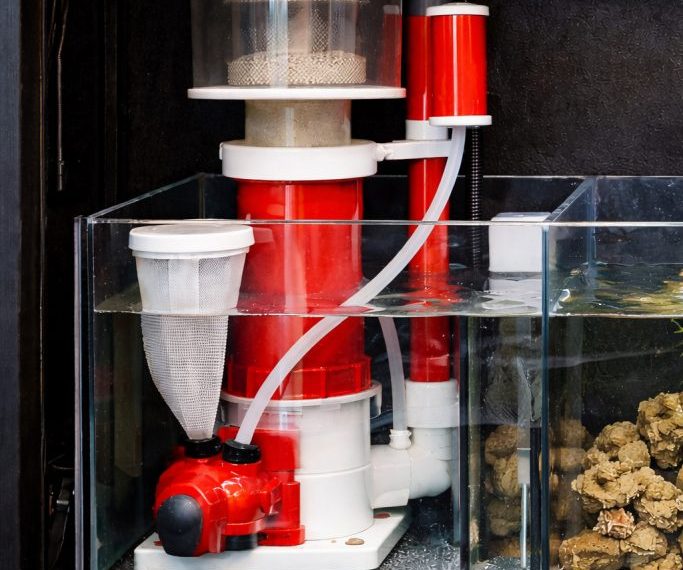
Protein Skimmer Reef Tank Guide
Learn how a protein skimmer works, how to size one, and how to tune it for a cleaner,…
 By
By
Reef Aquarium Water Parameters
Learn the ideal reef aquarium water parameters, safe ranges, and how to keep salinity, alkalinity, nutrients, and pH…