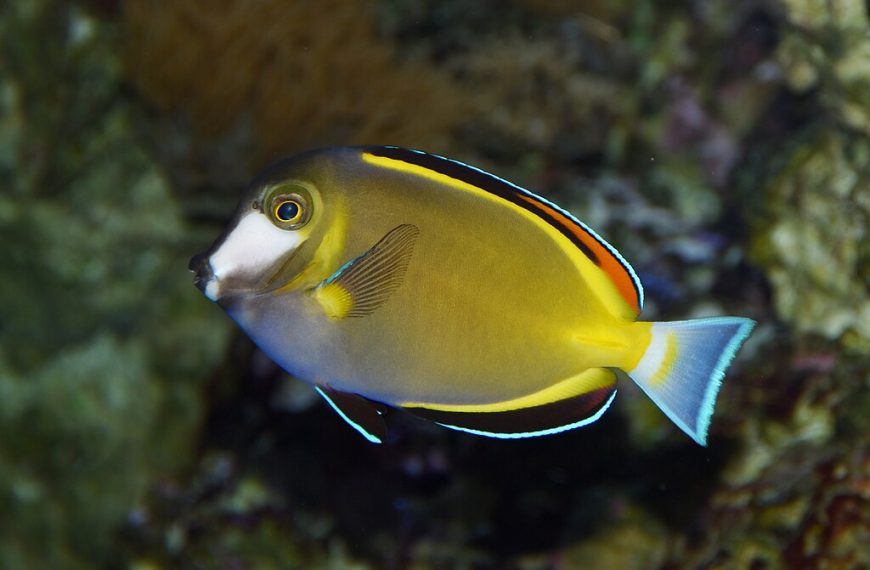

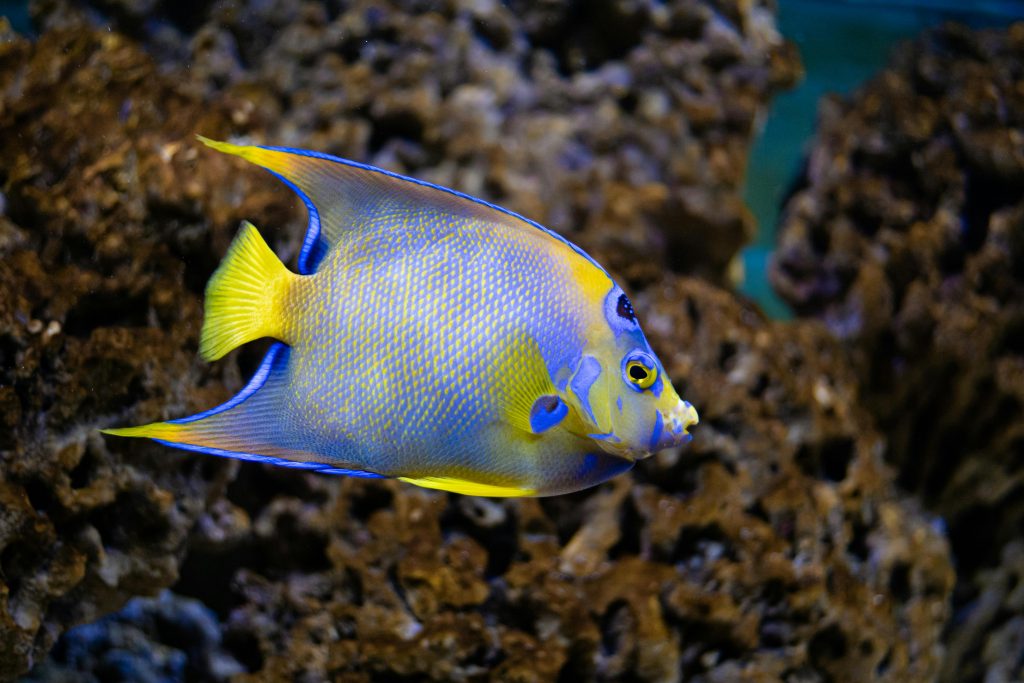
Large angelfish are showpiece fish with big needs. They grow fast and test your system design. A solid plan prevents aggression, disease, and coral damage.
Tank size, layout, and equipment basics
Start with the right tank size. Aim for 180 gallons for one large angel. Use 220–300 gallons for two, if compatible. Many species reach 10–15 inches as adults.
Build for swimming lanes and retreat zones. Use 150–250 pounds of live rock in a 180. Create two to three caves with separate entrances. Leave the front third open for cruising.
Oversize filtration from day one. Target 8–12x turnover per hour in total flow. Use a skimmer rated for 1.5–2x your tank volume. Add a 40–75 gallon sump for stability.
Keep parameters stable and boring. Maintain 76–78°F, salinity 1.025–1.026, and pH 8.1–8.4. Keep ammonia and nitrite at 0 ppm. Try for nitrate 5–20 ppm and phosphate 0.03–0.10 ppm.
- Use a heater controller and two smaller heaters for redundancy.
- Run activated carbon and change it every 2–4 weeks.
- Plan electrical load and drip loops before filling the tank.
If you need help sizing gear, review our sump setup guide. It covers baffles, return pumps, and noise control. Also, check protein skimmer sizing for realistic ratings.
Choosing species and managing temperament
Not all large angels behave the same. Emperor and Blueface can be bold and territorial. Majestic and Scribbled can be calmer in big tanks. Pass on thin, pinched-belly specimens at the store.
Add the angelfish at the right time. Introduce it after peaceful fish establish routines. Add it before the most aggressive tangs and triggers. Use an acclimation box for 2–5 days to reduce attacks.
Stock with intent and a backup plan. Keep one large angel per tank in most cases. Two can work in 8-foot tanks with heavy rockwork. Expect risk with two similar body shapes.
Watch for common aggression signals. Look for flared fins and repeated side-swipes. Torn fins often start at feeding time. Add extra nori clips and spread food across the tank.
- Rearrange a few rocks before adding a new angel.
- Feed small amounts 2–3 times daily during introductions.
- Keep a fish trap ready for fast removals.
For community planning, see our reef fish compatibility article. It helps you avoid common pairing mistakes. It also explains why “semi-aggressive” can still mean trouble.
Feeding, reef safety, and long-term care
Large angels need frequent, varied feeding. Offer food twice daily at minimum. Add a third small feeding for new arrivals. Mix frozen mysis, chopped clam, and quality pellets.
Add plant matter and sponge-based foods. Use nori sheets 4–6 days per week. Offer an angelfish formula with sponge several times weekly. This supports color and reduces grazing on corals.
Reef safety is never guaranteed. Many angels nip at LPS, zoas, and clam mantles. Test with cheap frags first. Keep corals well fed to reduce temptation.
Quarantine prevents most disasters. Run a 40–55 gallon QT for large angels. Observe for 30 days and treat as needed. Common issues include ich, flukes, and bacterial sores.
- Match QT salinity and temperature before transfer.
- Use PVC elbows for shelter and stress reduction.
- Log feeding response and feces to spot parasites early.
Common mistakes are easy to fix. Do not chase “zero nitrate” in fish systems. Do not underfeed to control algae. Instead, export nutrients with skimming and weekly 10–15% water changes.
Large angels reward patience and stable care. Build a big, filtered tank with smart rockwork. Choose compatible tankmates and feed with variety. Do that, and your angelfish will thrive for years.
Sources: Scott W. Michael, Marine Fishes (TFH); Fenner, The Conscientious Marine Aquarist (TFH); Delbeek & Sprung, The Reef Aquarium Vol. 1–3.
Was this helpful?
Related Posts
Dragonets Fish Care
Dragonets are beautiful reef fish, but they need mature tanks and steady food sources. Learn how to keep…
 By
By
Lighting For Aquarium
Lighting for Aquarium: Getting Saltwater Illumination Right Lighting for a saltwater aquarium is about much more than simply…