Lighting for Aquarium: Getting Saltwater Illumination Right
Lighting for a saltwater aquarium is about much more than simply making your tank look bright. The right spectrum, intensity, and photoperiod directly affect coral growth, fish health, algae control, and how natural your reef looks in the room. Whether you keep a simple fish-only system or a thriving mixed reef, dialing in your lighting will make everything in the tank look and live better.
Choosing the Right Type of Aquarium Lighting
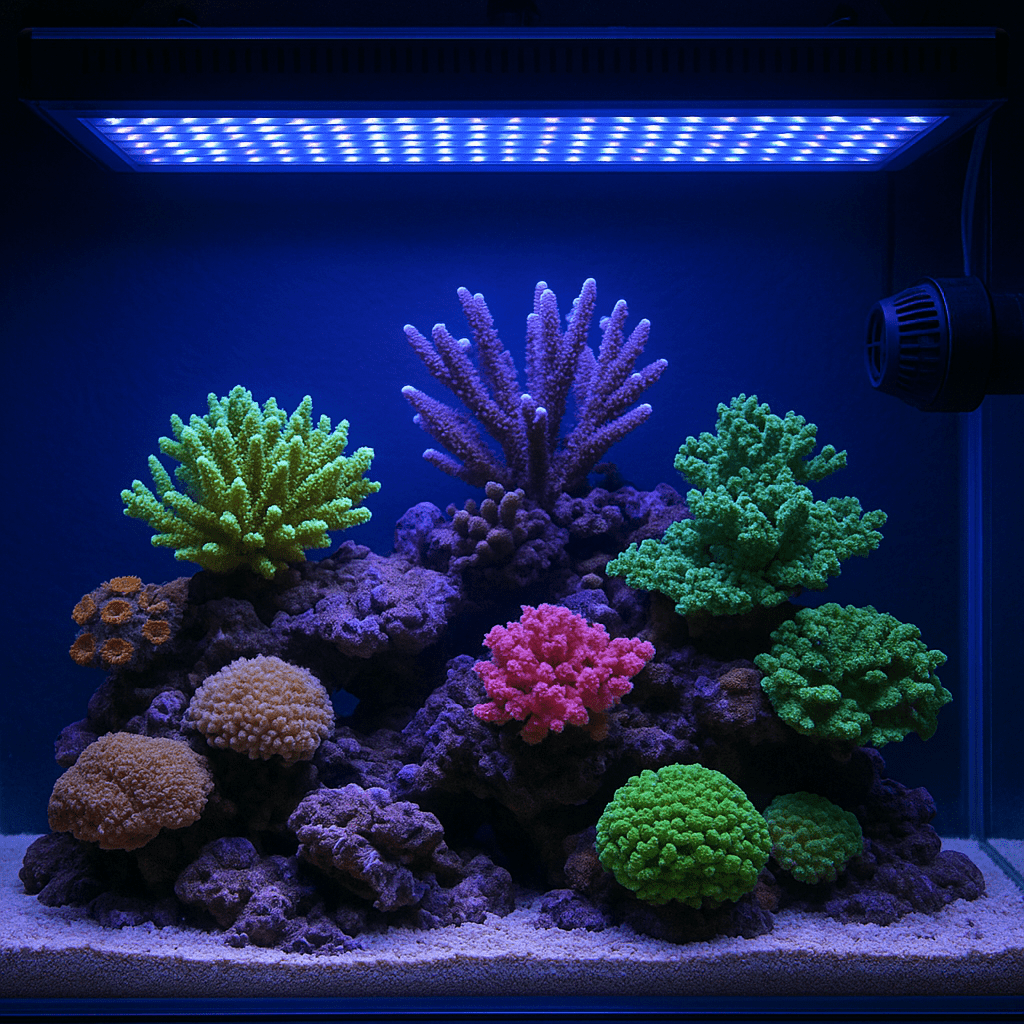
Most modern saltwater hobbyists use LED lights because they run cool, are energy efficient, and offer fine control over spectrum and intensity. T5 fluorescent and metal halide still work well but are less common due to heat and power use. When picking a fixture, match it to your tank’s dimensions and your livestock goals.
Match Light to Your Tank Style
- Fish-Only (FO) or FOWLR: You can use lower-intensity LEDs with a focus on color rendering. PAR is less critical, but you still want a pleasant, natural look. A simple full-spectrum LED bar is usually enough.
- Soft Coral & LPS: Look for reef-capable LEDs that provide a strong blue spectrum (around 420–470 nm) and moderate PAR. These corals typically thrive with mid-level light placed in the middle of the rockwork.
- SPS-Dominant Reefs: You’ll need high-output reef LEDs, often multiple fixtures or a hybrid setup, to deliver strong PAR at the top of the tank. Expect higher cost and more careful tuning.
For more help planning your system before buying equipment, see our guide on setting up a saltwater aquarium.
Spectrum, PAR, and Photoperiod Explained
Corals host zooxanthellae algae that use light for photosynthesis. This is why spectrum and intensity matter so much in reef tanks.
Spectrum: Why Blue is King
- Blue and violet wavelengths (roughly 400–470 nm) penetrate water deeply and drive photosynthesis.
- White channels fill in the spectrum so your fish and rockwork don’t look washed-out or overly blue.
- Red and green should be used sparingly; too much can fuel nuisance algae growth.
A common reef-friendly approach is a blue-heavy schedule during most of the day with a modest amount of white added for a few hours to create a natural midday look.
PAR and Coral Placement
PAR (Photosynthetically Active Radiation) measures usable light for photosynthesis. While exact targets vary by species, these ranges are a helpful starting point:
- Soft corals & many LPS: 50–150 PAR
- High-light LPS & lower SPS areas: 150–250 PAR
- SPS at the top: 250–350+ PAR
If you don’t own a PAR meter, use coral behavior as feedback: extended polyp extension, steady growth, and good coloration usually indicate that your lighting is in the right range. For details on where to place different species, check our article on coral placement in the reef tank.
Photoperiod: How Long Should Lights Be On?
Most reef tanks do well with 8–10 hours of main lighting plus gentle ramp-up and ramp-down periods. A sample schedule:
- 1–2 hours: low-intensity blue ramp-up (simulate sunrise)
- 6–8 hours: full intensity (daylight period)
- 1–2 hours: low-intensity blue ramp-down (simulate sunset)
Nighttime should be mostly dark. If you use moonlights, keep them very dim to avoid stressing fish and invertebrates.
Practical Tips for Stable, Healthy Lighting
- Acclimate corals to new lights: Start at 30–50% intensity and increase slowly over 2–4 weeks to avoid bleaching.
- Maintain your fixtures: Clean salt creep and dust from lenses and splash guards monthly so output stays consistent.
- Use a timer or controller: Consistency is key; automated schedules prevent accidental long days that fuel algae.
- Balance light with nutrients: Strong light without adequate nutrients can pale corals; too much light with high nutrients can explode algae.
Lighting is a tool, not a magic fix. Combine proper light with good water quality, stable parameters, and thoughtful stocking for the best results.
By choosing a fixture that matches your tank, tuning spectrum and intensity for your livestock, and keeping a stable photoperiod, you’ll create a vibrant, natural-looking reef that’s enjoyable day and night. To round out your system planning, also review our checklist on essential saltwater aquarium equipment so your lighting works in harmony with filtration and flow.
Sources
- Borneman, E. H. Aquarium Corals: Selection, Husbandry, and Natural History. TFH Publications.
- Delbeek, J. C., & Sprung, J. The Reef Aquarium series. Ricordea Publishing.
- Dana Riddle, articles on coral photobiology and PAR in reef aquarium literature.
Was this helpful?
Related Posts

Dragonets Fish Care
Dragonets are beautiful reef fish, but they need mature tanks and steady food sources. Learn how to keep…
 By
By
Ocellaris Clownfish (Amphiprion ocellaris)
Photo by Rachel Claire Few saltwater fish are as iconic—or as beginner friendly—as the Ocellaris Clownfish (Amphiprion ocellaris).…