Nutrient control in reef tanks is one of those topics that separates a good-looking aquarium from a truly thriving one. Too many nutrients and you’re battling algae and dull corals; too few and your corals starve, lose color, and recede. The goal isn’t zero nutrients, but a stable, balanced level that keeps both corals and beneficial bacteria happy.
Understanding Nitrates and Phosphates in Reef Aquariums
When reef keepers talk about “nutrients,” they’re usually referring to nitrate (NO3) and phosphate (PO4). These are byproducts of feeding and waste breakdown, and they fuel both coral growth and nuisance algae.
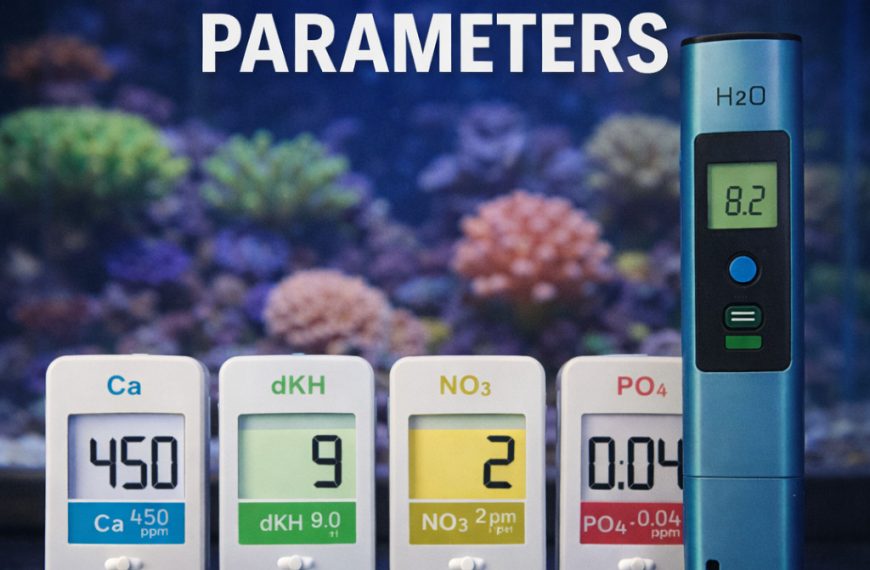
Target Ranges for a Healthy Reef
- Nitrate: ~2–20 ppm for mixed reefs, 2–10 ppm for SPS-heavy systems
- Phosphate: ~0.02–0.10 ppm, depending on coral load and lighting
Ultra-low readings might sound attractive, but many hobbyists see better color and growth once they raise nutrients into a reasonable range. If you’re unsure how this ties in with your overall setup, check out our guide on reef tank parameters for a broader overview.
Practical Ways to Control Nutrients
Good nutrient control starts with how much you put into the tank, then how efficiently your system processes and exports it.
1. Smart Feeding and Stocking
- Feed small amounts that fish finish in 30–60 seconds.
- Rinse frozen foods to remove excess juices rich in phosphates.
- Avoid overstocking; more fish = more waste = more nutrients.
Tip: If you’re constantly fighting high nutrients, track feeding for a week. Most reef keepers discover they’re feeding more than they think.
2. Mechanical and Biological Filtration
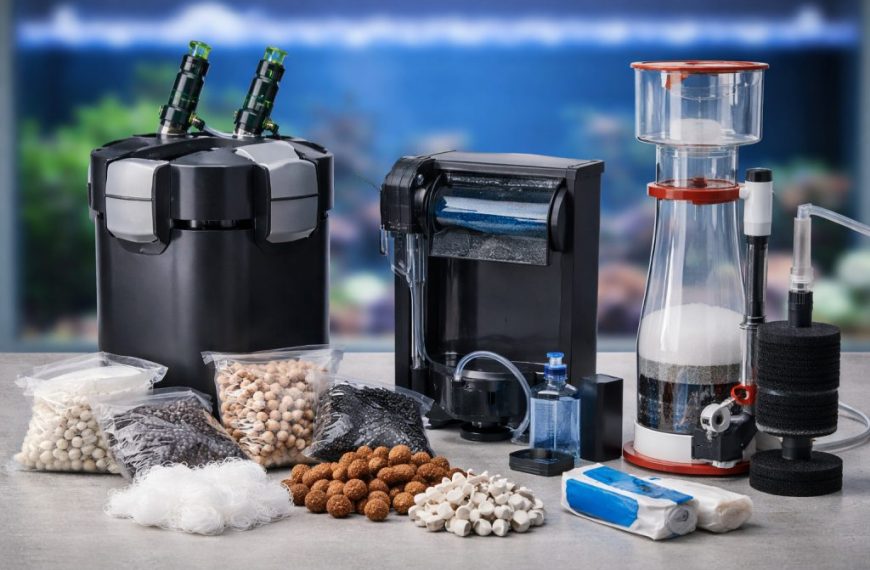
- Protein skimmer: A properly sized skimmer removes dissolved organics before they break down into nitrate and phosphate.
- Filter socks or rollers: Catch solid waste; change or rinse them every 2–3 days to prevent trapped debris from decomposing.
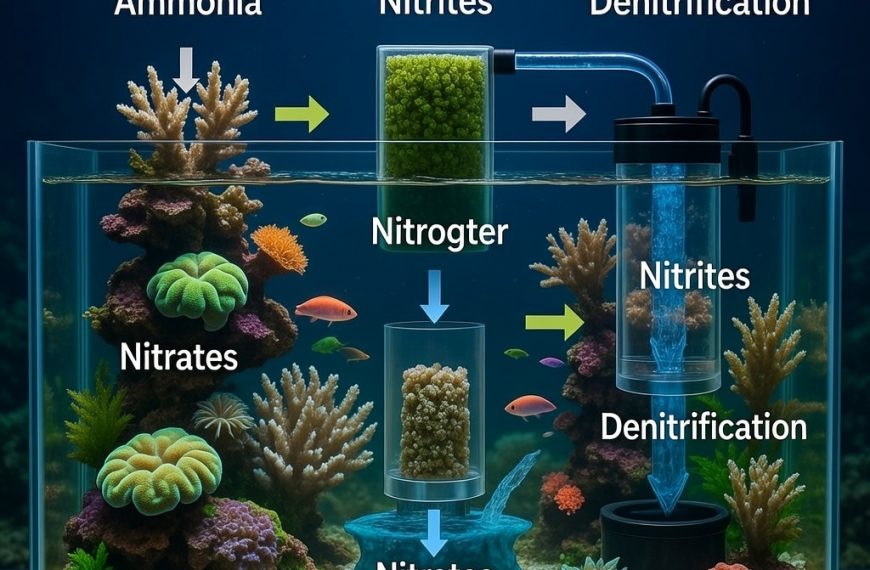
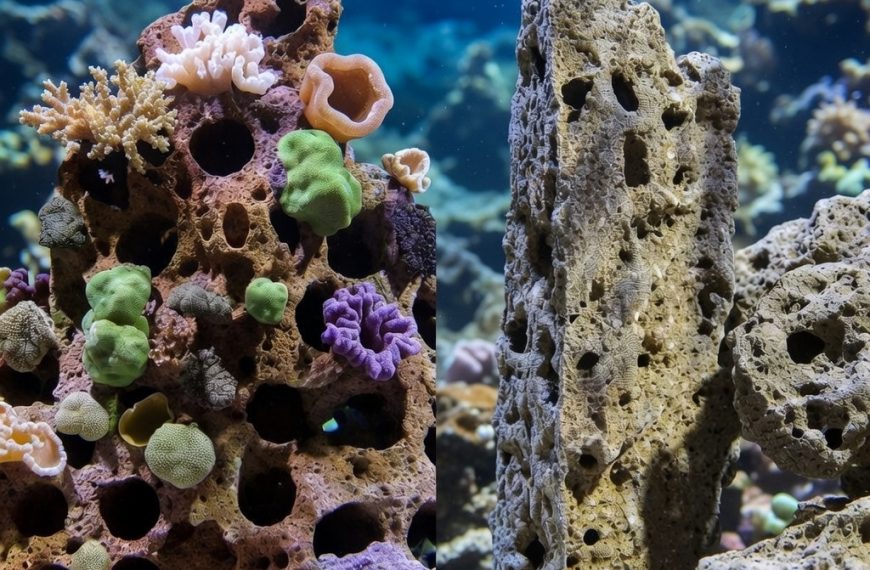
- Live rock and bacteria: Provide surface area for nitrifying and denitrifying bacteria to convert ammonia → nitrite → nitrate → nitrogen gas.
If you’re still planning your system, our article on reef tank filtration basics walks through how these pieces fit together.
3. Refugiums, Media, and Water Changes
- Refugium with macroalgae: Chaetomorpha and similar algae consume nitrate and phosphate; harvest regularly to export nutrients.
- GFO or phosphate resin: Great for lowering phosphate, but use cautiously to avoid stripping it too fast.
- Carbon dosing (vodka, vinegar, commercial blends): Feeds bacteria that consume nitrate and phosphate, which are then removed by your skimmer.
- Water changes: Simple, reliable nutrient export and trace element replenishment.
Monitoring and Adjusting for Long-Term Stability
Regular testing is the backbone of nutrient control. Use reliable nitrate and phosphate test kits or digital meters and log results weekly. When you notice a trend—nutrients creeping up or bottoming out—adjust one factor at a time:
- Reduce or increase feeding slightly.
- Clean or tune your skimmer.
- Add or remove media, or adjust refugium lighting duration.
For a step-by-step approach to balancing all major parameters together, see our reef tank maintenance schedule guide.
In the end, nutrient control in reef tanks is about consistency, not perfection. Aim for stable, moderate nitrate and phosphate levels, test regularly, and make gradual changes. Your reward will be clearer water, healthier fish, and corals that show their best color and growth over the long term.
Sources
- Borneman, E. H. (2001). Aquarium Corals: Selection, Husbandry, and Natural History. TFH Publications.
- Sprung, J., & Delbeek, J. C. (1994–2005). The Reef Aquarium Vol. 1–3. Ricordea Publishing.
- Holmes-Farley, R. (2002–2010). Reef Chemistry articles. Advanced Aquarist & Reefkeeping Magazine.
 By
By