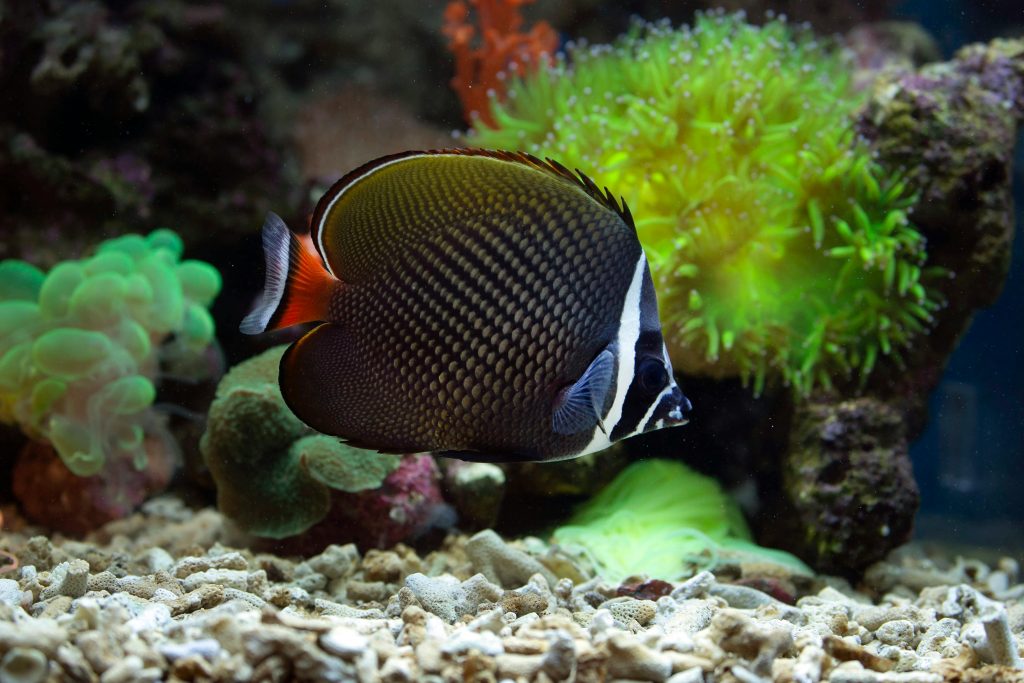
The Pakistan Butterflyfish, Chaetodon collare, is a striking marine fish with bold bands and elegant movement. It is best kept by aquarists with some experience. This species needs a mature tank, stable water, and careful feeding. It is not considered reef safe with many corals and small invertebrates.
This guide explains how to care for the Pakistan Butterflyfish in captivity. You will learn about tank size, aquascaping, diet, behavior, compatibility, and common problems. Many hobbyists buy this fish for its beauty, then struggle with feeding or coral nipping. Good planning makes a huge difference. With the right setup and realistic expectations, this butterflyfish can become a healthy and impressive display fish in a fish-only or carefully managed mixed marine aquarium.
Quick Reference Care Table
| Scientific name | Chaetodon collare |
| Common name | Pakistan Butterflyfish |
| Care level | Moderate |
| Temperament | Peaceful to semi-aggressive |
| Adult size | Up to 7 inches |
| Minimum tank size | 125 gallons |
| Diet | Omnivore with meaty foods |
| Reef safe | No, may nip corals and invertebrates |
| Temperature | 75 to 79°F |
| Salinity | 1.023 to 1.026 |
| pH | 8.1 to 8.4 |
| Water flow | Moderate |
| Lighting | Moderate to bright |
This table gives a fast overview. The details below matter even more. Butterflyfish often look hardy at the store. Some still fail in poor setups. Focus on stability, tank maturity, and feeding response before purchase.
Natural Habitat
The Pakistan Butterflyfish occurs in the Indian Ocean. It is found around coral-rich coastal reefs. Its range includes areas near Pakistan, India, Sri Lanka, and nearby reef systems. In the wild, it spends much of its day picking at reef surfaces. It searches for small invertebrates, coral polyps, worms, and other tiny food items.
This natural feeding style explains many aquarium challenges. The fish is active, observant, and always looking for food. It does not thrive in sterile tanks. It prefers mature rockwork with natural growth. Wild fish also use reef structure for security. They weave through rock crevices when startled. A bare tank with little cover often causes stress. Stress leads to poor feeding and disease.
Understanding its habitat helps you build a better home aquarium. Think established marine system, not a new tank. Think natural grazing behavior, not just one daily feeding. That mindset improves long-term success.
Aquarium Setup
A 125-gallon tank is the practical minimum for one adult Pakistan Butterflyfish. Larger tanks are better. This fish is active and needs room to cruise. Long tanks work better than tall tanks. Swimming length matters.
Use plenty of live rock or mature reef rock. Build caves, arches, and visual breaks. Leave open water in front for swimming. Avoid packing the tank too tightly. The fish should move easily around the aquascape. Secure all rockwork well. Butterflyfish can dart suddenly when frightened.
Stable water quality is critical. Ammonia and nitrite must stay at zero. Nitrate should remain low, though this fish is not as delicate as some obligate coral feeders. Strong filtration helps. A protein skimmer is strongly recommended. Consistent water changes support long-term health. Quarantine is also important. Many butterflyfish arrive stressed and can carry parasites.
If you are still planning your marine system, read our guides on saltwater aquarium setup, live rock for reef tanks, and reef tank water parameters. These basics matter before adding sensitive fish.
Lighting Requirements
The Pakistan Butterflyfish does not need specialized lighting for its own health. Moderate to bright lighting works well. Lighting choice depends more on the tank style. In a fish-only system, standard marine lighting is enough. In a mixed tank, lighting may be stronger because of corals.
Still, lighting affects behavior. Very harsh lighting in a sparse tank can make the fish feel exposed. Rock ledges and shaded zones help. These allow the fish to retreat when needed. A natural day and night cycle also reduces stress. Sudden light changes can startle butterflyfish. Using ramping LEDs or room lighting before the tank lights switch on helps.
If coral growth is part of your plan, remember this species may nip many sessile invertebrates. Strong reef lighting will not change that behavior. Always choose livestock based on compatibility first, then optimize lighting around the full tank plan.
Water Flow
Moderate water flow is ideal. The Pakistan Butterflyfish comes from reef areas with regular movement, but it should not fight a nonstop blast. Aim for varied flow across the tank. This keeps oxygen levels high and waste suspended for filtration.
Create calmer areas behind rockwork. The fish should be able to rest without effort. Random flow patterns are better than one direct stream. If the fish avoids half the tank, review your powerhead placement. Excessive flow can make feeding harder. Food may blow away before the fish can eat it.
Good flow also supports cleaner rock surfaces and healthier overall water quality. That matters because butterflyfish are poor candidates for neglected systems. Keep detritus low. Keep oxygen high. Keep the environment stable.
Feeding
Feeding is the most important part of Pakistan Butterflyfish care. Many losses happen because the fish never adapts to prepared foods. Always ask to see it eat before buying. This is one of the best tips for success.
Offer small meals two to three times daily. Start with frozen mysis shrimp, finely chopped clam, enriched brine shrimp, blackworms if available, and high-quality frozen marine blends. Some individuals accept pellets later. Others never do. Nori can be offered, but this is not a primary food. Variety matters. Frequent feeding helps maintain weight and immune strength.
Use a feeding station or target feed if tankmates are aggressive. Watch the belly line. A pinched stomach is a warning sign. Newly imported fish may need extra encouragement. Fresh clam on the half shell sometimes triggers feeding. Mature live rock also helps by offering natural grazing between meals.
For more help with marine fish diets, see our articles on best food for saltwater fish and quarantine for saltwater fish.
Compatibility
The Pakistan Butterflyfish is usually peaceful with unrelated fish. It can live with tangs, wrasses, angelfish of suitable temperament, and many community marine species. Avoid very aggressive tankmates. Triggers, large dottybacks, or territorial established fish may intimidate it. Stress can stop feeding fast.
Use caution with other butterflyfish. In very large tanks, some pairings can work. In average home aquariums, competition and territorial issues are common. It is safer to keep one unless you have extensive space and experience.
This species is not reef safe in the usual sense. It may nip LPS corals, soft corals, zoanthids, feather dusters, tube worms, and clam mantles. Some individuals behave better than others. None are fully trustworthy. If your goal is a coral-packed reef tank, this fish is a risky choice. It fits best in fish-only systems with live rock, or in selective display tanks where occasional nipping is acceptable.
Step-by-Step Acclimation Guide
Proper acclimation improves the odds with sensitive butterflyfish. Follow a simple process and avoid rushing.
- Prepare a quarantine tank before purchase. Use established biofiltration.
- Dim the lights before opening the transport bag.
- Float the bag for temperature matching for about 15 minutes.
- Transfer the fish and bag water to a clean bucket.
- Use slow drip acclimation for 30 to 45 minutes.
- Do not add store water to your tank if possible.
- Move the fish gently into quarantine.
- Offer hiding places and keep the environment calm.
- Wait several hours before the first feeding attempt.
- Observe breathing, swimming, and feeding response daily.
Quarantine gives you time to monitor parasites, bacterial issues, and appetite. It also protects your display tank. Butterflyfish often arrive with stress-related health problems that are easier to manage early.
Propagation and Breeding
The Pakistan Butterflyfish is not a species most hobbyists breed in home aquariums. Like many butterflyfish, it has complex spawning behavior and pelagic larval stages. These larvae are extremely difficult to raise. Commercial captive breeding is also uncommon.
Can hobbyists breed this species?
In practical terms, no. Most home aquarists should not expect to breed Chaetodon collare. Pair formation is difficult. Larval care is even harder. Success requires specialized systems, live foods, and advanced marine breeding knowledge.
What this means for aquarists
Since captive-bred specimens are rare, careful selection of wild imports matters. Buy from reputable dealers. Choose alert fish with full bodies and strong feeding response. Those factors matter far more than any breeding plan.
Common Problems
Refuses to eat
This is the most common issue. Newly imported fish may ignore dry foods. Stress, bullying, and poor acclimation often contribute. Offer clam, mysis, and other meaty frozen foods. Reduce competition during feeding. Provide more cover. Check for rapid breathing or visible parasites.
Nipping corals or clam mantles
This behavior is normal for the species. It is not always a hunger issue. Even well-fed individuals may pick at sessile invertebrates. If coral safety is important, remove the fish or move it to a fish-only system. There is no guaranteed fix.
Rapid breathing
Rapid breathing can signal ammonia exposure, shipping stress, low oxygen, or parasites. Test water immediately. Increase aeration. Review temperature and salinity. Quarantine allows closer observation and treatment if needed.
Weight loss over time
Weight loss usually means the fish is not getting enough calories, or internal issues are present. Feed more often. Use richer frozen foods. Watch whether aggressive tankmates steal food. A fish that eats but keeps thinning may need closer health evaluation.
Frequently Asked Questions
Is the Pakistan Butterflyfish reef safe?
No. It may nip corals, worms, and clam mantles. It is a risky choice for reef tanks.
How big does Chaetodon collare get?
Adults can reach about 7 inches. Give them enough swimming room from the start.
What is the minimum tank size?
A 125-gallon tank is the recommended minimum. Larger systems are more stable and more forgiving.
Can it live with clownfish and tangs?
Usually yes, if the tank is large and tankmates are not overly aggressive. Always monitor feeding time.
Should beginners keep this fish?
It is better for beginners who already understand marine stability and quarantine. Complete newcomers may struggle with feeding and compatibility issues.
Final Thoughts
The Pakistan Butterflyfish is beautiful, active, and full of character. It can do well in captivity, but only with the right expectations. Choose a healthy specimen that already eats. Provide a large, mature tank with secure rockwork and stable water. Feed small meals often. Do not expect full reef safety. If you respect its natural behavior, Chaetodon collare can be a rewarding show fish for the right marine aquarium.
Was this helpful?
Related Posts
Our Emergency Hospital Kit Checklist
Our emergency hospital kit checklist helps you act fast. Stock the right gear, meds, and tests to stabilize…
 By
By
Mustard Guttatus (Acanthurus guttatus)
Mustard guttatus is a large, active tang that needs a 180-gallon tank, strong flow, and daily algae feeding…