

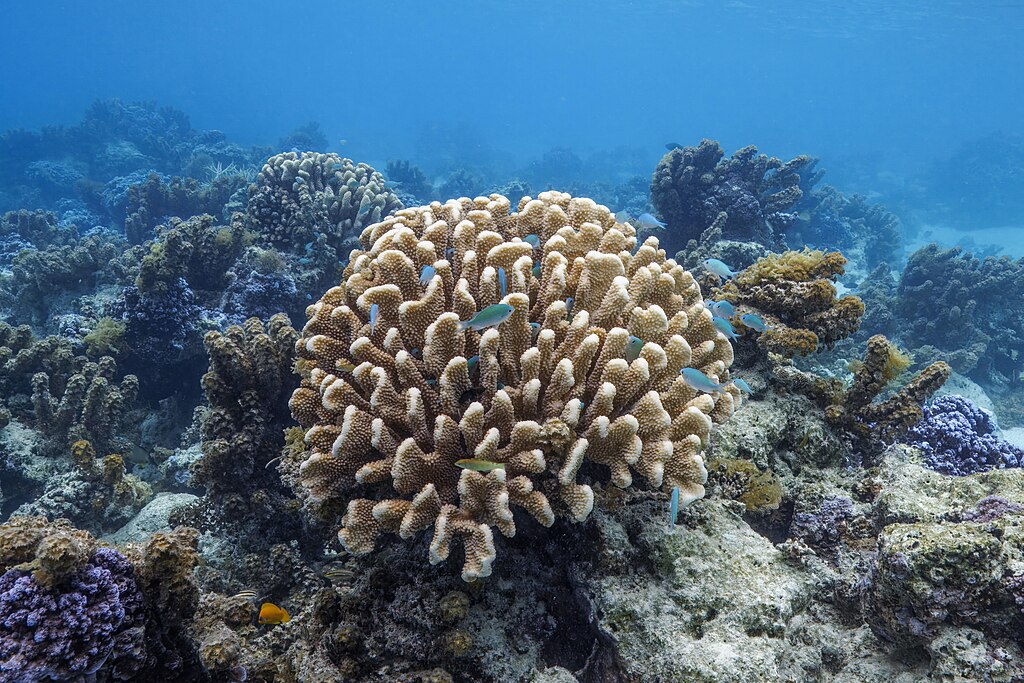
Pocillopora corals are often overlooked in favor of Acropora and Montipora, but these bushy, fast-growing SPS can be some of the most rewarding corals in a reef tank. With the right flow, light, and stability, Pocillopora will branch out into dense colonies that add movement and texture to your aquascape. This guide covers practical Pocillopora care so you can keep these corals thriving long-term.
Lighting, Flow, and Placement for Pocillopora
Pocillopora are small-polyp stony (SPS) corals that generally prefer moderate to high light and strong, turbulent flow. They’re often a bit more forgiving than many Acropora, making them a solid “next step” SPS once you’ve had success with easier species.
Lighting Requirements
- PAR range: Aim for roughly 150–250 PAR for most Pocillopora varieties.
- Placement: Mid to upper rockwork is usually ideal, depending on your lighting intensity.
- Acclimation: Start new frags lower and gradually move them up over 2–3 weeks to avoid light shock.
If you’re new to SPS lighting, it can help to review your overall soft coral care approach first, then slowly transition into higher light species like Pocillopora.
Flow and Polyp Extension
- Flow type: Random, turbulent flow is best. Avoid a constant, direct jet that blasts tissue on one side of the colony.
- Flow strength: Moderate to strong; polyps should sway and flutter, not be pinned in one direction.
- Placement tips: Mount Pocillopora where intersecting flow patterns create alternating currents.
Good flow helps deliver oxygen and nutrients, removes waste, and reduces the risk of algae or detritus settling on the branches.
Water Parameters and Feeding for Healthy Growth
Like all SPS, Pocillopora thrive in stable, clean water. They are often more tolerant than delicate Acropora, but they still demand consistency. If you’ve already dialed in your SPS coral care routine, Pocillopora should fit right in.
Key Water Parameters
- Temperature: 76–78°F (24–26°C)
- Salinity: 1.025–1.026 specific gravity
- Alkalinity: 8–9.5 dKH, with minimal daily swings
- Calcium: 400–450 ppm
- Magnesium: 1300–1400 ppm
- Nitrate: 2–10 ppm
- Phosphate: 0.02–0.08 ppm
Stability matters more than chasing exact numbers. Use reliable test kits and adjust dosing slowly. If your tank is new, consider focusing on more forgiving species first; our beginner saltwater corals guide is a good starting point before committing to larger SPS colonies.
Feeding and Nutrient Balance
Pocillopora rely heavily on their zooxanthellae for energy but also benefit from supplemental feeding, especially in ultra-low nutrient systems.
- Target feed occasionally with fine particle foods (e.g., reef roids–style powders or very small zooplankton).
- Feed at night or when polyps are extended for better capture.
- Avoid overfeeding; watch for film algae or rising nutrients as a sign to cut back.
Growth, Fragging, and Common Pocillopora Issues
Pocillopora are known for their fast, bushy growth. That’s a plus for filling in rockwork, but it also means you’ll likely be fragging and managing space sooner than you think.
Growth Behavior and Fragging Tips
- Growth form: Branching, bushy colonies that can shade neighbors below.
- Fragging: Use bone cutters or a coral saw to take small branch tips; glue frags to plugs or small rubble.
- Spread: Pocillopora can sometimes pop up from stray polyps in other areas of the tank; remove unwanted sprouts early.
Common Problems to Watch For
- Tissue recession or bare skeleton: Often linked to rapid swings in alkalinity, temperature, or salinity.
- Brown or dull coloration: Usually from low light, elevated nutrients, or both.
- Bleaching: Too much light, sudden changes, or severe parameter stress.
Hobbyist tip: Make only one major change at a time—whether it’s lighting, dosing, or flow—and then observe your Pocillopora for at least a week before adjusting again.
With balanced light, strong random flow, and stable water chemistry, Pocillopora can become one of the most resilient and visually striking SPS corals in your reef. They reward patience with dense, colorful branches that add both motion and structure to your aquascape—making them a fantastic choice for reef keepers ready to step deeper into the world of SPS corals.
Sources
- Borneman, E. H. Aquarium Corals: Selection, Husbandry, and Natural History. TFH Publications.
- Sprung, J. Corals: A Quick Reference Guide. Ricordea Publishing.
- Advanced hobbyist discussions and PAR/parameter ranges compiled from long-term reef-keeping forums and reef club experience.
Was this helpful?
Related Posts
Protein Skimmer Reef Tank Guide
Learn how a protein skimmer works, how to size one, and how to tune it for a cleaner,…
 By
By
Reef Aquarium Water Parameters
Learn the ideal reef aquarium water parameters, safe ranges, and how to keep salinity, alkalinity, nutrients, and pH…
_with_blue_damselfish_(Pomacentrus_pavo)_Moorea.jpg)