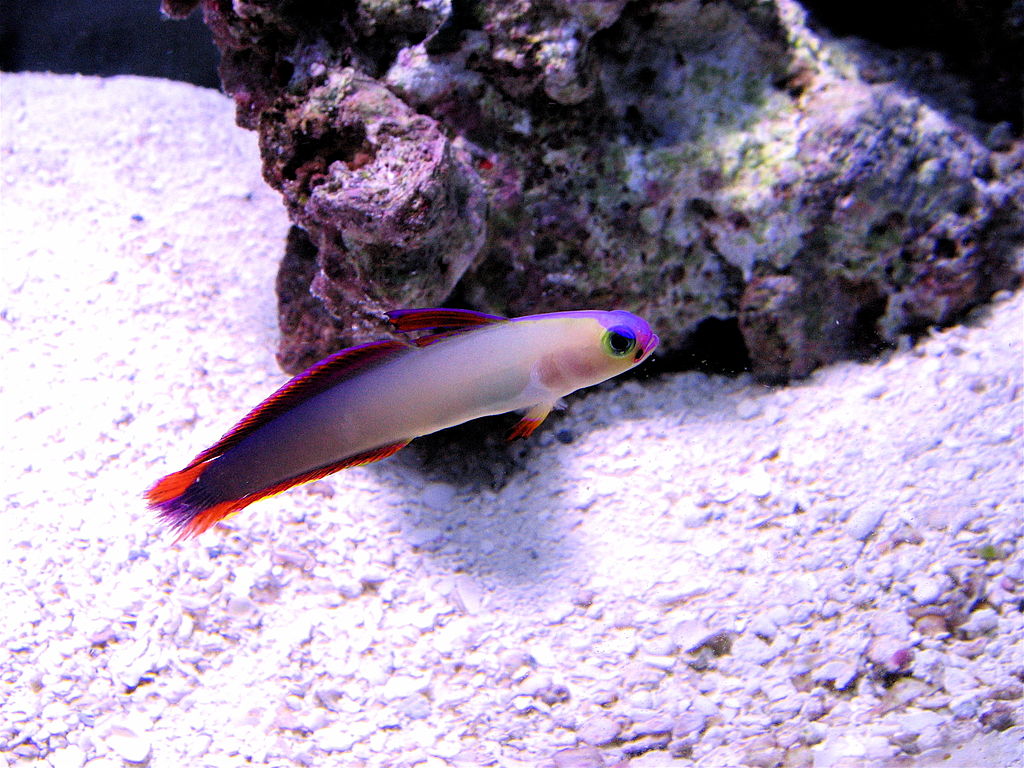
Purple firefish are calm, elegant reef fish with bold color. They also startle easily and jump. With the right setup, they thrive and show great personality.
Species overview and tank requirements
Nemateleotris decora reaches about 3.5 inches in most aquariums. It prefers quiet tanks with stable parameters. Plan your system around its skittish nature.
Use a 20-gallon tank for one fish. A 30-gallon tank works better for a pair. Provide open water for hovering and rockwork for quick retreats. Add a sand bed so it feels secure.
Keep temperature at 76–79°F. Aim for salinity at 1.025 specific gravity. Maintain pH at 8.1–8.4 and alkalinity at 8–9 dKH. Keep nitrate under 10 ppm and phosphate under 0.10 ppm.
Flow should be moderate and not blasting its perch. Use a tight lid with no gaps. Firefish can clear small openings during a scare. If you need help planning equipment, see our reef tank setup basics.
- Cover every opening around cords and plumbing.
- Add two or more caves with line-of-sight breaks.
- Use a dim ramp-up schedule for new LED lights.
Feeding, acclimation, and daily care
Purple firefish do best with small, frequent meals. Feed 2–3 times per day in smaller portions. This matches their natural plankton picking behavior.
Start with frozen mysis, enriched brine, and finely chopped krill. Add small pellets at 0.5–1 mm once it settles in. Soak foods in vitamins twice weekly for extra support.
Acclimate slowly to reduce stress. Use drip acclimation for 30–45 minutes. Keep the room quiet during release. Turn lights low for the first day.
Quarantine is strongly recommended for 2–4 weeks. Watch for flashing, rapid breathing, and white spots. Many losses come from skipping quarantine. Follow our saltwater fish quarantine guide for a simple plan.
- Target feed near its bolt-hole to build confidence.
- Use a feeding ring to keep food from blowing away.
- Do 10% weekly water changes to keep nitrate low.
Compatibility, pairing, and troubleshooting
Purple firefish are peaceful and reef safe. They mix well with clownfish, gobies, and small wrasses. Avoid aggressive tankmates that rush the water column.
Do not keep two random firefish in small tanks. They may fight until one hides and starves. A bonded pair can work in 30 gallons or more. Add both at the same time when possible.
Common mistakes include bright lights, high flow, and too few hiding spots. Another issue is sudden movement near the glass. This triggers jumping. Add a background and reduce foot traffic if needed.
If it stops eating, check competition and stress first. Test ammonia and nitrite at 0 ppm. Verify temperature swings stay under 1°F daily. If it hides all day, add a second cave and reduce flow near its perch. For broader fish behavior tips, read our reef fish stress signs guide.
- Signs of comfort: hovering, quick feeding response, and regular perching.
- Signs of trouble: clamped fins, gasping, or repeated dashing into corners.
- First fixes: dim lights, improve cover, and increase feeding frequency.
Purple firefish reward calm setups and consistent care. Give them a secure cave, stable water, and a tight lid. Do that, and this shy fish becomes a confident showpiece.
Sources: FishBase (Nemateleotris decora species summary); Scott W. Michael, Marine Fishes; Fenner, The Conscientious Marine Aquarist.
Was this helpful?
Related Posts
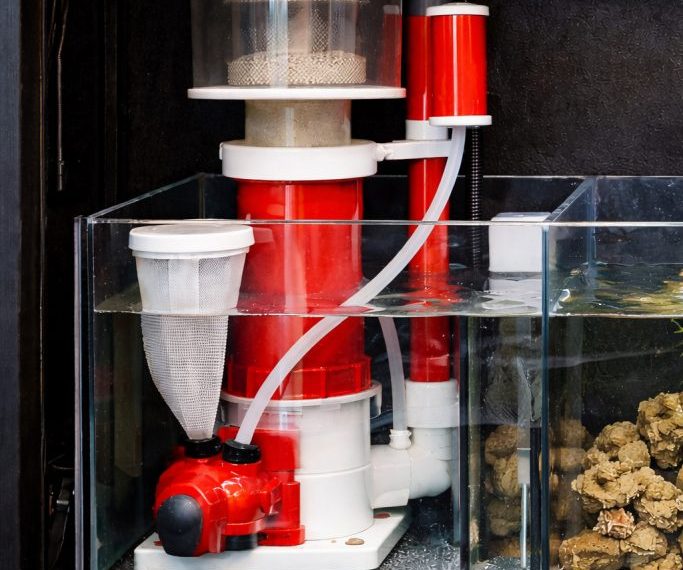
Protein Skimmer Reef Tank Guide
Learn how a protein skimmer works, how to size one, and how to tune it for a cleaner,…
 By
By
Reef Aquarium Water Parameters
Learn the ideal reef aquarium water parameters, safe ranges, and how to keep salinity, alkalinity, nutrients, and pH…