

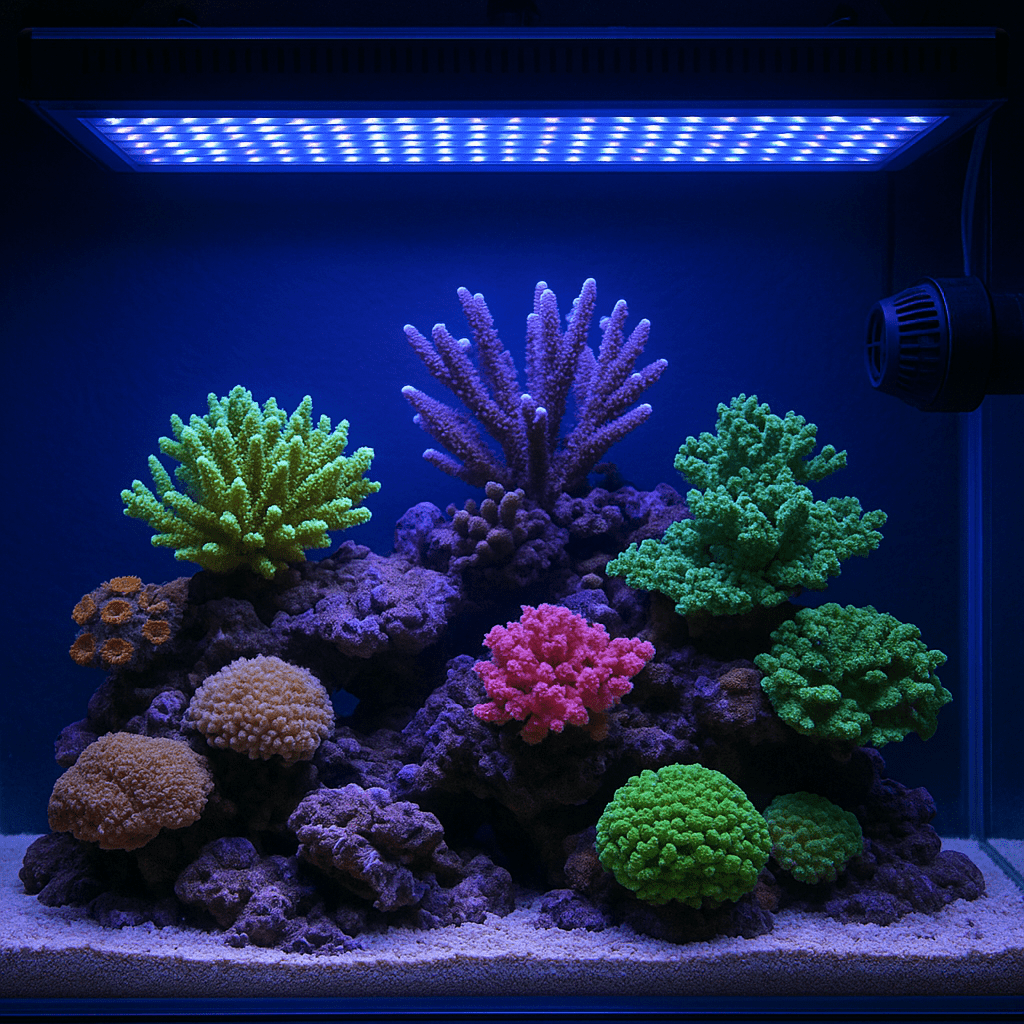
Most reef tanks fail for predictable reasons: rushing the setup, chasing numbers, and adding livestock before the system is stable. The good news is that beginner mistakes are easy to avoid once you understand what a reef aquarium actually needs to mature. This guide breaks down the most common reef tank beginner mistakes and gives practical fixes you can apply today, whether you are running a nano reef or a full-size mixed reef.
1) Adding fish and corals too fast
The number one mistake new reef keepers make is stocking on a calendar instead of based on biological maturity. A reef tank can be “cycled” (ammonia and nitrite read zero) but still be unstable for weeks to months as bacterial populations, microfauna, and algae phases settle in.
Why it causes problems
- Sudden bioload spikes lead to ammonia stress and oxygen swings.
- New tanks commonly hit ugly stages (diatoms, dinos, cyano) that irritate or smother corals.
- Immature tanks have inconsistent pH and alkalinity consumption, which is hard on SPS and LPS.
What to do instead
- Add livestock in phases: clean-up crew first, then hardy fish, then easier corals.
- Wait 2 to 4 weeks between additions so the tank can adjust.
- Track trends, not single test results (nitrate, phosphate, alkalinity, pH).
2) Skipping quarantine (or doing it incorrectly)
Marine ich, velvet, brooklynella, flukes, and bacterial infections can wipe out a new reef quickly. Many beginners assume a “reef-safe” fish from a store is automatically healthy. It is not. Quarantine is less about paranoia and more about protecting your investment and preventing months of frustration.
Common quarantine mistakes
- Quarantining in an uncycled tank without ammonia control.
- Using copper without a reliable copper test kit.
- Skipping observation time and moving fish too soon.
- Not quarantining corals (pests like flatworms, nudibranchs, and aiptasia hitchhike).
Better approach
- Run a simple fish QT: bare tank, heater, sponge filter, PVC elbows, lid.
- Keep detoxifier on hand and test ammonia frequently.
- Dip and inspect corals, and consider a separate coral/invert observation tank.
3) Overreacting to test results (chasing numbers)
Reef chemistry is about stability. Beginners often see a number slightly out of range and immediately add multiple supplements. That can create bigger swings than the original issue, especially with alkalinity and salinity.
What stability looks like
- Salinity steady within 0.001 specific gravity day to day.
- Alkalinity changes slowly (ideally less than 0.3 dKH per day).
- Nitrate and phosphate present and consistent, not bottomed out at zero.
Fix: adjust slowly and one variable at a time
- Confirm results with a second test before making big corrections.
- Make a single change, then re-test after 24 to 72 hours.
- Use water changes for broad corrections instead of stacking additives.
4) Not controlling salinity and evaporation
Evaporation does not remove salt, so salinity rises as water level drops. In small tanks, this can swing quickly and stress fish and corals. Topping off with saltwater is another common mistake that increases salinity over time.
Best practices
- Top off evaporation with fresh RODI water only.
- Use an ATO (auto top-off) if possible, especially for nano reefs.
- Measure salinity with a calibrated refractometer or quality digital meter.
5) Using poor source water (or skipping RODI)
Tap water often contains phosphate, nitrate, silicate, copper, and chloramines. Even if it looks “fine,” it can fuel algae, irritate corals, and introduce heavy metals. This is one of the most expensive beginner mistakes because it leads to ongoing nuisance algae and mysterious coral decline.
What to do
- Use RODI water for mixing salt and for top-off.
- Replace RO membranes and DI resin based on TDS and manufacturer guidance.
- If you buy water, verify it is actually RODI and store it cleanly.
6) Buying livestock that outgrows the tank
Many reef fish are sold small but become large, aggressive, or high-waste animals. Beginners often choose based on looks instead of adult size and behavior, leading to stress, nutrient problems, and compatibility issues.
Examples of common mismatches
- Tangs in tanks under recommended sizes.
- Large angels that nip corals in mixed reefs.
- Triggerfish or hawkfish in peaceful nano communities.
- Too many fish in a new tank, overwhelming filtration.
Fix: plan around adult size and temperament
- Research adult size, diet, and aggression before purchase.
- Stock slowly and leave “bioload room” for coral growth and feeding.
- Choose species known to thrive in your tank size and style.
7) Underestimating flow and oxygenation
Flow is not just about keeping detritus off corals. It delivers oxygen, removes waste, and stabilizes pH by improving gas exchange. New reef keepers often run a single weak pump and wonder why algae blooms, cyanobacteria, and coral recession show up.
Signs you need better flow
- Detritus collects in corners or behind rockwork.
- Cyano mats form in low-flow areas.
- Fish breathe fast at night or hang near the surface.
- Corals stay closed or develop tissue issues on the shaded side.
Fix: aim for varied, turbulent flow
- Use controllable powerheads and alternate patterns if possible.
- Point flow to create randomness, not a constant blast on one coral.
- Keep the surface rippling for gas exchange, especially at night.
8) Poor lighting choices and bad coral placement
Lighting mistakes go both directions: too weak for coral goals, or too strong too fast, causing bleaching. Placement matters just as much as the fixture. Beginners commonly put a new coral in the brightest spot immediately, then wonder why it turns pale.
Better approach
- Match lighting to your coral plan (softies and LPS vs SPS-dominant).
- Acclimate corals to light: reduce intensity or use a ramp-up schedule.
- Place corals based on light and flow needs, not just aesthetics.
9) Overfeeding and ignoring nutrient balance
Overfeeding is a classic reef tank beginner mistake because it feels like “taking care of the fish.” Excess food becomes nitrate and phosphate, fuels algae, and can lower oxygen. On the other hand, many new SPS keepers overcorrect and strip nutrients to zero, which can starve corals and invite dinoflagellates.
Feeding guidelines that work
- Feed what fish consume in 30 to 60 seconds, then adjust.
- Rinse frozen foods if phosphate is an issue, but do not starve the tank.
- Target a stable, measurable nutrient range instead of chasing “zero.”
10) Neglecting maintenance and equipment basics
Reef tanks reward consistency. Skipping small tasks leads to big problems: clogged filters become nitrate factories, dirty pumps lose flow, and neglected test kits give bad data. Many “mystery crashes” trace back to simple maintenance that slipped for a few weeks.
High-impact maintenance habits
- Clean filter socks, sponges, and floss regularly (do not let them rot).
- Empty and clean the skimmer cup and neck to keep performance stable.
- Inspect heaters, ATO sensors, and powerhead intakes for buildup.
- Calibrate salinity tools and replace old test reagents.
11) Not planning for alkalinity, calcium, and magnesium demand
Corals and coralline algae consume alkalinity and calcium as they grow. In a new tank, consumption may be low, then suddenly increase as coral mass grows. Beginners often start dosing without measuring daily consumption, which causes unstable alkalinity and stressed corals.
How to handle it
- Test alkalinity at the same time on consecutive days to find daily usage.
- Start dosing only when water changes no longer hold parameters steady.
- Use a dosing pump for consistency once demand increases.
12) Ignoring pests early
Aiptasia, bubble algae, bryopsis, flatworms, nudibranchs, and vermetid snails are much easier to manage when you catch them early. Beginners often wait until the problem is “bad enough,” but by then it is harder to remove without collateral damage.
Early detection checklist
- Inspect new frags under white light before adding them.
- Look for egg spirals, bite marks, and unusual film or webbing.
- Check at night with a flashlight for hitchhikers.
Quick “do this first” reef tank checklist
If you want the fastest path to a stable reef, focus on these fundamentals before you buy more livestock:
- RODI water + consistent salinity with an ATO
- Strong, varied flow and good surface agitation
- Stable alkalinity (then calcium and magnesium)
- Reasonable nutrients (not too high, not zero)
- Slow stocking and quarantine habits
- Simple, repeatable maintenance routine
FAQ: Reef tank beginner mistakes
How long should I wait before adding corals to a new reef tank?
After the nitrogen cycle completes, many hobbyists wait several weeks and start with hardy soft corals or LPS once nutrients and alkalinity trends are stable.
Is “zero nitrate and zero phosphate” ideal?
Not usually. Many reefs do better with low but detectable nitrate and phosphate. Ultra-low nutrients can lead to pale corals and dinoflagellate issues.
Do I really need an ATO for a nano reef?
It is not mandatory, but it is one of the best upgrades for stability. Small tanks swing salinity quickly, and an ATO prevents daily ups and downs.
What is the most important parameter to keep stable?
Salinity and alkalinity are the big two for most reef tanks. Stability matters more than hitting a perfect number, as long as you stay in a safe range.
Why do new reef tanks get ugly algae phases?
New systems go through succession as microbial communities establish. Diatoms and other blooms are common early on, especially with excess nutrients or silicates.
Final thoughts
Reef keeping is a stability game. Avoiding reef tank beginner mistakes comes down to slowing down, measuring trends, and building good habits around quarantine, RODI water, salinity control, flow, and consistent maintenance. If you make changes gradually and stock patiently, your reef will become easier to manage every month instead of harder.
Was this helpful?
Related Posts
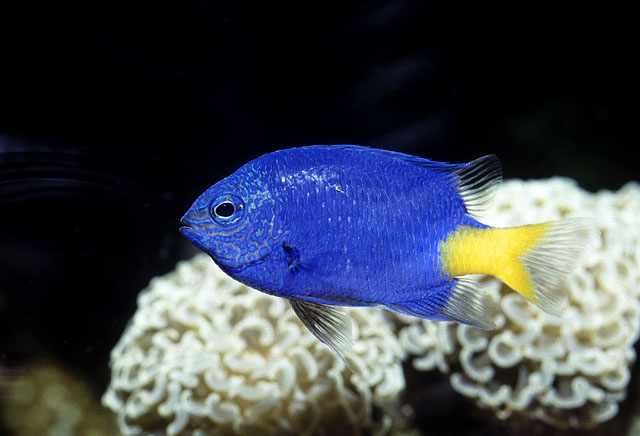
Yellowtail Damselfish (Chrysiptera Parasema)
Yellowtail Damselfish are hardy, colorful, and reef safe, but they can be territorial. Learn their care, feeding, tank…
 By
ByWater Chemistry Basics
Water chemistry basics are the foundation of reef success. Learn the key parameters, target ranges, and simple ways…
[favorite_button]
My Bookmarks:
To see full list click here
[user_favorites user_id="" include_links="true" site_id="" post_types="" include_thumbnails="true" thumbnail_size="thumbnail" include_excerpt="false"]