

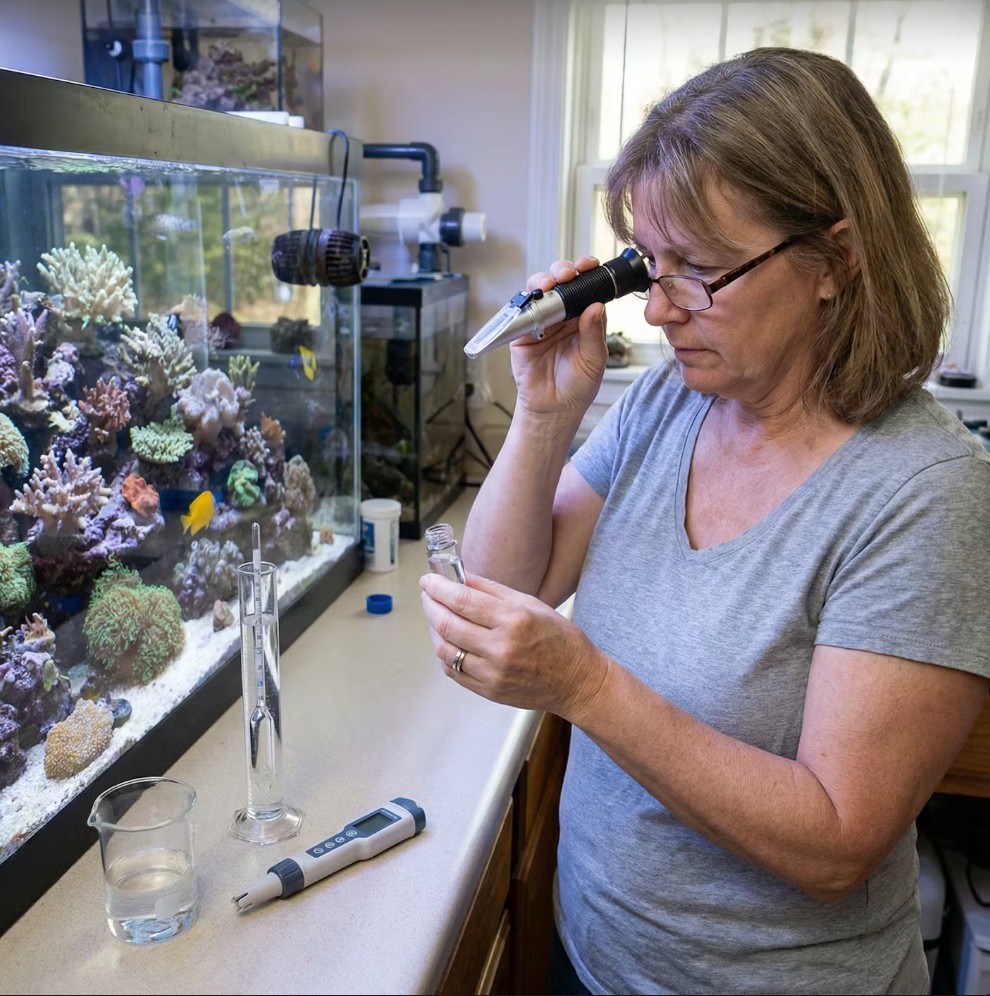
Salinity testing tools help reef keepers measure one of the most important parameters in a marine aquarium. The best tool depends on your budget, accuracy needs, and maintenance habits. For most hobbyists, a quality refractometer or digital salinity meter offers the best balance of precision and ease.
Stable salinity matters as much as the number itself. Corals, fish, and invertebrates all rely on consistent osmotic conditions. Even small swings can stress sensitive animals. In this guide, you will learn how the main salinity testing tools work, how accurate they are, what they cost, and how to use them correctly. We will also cover common mistakes, calibration tips, and which tool makes the most sense for beginner, intermediate, and advanced reef keepers.
Quick Reference Table
| Tool | Typical Accuracy | Ease of Use | Cost | Best For |
|---|---|---|---|---|
| Hydrometer | Low to moderate | Easy | Low | Budget beginners |
| Swing-arm hydrometer | Moderate if clean | Easy | Low | Basic fish-only systems |
| Glass floating hydrometer | Moderate to high | Moderate | Low to moderate | Careful hobbyists |
| Refractometer | High | Easy | Moderate | Most reef keepers |
| Digital salinity meter | High to very high | Very easy | Moderate to high | Convenience and precision |
| Conductivity probe/controller | High when maintained | Moderate | High | Advanced monitoring |
Why Salinity Testing Matters in a Reef Tank
Natural seawater is usually around 35 parts per thousand. That equals a specific gravity near 1.026 at standard reef temperatures. Most reef aquariums do best close to that range. Fish can tolerate some variation. Many corals and invertebrates tolerate much less.
Salinity affects coral tissue health, polyp extension, and skeletal growth. It also changes how other test results behave. Calcium, alkalinity, and magnesium readings all make more sense when salinity is correct. If salinity drifts low, corals may look dull and fail to grow. If it rises too high, snails, shrimp, and other invertebrates often show stress first.
Evaporation is the main reason salinity changes. Water leaves the tank, but salt remains behind. That slowly raises salinity unless you replace evaporated water with fresh RO/DI water. Water changes can also cause issues if new saltwater is mixed incorrectly. Good testing catches these problems early. It also helps you avoid chasing coral problems caused by a simple measurement error.
Main Types of Salinity Testing Tools
Reef hobbyists usually choose from five common options. Each one measures salinity in a slightly different way. Some estimate density. Others measure refractive index or conductivity. Knowing the difference helps you choose wisely.
Hydrometers are the oldest and cheapest tools. They are easy to find and simple to use. Refractometers are more popular in reef tanks because they are more precise. Digital salinity meters remove some user error and are very convenient. Conductivity probes add continuous monitoring, but they need regular cleaning and calibration. Glass floating hydrometers remain useful, though they are less common today.
No tool is perfect forever. Every salinity device needs maintenance, proper technique, and occasional verification. The best tool is the one you can use consistently and correctly. For many reef keepers, reliability matters more than advanced features.
Hydrometers: Cheap but Limited
Plastic swing-arm hydrometers are often the first tool a hobbyist buys. They are inexpensive and easy to use. You fill the chamber with tank water and read where the arm settles. That sounds simple, but several things can affect the result.
Salt creep, trapped air bubbles, and residue can all change the reading. If the arm sticks even slightly, the result may be wrong. Temperature can also affect accuracy. Many budget hydrometers are good enough for rough estimates, but they are not ideal for coral-heavy reef systems. They can still serve as a backup tool if kept clean.
Glass floating hydrometers are often more accurate than plastic swing-arm units. They rely on buoyancy and can give solid readings when used carefully. Still, they are fragile and require a stable sample container. For a beginner reef tank, a plastic hydrometer is acceptable at first. For long-term success, most hobbyists upgrade quickly.
Refractometers: The Reef Hobby Standard
Refractometers are the most common salinity tool in reef keeping. They work by measuring how light bends through a water sample. That gives a reading in specific gravity or parts per thousand. They are compact, affordable, and usually very consistent.
A good refractometer is accurate enough for nearly any home reef aquarium. It is also fast. You place a few drops on the prism, close the cover, and read the scale. Many units offer automatic temperature compensation. That helps, but proper calibration still matters. One major mistake is calibrating with pure RO/DI water only. Reef refractometers are often more accurate when calibrated with a 35 ppt calibration solution.
Refractometers do have a learning curve. You must keep the prism clean. You must also read the boundary line correctly under good light. If you want one dependable tool without spending too much, this is usually the best choice. It is a strong upgrade from a hydrometer and a practical long-term option.
Digital Salinity Meters and Conductivity Probes
Digital salinity meters are popular because they are quick and easy. Many use conductivity to estimate salinity. You place the probe in the sample or tank, wait a few seconds, and read the display. This removes some visual guesswork and helps hobbyists who dislike reading refractometer scales.
These meters can be very accurate, but they are not maintenance-free. Salt buildup on the sensor can cause drift. Calibration solution must be fresh and correct for the unit. Batteries also matter. A weak battery can sometimes cause unstable readings. Still, many reef keepers love digital meters because they make routine testing painless.
Conductivity probes connected to controllers take this a step further. They can track salinity continuously and alert you to changes. That is useful on systems with auto top off issues, mixing stations, or large sumps. The drawback is cost and maintenance. Probes foul over time. They need cleaning and recalibration. For advanced systems, they are excellent. For most hobbyists, a handheld digital meter is simpler.
How to Choose the Best Salinity Tool
Your choice should match your tank goals. A fish-only setup can tolerate a little more measuring error. A mixed reef or SPS system cannot. If you keep acropora, clams, or delicate shrimp, accuracy becomes more important. Stability also becomes more important.
For strict budgets, a clean hydrometer can work short term. Just verify it against a better tool when possible. For most reef keepers, a refractometer is the sweet spot. It offers strong accuracy at a reasonable price. If you value convenience and test often, a digital salinity meter is a great upgrade. If you run a large or automated system, a conductivity probe may be worth the investment.
Also think about your own habits. Some hobbyists maintain equipment carefully. Others want the fastest possible test. A high-end tool is not helpful if you never calibrate it. A simple tool can outperform an advanced one when used properly every week.
Step-by-Step: How to Test Salinity Correctly
- Wash your hands and dry them well.
- Rinse the tool with RO/DI water if needed.
- Rinse again with a small amount of tank water.
- Take the sample from a high-flow area.
- Avoid testing right after topping off or dosing.
- Follow the tool instructions exactly.
- Wait the recommended time before reading.
- Record the result in a log.
- Clean the tool after use.
- Recheck if the reading seems unusual.
Consistency matters here. Test at similar times each week. Test mixed saltwater before every water change. If salinity is off, adjust slowly. Never make large corrections all at once. Fish usually handle gradual changes. Invertebrates often do not handle rapid swings well.
Calibration and Maintenance Tips
Calibration is the difference between confidence and guesswork. Refractometers should be checked often with a proper 35 ppt standard. Digital meters and conductivity probes should be calibrated using the manufacturer’s recommended solution. Do not assume a new tool is accurate out of the box.
Keep lenses, prisms, and probes clean. Salt residue changes results. Drying sample water on a sensor can cause drift. Rinse tools with fresh water after use. Let them dry fully before storage. Replace worn batteries in digital units early. Store glass hydrometers safely so they do not crack.
It is also smart to cross-check readings from time to time. Compare your tool with a trusted local fish store, a friend’s calibrated meter, or a second device. If your coral health seems fine but your salinity reading looks strange, verify before making changes. That simple step can prevent a lot of trouble.
Common Problems
Why does my salinity keep rising?
The most common cause is evaporation. Water evaporates daily, but salt stays behind. If your auto top off is not working well, salinity will climb. Check the ATO pump, float switch, optical sensor, and reservoir. Also inspect for salt creep or blocked tubing.
Why do two tools give different readings?
This usually means one tool is dirty, uncalibrated, or being used incorrectly. Hydrometers often trap bubbles. Refractometers may be calibrated wrong. Digital probes may have residue on the sensor. Clean both tools and test again with calibration solution before changing tank salinity.
Can low salinity harm corals?
Yes. Corals can survive mild short-term drops, but chronic low salinity reduces growth and stresses tissue. Invertebrates often react first. Snails may become inactive. Shrimp may hide more. Raise salinity slowly by using slightly saltier water during water changes or by reducing over-dilution.
Why is my refractometer still inaccurate after calibration?
You may be using the wrong calibration fluid. Some units read best when calibrated at 35 ppt, not zero. The prism may also be dirty. Temperature shifts and poor lighting can affect the reading line. If problems continue, the unit may be low quality or damaged.
Frequently Asked Questions
What salinity should a reef tank be?
Most reef tanks do best at 35 ppt, or about 1.026 specific gravity. Stability is the key goal.
How often should I test salinity?
Test weekly at minimum. Test more often after setup changes, ATO issues, or large water changes.
Is a hydrometer accurate enough for corals?
It can work for basic tanks, but it is not ideal for coral-heavy systems. A refractometer is usually better.
Should I calibrate with RO/DI water?
For many reef refractometers, a 35 ppt calibration solution is more accurate than RO/DI water alone.
What is the easiest salinity tester to use?
A digital salinity meter is usually the easiest. It is quick, clear, and reduces reading errors.
Final Thoughts
Salinity testing is basic, but it shapes everything else in a reef tank. A poor reading can lead to poor decisions. A good tool helps you maintain stability, mix water correctly, and spot problems early. For most hobbyists, a refractometer remains the best all-around choice. A digital salinity meter is the best choice for convenience. Hydrometers still have value, but they are better as entry-level or backup tools.
Whatever tool you choose, use it consistently and maintain it well. That matters more than brand hype. Reef tanks reward stable habits. Accurate salinity testing is one of the easiest habits to build.
reef tank parameters
how to mix saltwater
reef auto top off guide
refractometer calibration tips
reef water change guide
Was this helpful?
Related Posts
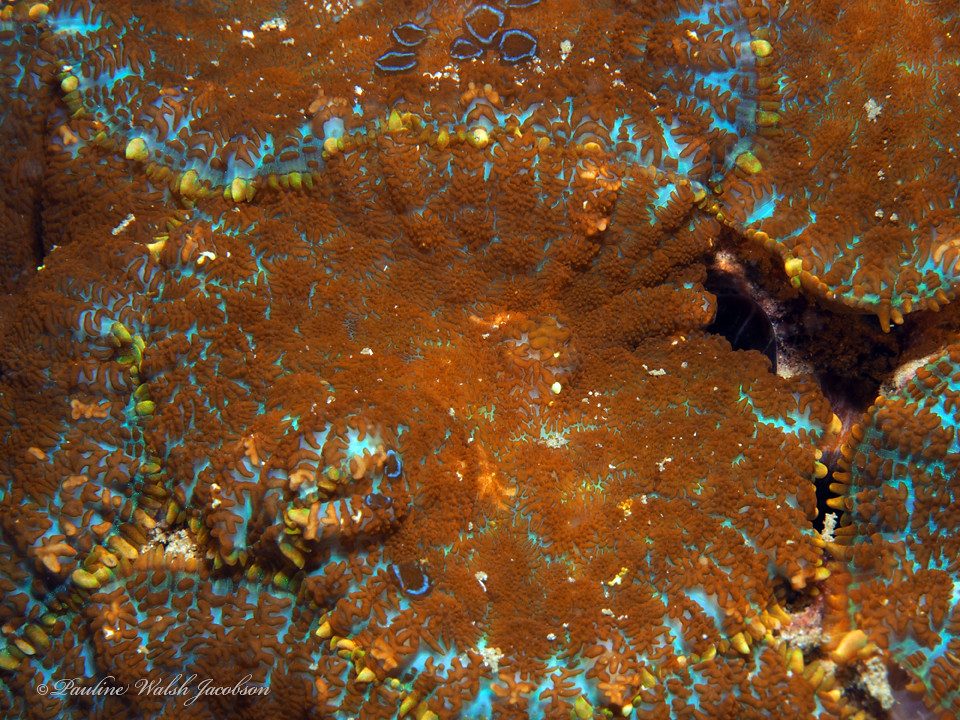
Rhodactis Mushrooms Care
Rhodactis mushrooms are hardy reef corals that prefer low to moderate light, gentle flow, and stable water. Learn…
 By
By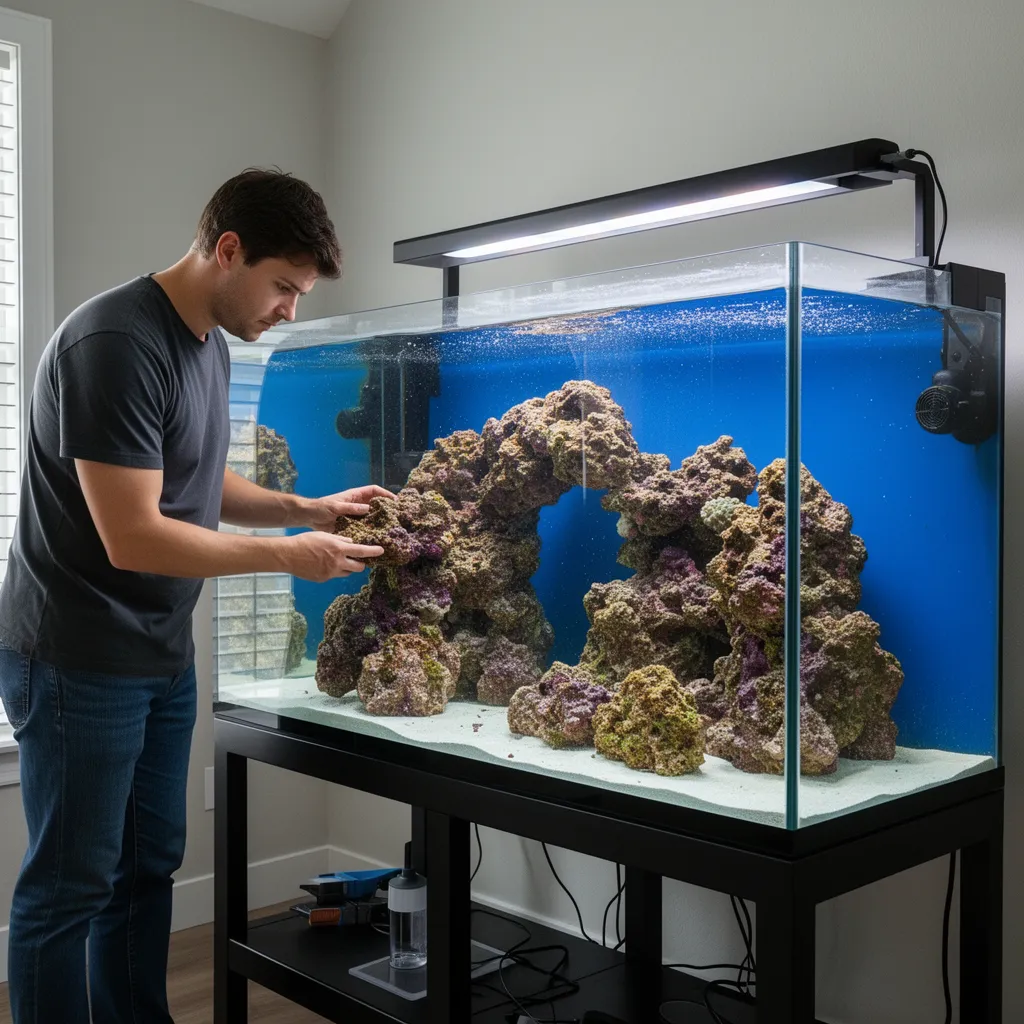
Setting Up A Reef Tank
Setting up a reef tank is easier when you focus on stability, smart equipment, and slow stocking. This…
[favorite_button]
My Bookmarks:
To see full list click here
[user_favorites user_id="" include_links="true" site_id="" post_types="" include_thumbnails="true" thumbnail_size="thumbnail" include_excerpt="false"]