

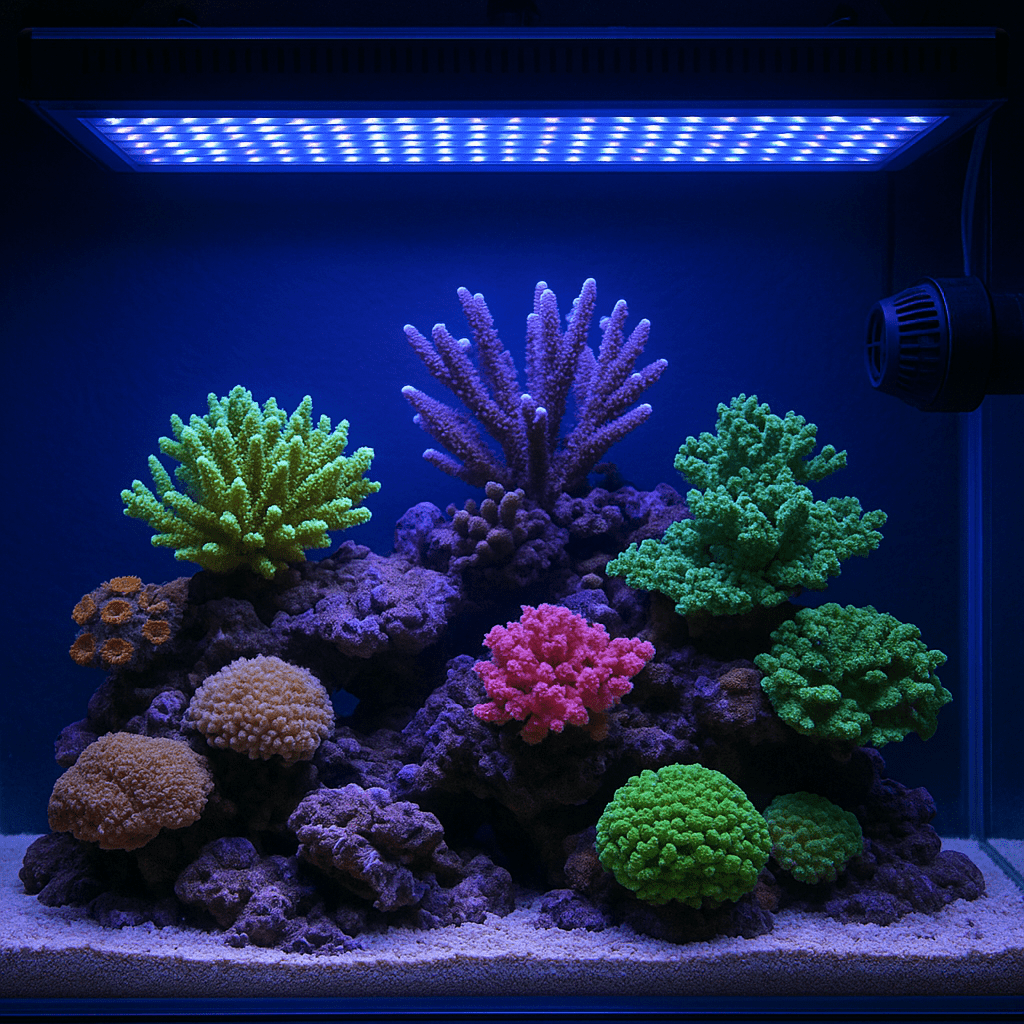
Rock Flower Anemones (Epicystis crucifer) are one of the easiest ways to add “collector color” to a reef tank without signing up for the demanding care that comes with many host anemones. They stay relatively small, tolerate a wide range of reef conditions once established, and come in an incredible mix of neon greens, oranges, reds, blues, and speckled patterns. They also tend to be far less mobile than many anemones, which makes them a great choice for mixed reefs where you do not want a wandering stinger mowing through your corals.
This guide covers what Rock Flowers are, how to choose a healthy specimen, acclimation tips, ideal placement, lighting and flow targets, feeding, compatibility, and troubleshooting common problems like gaping mouths, shrinking, or sudden detachment.
Quick facts: Rock Flower Anemone care
| Common name | Rock Flower Anemone (RFA) |
| Scientific name | Epicystis crucifer |
| Difficulty | Beginner to intermediate |
| Tank size | 10+ gallons (more stable is better) |
| Lighting | Moderate (often 80–150 PAR works well) |
| Flow | Low to moderate, indirect |
| Feeding | 1–2x weekly for best growth/color |
| Placement | Sand/rock interface, rubble cups, crevices |
| Reef safety | Reef-safe with spacing; can sting nearby corals |
Natural habitat and behavior
Rock Flower Anemones are found in the Caribbean and surrounding tropical Atlantic regions, including areas like Florida and the Bahamas. In the wild they typically live in shallow to moderate depths on hard substrate, rubble, and sandy patches near rock. This habitat explains two important husbandry traits:
- They like to “plant” their foot deep into a crevice or under rubble for security.
- They handle variable conditions better than many anemones, because nearshore environments can swing in light, flow, and nutrients.
RFAs are not clownfish hosts in the way Bubble Tip Anemones or carpets are, but some captive fish may investigate them. Most of the time they are best appreciated as a stationary, colorful anemone that behaves more like a living “flower” on the sandbed.
Choosing a healthy Rock Flower Anemone
Start with a healthy specimen and your odds of success go way up. When shopping, look for:
- Sticky tentacles that grab lightly when touched (ask the store to gently waft water over it rather than poking).
- A closed, tight mouth (a slightly visible mouth can be normal, but avoid gaping or “inside-out” looking mouths).
- Good inflation with a full disc and tentacles, not a limp, deflated blob.
- Attached foot to rock or a plug. A loose anemone bouncing around in the tank is higher risk.
- No foul odor in the bag water and no cloudy slime coating.
Color morphs do not change the care requirements. Choose the healthiest animal first, then the pattern you love.
Tank requirements and placement
Rock Flower Anemones do well in nano reefs and larger systems, but stability matters more than raw volume. A mature tank (3+ months) with consistent salinity and temperature is ideal.
Best placement strategy (the “rubble cup” method)
RFAs often move until they find a spot where the foot feels protected and the light and flow feel right. You can reduce wandering by giving them an obvious home:
- Place a shallow dish, frag cup, or low ceramic bowl on the sandbed.
- Fill it with small rubble pieces or crushed coral.
- Set the anemone on the rubble and turn flow down for 30–60 minutes.
Many RFAs will tuck their foot under rubble within a day or two and stay put long-term. Once attached, you can gently move the entire cup to fine-tune placement.
Aquascape considerations
- Give them space: plan a “flower garden” zone with several inches of clearance from LPS and soft corals.
- Protect intakes: cover powerhead and overflow intakes with foam guards or mesh. Even a typically stationary anemone can detach during acclimation or after a parameter swing.
- Avoid sharp rock edges: a torn foot is one of the most common preventable injuries.
Water parameters
Rock Flower Anemones are forgiving, but they still respond best to stable, reef-appropriate parameters. Aim for consistency, especially with salinity and alkalinity.
| Parameter | Recommended range |
|---|---|
| Temperature | 76–79°F (24.5–26°C) |
| Salinity | 1.025–1.026 SG (35 ppt) |
| pH | 8.1–8.4 |
| Alkalinity | 8–9.5 dKH (stable) |
| Calcium | 400–450 ppm |
| Magnesium | 1250–1400 ppm |
| Nitrate | 2–15 ppm |
| Phosphate | 0.03–0.10 ppm |
Ultra-low nutrient systems can work, but RFAs often look and feed better with a little measurable nitrate and phosphate. Sudden swings (big salinity corrections, rapid alkalinity changes, or temperature spikes) are a common trigger for deflation and detachment.
Lighting requirements
Rock Flower Anemones host symbiotic zooxanthellae, so light matters. In most reef tanks they thrive under moderate lighting. As a practical target, many hobbyists see great results around 80–150 PAR, though some morphs adapt to a bit lower or higher once established.
- Too little light: stretching, dull color, slow recovery after feeding, and more dependence on frequent feedings.
- Too much light too fast: bleaching, chronic deflation, and repeated wandering.
If you are moving an RFA from dim store lighting to strong LEDs, acclimate it the same way you would a coral: start lower in the tank or reduce intensity and ramp up over 2–3 weeks.
Water flow
RFAs prefer low to moderate, indirect flow. Think “gentle sway” rather than a constant blast. Good flow helps them shed mucus and waste after feeding, but too much direct flow can keep them partially deflated or encourage them to let go and tumble.
- Aim for a zone where detritus does not pile up, but tentacles are not pinned down.
- Use random, pulsing flow if possible, and avoid pointing a powerhead straight at the oral disc.
- During the first day of placement, it is fine to temporarily reduce flow to help the foot attach.
Feeding: what and how often?
Rock Flower Anemones can survive on light and nutrients in the water, but they do noticeably better with regular feeding. Feeding supports growth, recovery, and often improves “puffiness” and color saturation.
Best foods
- Mysis shrimp (thawed)
- Finely chopped shrimp, clam, scallop, or fish
- Enriched brine shrimp (as a treat, not a staple)
- Small pellets or reef roids style powders can work, but meaty foods are more reliable
Feeding method
- Turn off pumps for 10–20 minutes.
- Use tongs or a pipette to place a pea-sized portion on the tentacles near the mouth.
- Wait for the anemone to grab and fold the food inward before restarting flow.
Frequency: 1–2 times per week is a great baseline. If nutrients climb or the anemone regurgitates food, reduce portion size or feed less often.
Compatibility in reef tanks
Rock Flower Anemones are generally reef-safe, but they are still anemones with a sting. Plan your layout and livestock around that fact.
With corals
- Give space: keep several inches between RFAs and LPS/softies to prevent stings and chemical warfare.
- Watch at night: some corals extend sweepers after lights out and can irritate an anemone that seemed “far enough” during the day.
- Best neighbors: many hobbyists keep RFAs on sandbed islands away from SPS and LPS zones.
With fish
- Most reef fish ignore RFAs.
- Avoid fish known to nip (some butterflyfish, large angels) and fish that may harass the anemone.
- Clownfish usually do not host RFAs, but individual clowns sometimes try. If a clown insists on “hosting” and the anemone stays closed, you may need to separate them.
With invertebrates
- Cleaner crews: snails and hermits are usually fine, but a bulldozing hermit can irritate a newly placed anemone.
- Shrimp: peppermint and cleaner shrimp may steal food directly from the anemone during feeding. Use a feeding dome or distract shrimp with a separate morsel.
- Other anemones: RFAs can be kept in groups, but do not force them to touch. Provide enough rubble real estate so each can settle.
Acclimation and introduction tips
Most Rock Flower Anemone losses happen in the first week, usually from shipping stress plus parameter mismatch. Take acclimation seriously:
- Match salinity: measure the bag water. If it is significantly lower than your tank, do a slow drip acclimation (45–90 minutes).
- Temperature equalization: float the bag 15–20 minutes before opening.
- Handle gently: never pull an anemone off a surface. If it is attached to a plug or rock, keep it attached.
- Dim start: place lower light for a few days, then move or increase intensity gradually.
Expect some deflation cycles during the first few days. That is normal as long as the mouth stays mostly closed and the animal re-inflates.
Common problems (and how to fix them)
1) The Rock Flower Anemone keeps moving
Movement is usually the anemone “voting” on light, flow, or footing.
- Check flow: reduce direct flow and provide indirect, varied movement.
- Check light: if it is bleaching or staying tightly closed, reduce intensity; if it is stretching, increase light slowly.
- Improve footing: use a rubble cup or provide a crevice at the sand/rock line.
- Stability check: confirm salinity and temperature are not swinging daily.
2) Gaping mouth or “inside-out” look
A persistently gaping mouth is a red flag. Occasional brief opening can happen after feeding or during waste expulsion, but it should not stay wide open for hours.
- Test basics immediately: salinity, temperature, ammonia, nitrite, pH, alkalinity.
- Look for irritation: nearby corals with sweepers, crabs picking, or fish nipping.
- Stop feeding temporarily: do not add food if the anemone is already stressed.
- Increase oxygenation: aim a powerhead at the surface and ensure good gas exchange.
3) Deflating every day
Some deflation is normal, but repeated long deflation cycles can indicate stress.
- Parameter swings: check for salinity creep, heater overshoot, or alkalinity instability.
- Too much flow: constant blasting can prevent full inflation.
- Light shock: reduce intensity and ramp back up slowly.
4) Bleaching (loss of color)
Bleaching is usually from too much light too soon, heat stress, or poor shipping recovery.
- Lower the anemone to a shaded, moderate-light area.
- Keep temperature stable (avoid 80+°F spikes).
- Feed small portions 1–2x weekly to support recovery.
- Do not chase numbers with big corrections.
5) Detachment and getting sucked into a pump
This is preventable and worth addressing before it happens.
- Use foam guards or mesh covers on powerheads and overflow intakes.
- During the first 48 hours, reduce flow and keep the anemone in a rubble cup.
- If it detaches, gently place it back into the cup and dim the lights for the rest of the day.
Do Rock Flower Anemones split or reproduce in captivity?
Yes, Rock Flower Anemones can reproduce in aquariums, but not as predictably as Bubble Tip Anemones. RFAs may:
- Broadcast spawn (release eggs and sperm) in mature systems, sometimes leading to tiny juvenile RFAs appearing later.
- Occasionally divide, though true “splitting” is less common and less controllable than with BTAs.
Intentional cutting and fragging is not recommended for most hobbyists. The foot and internal structures are easy to damage, and losses can be high compared to simply letting the animal reproduce on its own. If your goal is a Rock Flower garden, focus on stable parameters, consistent feeding, and giving each anemone a safe place to attach.
Rock Flower Anemone “garden” tips
If you want that colorful carpet look, treat RFAs like a dedicated zone in your aquascape rather than random additions:
- Create an island: a sandbed area bordered by rock helps keep them away from corals.
- Use multiple rubble cups: especially in higher flow tanks, this keeps individuals from tumbling into each other.
- Feed consistently: light plus weekly feeding tends to keep them inflated and sticky.
- Plan spacing: leave room for growth and for new additions later.
FAQ
Are Rock Flower Anemones reef safe?
They are generally reef safe, but they can sting nearby corals. Keep them on a sandbed island or spaced several inches away from coral colonies.
Do Rock Flower Anemones need to be fed?
They can survive without frequent feeding under good lighting, but most do better with small meaty foods once or twice per week.
What PAR do Rock Flower Anemones like?
Many thrive around 80–150 PAR with moderate spectrum reef lighting. Acclimate slowly if moving from lower light to strong LEDs.
Why is my Rock Flower Anemone moving?
Usually it is looking for better footing, less direct flow, or more suitable light. A rubble cup at the sand/rock line helps them settle.
Can clownfish live with Rock Flower Anemones?
Most clowns will not host them, but some individuals may try. If the clown’s attention keeps the anemone closed or stressed, separate them.
Was this helpful?
Related Posts
Best Filtration Systems
Best Filtration Systems for a Healthy Saltwater Aquarium Choosing the best filtration system for your saltwater aquarium is…
 By
By
Clown Triggerfish (Balistoides Conspicillum)
Clown triggerfish are stunning but aggressive marine fish that need very large tanks, strong filtration, and careful tankmate…
[favorite_button]
My Bookmarks:
To see full list click here
[user_favorites user_id="" include_links="true" site_id="" post_types="" include_thumbnails="true" thumbnail_size="thumbnail" include_excerpt="false"]