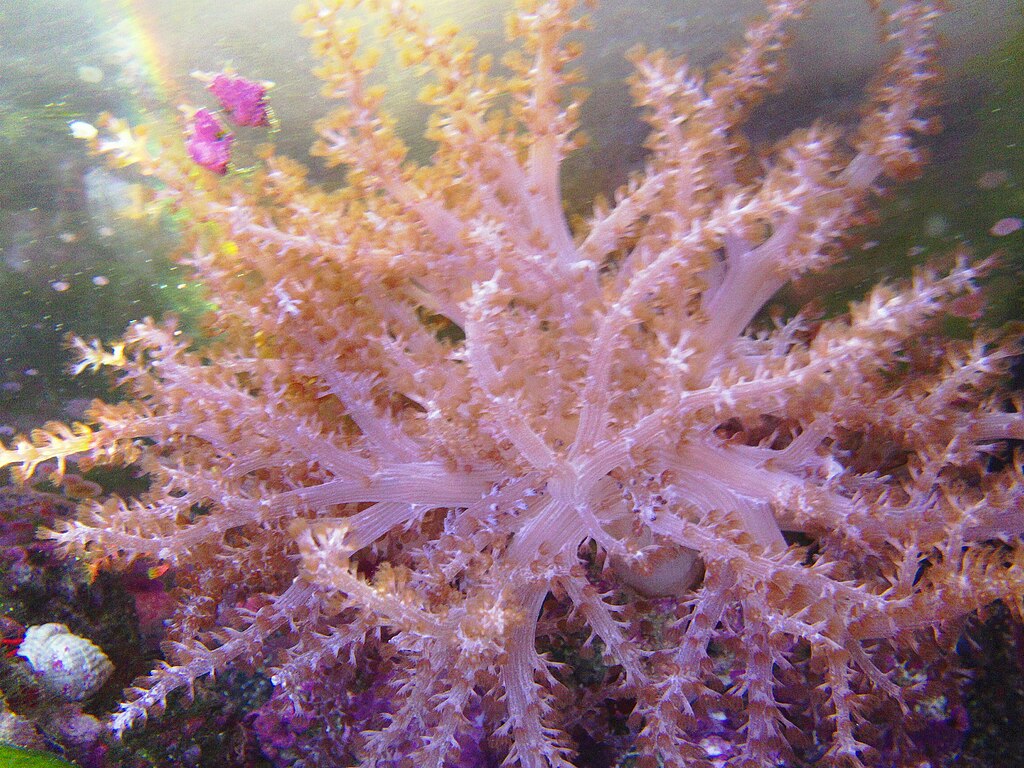
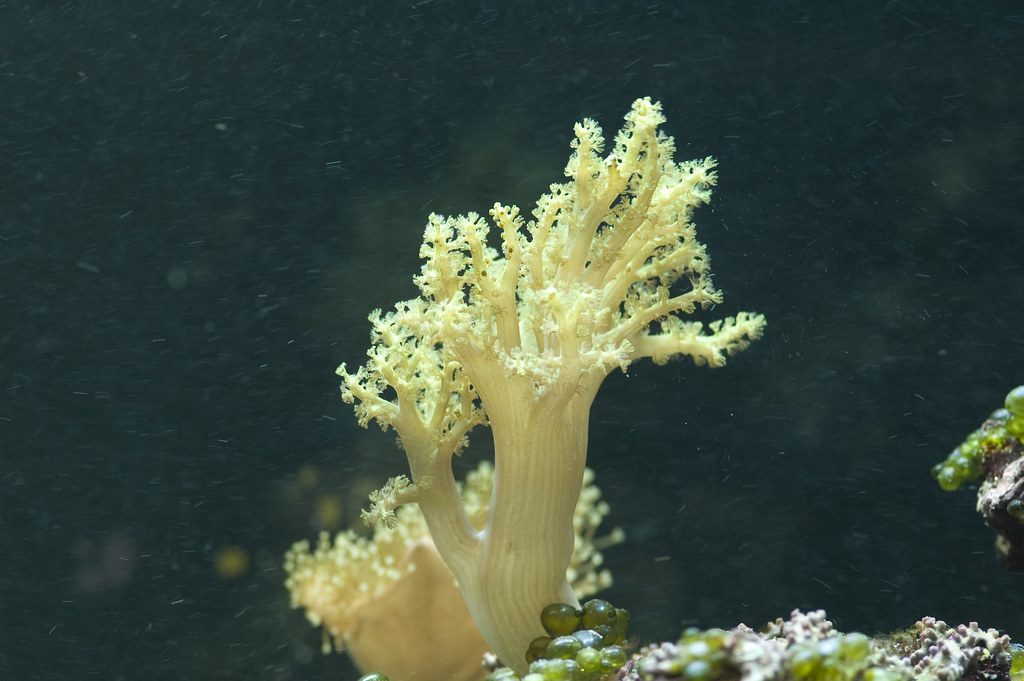
Sinularia leathers are hardy soft corals with strong movement and fast growth. They suit new reef keepers, but they still need stable basics. This guide covers placement, flow, light, feeding, and common problems.
Tank setup, placement, and water parameters
Start with a stable tank that is at least 3 to 6 months old. Sinularia dislikes fast swings in alkalinity and salinity. Aim for salinity 1.025 to 1.026, temperature 25 to 26°C, and pH 8.1 to 8.4. Keep alkalinity 8 to 9 dKH, calcium 400 to 450 ppm, and magnesium 1250 to 1400 ppm.
Nutrients should not be zero. Target nitrate 2 to 15 ppm and phosphate 0.03 to 0.10 ppm. Very low nutrients can cause slow growth and “closed” polyps. Very high nutrients can fuel algae that smothers the base. Use a reliable test schedule and log results weekly.
Place Sinularia on rock, not on sand. Give it room to expand and sway. Keep 10 to 15 cm clearance from stony corals. Sinularia can release terpenes that irritate neighbors. Run fresh carbon and replace it every 2 to 4 weeks.
- Quick parameter check: 1.026 SG, 25.5°C, 8.5 dKH, Ca 430 ppm, Mg 1350 ppm
- Stability tip: top off daily or use an ATO to prevent salinity swings
- Chemical warfare tip: carbon plus water changes of 10% weekly
If you need a baseline for system maturity, review our reef tank cycling guide. For ongoing stability, see our reef water parameters checklist.
Lighting, flow, feeding, and growth habits
Sinularia tolerates a wide light range. Most do well at 80 to 150 PAR. Start lower if it is freshly shipped. Increase light by 10% per week if it stretches. If it shrinks and stays tight, reduce intensity or move it down.
Flow matters more than raw PAR for many leathers. Aim for moderate to strong, random flow. The coral should sway, not fold over. Good flow helps it shed its waxy coat during “shedding” cycles. Shedding can last 2 to 7 days.
Feeding is optional but helpful in lean systems. Sinularia gains energy from light and dissolved nutrients. You can spot feed fine foods once or twice weekly. Use reef roids, rotifers, or a blended coral food. Turn off pumps for 10 minutes during feeding.
Expect fast growth once settled. It may encrust the rock and form new lobes. Trim it before it shades other corals. Use sharp scissors and wear gloves. Dip the cut in tank water and mount with a rubber band or mesh.
- Light acclimation: reduce to 50% for a week after shipping
- Flow test: polyps extend and the tissue stays clean
- Feeding dose: 1/8 tsp powdered food per 75 gallons, once weekly
For safe mounting methods, see our fragging soft corals guide. It covers mesh and rubble techniques that work well for leathers.
Troubleshooting: closed polyps, shedding, and irritation
Closed polyps are usually a husbandry signal. First, check salinity with a calibrated refractometer. Then check alkalinity stability across three days. A 1 dKH swing can keep leathers sulking. Also inspect for detritus settling on the crown.
Shedding is normal and often looks alarming. The coral forms a dull film, then sloughs it off. Increase random flow and gently baste the surface. Do not scrub the tissue. Avoid large changes during shedding unless parameters are unsafe.
Watch for chemical irritation from nearby corals. LPS sweeper tentacles can sting at night. Keep space and run carbon. If the coral stays limp for more than a week, move it to a calmer zone with good flow. Also consider a 10 to 15% water change.
Pests are less common, but still possible. Check for nudibranchs, flatworms, and algae at the base. Quarantine new frags for 2 to 4 weeks when possible. Use a coral dip that is labeled reef-safe. Rinse in clean saltwater before placement.
- If it stays closed: verify SG, dKH, and temperature first
- If it looks “dirty”: increase flow and turkey baste daily for three days
- If neighbors react: add fresh carbon and increase spacing
Sinularia leathers reward steady care more than constant tinkering. Give them stable parameters, good flow, and room to grow. Once settled, they become a reliable, fast-growing centerpiece for many reef styles.
Sources: Borneman, E. (2001) Aquarium Corals; Delbeek & Sprung (1994–2005) The Reef Aquarium Vol. 1–3; Fenner, R. (2003) The Conscientious Marine Aquarist.
Was this helpful?
Related Posts
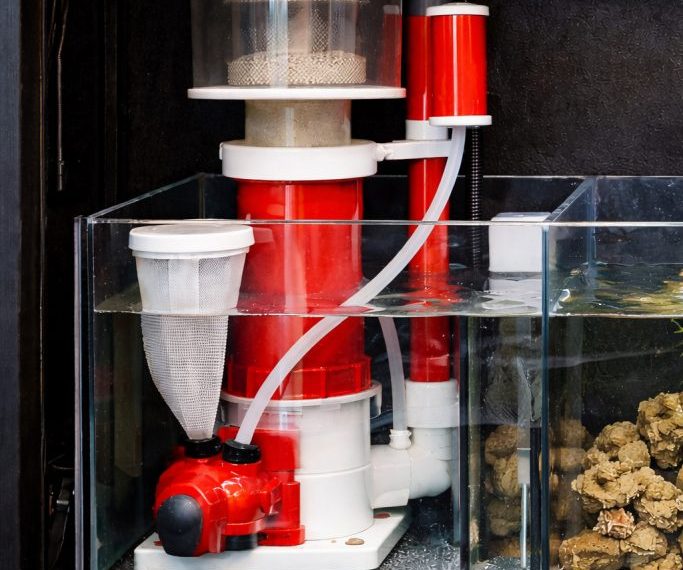
Protein Skimmer Reef Tank Guide
Learn how a protein skimmer works, how to size one, and how to tune it for a cleaner,…
 By
By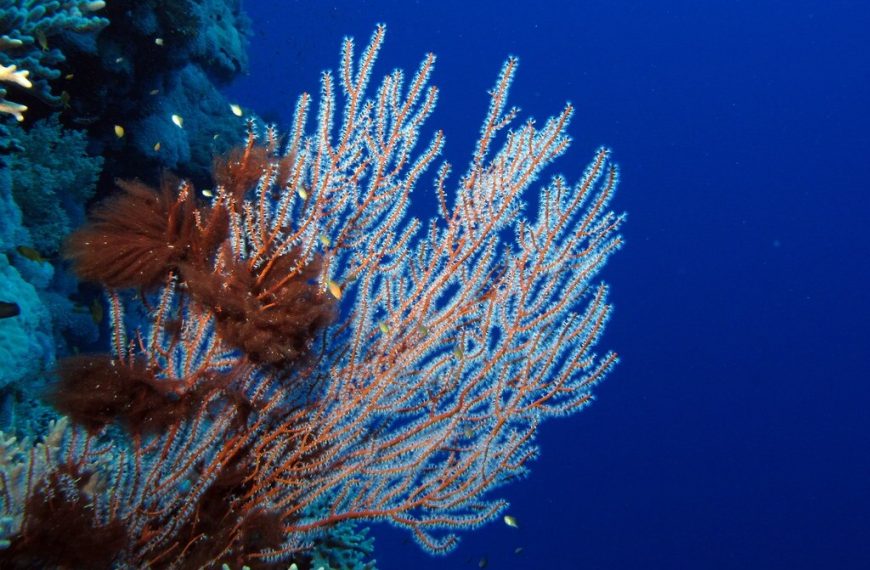
Reef Aquarium Water Parameters
Learn the ideal reef aquarium water parameters, safe ranges, and how to keep salinity, alkalinity, nutrients, and pH…