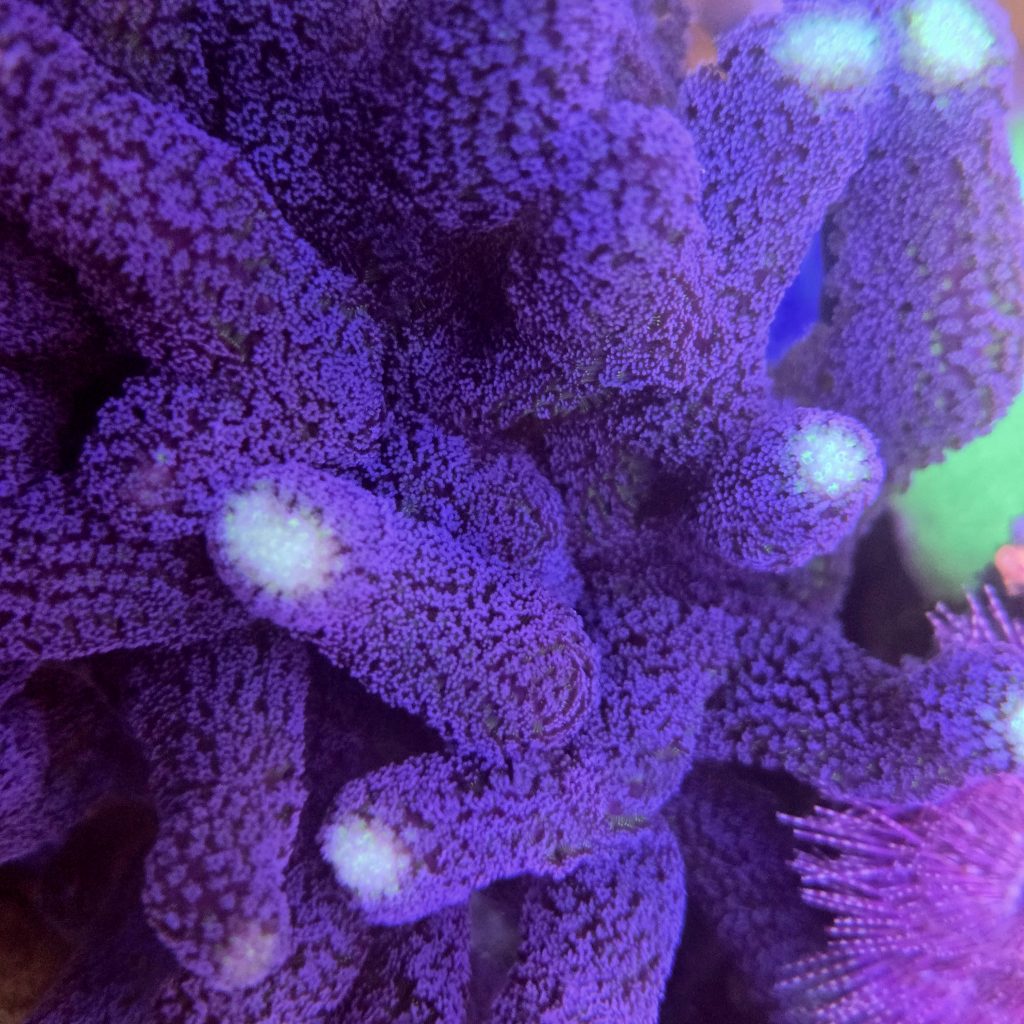
Stylophora corals are hardy SPS with thick branches and bright color. They can still fail fast if basics slip. This guide covers stable parameters, lighting, flow, feeding, and fixes.
Tank setup and target parameters
Start with a mature reef tank. Aim for at least 6 months old. Use a tank of 20 gallons or larger. Bigger tanks hold stability better. Place Stylophora on solid rock, not loose rubble.
Keep parameters tight and steady. Stylophora tolerates some range, not swings. Test alkalinity at least twice weekly at first. Use a reliable kit or checker. Dose in small daily amounts for stability.
Use these targets as your baseline. Match your salt mix and keep it consistent. If you change brands, transition slowly. Sudden shifts can cause tip burn. They can also cause tissue loss at the base.
- Temperature: 25–26°C (77–79°F), daily swing under 0.5°C
- Salinity: 1.025–1.026 SG (35 ppt), calibrated refractometer
- Alkalinity: 8–9 dKH, avoid changes over 0.3 dKH per day
- Calcium: 420–460 ppm
- Magnesium: 1300–1400 ppm
- Nitrate: 2–15 ppm
- Phosphate: 0.03–0.10 ppm
Plan your maintenance routine. Do 5–10% weekly water changes. Clean pumps and powerheads monthly. Replace carbon every 2–4 weeks if you use it. For more on stability, see reef tank water parameters.
Lighting, flow, and placement
Stylophora prefers moderate to high light. Aim for 200–350 PAR at the coral. Many thrive near 250 PAR. Start lower if the coral is new. Ramp up over 2–3 weeks using acclimation mode.
Use a stable photoperiod. Run 8–10 hours of full intensity. Add 1–2 hours of ramp time. Avoid frequent spectrum changes. Blue-heavy lighting often boosts color. Too much white can brown it out.
Provide strong, chaotic flow. Target 20–40x tank turnover per hour. Use alternating pumps or random modes. Avoid a direct jet at the tips. Direct blast can strip tissue. Low flow can trap detritus at the base.
Place it where it can grow without stinging wars. Give 3–4 inches from other corals. Keep it away from aggressive LPS sweepers. Mount frags upright for best branching. For pump patterns, read reef tank water flow guide.
- New frag placement: lower third, partial shade, 7–14 days
- Move upward in 2–3 inch steps every 7 days
- Watch for paling, then pause the move
- Keep sand off the base with angled flow
Feeding, dosing, and troubleshooting
Stylophora gets most energy from light. It still benefits from fine foods. Feed 1–3 times per week at night. Use reef roids-style powders or rotifers. Turn off return for 10–15 minutes. Keep powerheads on low to circulate.
Balance nutrients to avoid pale tissue. Ultra-low nitrate can starve it. High phosphate can slow calcification. If nitrate is under 1 ppm, feed fish more. You can also reduce skimmer time. If phosphate is over 0.15 ppm, increase export slowly.
Alkalinity stability matters most for growth. Rapid increases can cause burnt tips. Rapid drops can cause dull color and slow polyp extension. If you see tip burn, check dKH history first. Then verify calcium and magnesium.
Pests and stress can mimic parameter issues. Check for flatworms, red bugs, and nudibranchs. Use a coral dip before adding new frags. Quarantine if you can. See coral quarantine and dipping for a simple process.
- Brown color: reduce nutrients slowly, increase PAR by 10–15% per week
- Pale color: raise nitrate to 2–5 ppm, shorten light by 1 hour
- Receding base: increase random flow, siphon detritus, check pests
- No polyp extension: verify temperature swing, reduce handling, stabilize dKH
Use real-world checkpoints. A healthy Stylophora shows daytime polyp extension. Tips look clean and bright. New growth forms lighter rings. If growth stops for two weeks, test alkalinity daily. Look for swings from dosing or water changes.
Stylophora can be a reliable SPS when you prioritize stability. Keep alkalinity steady and flow random. Acclimate to light slowly and keep nutrients measurable. With those habits, you can expect steady branching and strong color.
Sources: Delbeek & Sprung, The Reef Aquarium (Vol. 1–3); Borneman, Aquarium Corals; Paletta, The New Marine Aquarium; Veron, Corals of the World.
Was this helpful?
Related Posts
Dragonets Fish Care
Dragonets are beautiful reef fish, but they need mature tanks and steady food sources. Learn how to keep…
 By
By
Lighting For Aquarium
Lighting for Aquarium: Getting Saltwater Illumination Right Lighting for a saltwater aquarium is about much more than simply…