

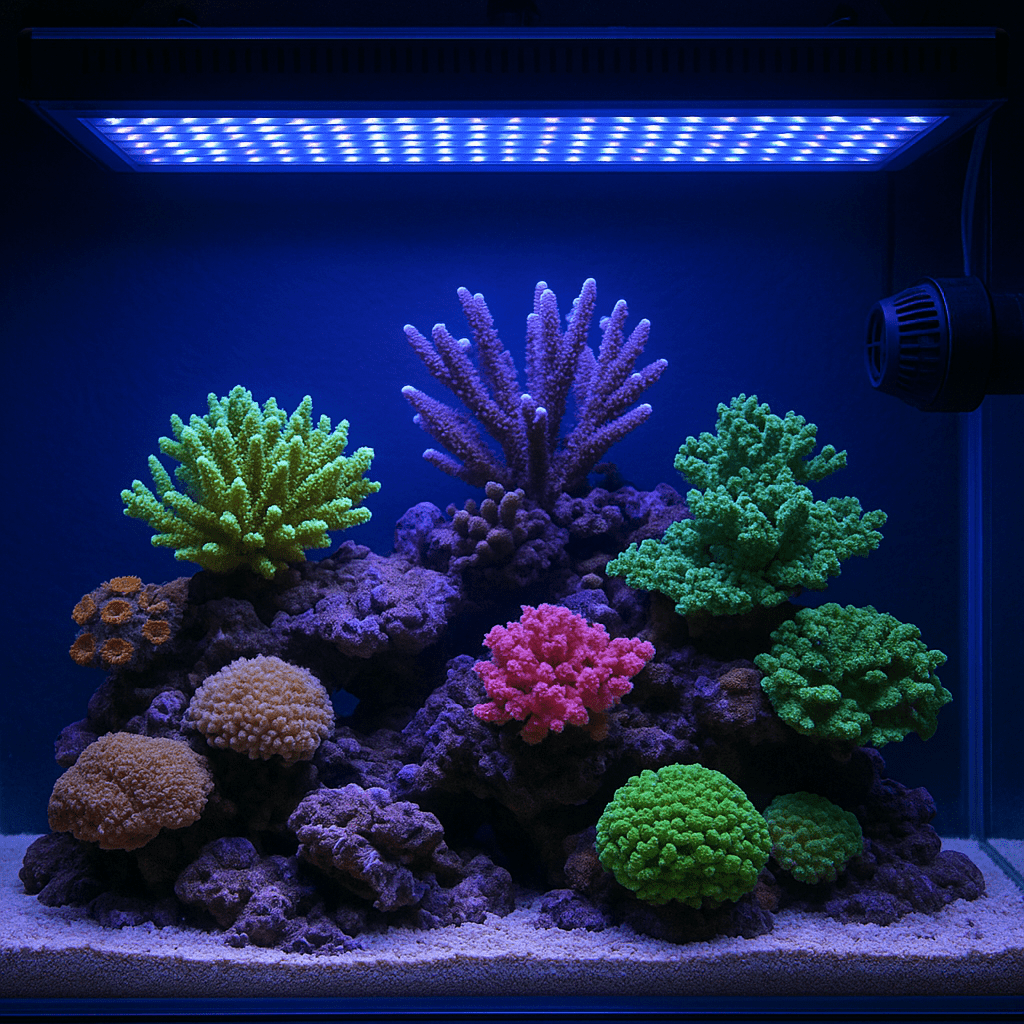
A TDS meter helps reef keepers verify RO/DI water quality fast. It does not tell the whole story, but it does show when your source water or DI resin needs attention. Used correctly, it prevents many algae, nuisance nutrient, and contaminant problems before they reach the display tank.
Many beginners buy a TDS meter, take one reading, and assume they are done. That often leads to confusion. A low reading is good, but the number only matters when you know where you measured it and what it means. In this guide, you will learn how a TDS meter works, where to test, how to read the results, and how to troubleshoot common reef RO/DI issues. You will also learn when a TDS reading is useful, when it is misleading, and how to build a simple testing routine that protects your reef.
Quick Reference Table
| Test Point | Ideal Reading | What It Means | Action if High |
|---|---|---|---|
| Tap water | Varies widely | Baseline source water | None, use as comparison |
| After RO membrane | Usually 1–10% of tap TDS | Shows membrane performance | Check pressure, flush membrane, replace if needed |
| After DI resin | 0 ppm | Final product water for reef use | Replace DI resin |
| Stored RO/DI water | 0 ppm preferred | Checks storage contamination | Clean container, retest, inspect lid and pump |
What a TDS Meter Measures
TDS stands for total dissolved solids. A handheld or inline TDS meter estimates the amount of dissolved ions in water. It reports that estimate in parts per million, or ppm. In reef keeping, this matters most when making RO/DI water for top off and salt mixing.
The key word is estimate. A TDS meter does not identify specific contaminants. It does not tell you if the water contains phosphate, silicate, copper, nitrate, or chloramine by name. It only shows the total ionic load that conducts electricity. That is why reef keepers use it as a screening tool, not a complete water analysis.
Even with that limit, it is one of the most useful tools you can own. It gives instant feedback. It helps you compare tap water to RO water. It helps you know when DI resin is exhausted. It also helps you catch a failing membrane before poor water reaches your reef.
Why TDS Matters in a Reef Aquarium
Corals need stable, clean water. Impurities in source water can fuel algae, irritate sensitive corals, and add unwanted nutrients. They can also accumulate slowly. That makes source water quality easy to overlook until a problem becomes obvious.
Using 0 TDS RO/DI water reduces that risk. It gives you a clean base for salt mixing. It also prevents dissolved solids from entering the tank during evaporation top off. Since only pure water evaporates, every top off adds whatever was in the source water. Over time, that can become a major issue.
A TDS meter helps stop that cycle. It is especially useful if you battle diatoms, unexplained film algae, or repeated DI resin exhaustion. If your final water is not reading 0 ppm, your purification system needs attention. For a deeper look at source water quality, see reef tank water parameters and RODI system guide.
How to Use a TDS Meter Step by Step
Using a TDS meter is simple. Consistency matters more than speed. Follow the same method each time so your readings stay comparable.
- Rinse the testing cup with the water you plan to test.
- Collect a fresh sample. Avoid old standing water if possible.
- Turn on the meter and place the probe in the sample.
- Gently stir or move the probe to release trapped bubbles.
- Wait a few seconds for the number to stabilize.
- Record the reading and the sample location.
- Rinse the probe with clean RO/DI water after use.
If you use an inline meter, label each line clearly. One probe should read after the RO membrane. The other should read after the DI stage. This setup makes trend tracking easy. It also helps you know whether the membrane or the DI resin is the actual problem.
Always test water that has flowed for a minute or two. Stagnant water can give odd readings. That is especially true after the unit sits overnight.
Where to Test Your RO/DI System
Many hobbyists only test the final product water. That is useful, but incomplete. The best practice is to test at three points. First, test your tap water. This gives you a baseline. Second, test after the RO membrane. Third, test after the DI resin.
The tap reading tells you how hard your source water is on the system. High tap TDS means the membrane and resin will work harder. The post-RO reading shows membrane efficiency. The post-DI reading tells you if the final water is reef safe.
For example, tap water at 250 ppm and RO water at 10 ppm suggests the membrane is doing well. Final water should then read 0 ppm after DI. If post-RO water is 40 ppm instead, the membrane may be underperforming. If post-RO looks fine but final water reads 2 ppm, the DI resin is likely exhausted.
This testing pattern saves money. It prevents replacing the wrong stage. It also helps you plan maintenance before problems reach your tank.
How to Interpret TDS Readings
For reef use, the most important target is simple. Final RO/DI water should read 0 ppm. That is the goal. Anything above that means dissolved solids are passing through the system or entering during storage.
Post-RO readings are more flexible. They depend on your tap water and membrane efficiency. A healthy membrane often removes 95 to 99 percent of dissolved solids. You can estimate rejection rate with a simple formula: subtract post-RO TDS from tap TDS, divide by tap TDS, then multiply by 100.
Example: tap water is 200 ppm. Post-RO water is 8 ppm. The membrane rejection rate is 96 percent. That is solid performance. If the same system later reads 20 ppm post-RO, the rejection rate has dropped to 90 percent. That points to pressure, temperature, age, or membrane fouling issues.
Remember that TDS is not a direct nutrient test. A reading of 0 does not guarantee zero phosphate or zero chloramine by itself. It is still a strong practical target for reef keepers.
Common Problems
Why Is My RO/DI Water Not Reading 0 TDS?
The most common cause is exhausted DI resin. DI resin polishes the remaining ions after the RO membrane. Once it is spent, final water begins to rise above zero. Replace the resin and retest. If the number stays high, check the RO membrane next.
Also inspect tubing order and canister seating. A misrouted line can bypass the DI stage. Cracked housings or loose fittings can create strange results too.
Why Does My TDS Creep Up at Startup?
TDS creep is normal. When the RO unit sits idle, dissolved solids can diffuse across the membrane. The first water produced may show a higher reading. Let the unit run briefly before collecting water for reef use. This is one reason many hobbyists discard the first minute of product water.
Why Is My DI Resin Depleting Too Fast?
Fast DI exhaustion usually points to high post-RO TDS. That means the membrane is not removing enough solids first. Low water pressure is a common cause. Many membranes perform best around the manufacturer’s recommended pressure. Cold water can also reduce efficiency. Extremely high tap TDS shortens resin life too.
Check sediment and carbon filters as well. Clogged prefilters reduce pressure. Old carbon blocks can allow chlorine or chloramine through. That can damage the membrane over time.
Why Does Stored RO/DI Water Show TDS?
Storage containers can contaminate pure water. Dust, salt spray, dirty pumps, and residue inside brute cans can all raise the reading. Clean storage bins with safe methods. Keep lids closed. Use dedicated containers for RO/DI water only. If you mix salt in the same vessel, rinse it very well before storing pure water again.
Best Practices for Accurate Readings
Small habits improve accuracy a lot. Always use a clean sample cup. Rinse the cup first with the sample water. Do not test in a salty area where splash can contaminate the probe. Store the meter dry if the manufacturer recommends that method. Replace batteries before they get weak.
Temperature can affect readings. Many digital meters include automatic temperature compensation. Even so, test at similar temperatures when comparing trends. Calibration matters too. If your meter supports calibration, follow the manual and use the proper solution.
Most important, log your numbers. Write down tap, post-RO, and post-DI readings monthly. Trends tell a better story than one isolated result. This habit makes filter replacement much easier to predict. It also helps explain algae issues when they appear. For broader maintenance planning, read reef tank maintenance schedule and how to mix saltwater.
When a TDS Meter Is Not Enough
A TDS meter is excellent for daily use, but it has limits. It cannot confirm chlorine or chloramine breakthrough. It cannot measure exact phosphate levels. It also cannot tell you which dissolved solids are present. If you suspect a specific contaminant, use a dedicated test kit or contact your water provider for a report.
This matters most if your city treats water seasonally or uses chloramines. In that case, proper carbon filtration becomes critical. If your reef has unexplained stress despite 0 TDS water, look beyond the meter. Check salinity, alkalinity, temperature, and nutrients. Source water is only one piece of the puzzle. A good next read is reef salinity guide.
Frequently Asked Questions
What TDS should RO/DI water be for a reef tank?
Final RO/DI water should read 0 ppm. That is the standard target for reef use.
Can I use 1 or 2 TDS water in my reef tank?
Many tanks will tolerate it short term, but 0 ppm is best. Small impurities add up over time.
How often should I check my TDS meter readings?
Check at least monthly. Test more often if you make a lot of water or notice algae issues.
Does a TDS meter measure saltwater correctly?
It will show a number, but that is not useful for reef salinity. Use a refractometer or calibrated conductivity tool for saltwater.
Should I replace DI resin as soon as TDS rises above zero?
Yes. Once final water rises above 0 ppm, replace the DI resin to keep source water as pure as possible.
Final Thoughts
A TDS meter is a simple tool, but it prevents expensive mistakes. Test your tap water. Test after the RO membrane. Test after the DI stage. Aim for 0 ppm final water every time. If the reading changes, use the pattern to find the cause. That routine will protect your salt mix, your top off water, and your reef long term.
Was this helpful?
Related Posts
Yellowtail Damselfish (Chrysiptera Parasema)
Yellowtail Damselfish are hardy, colorful, and reef safe, but they can be territorial. Learn their care, feeding, tank…
 By
ByWater Chemistry Basics
Water chemistry basics are the foundation of reef success. Learn the key parameters, target ranges, and simple ways…
[favorite_button]
My Bookmarks:
To see full list click here
[user_favorites user_id="" include_links="true" site_id="" post_types="" include_thumbnails="true" thumbnail_size="thumbnail" include_excerpt="false"]