

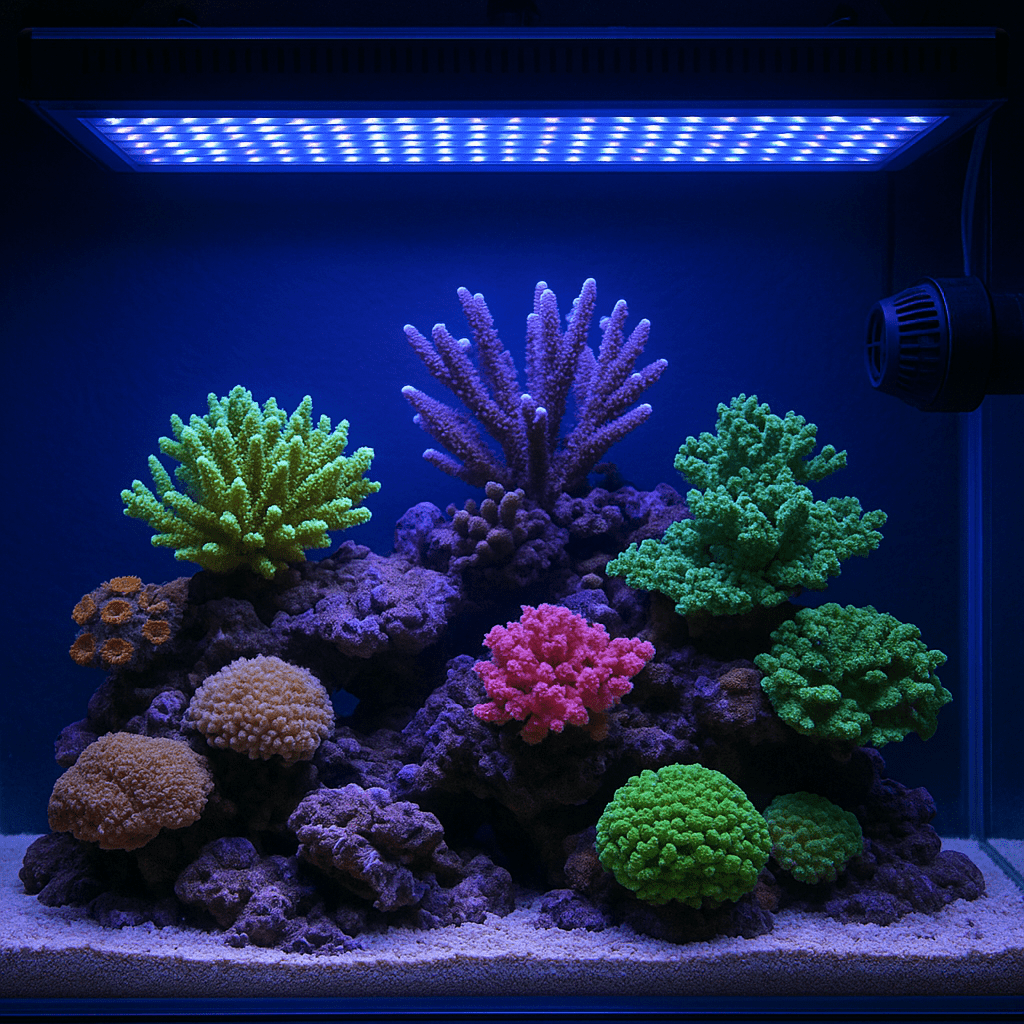
Water flow in a reef tank does far more than move water around. It delivers oxygen, carries food, removes waste, and helps corals grow in a natural way. Good flow keeps detritus suspended, prevents dead spots, and supports healthy tissue extension. Poor flow often leads to algae, cyanobacteria, stressed corals, and unstable tank conditions.
Many reef keepers focus on lighting first. That makes sense. Corals need light to thrive. But flow is just as important. In nature, reefs experience constant movement from tides, surge, and waves. Corals evolved to live in that motion. In a home aquarium, powerheads and return pumps must recreate it. This guide explains how reef tank flow works, how much you need, how to place pumps, and how to solve common flow problems.
Quick Reference Table
| Topic | General Recommendation |
|---|---|
| Soft coral tanks | 10–20x tank volume per hour |
| LPS tanks | 20–40x tank volume per hour |
| SPS tanks | 30–60x tank volume per hour |
| Best flow style | Random, turbulent, changing flow |
| Avoid | Constant direct blasts on coral tissue |
| Signs of low flow | Detritus buildup, cyanobacteria, weak polyp movement |
| Signs of too much flow | Retracted polyps, tissue recession, sandstorms |
| Pump placement | Aim for crossflow and surface agitation |
Use these numbers as a starting point. Every aquascape changes how water moves. Rock structures block current. Coral colonies also redirect flow as they grow. That means a tank may need adjustment over time. Watch the tank closely. Coral behavior and detritus patterns will tell you more than any formula.
Why Water Flow Matters in a Reef Tank
Flow affects nearly every part of reef husbandry. It helps gas exchange at the surface. That keeps oxygen levels high and carbon dioxide lower. It also moves nutrients and trace elements around the tank. Corals depend on that movement. Without it, waste can settle on tissue and irritate the colony.
Water movement also helps corals feed. Many corals capture suspended particles from the water column. Good flow brings those particles within reach. It also prevents a stagnant boundary layer from forming around coral tissue. That thin layer limits exchange if water is too still. In practical terms, proper flow helps corals breathe, eat, and shed mucus.
Flow also improves tank cleanliness. Uneaten food and fish waste stay suspended longer. That gives your overflow, filter socks, roller mat, or skimmer a chance to remove them. If flow is weak, debris settles into rockwork and sand. That trapped waste can fuel nuisance algae and poor water quality.
Natural Habitat and What It Teaches Us
Wild coral reefs are not still places. Shallow reefs receive wave energy all day. Tides shift direction. Surge creates pulses of movement. Even deeper reef slopes experience changing current. Corals from these zones adapted to different flow patterns. That matters when you choose placement in your tank.
SPS corals often come from high-energy areas. They usually prefer stronger, more chaotic flow. Many LPS corals come from slightly calmer zones. They still need movement, but not a harsh direct blast. Soft corals vary widely. Some enjoy moderate sway. Others tolerate stronger current if it is indirect.
The lesson is simple. Reefs thrive with varied movement, not a single straight stream. Try to mimic that. Use multiple pumps. Alternate intensity if possible. Create zones with different flow strengths. This gives each coral a better chance to thrive in the right spot.
How Much Flow Does a Reef Tank Need?
Reef keepers often measure flow as turnover. This means total gallons per hour divided by tank volume. A 50-gallon tank with 1,500 gallons per hour of internal flow has 30x turnover. That number is useful, but it is only a guide. Pump ratings drop after placement, rock resistance, and maintenance buildup.
Soft coral tanks usually do well around 10 to 20 times turnover. LPS systems often need 20 to 40 times turnover. SPS reefs usually need 30 to 60 times turnover. Some high-energy SPS tanks go even higher. The key is not just volume. The key is how that water is delivered.
A broad random flow is better than a narrow jet. Two smaller pumps often work better than one large pump. They create intersecting currents. That breaks up laminar flow and makes movement more natural. If your corals only bend one way all day, your pattern is likely too simple.
Aquarium Setup and Pump Placement
Pump placement determines whether your flow helps or harms. Start by thinking about the whole tank. You want movement across the rockwork, behind the structure, and at the surface. Surface agitation is important. It improves oxygen exchange and prevents a film from forming.
Place one pump on each side in many standard tanks. Aim them so the streams cross near the middle. This creates turbulence instead of a direct blast. In longer tanks, add a third pump if needed. In cube tanks, opposing pumps often work well. Always check behind the rocks. Dead spots often hide there.
Keep sand bed movement in mind. Fine sand can blow easily. If you see dunes or bare glass, adjust the angle upward or reduce intensity. It helps to mount pumps higher than expected. Let the flow bounce off the front glass or water surface. That softens the force while keeping the tank active.
If you are planning a new build, read reef tank aquascaping tips. Open rockwork makes better flow paths. Dense walls of rock trap waste and block circulation.
Flow Patterns: Random Beats Constant
There are several common flow patterns in reef tanks. Constant flow is the simplest. A pump runs at one speed all day. This works, but it is rarely ideal. Pulse modes create short bursts. These can produce a wave effect in some tanks. Reef crest or random modes vary intensity over time. These are often the best choice for mixed reefs.
Gyre style flow moves water in a circular path around the tank. It can be effective in long aquariums. Still, gyres need tuning. Too much uniformity can leave some coral surfaces under-served. Random changes help solve that. The goal is to keep water moving from many angles over time.
Corals respond well to changing movement. Polyps extend more naturally. Tissue stays cleaner. Detritus has fewer places to settle. If your pumps have a controller, use it. Even simple day and night reductions can help. Just do not cut flow too low at night. Corals and fish still need oxygen after lights out.
Lighting and Water Flow Work Together
Lighting and flow should be planned as a pair. Strong light increases coral metabolism. That means corals often need stronger flow too. The extra movement helps with gas exchange and waste removal. A high-light SPS tank with weak flow usually struggles over time.
Flow also changes how corals handle light. In strong moving water, tissue cools and exchanges gases more efficiently. This can reduce stress under bright lighting. In still water, some corals may show reduced extension even if PAR is correct. Hobbyists sometimes blame the light first. The real issue is poor circulation.
If you are dialing in both systems, visit reef tank lighting guide. It helps to match PAR, coral type, and placement with the right movement pattern.
Flow Needs by Coral Type
Soft corals usually like moderate flow. Leather corals, zoanthids, and many mushrooms prefer enough movement to keep debris off their surface. They should sway or ripple gently. If they fold over hard all day, the current is too strong.
LPS corals need more care with placement. Hammers, torches, acans, blastos, and scolys dislike a direct blast. Their fleshy tissue can tear or stay retracted. Aim for indirect, alternating movement. Tentacles should move, but not whip violently. Euphyllia often look best in moderate, varied flow.
SPS corals usually want the strongest flow. Acropora, montipora, and similar species need high oxygen and clean tissue surfaces. They benefit from broad, chaotic movement from several directions. Dead areas inside dense SPS colonies are a common issue. Add crossflow as colonies grow.
For coral placement basics, see best beginner corals for a reef tank. It helps match coral type to your tank conditions.
Step-by-Step: How to Dial In Reef Tank Flow
Start with your return pump running normally. Then add powerheads at a moderate setting. Watch the surface first. You want visible agitation across most of the top. Next, look at the sand. If it blows hard, angle pumps upward or lower the output.
Now feed a small amount of fine food or coral food. Watch where particles travel. They should stay suspended for a while and move through the tank. If food falls quickly into one area, that zone likely has weak flow. Check behind rocks and under ledges. Detritus often settles there.
Observe your corals over several days. Polyps should extend normally. Tissue should look clean. LPS should inflate without being battered. SPS should not collect debris between branches. Make small changes only. Big adjustments make troubleshooting harder. Recheck after each change. Flow tuning is a process, not a one-time task.
Feeding, Filtration, and Water Flow
Flow strongly affects feeding response. Corals need moving water to intercept food. Fish also benefit because suspended food spreads more evenly. During broadcast feeding, moderate random flow works best. It keeps food in the water column longer. During target feeding, you may want to reduce pumps briefly.
Filtration also depends on circulation. Your overflow can only remove what reaches it. If waste settles in the display, the sump never sees it. Good flow lifts debris so the mechanical filter and skimmer can export it. This is one reason clean tanks often have strong internal circulation.
Stable nutrients still matter. Flow will not fix overfeeding or poor maintenance. But it makes your filtration system more effective. For nutrient basics, check reef tank water parameters guide. Flow and chemistry always work together.
Common Problems
Detritus Keeps Settling in One Area
This usually means you have a dead spot. Rockwork often blocks current near the back or bottom. Reposition one pump to sweep behind the structure. You can also raise a pump higher and angle it downward slightly. Clean pumps too. Dirty impellers reduce output more than many hobbyists expect.
Corals Stay Closed or Look Irritated
Too much direct flow is a common cause. LPS corals show this quickly. Tissue may stay tight or recede on the side facing the pump. Move the coral or redirect the stream. Also rule out pests and water quality issues. Flow is important, but it is not the only factor.
Cyanobacteria or Algae Keeps Returning
Low-flow zones often collect organics. That creates ideal areas for cyanobacteria and nuisance algae. Increase circulation in those sections. Siphon trapped waste during water changes. Review feeding and nutrient export as well. Better flow helps, but it must be part of a full solution.
Sand Bed Blows Everywhere
Your pump is likely too low or too focused. Aim it toward the surface or front glass. Reduce the speed if needed. Broad-flow pumps are often easier on sand than narrow-stream models. You can also use a slightly coarser sand if your livestock allows it.
SPS Corals Brown Out or Lose Tissue Inside Colonies
Internal dead spots are common in branching corals. As colonies grow, they block their own circulation. Add another pump or change angle to reach the interior. Also confirm strong lighting and stable alkalinity. SPS health depends on all three working together.
Frequently Asked Questions
Can you have too much flow in a reef tank?
Yes. Too much direct flow can damage tissue, stress fish, and create sandstorms. Strong flow is useful, but it should be broad and varied.
Is the return pump enough for reef tank flow?
Usually not. Return pumps help circulation, but they rarely provide enough internal movement for corals. Most reef tanks need dedicated powerheads.
Do corals need flow at night?
Yes. Corals and fish still need oxygen at night. You can reduce intensity slightly, but do not shut off internal flow completely.
What is the best flow for a mixed reef?
A mixed reef usually does best with moderate to strong random flow. Create lower-flow zones for fleshy LPS and stronger zones for SPS.
How do I know if my reef tank has dead spots?
Look for settled detritus, cyanobacteria patches, or areas where food drops straight down. Those signs often point to weak circulation.
Final Thoughts
Water flow in a reef tank is not just about pump size. It is about pattern, placement, and observation. Healthy reefs need motion from many angles. Start with broad random flow. Watch your corals closely. Adjust slowly as the tank matures. If you get flow right, many other parts of reef keeping become easier.
Was this helpful?
Related Posts
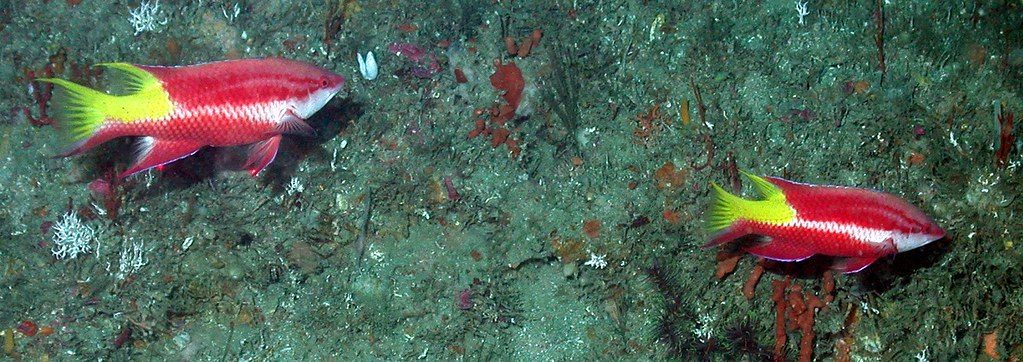
Cuban Hogfish (bodianus Pulchellus)
Cuban Hogfish care is straightforward in larger reef tanks. Learn tank size, diet, compatibility, and reef safety before…
 By
ByWhat to Do During a Power Outage
A reef tank power outage demands fast action. Protect oxygen, temperature, and circulation first to keep fish and…
 By
By[favorite_button]
My Bookmarks:
To see full list click here
[user_favorites user_id="" include_links="true" site_id="" post_types="" include_thumbnails="true" thumbnail_size="thumbnail" include_excerpt="false"]