
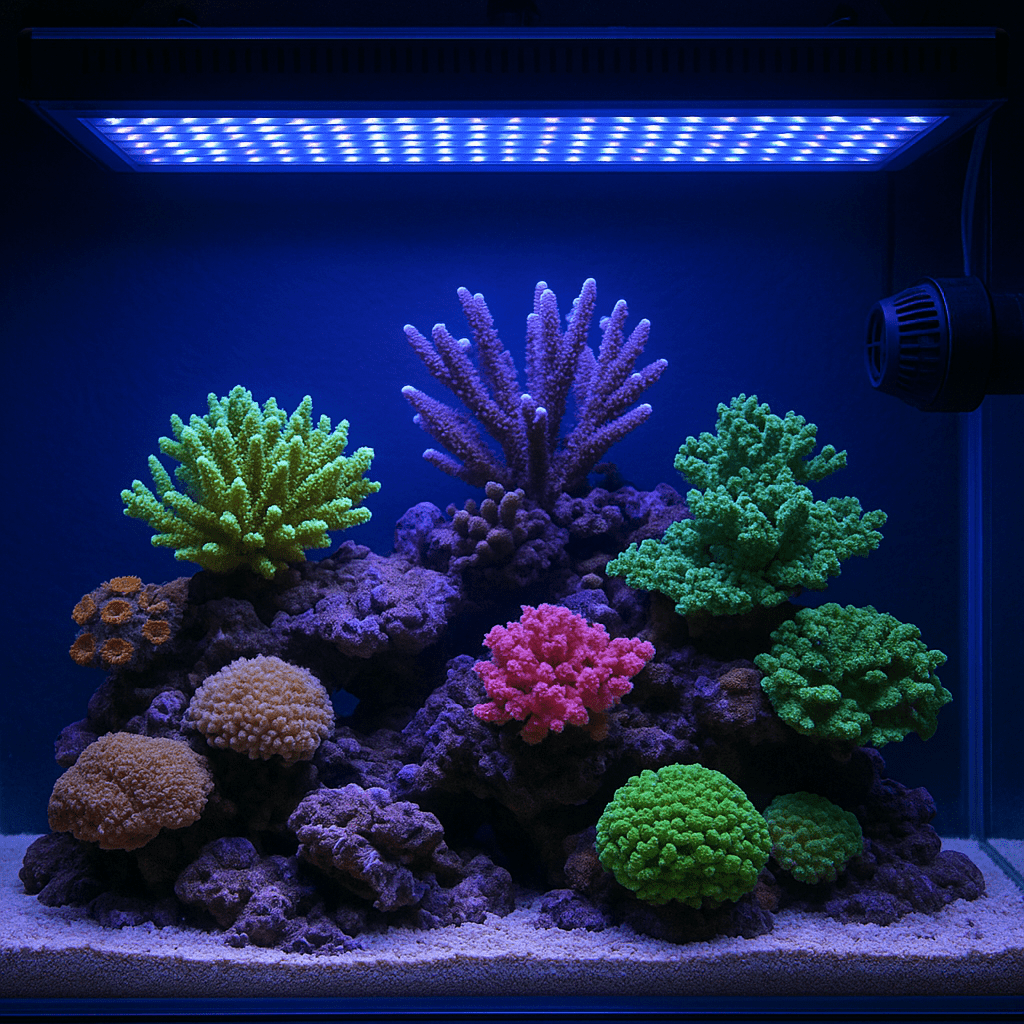
Choosing the best beginner corals for a reef tank can make the difference between an encouraging first reef and a frustrating one. Hardy, adaptable corals give new hobbyists room to learn lighting, flow, nutrient control, and placement without immediately dealing with delicate species that react badly to every small swing.
In general, the best starter corals share a few traits. They tolerate minor parameter fluctuations, accept a wide range of lighting, and usually show clear signs when they are happy or stressed. That makes them excellent teachers. You can watch polyp extension, tissue inflation, color changes, and growth patterns to understand how your reef is maturing.
If you are still building your foundation, it helps to first understand stable reef tank water parameters and how to create consistent reef tank flow. Even easy corals do best when the basics are steady.
What Makes a Coral Beginner Friendly?
A beginner coral is not just one that survives neglect. The best beginner corals are species that respond well to reasonable care and recover from small mistakes. In practical reef keeping, that usually means:
- Tolerance for moderate nutrient levels
- Ability to live under common reef LEDs
- Less sensitivity to slight alkalinity or temperature swings
- Visible feeding and growth response
- Availability as aquacultured frags
- Lower risk of rapid tissue loss compared to delicate SPS
That said, beginner friendly does not mean maintenance free. Sudden salinity changes, unstable alkalinity, poor acclimation, and bad placement can still cause problems. If your tank is brand new, patience matters as much as coral selection.
Best Beginner Corals for a Reef Tank
Below are some of the most reliable starter corals for new and intermediate reef keepers. These are popular for good reason. They are attractive, widely available, and usually forgiving when compared to more demanding species.
1. Zoanthids
Zoanthids are often the first coral many hobbyists keep successfully. They come in a huge range of colors and patterns, and many varieties adapt well to mixed reef aquariums. They generally prefer moderate light and moderate flow, though exact preferences vary by morph.
Why they are great for beginners:
- Fast to moderate growth in stable tanks
- Easy to place on isolated rock islands
- Good visual feedback through polyp extension
- Available in affordable frags
Watch for nuisance algae around the colony and avoid blasting them with direct flow. A common beginner mistake is placing them in a dead spot where detritus settles. Another is handling them carelessly during fragging. Always use proper protection because some zoanthids may contain palytoxin.
2. Mushroom Corals
Mushroom corals, including Discosoma, Rhodactis, and Ricordea, are among the hardiest soft corals in the hobby. They do especially well in tanks with lower to moderate light and gentler flow. If you have a newer tank that is not ready for demanding SPS, mushrooms are often a safe place to start.
Why they are beginner friendly:
- Very forgiving of moderate nutrient levels
- Can thrive in lower PAR areas
- Interesting textures and colors
- Often recover well from minor stress
In real tanks, mushrooms often tell you when lighting is too intense by shrinking, wandering, or staying tightly contracted. If they are stretching upward, they may want more light. Give them room because some types spread quickly and can crowd nearby corals.
3. Green Star Polyps
Green star polyps are famous as a beginner coral because they are hardy, bright, and usually quick to grow once settled. The waving green polyps create great movement in the aquarium, especially on isolated rocks or back walls.
Why hobbyists like them:
- Strong growth under common reef lighting
- Tolerant of a broad range of conditions
- Eye-catching motion in the tank
- Easy to frag and share
The caution is simple. They can spread aggressively. Many experienced reef keepers recommend putting green star polyps on their own island rock so they do not overtake your aquascape. This is one of those corals that beginners love early on, but placement matters a lot long term.
4. Toadstool Leather Coral
Toadstool leathers are classic beginner soft corals. They are durable, attractive, and usually easy to keep under moderate light and flow. A healthy toadstool develops a broad cap and extends long polyps that give it a fuzzy appearance.
Why they work well in starter reefs:
- Adaptable to a variety of tank conditions
- Generally peaceful compared to some other soft corals
- Strong visual growth over time
- Easy to frag once established
New hobbyists often worry when a toadstool closes for several days and develops a shiny film. This is normal shedding behavior in many leather corals. Moderate, indirect flow helps them slough off the film and reopen.
5. Kenya Tree Coral
Kenya tree corals are resilient and fast growing, making them a common beginner choice. They have a branching, soft structure and sway nicely in current. They usually tolerate less-than-perfect conditions better than many stony corals.
Benefits for beginners include:
- Excellent hardiness
- Quick growth in nutrient-rich mixed reefs
- Simple care requirements
- Easy propagation
The tradeoff is that they can drop branches and spread around the tank. That can be helpful if you want easy coral growth, but frustrating if you prefer a tightly controlled aquascape. Think of Kenya trees as forgiving, but not subtle.
6. Duncan Coral
Duncan corals are one of the best beginner LPS corals. They have fleshy polyps, clear feeding responses, and often grow steadily in stable mixed reefs. Their movement and bright centers make them especially appealing for hobbyists who want something more substantial than soft corals.
Why they are a strong starter LPS:
- Generally hardy under moderate light
- Readily accepts target feeding
- Clear signs of happiness through polyp extension
- Can form attractive multi-head colonies
Duncans appreciate moderate flow that keeps debris off the skeleton without whipping the tissue. If you want to improve growth, occasional feeding with small meaty foods can help, especially in lower nutrient systems.
7. Candy Cane Coral
Candy cane coral, also called Caulastrea, is another excellent beginner LPS. It has puffy heads over a branching skeleton and usually adapts well to moderate reef conditions. It is less intimidating than many fleshy LPS because its care is straightforward and its feeding response is easy to observe.
Beginner advantages:
- Hardy once acclimated
- Moderate lighting needs
- Visible growth through new heads
- Relatively easy to frag
One common issue is placing candy canes too high under intense light right away. They often do better when acclimated from lower to moderate PAR rather than being exposed to strong light on day one.
8. Hammer Coral and Frogspawn Coral
Many reef keepers eventually try Euphyllia such as hammer coral and frogspawn after gaining some confidence. These are still reasonable beginner corals in stable tanks, though they are a step up from mushrooms and leathers. Their flowing tentacles bring a classic reef look to mixed aquariums.
Why they are popular starter LPS:
- Strong visual movement
- Moderate care requirements
- Good growth in stable systems
- Wide availability in aquacultured frags
They need more attention to placement than many soft corals. Too much flow can keep the tissue retracted, while too little flow allows detritus to settle between heads. Keep enough space between Euphyllia and neighbors because sweeper tentacles can sting nearby corals.
Best Water Parameters for Beginner Corals
Most beginner corals do well when the tank is stable rather than aggressively tuned. Chasing perfect numbers often causes more trouble than keeping good numbers consistent. A practical starting range for mixed reefs is:
- Temperature: 76 to 78 F
- Salinity: 1.025 to 1.026 specific gravity
- Alkalinity: 8 to 9 dKH
- Calcium: 400 to 450 ppm
- Magnesium: 1250 to 1400 ppm
- Nitrate: 5 to 15 ppm
- Phosphate: 0.03 to 0.10 ppm
For new hobbyists, consistency in salinity and alkalinity matters more than tiny adjustments. If you have not already, learn the basics of cycling a reef tank before adding corals to immature systems.
Lighting and Flow Tips for Starter Corals
Most beginner corals prefer low to moderate lighting and low to moderate indirect flow. This is helpful because many entry-level reef lights and powerhead setups can support them without extreme tuning.
As a rough guideline:
- Soft corals and mushrooms often do well around 50 to 100 PAR
- Zoanthids and many leathers often thrive around 75 to 150 PAR
- Duncans, candy canes, and many Euphyllia often do well around 75 to 150 PAR depending on acclimation
Flow should keep tissue gently moving and prevent debris buildup without causing the coral to stay tightly closed. Random, indirect flow patterns are usually better than a direct blast from a pump. If you are still dialing in equipment, a guide to reef tank lighting for beginners can help you avoid common setup mistakes.
Corals Beginners Should Usually Avoid at First
There is nothing wrong with aiming high, but some corals are better left until your tank and habits are more mature. Beginners often struggle with:
- Acropora and other demanding SPS corals
- Non-photosynthetic corals that need frequent feeding
- Very high-end torches that react badly to instability
- Corals with strong chemical aggression in small tanks
These species often need tighter control of nutrients, alkalinity, and flow. It is much easier to build confidence with hardy corals first, then move into more sensitive species once your maintenance routine is consistent.
Common Beginner Mistakes When Choosing Corals
- Adding corals too soon to an immature tank
- Buying based only on color without checking care needs
- Placing all corals high in the rockwork under strong light
- Ignoring coral aggression and spacing
- Making large parameter corrections too quickly
- Overcleaning the tank and driving nutrients too low
One of the biggest lessons in reef keeping is that corals often decline from instability, not from a single bad number. New hobbyists often improve success dramatically just by slowing down, testing consistently, and making smaller changes.
Final Thoughts
The best beginner corals for a reef tank are the ones that match your current skill level, equipment, and tank maturity. Mushrooms, zoanthids, green star polyps, toadstool leathers, Kenya trees, duncans, candy canes, and some Euphyllia all offer a realistic path to success for new reef keepers.
Start with a few hardy frags, place them carefully, and focus on stable husbandry. As your confidence grows, your coral choices can expand with it. In reef keeping, early wins matter, and beginner friendly corals are often the best teachers you can buy.
Was this helpful?
Related Posts
Reef Tank Plumbing Basics
Learn reef tank plumbing basics, including drains, return pumps, sump flow, noise control, and flood prevention for a…
 By
ByOur Reef Emergency Plan
A reef emergency plan helps you act fast during outages, leaks, and water quality crashes. Here is the…
[favorite_button]
My Bookmarks:
To see full list click here
[user_favorites user_id="" include_links="true" site_id="" post_types="" include_thumbnails="true" thumbnail_size="thumbnail" include_excerpt="false"]