

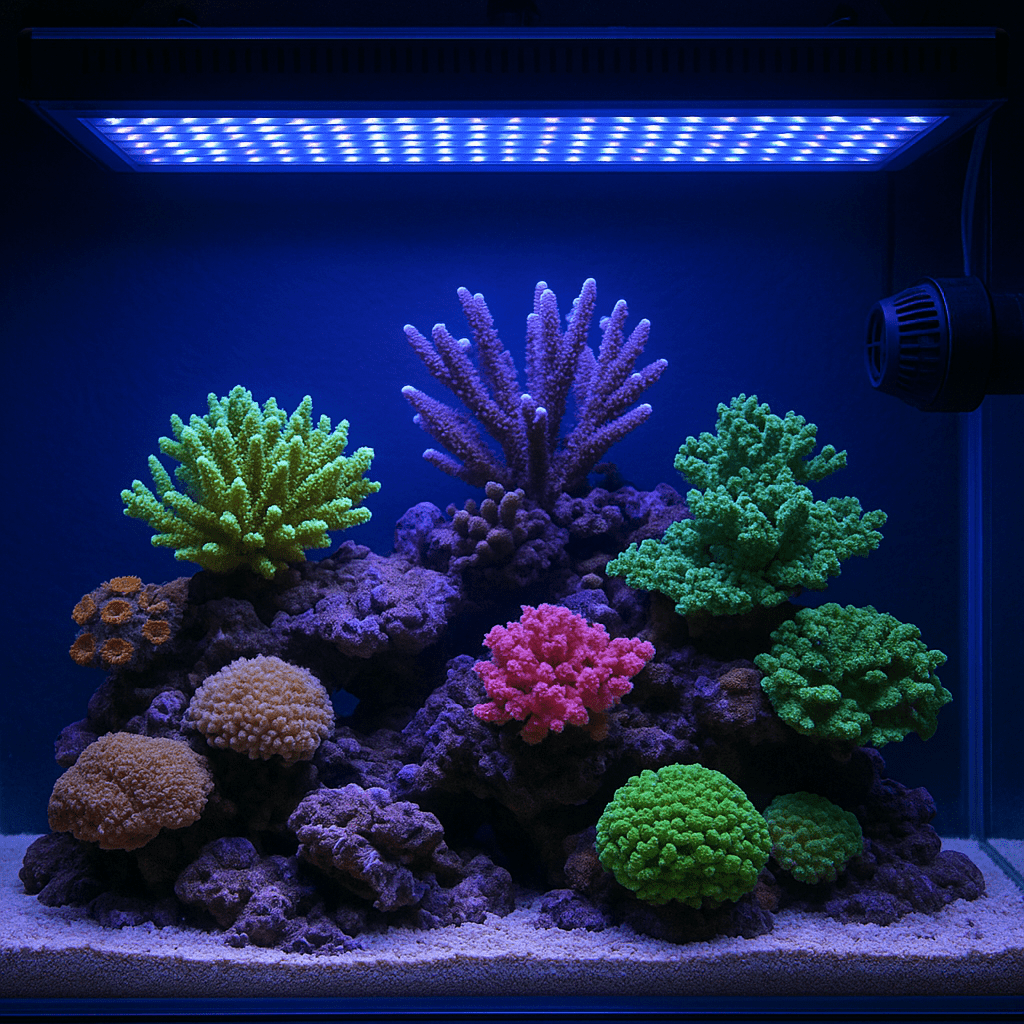
An RODI unit, short for reverse osmosis deionized unit, is a water filtration system reef hobbyists use to make highly purified water for salt mixing and top off. It removes chlorine, chloramine, heavy metals, nitrate, phosphate, silicate, and many other dissolved contaminants that can fuel algae, irritate corals, or make water chemistry harder to control.
If you are keeping a reef tank, starting with clean source water is one of the best long term decisions you can make. Many beginners focus on lights, pumps, and livestock first, but the quality of your water affects nearly everything in the aquarium. Poor source water can introduce nutrients and impurities that lead to nuisance algae, unstable parameters, and unexplained coral stress. An RODI filter helps create a consistent baseline so you know exactly what is going into the system.
How an RODI unit works
An RODI system filters water in stages. Each stage targets different impurities, and together they produce water with very low total dissolved solids, often called TDS.
- Sediment filter removes rust, silt, sand, and other particles that can clog later stages.
- Carbon block removes chlorine, many chemicals, and in some systems helps reduce chloramine when properly configured.
- Reverse osmosis membrane is the main purification stage. It rejects a large percentage of dissolved contaminants.
- DI resin or deionization resin polishes the water after the membrane and removes remaining ions to bring TDS close to zero.
The result is purified water that is far more predictable than tap water. That consistency matters when mixing reef salt, maintaining salinity, and keeping sensitive corals and invertebrates healthy.
Why reef aquariums use RODI water
Tap water quality varies from one city to another and can even change through the year. Some water supplies contain phosphate, nitrate, silicate, copper, or disinfectants that are not ideal for a marine aquarium. Even if tap water looks clean and tastes fine, it may still contain dissolved substances that create problems in a reef system.
Using RODI water helps reef keepers:
- Reduce nuisance algae caused by excess nutrients and silicates
- Avoid adding copper and other metals that can harm invertebrates
- Improve consistency when mixing saltwater
- Prevent unknown contaminants from affecting coral health
- Maintain better control over alkalinity, calcium, and nutrient management
In practical terms, purified water makes troubleshooting easier. If something goes wrong in the tank, you can rule out source water contamination much faster.
What does reverse osmosis deionized mean?
Reverse osmosis is a process where water is pushed through a semi permeable membrane under pressure. The membrane allows water molecules through while rejecting many dissolved impurities.
Deionization uses special resin beads that exchange ions in the water, removing the remaining charged contaminants that pass the membrane. This final stage is what brings the water from very clean to reef ready.
That is why reef hobbyists often say RO water is good, but RODI water is better for demanding systems, especially coral tanks.
What contaminants does an RODI unit remove?
A properly functioning RODI system can remove or greatly reduce:
- Chlorine and chloramine
- Nitrate
- Phosphate
- Silicate
- Copper and other metals
- Pesticides and many organic compounds
- Hardness minerals like calcium and magnesium from tap water
- General dissolved solids measured as TDS
The exact performance depends on the quality of the membrane, water pressure, incoming water chemistry, and whether filters are replaced on time.
Do you need an RODI unit for a reef tank?
Strictly speaking, some hobbyists run fish only systems on conditioned tap water or store bought purified water. But for a reef tank with corals, an RODI unit is strongly recommended. Corals, snails, shrimp, and other invertebrates are less forgiving of contaminants than many fish. Starting with purified water reduces risk and usually saves money and frustration over time.
If you are deciding between buying water from a local fish store and making your own, think about your tank size and maintenance routine. Small tanks can sometimes be managed with purchased water, but owning a unit is more convenient and gives you direct control over filter quality and TDS.
Common parts of an RODI system
Most hobby grade units include a few standard components:
- Filter canisters for sediment, carbon, and DI resin
- RO membrane housing for the reverse osmosis membrane
- Tubing and fittings to route feed water, product water, and waste water
- Flow restrictor to maintain proper membrane pressure
- Flush valve on some systems to help rinse the membrane
- TDS meter to monitor water quality before and after DI
- Pressure gauge to help diagnose performance issues
Some advanced units also include booster pumps, dual DI stages, leak detectors, or automatic shutoff valves.
What is TDS and why does it matter?
TDS stands for total dissolved solids. It is a general measurement of dissolved material in the water, usually displayed in parts per million. Tap water may read anywhere from under 50 to several hundred ppm depending on the source. Good RO water will be much lower, and final RODI water is often 0 ppm on a hobby TDS meter.
A TDS reading does not tell you exactly what contaminants are present, but it is a useful quick check. If your product water is no longer reading 0 after the DI stage, the resin may be exhausted or the membrane may not be performing well.
How to choose an RODI unit
When shopping for a reverse osmosis deionized unit, look at more than just gallons per day. The best choice depends on your incoming water and how much purified water you need each week.
- Membrane quality matters more than marketing claims. A high rejection membrane reduces DI resin consumption.
- Carbon capacity is important if your water supply uses chloramine.
- Pressure support matters because low pressure reduces membrane efficiency.
- Dual inline TDS meters make it easier to monitor performance.
- Replacement filter availability should be simple and affordable.
For many reef keepers, a 4 or 5 stage unit is a solid starting point. If your municipal water contains chloramine, make sure the carbon stage is designed to handle it.
How much water does an RODI unit waste?
RO membranes produce purified water and waste water at the same time. The waste stream carries rejected contaminants away from the membrane. Typical systems may have a waste ratio around 3:1 or 4:1, though this varies with pressure, temperature, membrane type, and system tuning.
This surprises many beginners, but it is normal. Some hobbyists collect waste water for watering non edible plants, cleaning, or other household uses. Just remember it is not purified water, so it should not be used for the aquarium.
RODI maintenance basics
An RODI unit only works well if you maintain it. Neglected filters can reduce water quality and shorten membrane life.
- Replace the sediment filter when it becomes dirty or according to the manufacturer schedule
- Replace the carbon block on time to protect the membrane from chlorine or chloramine damage
- Monitor RO and DI TDS regularly
- Replace DI resin when final product water rises above 0 TDS or according to your target standard
- Check water pressure if production slows or rejection worsens
- Sanitize the system periodically when changing filters if recommended by the manufacturer
The membrane often lasts longer than prefilters, but poor maintenance can ruin it early.
Common RODI problems and troubleshooting
Why is my RODI water not reading 0 TDS?
The most common cause is exhausted DI resin. If the RO stage is also producing water with unusually high TDS, the membrane may be damaged, improperly seated, or operating under low pressure. Check your TDS before and after the DI stage to narrow it down.
Why is water production so slow?
Low water pressure, cold incoming water, clogged prefilters, or an aging membrane can all reduce production. Membranes are rated under specific test conditions, and real world output is often lower than the box claims.
Why is my DI resin depleting quickly?
Fast DI exhaustion usually points to poor RO membrane rejection, high incoming TDS, chloramine issues, or channeling in the resin cartridge. Improving the RO stage often saves money on DI resin.
Can I drink RODI water?
RODI water is highly purified, but aquarium systems are not necessarily installed, stored, or maintained to drinking water standards. It is best to think of it as aquarium water unless your system is specifically set up and maintained for potable use.
Best practices for reef keepers
- Store purified water in a clean food safe container with a lid
- Label containers for top off water and mixed saltwater
- Test salinity after mixing salt, not before
- Keep a spare sediment filter, carbon block, and DI resin on hand
- Use a TDS meter instead of guessing when service is needed
For most reef hobbyists, an RODI unit is not just another accessory. It is foundational equipment that supports stable chemistry and cleaner, more predictable reef keeping. If you want fewer unknowns in your system, starting with purified water is one of the smartest upgrades you can make.
Frequently asked questions
What is an RODI unit used for in a reef tank?
It is used to make purified water for salt mixing and freshwater top off so unwanted contaminants do not enter the aquarium.
Is RO water the same as RODI water?
No. RO water has passed through a reverse osmosis membrane, while RODI water also goes through deionization resin for additional purification.
Do saltwater aquariums need 0 TDS water?
For reef tanks, 0 TDS product water is the usual goal because it minimizes the chance of adding nutrients, metals, or other dissolved impurities.
How often should I change RODI filters?
It depends on water quality and usage, but sediment and carbon filters are often changed every 6 to 12 months, while DI resin and membranes vary based on TDS and performance.
Can I use tap water if I add dechlorinator?
Dechlorinator only handles disinfectants like chlorine or chloramine. It does not remove phosphate, nitrate, silicate, copper, or many other dissolved contaminants that can affect a reef tank.
Was this helpful?
Related Posts
Butterflyfish Care in Marine Aquariums
Practical butterflyfish care for marine aquariums, including tank size, feeding steps, and quarantine tips for healthy long-term success.
 By
ByReef Tank Plumbing Basics
Learn reef tank plumbing basics, including drains, return pumps, sump flow, noise control, and flood prevention for a…
[favorite_button]
My Bookmarks:
To see full list click here
[user_favorites user_id="" include_links="true" site_id="" post_types="" include_thumbnails="true" thumbnail_size="thumbnail" include_excerpt="false"]