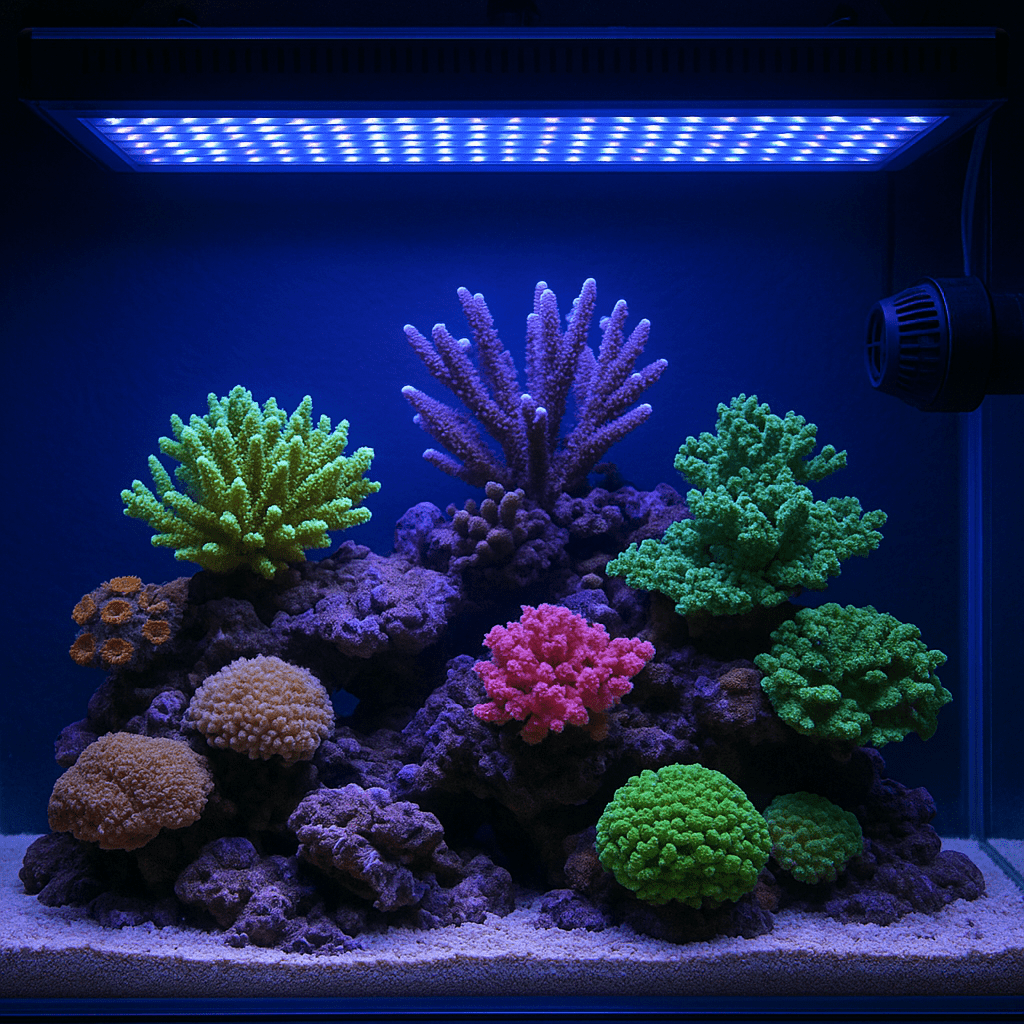
For most new reef keepers, the best reef tank size is 40 to 75 gallons. This range offers better stability, easier aquascaping, and enough room for fish and coral growth. Smaller tanks can work, but they demand faster corrections and tighter maintenance. Larger tanks are often easier to manage once they are running.
Choosing your first reef tank size shapes everything that follows. It affects cost, stocking, equipment, and daily care. Many beginners assume smaller tanks are easier. In reef keeping, that is often false. Small water volume changes quickly. Salinity swings faster. Temperature shifts happen sooner. Nutrients can spike overnight. A slightly larger aquarium gives you more margin for error. That matters when you are learning test kits, dosing, and coral placement. In this guide, you will learn which tank sizes work best for beginners, why stability matters, what equipment each size needs, and how to choose a tank that fits your budget and goals.
Quick Reference Tank Size Table
| Tank Size | Beginner Friendly? | Main Advantage | Main Drawback | Best For |
|---|---|---|---|---|
| 10–20 gallons | No, not ideal | Low upfront cost | Very unstable water parameters | Nano specialists |
| 20–30 gallons | Moderate | Compact footprint | Limited fish options | Small apartments |
| 40 gallons breeder | Yes | Excellent balance of volume and access | Needs quality equipment | Most beginners |
| 50–75 gallons | Best choice | Strong stability and stocking flexibility | Higher initial budget | First serious reef tanks |
| 90+ gallons | Yes, if budget allows | High stability and aquascaping freedom | Expensive setup and maintenance | Long-term display tanks |
This table gives the short answer. Most beginners do best with a 40 breeder, 50 gallon, or 75 gallon reef tank. These sizes hold enough water to buffer mistakes. They also leave room for beginner-friendly fish and easier coral placement.
Why Tank Size Matters So Much in Reef Keeping
Reef tanks reward stability. Corals, fish, and invertebrates all depend on consistent conditions. In a small tank, one extra feeding can raise nutrients fast. A missed top-off can push salinity up in hours. A failing heater can swing temperature before you notice. These problems happen in larger tanks too. They just happen more slowly.
That extra time helps beginners. You can test the water, spot a trend, and make a measured correction. Larger tanks also spread out aggression better. Fish have more territory. Coral colonies have more room to grow. Equipment choices improve as size increases too. Many reliable skimmers, return pumps, and lights are designed around mid-sized systems.
There is also a practical side. Bigger tanks are easier to aquascape. You can create caves, swim-throughs, and coral shelves. You can separate aggressive corals from peaceful ones. You can place high-light corals up top and low-light corals lower down. That flexibility makes success more likely.
Are Small Reef Tanks Good for Beginners?
Small reef tanks look appealing. They cost less at first. They fit on desks and counters. They use less salt and less water. That sounds beginner friendly. In practice, nano reefs are less forgiving. A five-gallon or ten-gallon reef can be beautiful, but it needs discipline.
Evaporation is the biggest issue. In a nano tank, a small amount of evaporation changes salinity fast. That stresses coral and invertebrates. Nutrient control is also harder. Overfeeding one clownfish can raise nitrate and phosphate quickly. Algae can spread in days. Coral warfare becomes a problem sooner because space is limited.
If you love nano reefs, start with at least 20 to 25 gallons. Add an auto top-off system. Keep stocking light. Focus on hardy corals like zoanthids, mushrooms, and many soft corals. Skip delicate SPS at first. A nano reef can teach strong habits. It just will not forgive weak ones.
The Best Reef Tank Sizes for Most Beginners
The sweet spot for beginners is 40 to 75 gallons. This size range balances cost, stability, and stocking options. It gives you enough water volume to reduce sudden swings. It also stays manageable during water changes and routine maintenance.
A 40 breeder is a favorite for good reason. It has a wide footprint. That makes aquascaping easier. It gives corals more horizontal space. It also allows better gas exchange. Many reef keepers consider it the best budget beginner reef tank.
A 50 to 75 gallon tank is even more forgiving. You can keep a pair of clownfish, a goby, a blenny, and a few other small reef-safe fish. You also have room for LPS and soft coral gardens, or a mixed reef with careful planning. A 75 gallon tank is often the best long-term beginner choice. It is large enough to grow with your skills. It is still affordable compared to very large systems.
If your budget allows, choose the largest tank you can comfortably maintain. Not the largest tank you can barely afford. Reef success depends on stable upkeep, not just display size.
Step-by-Step: How to Choose the Right Beginner Reef Tank Size
1. Measure your available space
Start with the room, not the tank. Measure floor space, wall clearance, and access around the stand. Leave room for cords, plumbing, and maintenance. You need space above the tank too. Lights, lids, and feeding access all matter.
2. Set a realistic total budget
The tank is only part of the cost. You also need a stand, light, heater, return pump, powerheads, test kits, rock, sand, salt, and likely an ATO. A cheap tank with poor equipment often costs more later. Plan for the full system.
3. Decide what you want to keep
Fish plans matter. Coral plans matter too. If you want only soft corals and a clownfish pair, a 25 to 40 gallon tank may work. If you want a mixed reef with more fish variety, 50 to 75 gallons is better. If you dream of tangs, most beginner tanks are too small.
4. Think about maintenance time
Small tanks need frequent attention. Mid-sized tanks need more water during changes, but often fewer emergency corrections. Be honest about your schedule. Consistency beats ambition.
5. Choose stability over novelty
Many beginners chase stylish all-in-one nanos. Some are excellent. Some are too cramped. If two tanks fit your space, choose the larger one. Extra water volume usually makes the learning curve smoother.
Aquarium Setup Considerations by Tank Size
Setup needs change with tank size. A 20 gallon reef may rely on simple filtration, weekly water changes, and an ATO. A 40 breeder often benefits from a sump, protein skimmer, and stronger flow. A 75 gallon reef usually performs best with a sump, reliable skimmer, heater controller, and two or more powerheads.
Aquascaping also changes. In smaller tanks, avoid wall-to-wall rock. Leave open sand and swim space. In larger tanks, build islands or arches. This improves flow and coral placement. It also reduces detritus buildup. Keep rock stable. Reef tanks often host snails, urchins, and burrowing fish that can shift loose structures.
Plan for future coral growth. Beginners often place frags too close together. A small torch coral or mushroom can double in size. A mid-sized tank gives you room to adjust. That is another reason 40 to 75 gallons works so well for first reefs.
Equipment Differences Between Nano and Mid-Sized Reef Tanks
Equipment quality matters more than many beginners expect. On a nano reef, one weak pump or inaccurate heater can cause big problems. On a 40 to 75 gallon tank, you still need quality gear, but there is more room for redundancy and better performance.
Lighting is a good example. A small tank may use one compact LED fixture. Coverage can still be uneven. A 40 breeder often needs a wider fixture or two smaller lights for even PAR. A 75 gallon usually needs longer fixtures or multiple modules. Better spread helps coral color and growth.
Flow follows the same pattern. Small tanks can create harsh dead spots or sandstorms quickly. Mid-sized tanks let you angle pumps better and create random flow. That helps LPS and soft corals extend normally. If you plan SPS later, a larger tank gives you more options for high-flow zones.
For more planning help, see reef tank equipment checklist, best beginner corals, reef tank water parameters, and how to cycle a reef tank.
Common Problems When Beginners Choose the Wrong Tank Size
Salinity swings in small tanks
This is one of the most common beginner issues. Water evaporates, but salt stays behind. In a small tank, salinity rises fast. Use an ATO. Check salinity with a calibrated refractometer. Top off daily if needed.
Nutrient spikes after feeding
New hobbyists often overfeed. In small tanks, leftover food breaks down quickly. Nitrate and phosphate rise. Algae follows. Feed lightly. Remove uneaten food. Increase export with water changes and better filtration.
Limited fish choices
A tiny tank forces hard stocking limits. Many active fish need more swimming room. Overstocking causes stress and aggression. Choose fish based on adult size and behavior, not store size.
Corals outgrowing the aquascape
Fast-growing soft corals can dominate small tanks. Euphyllia can sting nearby corals. Mushrooms can spread into every gap. Give each coral room. Research aggression before placement. Frag or trade colonies before they become a problem.
Frequently Asked Questions
Is a 20 gallon reef tank too small for a beginner?
Not always, but it is less forgiving. A 20 gallon can work if you keep stocking light and stay consistent. A 40 gallon is easier for most beginners.
What is the easiest reef tank size to maintain?
For most hobbyists, 40 to 75 gallons is the easiest range. It offers better stability without the high cost of very large systems.
Is a 75 gallon reef tank good for a first tank?
Yes. A 75 gallon reef tank is one of the best first choices if your budget supports it. It gives strong stability and flexible stocking.
Why are nano reef tanks harder?
Nano tanks change fast. Salinity, temperature, and nutrients can shift in hours. That leaves less time to spot and fix problems.
Should I buy the biggest tank I can afford?
Buy the biggest tank you can afford to set up and maintain properly. Leave room in the budget for quality equipment, salt, test kits, and livestock care.
Final Thoughts
The best reef tank size for beginners is usually not the smallest one. A 40 breeder, 50 gallon, or 75 gallon tank gives you the best chance of success. These sizes offer stability, better stocking options, and easier coral placement. They also give you time to learn from mistakes before they become disasters. If space is tight, a 20 to 25 gallon reef can work with careful planning. If you want the smoothest start, aim for the 40 to 75 gallon range. In reef keeping, a little more water often means a lot less stress.
Was this helpful?
Related Posts
How to Use a Dosing Pump
Learn how to use a dosing pump for stable reef chemistry, safer supplement delivery, and easier daily maintenance.
 By
ByReef Tank Magnesium
Reef tank magnesium supports stable calcium and alkalinity. Learn the ideal range, testing tips, dosing methods, and common…