

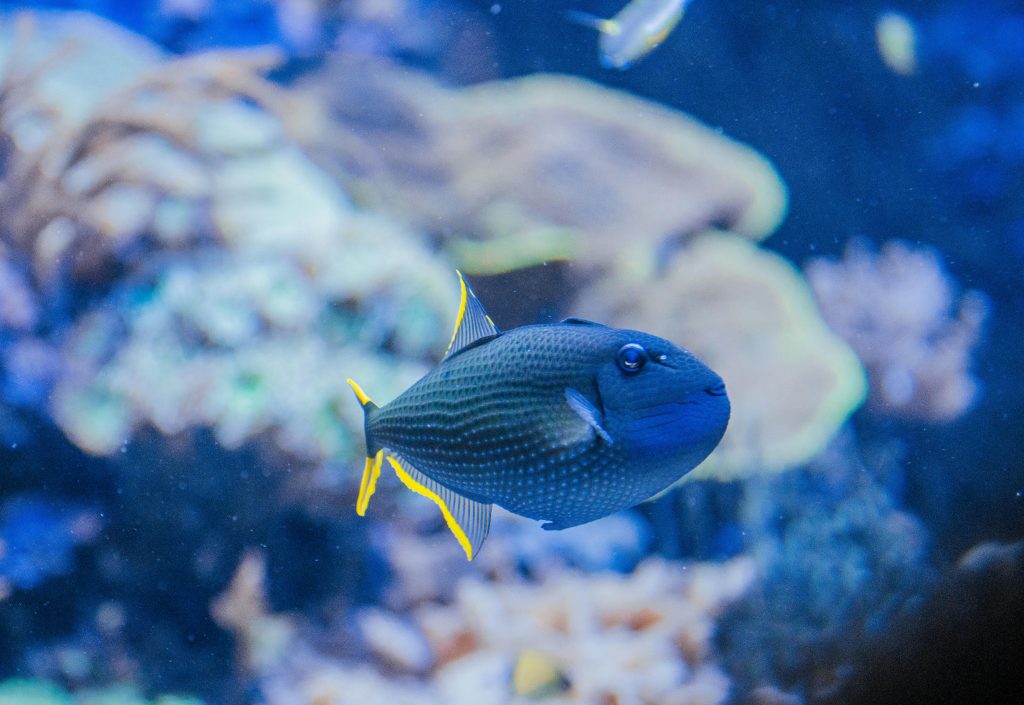
The Blue Throat Triggerfish is one of the most reef-friendly triggerfish available. It is active, colorful, and usually less destructive than many trigger relatives. With the right tank size, secure aquascape, and steady feeding routine, this species can thrive in a mixed marine aquarium and become a true centerpiece fish.
Many hobbyists love triggerfish but worry about aggression and coral damage. That concern is valid with many species. The Blue Throat Triggerfish, also called the Bluejaw Trigger, is different. It is a plankton-feeding trigger from deeper reef slopes. That natural behavior makes it less likely to chew rockwork or harass corals. It still needs careful planning. In this guide, you will learn tank size, diet, compatibility, reef safety, water flow, common problems, and practical care tips for long-term success.
Blue Throat Triggerfish Quick Reference
| Common name | Blue Throat Triggerfish |
| Scientific name | Xanthichthys auromarginatus |
| Adult size | 8 to 10 inches |
| Minimum tank size | 125 gallons |
| Temperament | Semi-aggressive |
| Reef safe | Usually reef safe with caution |
| Diet | Meaty marine foods, varied frozen diet |
| Care level | Moderate |
| Best placement | Open swimming space with caves |
| Ideal temperature | 75 to 79°F |
| Salinity | 1.024 to 1.026 |
| Nitrate | Under 20 ppm preferred |
This fish is often chosen by reef keepers who want a larger show fish without the usual triggerfish risks. It is still a powerful species. It needs stable water quality and enough room to swim. A cramped tank often leads to stress and aggression. A spacious aquarium helps this fish behave more calmly and feed with confidence.
Natural Habitat
The Blue Throat Triggerfish comes from the Indo-Pacific region. It is found around outer reef slopes and drop-offs. In nature, it often lives in areas with strong current and open water above the reef. It spends much of its time picking plankton and small prey from the water column. This matters in the home aquarium.
Unlike many triggers, this species does not spend all day biting rocks for invertebrates. That is one reason it is considered safer for reef tanks. Males show a vivid blue patch on the throat and brighter body markings. Females are more subdued but still attractive. In the wild, they often stay alert and ready to retreat into caves. That means they need both swimming room and secure shelter in captivity.
Knowing the natural habitat helps explain the best setup. These fish appreciate oxygen-rich water, brisk movement, and open lanes for cruising. They also prefer a tank with a few shaded retreats. A stressed trigger without hiding spots may pace the glass or become jumpy during feeding.
Aquarium Setup
A 125-gallon tank is the practical minimum for one adult Blue Throat Triggerfish. Larger is better. A 180-gallon aquarium gives better swimming space and more stable water quality. This species is active all day. It needs open water in the front and center of the tank. Avoid packing the aquascape too tightly.
Build a stable rock structure with caves and overhangs. Make sure all rocks are secure. Triggerfish are strong. They can dislodge loose pieces while darting into shelter. Use epoxy or rods if needed. Leave enough room around the rockwork for flow and maintenance. A sand bed is fine, but it is not critical for this species.
A tight lid is essential. Blue Throat Triggerfish can jump when startled. Cover every gap around plumbing and cords. Strong filtration also helps. Use an efficient protein skimmer and good mechanical export. These fish eat meaty foods and produce waste. Stable salinity, low dissolved organics, and strong oxygenation improve long-term health. If you are building a larger community system, read our guides on reef tank setup and protein skimmer basics.
Lighting Requirements
The Blue Throat Triggerfish has no special lighting demands. It is a fish-only care topic, not a coral lighting issue. In reef tanks, the lighting will usually be set for the corals. That works fine for this species. Moderate to bright reef lighting is generally well tolerated, as long as the fish has shaded places to retreat.
Very intense lighting across the entire tank can make a new specimen feel exposed. This is more common in bare, open aquascapes. Add caves, overhangs, and dimmer side areas so the fish can settle in. If the trigger hides constantly after introduction, the issue is usually stress, tankmates, or shipping shock rather than the light itself.
Use a consistent photoperiod. Sudden changes can startle active fish. Ramping lights up and down helps. This is especially useful in mixed reefs with strong LED systems. If your tank includes SPS corals, the fish usually adapts well as long as water quality remains stable and the aquascape offers shelter.
Water Flow
This species appreciates moderate to strong water movement. In nature, it lives in areas with current and open water exchange. Good flow supports gas exchange and keeps the fish active. It also helps remove waste from a tank housing a larger carnivorous fish.
Aim for broad, turbulent flow rather than a harsh direct jet. The fish should be able to swim through moving water without struggling constantly. In reef tanks, random flow patterns are ideal. They create a more natural environment and prevent dead spots around rockwork. The trigger will often cruise in the current and then duck into calmer zones to rest.
If the fish avoids one side of the tank, check for excessive direct flow or aggression from tankmates. If waste collects under the rockwork, increase circulation or adjust pump placement. Our reef tank flow guide can help you fine-tune circulation in larger marine systems.
Feeding
Blue Throat Triggerfish are eager feeders. They do best on a varied diet of marine-based meaty foods. Offer mysis shrimp, chopped clam, krill, squid, finely chopped shrimp, and quality frozen blends. High-quality pellets can also be used. Variety matters. It improves nutrition and reduces the risk of finicky feeding.
Feed adults one to two times daily. Smaller or newly imported fish often do better with two smaller meals. This species is a water-column feeder. Let food drift in the current instead of dropping large chunks to the bottom. Avoid overfeeding. Triggers are enthusiastic and will beg for food. Excess food quickly raises nitrate and phosphate.
Use vitamin-enriched foods a few times each week. This supports immune health and color. If the fish ignores food at first, try enriched mysis or fresh clam. New specimens often settle faster when fed in lower traffic periods. For more nutrition tips, see our article on feeding marine fish properly.
Compatibility
The Blue Throat Triggerfish is usually one of the safest triggerfish for a reef aquarium. It generally ignores corals. Many hobbyists keep it successfully with soft corals, LPS, and SPS. That said, no triggerfish is guaranteed reef safe. Individual behavior matters. Hungry or stressed fish are more likely to sample ornamental invertebrates.
Use caution with very small shrimp, tiny crabs, and delicate ornamental crustaceans. Cleaner shrimp may be ignored in some tanks and eaten in others. Snails are often left alone, but there are no promises. This fish usually does well with tangs, larger wrasses, dwarf angels, anthias, clownfish, and peaceful to moderately assertive community fish. Avoid housing it with highly aggressive triggers or large territorial predators unless the tank is very large.
Males can be kept singly. Male-female pairs are possible in large systems, but pairing should be attempted carefully. Introduce with planning and plenty of space. Quarantine all new fish first. This reduces disease risk and helps you confirm feeding response before release. Our marine fish quarantine guide is a helpful starting point.
Step-by-Step Acclimation Guide
Proper acclimation gives this species a much better start. Follow these steps for the best chance of success.
- Prepare a covered quarantine tank before the fish arrives.
- Match temperature carefully during the first 15 to 20 minutes.
- Test salinity in the shipping water and in your quarantine tank.
- Use a slow acclimation if salinity differs significantly.
- Transfer the fish gently without adding bag water to the tank.
- Keep lights dim for the first several hours.
- Offer a small meal after the fish has calmed down.
- Observe breathing, swimming, and feeding for several days.
- Monitor for ich, flukes, bacterial issues, and shipping damage.
- Move the fish to the display only after quarantine is complete.
This species usually adapts well once it starts eating. The first week matters most. Avoid sudden movements near the tank. Start with simple foods the fish can recognize quickly. Stable salinity and low stress are more important than complicated additives.
Propagation or Breeding
Blue Throat Triggerfish are not realistically bred by home reef hobbyists. Spawning behavior in captivity is rare, and raising larvae is extremely difficult. Most specimens in the trade are wild collected. Because of this, hobbyist propagation is not a practical care topic in the same way it is for clownfish or coral frags.
Can They Spawn in Aquariums?
There are occasional reports of pair bonding and courtship in very large systems. These cases are unusual. Even if spawning occurs, larval survival is the real challenge. The larvae require specialized foods, stable plankton culture, and advanced rearing systems.
Should You Try to Keep a Pair?
A pair can work in a large aquarium with careful introduction. However, pairing should not be attempted in undersized tanks. Start with healthy specimens and provide ample space. For most hobbyists, keeping one well-acclimated fish is the better choice.
Common Problems
Why is my Blue Throat Triggerfish not eating?
New imports often refuse food for a few days. Shipping stress is common. Poor acclimation, bullying tankmates, or elevated ammonia can also suppress appetite. Try enriched mysis, clam, or a high-quality frozen mix. Feed with pumps briefly reduced so the fish can focus. Check for rapid breathing or flashing, which may suggest parasites.
Why is it hiding all the time?
Hiding usually means the fish feels unsafe. Common causes include aggressive tankmates, lack of caves, sudden bright lighting, or recent introduction. Add more shelter and reduce external activity near the glass. Review tankmate behavior during feeding. A dominant tang or angel can intimidate a new trigger without obvious chasing.
Is it safe with shrimp and crabs?
Sometimes yes, sometimes no. This species is safer than many triggers, but it can still eat ornamental crustaceans. Risk rises if the shrimp is small, newly molted, or introduced after the trigger. Keep expectations realistic. If shrimp are a priority, observe closely and have a backup plan.
Why is my trigger becoming aggressive?
Aggression often increases in cramped tanks or with poor feeding routines. Rearranging rockwork can help reset territories. Increase swimming space if possible. Feed a varied diet on a steady schedule. Remove incompatible tankmates if conflict continues. Large fish need room to avoid each other.
Frequently Asked Questions
Is the Blue Throat Triggerfish reef safe?
Usually, yes, with caution. It is one of the most reef-safe triggers. Most ignore corals. Small crustaceans may still be at risk.
How big does a Blue Throat Triggerfish get?
Most reach about 8 to 10 inches in captivity. Growth depends on diet, space, and overall care.
What is the minimum tank size?
A 125-gallon tank is the minimum for one adult. Larger tanks provide better swimming room and improve compatibility.
Can you keep two Blue Throat Triggerfish together?
Sometimes, in a large aquarium. A male-female pair has the best chance. Two males are much riskier.
Do Blue Throat Triggerfish need a lid?
Yes. A secure lid is strongly recommended. This species can jump when startled or chased.
The Blue Throat Triggerfish is a great option for hobbyists who want a bold centerpiece fish in a reef or fish-only system. It offers triggerfish personality without the extreme behavior seen in more destructive species. Give it space, oxygen-rich water, secure rockwork, and a varied diet. In return, you get an active, intelligent fish that often becomes the star of the aquarium.
Was this helpful?
Related Posts
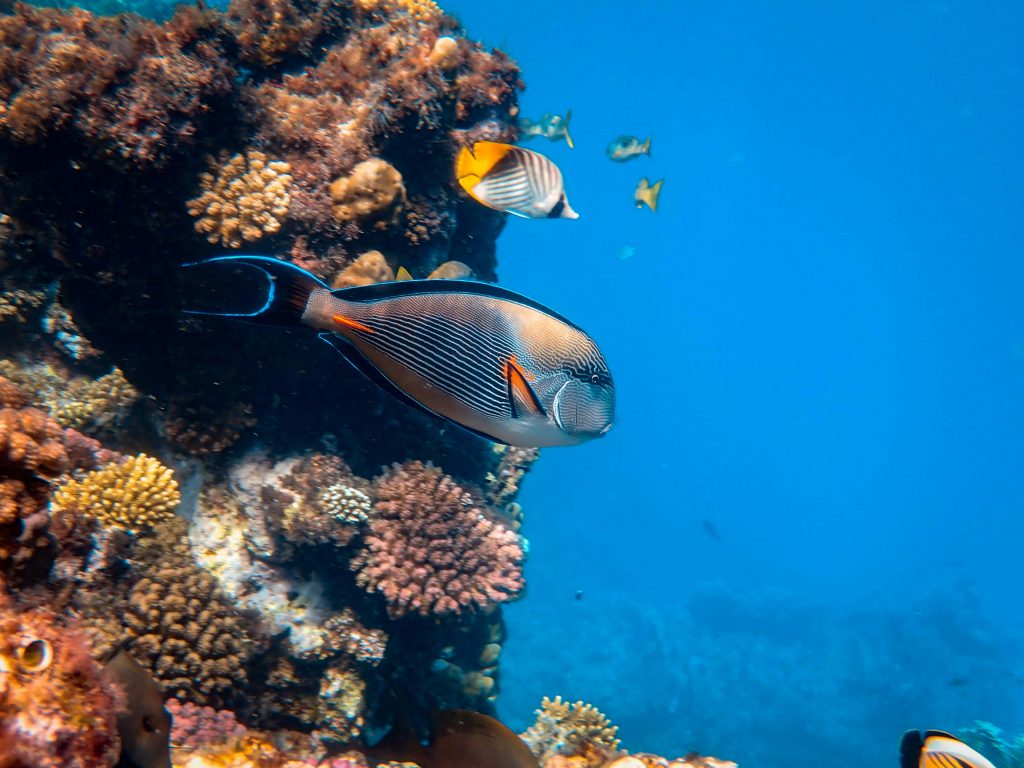
Sohal Tang (Acanthurus Sohal)
Sohal Tang care centers on space, heavy feeding, and aggression control. Learn tank size, diet, compatibility, and common…
 By
By
Reef Safe Fish Guide
Learn which reef safe fish work best in coral tanks, plus species to avoid, compatibility tips, and beginner-friendly…
[favorite_button]
My Bookmarks:
To see full list click here
[user_favorites user_id="" include_links="true" site_id="" post_types="" include_thumbnails="true" thumbnail_size="thumbnail" include_excerpt="false"]