

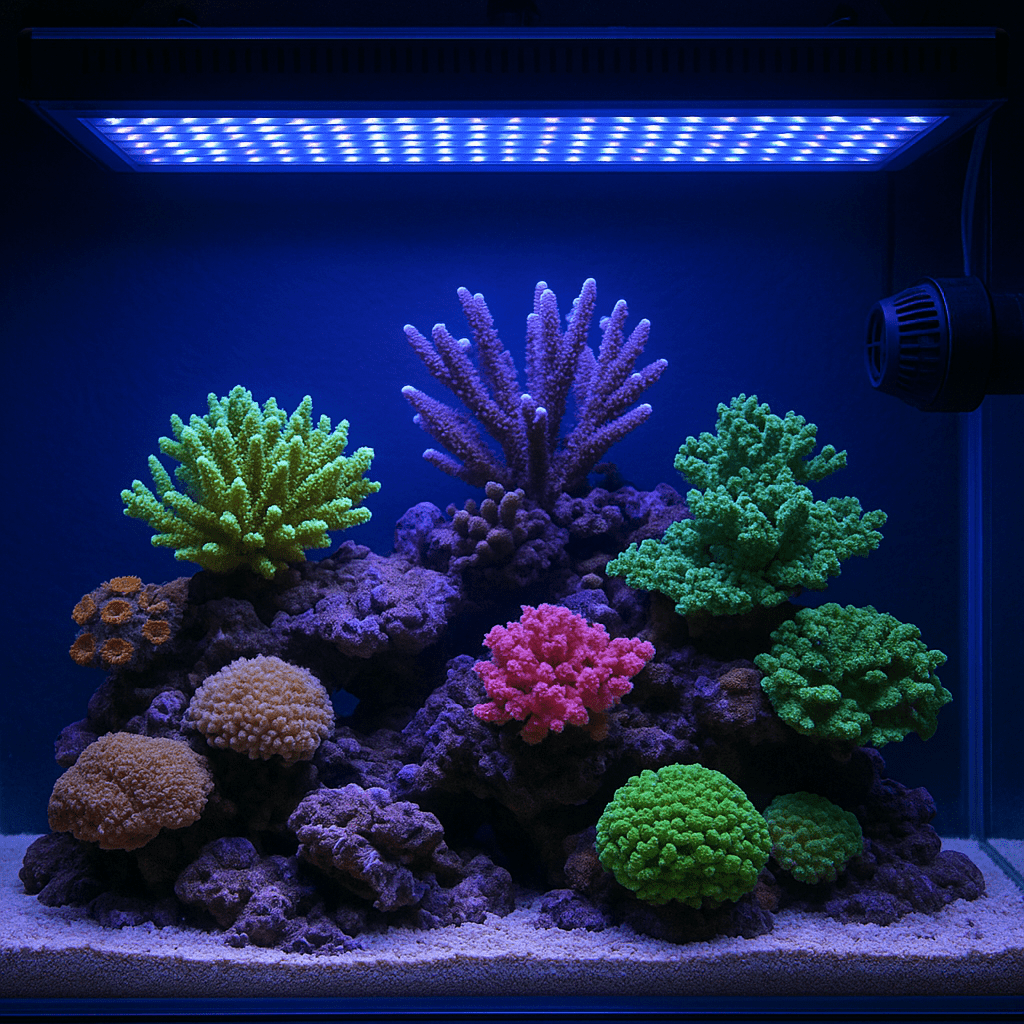
Calcium, alkalinity, and magnesium control coral skeleton growth and reef stability. When these three parameters stay balanced, corals grow faster, coralline algae spreads, and daily dosing becomes easier. This guide explains what each parameter does, where to keep it, and how to correct common problems without causing swings.
Many reef keepers struggle with these numbers at first. Test kits show changes. Corals react differently. Online advice often sounds confusing. The good news is that the chemistry becomes simple once you understand each parameter’s job. Calcium supplies skeletal material. Alkalinity supports calcification and pH stability. Magnesium helps prevent calcium and alkalinity from falling out of solution too quickly. In this article, you will learn target ranges, testing habits, dosing methods, and troubleshooting steps. You will also learn how these values interact in real reef tanks. That practical understanding matters more than memorizing one perfect number.
Quick Reference Table
| Parameter | Recommended Range | Why It Matters | Common Correction |
|---|---|---|---|
| Calcium | 400 to 450 ppm | Supports coral skeleton growth | Calcium chloride supplement |
| Alkalinity | 7.5 to 9 dKH | Supports calcification and pH stability | Alkalinity buffer or soda ash |
| Magnesium | 1250 to 1400 ppm | Helps stabilize calcium and alkalinity | Magnesium chloride blend |
| pH | 7.8 to 8.4 | Impacts coral health and alk behavior | Improve gas exchange and stability |
| Testing Frequency | 2 to 4 times weekly | Tracks consumption trends | Adjust dosing slowly |
This table gives you a safe starting point. Stability matters more than chasing exact numbers. A tank at 8.0 dKH every day is usually better than a tank swinging between 7 and 10 dKH each week.
What Calcium Does in a Reef Tank
Calcium is a major building block for hard corals. Stony corals use it to build aragonite skeletons. Coralline algae also consumes large amounts of calcium. Clams and other calcifying invertebrates need it too. In a lightly stocked soft coral tank, calcium use may stay low. In an SPS-dominant reef, demand can rise fast.
A healthy range is usually 400 to 450 ppm. Some tanks do fine slightly outside that range. Problems start when calcium drops low and stays low. Coral growth slows. New tips may look weak. Coralline algae can fade. Very high calcium is less common, but it can still create issues. It may encourage precipitation when alkalinity is also high. That can leave white buildup on heaters, pumps, and dosing lines.
Do not raise calcium too quickly. Large corrections can stress sensitive systems. A slow correction over several days is safer. If calcium keeps falling, your tank likely has real demand. That means you should look at dosing consistency instead of repeating random one-time fixes.
What Alkalinity Does in a Reef Tank
Alkalinity is often the most important number to watch closely. It measures the water’s buffering capacity. In reef tanks, it also reflects available bicarbonate and carbonate used in calcification. Corals need that supply to grow skeleton efficiently. That is why alkalinity often changes faster than calcium.
Most reef keepers target 7.5 to 9 dKH. Ultra-low nutrient systems often run lower. Mixed reefs often do well near the middle of that range. The best target is one you can hold steady. Sudden alkalinity swings can burn SPS tips, reduce polyp extension, and cause tissue recession. Even soft coral tanks benefit from stable alkalinity because it supports overall chemical balance.
Alkalinity also affects pH behavior. Low alkalinity can make pH less stable. High alkalinity is not always better. If nutrients are very low, elevated alkalinity may stress some Acropora. That is why matching alkalinity to your nutrient level and husbandry style works better than blindly copying another reefer’s numbers.
What Magnesium Does in a Reef Tank
Magnesium gets less attention, but it plays a critical support role. It helps keep calcium and alkalinity in solution. When magnesium is too low, maintaining the other two becomes harder. You may dose calcium and alkalinity, yet still see unstable readings. That often leads hobbyists to think their test kits are wrong.
A good magnesium range is 1250 to 1400 ppm. Natural seawater sits around the lower part of that range. Many salt mixes land near 1300 to 1380 ppm. Magnesium usually drops more slowly than alkalinity. Because of that, you do not need to test it daily in most tanks. Weekly or biweekly testing is enough for many systems once the tank is stable.
Low magnesium can show up as poor parameter stability, weak coralline growth, or stubborn precipitation issues. High magnesium is less common. It usually comes from overcorrection or a salt mix with elevated values. Modest elevation is often tolerated, but extreme levels should be avoided. Slow corrections are still the safest approach.
How These Three Parameters Work Together
Reef chemistry makes more sense when you stop viewing these numbers separately. Calcium, alkalinity, and magnesium are linked. Corals consume calcium and alkalinity together during skeleton growth. Magnesium helps keep that process chemically manageable in seawater. If one value drifts far out of line, the other two often become harder to maintain.
For example, many reef keepers chase low calcium by adding large doses. If alkalinity is already high, the added calcium may precipitate instead of staying available. You then see cloudy water, crust on equipment, or little change in test results. Another common issue is low magnesium. In that case, calcium and alkalinity may both seem impossible to stabilize.
The practical lesson is simple. Test all three before making a major correction. Look for trends, not isolated numbers. Stable consumption patterns are easier to manage than emergency adjustments. Once you know your tank’s daily demand, dosing becomes much more predictable.
Testing and Tracking Consumption
Good testing habits prevent most chemistry problems. New reef keepers should test alkalinity several times each week. Calcium can be tested two or three times weekly. Magnesium can usually be tested weekly at first. Use the same kits each time when possible. Consistent methods reduce confusion.
Always test at roughly the same time of day. Record every result in a log. A notebook works fine. An app works too. The goal is to spot a pattern. If alkalinity drops 0.3 dKH per day, that tells you far more than a single reading. The same logic applies to calcium use over a week.
When results seem odd, retest before dosing. Check expiration dates. Rinse vials well. Follow instructions exactly. Small testing mistakes create big dosing mistakes. If one parameter looks far off, confirm it with a second test if possible. Reliable data is the foundation of stable reef chemistry.
Step-by-Step Guide to Correcting Levels Safely
Start by testing calcium, alkalinity, and magnesium together. Write down each result. Compare them to your target range. Decide which value needs correction first. In most cases, alkalinity deserves the closest attention because it changes fastest and affects coral response quickly.
Next, correct magnesium if it is clearly low. This creates a more stable base. Then adjust alkalinity and calcium slowly. Use a reef chemistry calculator from a trusted source. Dose only the amount needed for a modest increase. Wait, retest, and repeat if needed. Avoid large one-day jumps.
After correction, measure daily consumption. Test at the same time for several days. That shows how much your tank uses. Once you know demand, choose a maintenance method. Many hobbyists use two-part dosing. Others use kalkwasser or a calcium reactor. The best method is the one you can run consistently and safely.
Finally, keep water changes in mind. A good salt mix can help maintain baseline chemistry. Water changes do not replace proper dosing in high-demand tanks, but they do help reset minor imbalances.
Dosing Methods for Beginners and Growing Reefs
Two-part dosing is the easiest starting point for most reef keepers. One part raises alkalinity. The other raises calcium. Magnesium is added separately when needed. This method is simple, flexible, and easy to automate with dosing pumps. It works well for mixed reefs and many SPS systems.
Kalkwasser is another popular option. It adds both calcium and alkalinity in balanced form. It also helps support pH. However, it must be used carefully. Overdosing can spike pH and alkalinity. It works best when added slowly through top-off water or a controlled dosing system.
Calcium reactors suit larger or high-demand tanks. They dissolve media using carbon dioxide. That releases calcium and alkalinity continuously. Reactors are powerful, but they have a steeper learning curve. Beginners usually do better with two-part dosing first. Once coral demand rises, a reactor may become more practical and cost-effective.
If you are still setting up your system, read our aquarium cycling guide, reef tank equipment checklist, dosing pump setup tips, and beginner coral care guide.
Common Problems
Why does alkalinity keep dropping?
This usually means your tank has active calcification. Stony corals, coralline algae, and clams all consume alkalinity. Test daily for a week. Calculate the average drop. Then match that demand with daily dosing. Also check magnesium. Low magnesium can make stability harder.
Why is calcium hard to raise?
Check alkalinity and magnesium first. High alkalinity plus heavy dosing can trigger precipitation. Low magnesium can also interfere with stable calcium levels. Make sure your salt mix is not already skewing results. Retest with a fresh kit if readings seem unrealistic.
What causes white crust on heaters and pumps?
That buildup is often calcium carbonate precipitation. It happens when calcium and alkalinity are pushed too high, especially near warm equipment or concentrated dosing areas. Dose into high flow. Separate alkalinity and calcium additions. Avoid large corrections all at once.
Can low magnesium hurt coral growth?
Yes, indirectly. Corals may still have enough calcium, but unstable chemistry slows growth. Low magnesium often makes it harder to hold calcium and alkalinity steady. Correct it gradually, then reevaluate the other two parameters.
Should I chase natural seawater numbers exactly?
Not necessarily. Stability matters more than exact imitation. Many successful tanks run slightly above or below natural seawater values. Choose reasonable targets and keep them consistent. Corals adapt well to stable conditions.
Frequently Asked Questions
What is the ideal alkalinity for a mixed reef?
Aim for about 8 to 9 dKH in many mixed reefs. The exact number matters less than consistency. Avoid fast swings.
How often should I test calcium, alkalinity, and magnesium?
Test alkalinity two to four times weekly at first. Test calcium two or three times weekly. Test magnesium weekly until the tank is stable.
Can water changes alone maintain these levels?
In very low-demand tanks, sometimes yes. In coral-heavy tanks, usually no. Growing stony corals often consume more than water changes can replace.
Is high alkalinity dangerous?
It can be, especially in low-nutrient SPS tanks. Elevated alkalinity combined with instability can stress corals. Moderate and stable is safer.
Which is more important, calcium or alkalinity?
Both matter, but alkalinity usually needs closer monitoring. It changes faster and corals often react to alkalinity swings sooner.
Final Thoughts
Calcium, alkalinity, and magnesium are the backbone of reef chemistry. You do not need to fear them. You need a system. Test consistently. Record results. Correct slowly. Match dosing to real consumption. When these habits become routine, coral growth becomes more predictable and your reef becomes easier to manage. Stable chemistry is not about perfection. It is about repeatable care every day.
Was this helpful?
Related Posts
Cuban Hogfish (bodianus Pulchellus)
Cuban Hogfish care is straightforward in larger reef tanks. Learn tank size, diet, compatibility, and reef safety before…
 By
ByWhat to Do During a Power Outage
A reef tank power outage demands fast action. Protect oxygen, temperature, and circulation first to keep fish and…
 By
By[favorite_button]
My Bookmarks:
To see full list click here
[user_favorites user_id="" include_links="true" site_id="" post_types="" include_thumbnails="true" thumbnail_size="thumbnail" include_excerpt="false"]