
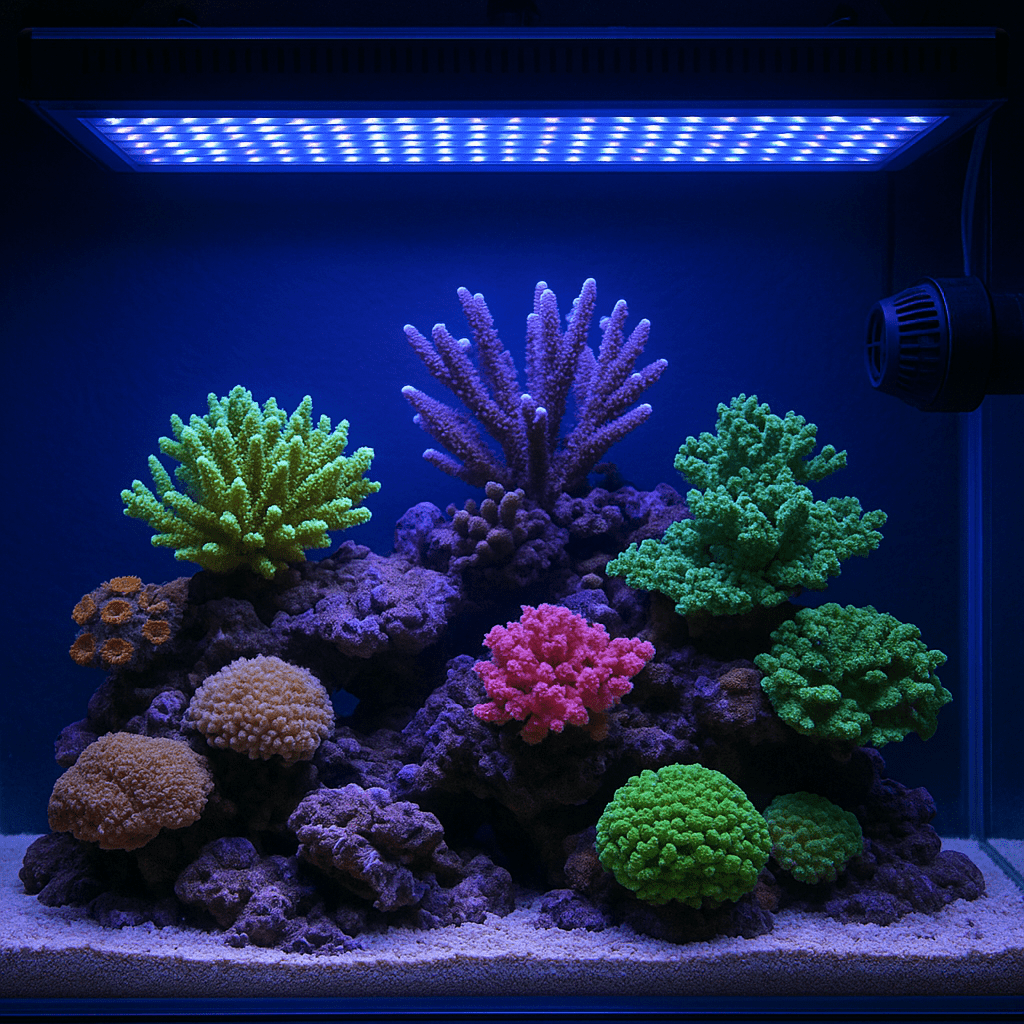
Coral lighting basics come down to three things. Intensity, spectrum, and stability. Corals use light to fuel photosynthesis through their zooxanthellae. Good lighting helps growth, color, and health. Poor lighting causes stress, fading, or tissue loss. Most reef tanks do best with a balanced schedule and gradual changes.
Lighting is one of the first big decisions in reef keeping. It also causes the most confusion. New hobbyists often focus on brand names first. In practice, coral response matters more than marketing terms. You need to match the light to the corals you keep. You also need to place corals correctly and avoid sudden changes. In this guide, you will learn how reef lighting works, what PAR means, how spectrum affects coral color, and how to build a simple lighting plan that works for beginner and mixed reefs.
Quick Reference Table
| Topic | Beginner Guideline |
|---|---|
| Photoperiod | 8 to 10 hours of full lighting |
| Blue-heavy viewing period | 10 to 12 hours total, including ramp time |
| Soft coral PAR | 50 to 100 PAR |
| LPS coral PAR | 75 to 150 PAR |
| SPS coral PAR | 200 to 350 PAR for many species |
| Best spectrum range | Blue and violet heavy reef spectrum |
| Acclimation period | 2 to 4 weeks for most new corals |
| Main risk | Increasing intensity too fast |
Use these numbers as starting points. They are not strict rules. Different corals adapt to different conditions. Tank depth, rockwork, water clarity, and fixture spread all change the result.
What Coral Lighting Really Does
Most reef corals contain symbiotic algae called zooxanthellae. These algae live inside coral tissue. They use light to produce energy. The coral then uses that energy for growth and survival. This is why lighting matters so much in reef aquariums.
Light does more than support growth. It also affects coral color and shape. Too little light can lead to browning, stretching, and weak growth. Too much light can bleach corals. It can also cause tissue recession. Corals need a useful amount of light, not simply the brightest light possible.
This is why reef keepers talk about balance. A good light setup gives enough intensity for photosynthesis. It also provides a reef-appropriate spectrum. Just as important, it stays consistent every day. Corals adapt slowly. Stable lighting usually beats constant tweaking.
Understanding PAR, PUR, and Spectrum
PAR stands for Photosynthetically Active Radiation. It measures usable light in the 400 to 700 nanometer range. In reef tanks, PAR is the most practical number for coral placement. It tells you how much light reaches a specific spot.
PUR means Photosynthetically Usable Radiation. It refers to the wavelengths corals use most efficiently. Reef hobbyists often mention PUR, but PAR is easier to measure. That is why PAR maps are so common when comparing lights.
Spectrum describes the color mix of the light. Corals usually respond best to blue and violet heavy spectrums. These wavelengths penetrate water well in nature. They also support fluorescence. White channels can help visual balance. Too much white often increases glare and nuisance algae. A blue-heavy spectrum is usually safer for reef tanks.
If you want a simple rule, focus on stable PAR and a proven reef spectrum. Do not chase every color channel. Corals care more about consistency than novelty.
Natural Habitat and Why It Matters
Reef corals come from shallow tropical seas. Many live in clear, sunlit water. Others grow in shaded ledges, deeper slopes, or turbid lagoons. That natural habitat affects how much light a coral can handle.
Acropora often come from bright, high-energy zones. They usually want stronger light and flow. Mushrooms and many fleshy LPS often come from lower light areas. They can struggle under intense lighting. This is why coral type matters more than fixture power alone.
Try to think about the coral’s original environment. Was it exposed to strong tropical sun? Was it shaded by rock? Was the water clear or cloudy? These clues help you place corals better. They also reduce stress during acclimation.
For more beginner placement advice, see reef tank aquascaping basics and how to place corals in a reef tank.
Lighting Requirements by Coral Type
Soft corals usually need the least light. Many leathers, zoanthids, and mushrooms do well around 50 to 100 PAR. Some can handle more. Many look best under moderate blue-heavy light.
LPS corals often prefer moderate lighting. A good target is 75 to 150 PAR for many species. Euphyllia, acans, blastomussa, and favia often thrive in that range. Some chalices and scolymia prefer lower light. Watch tissue inflation and color for clues.
SPS corals usually demand stronger lighting. Many acropora and montipora perform best from 200 to 350 PAR. Some tanks run higher. High PAR only works when nutrients, flow, and chemistry are stable. Strong light with weak stability often causes problems.
Always remember that placement changes PAR. The same fixture may produce low light on the sand and high light near the surface. Use coral type and position together. Never judge lighting by fixture percentage alone.
Aquarium Setup and Light Spread
Tank dimensions affect lighting more than many hobbyists expect. A shallow frag tank needs less power than a deep display. A long tank needs spread across the full length. A cube needs even coverage from front to back.
Mounting height also matters. Higher mounting improves spread and blending. It can reduce hot spots. It also lowers intensity at the water surface. Lower mounting increases punch but can create harsh shadows. The right height depends on fixture design.
Rockwork changes everything. Tall bommies create bright peaks and shaded valleys. Overhangs create low light zones. This is useful in mixed reefs. You can place SPS high, LPS mid-level, and soft corals lower. Good aquascaping gives you lighting zones without changing fixtures.
If you are still building your tank, read reef tank setup guide for a full beginner plan.
Choosing a Reef Light
Most reef hobbyists choose between LED, T5, or hybrid systems. LEDs are the most common today. They run cool, offer controllability, and create shimmer. Good LEDs can grow all common coral types when used properly.
T5 fixtures produce even spread and fewer shadows. They are forgiving and effective. Many SPS keepers still love them. The tradeoff is bulb replacement and less control. Hybrid systems combine LED shimmer with T5 fill. They are excellent but cost more.
Do not buy a light based only on wattage. Look for spread, PAR data, and real reef results. Ask whether the light can cover your tank dimensions. A powerful fixture with poor spread can leave dark areas. A moderate fixture with good spread often performs better.
How to Set a Simple Lighting Schedule
Keep your schedule simple. Corals do not need dramatic sunrise and sunset effects. They need a stable daily pattern. For most tanks, use 8 to 10 hours of main lighting. Include a short ramp up and ramp down. This makes viewing more pleasant.
A common beginner schedule works well. Ramp blues up for 1 to 2 hours. Run your main peak for 6 to 8 hours. Ramp down for 1 to 2 hours. Avoid very long full-power periods. More hours does not always mean better growth.
Moonlight is optional. It should stay very dim. Bright moonlights all night can stress fish and invertebrates. Darkness is part of a healthy reef rhythm. Corals and fish benefit from a true night period.
Step-by-Step Coral Light Acclimation
New corals often fail because of light shock. Even healthy corals can bleach if moved into strong light too fast. Follow a slow acclimation process every time you add a coral or upgrade a fixture.
- Start the new coral lower in the tank.
- Reduce fixture intensity by 20 to 40 percent if needed.
- Use the light’s acclimation mode if available.
- Watch coral color and polyp extension daily.
- Move the coral upward slowly over 2 to 4 weeks.
- Stop increasing light if the coral pales or retracts.
This slow approach prevents bleaching. It also gives the coral time to adjust its zooxanthellae density. Patience matters here. Fast changes often end badly.
Water Flow and Lighting Work Together
Strong lighting increases a coral’s metabolic demand. That means flow becomes even more important. Water movement helps remove waste. It delivers oxygen and nutrients. It also prevents stagnant zones around the coral.
A coral under bright light but weak flow may struggle. Tissue can stay irritated. Detritus can settle. Gas exchange can suffer. This is common with SPS corals. They need both strong light and strong, varied flow.
LPS and soft corals usually prefer gentler flow. Their tissue can tear under direct blasting. Match the flow to the coral type, then match the light to the placement. Reef success often comes from balancing these factors together.
Feeding and Nutrients Under Strong Lighting
Light fuels photosynthesis, but corals still need nutrients. Very bright tanks with ultra-low nutrients can lead to pale corals. This is common in modern systems with aggressive filtration. Corals need some nitrate and phosphate to stay healthy.
Many LPS corals benefit from direct feeding. Offer mysis, reef roids, or other coral foods in moderation. SPS usually rely more on dissolved nutrients and stable water quality. Do not overfeed to fix a lighting issue. Test water first.
As a general rule, bright light works best when alkalinity, nutrients, and flow are stable. If one factor is off, problems appear faster. For help with nutrient balance, visit reef tank water parameters.
Common Problems
Why are my corals turning brown?
Brown corals often point to low light, high nutrients, or both. Corals may increase zooxanthellae density in lower light. That darker look can hide brighter pigments. Check PAR, nitrate, and phosphate. Improve lighting slowly. Avoid making large changes in one day.
Why are my corals bleaching?
Bleaching usually means too much stress. Sudden light increases are a common cause. Heat, unstable alkalinity, and shipping stress also contribute. Reduce intensity, shorten the peak period, and improve stability. Corals can recover if tissue remains intact.
Why do my SPS lose color under strong lights?
This often happens when nutrients are too low. The light may not be the only issue. Test nitrate and phosphate. Check alkalinity swings too. Strong light with unstable chemistry can wash out pigments. Lower intensity slightly while you correct the root cause.
Why are my corals stretching upward?
Stretching usually suggests insufficient light. Zoanthids and soft corals often show this first. The colony may elongate toward the source. Increase light slowly or move the coral higher. Also make sure the light spread is even across the tank.
Why do shaded areas in my tank struggle?
LEDs can create shadows around dense branches and overhangs. This is common in SPS tanks. Raise the fixture, add supplemental bars, or improve fixture spread. Better coverage often solves growth issues in lower branches.
Frequently Asked Questions
How many hours should reef lights stay on?
Most reef tanks do well with 8 to 10 hours of main lighting. Include ramp time if you like. Very long photoperiods often add algae without helping coral growth.
Is blue light enough for corals?
Blue and violet wavelengths are very important for coral health. Many successful reef tanks run blue-heavy settings. You still need enough overall intensity and a balanced reef spectrum.
Do I need a PAR meter?
You do not need one to start, but it helps a lot. A PAR meter removes guesswork. Many local clubs and stores rent them. That can save money and prevent coral losses.
Can too much light cause algae?
Yes, especially when nutrients are elevated. Long photoperiods and excess white light can encourage nuisance algae. Lighting is only part of the issue. Nutrient control still matters.
Should I change lighting if my corals look fine?
Usually no. Stable, healthy corals are a good sign. Constant adjustments often create stress. Change only when you have a clear reason and a slow plan.
Final Thoughts
Coral lighting basics are simpler than they first appear. Match light intensity to coral type. Use a blue-heavy reef spectrum. Keep the schedule steady. Acclimate slowly. Then let the corals tell you how they feel. Good extension, steady growth, and stable color usually mean you are on the right track. In reef keeping, measured changes beat dramatic ones every time.
Was this helpful?
Related Posts
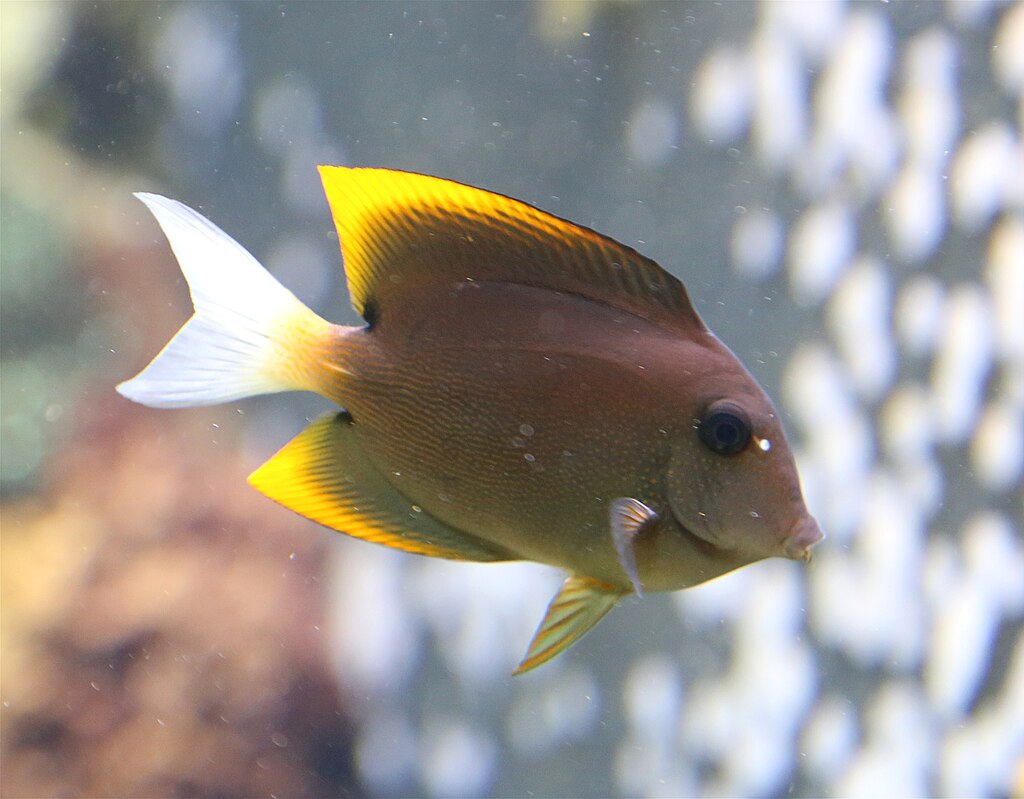
Juvenile Orange Shoulder (acanthurus Olivaceus)
Juvenile orange shoulder tangs are bright, hardy, and reef safe, but they grow large and need a spacious…
 By
ByBest Filtration Systems
Best Filtration Systems for a Healthy Saltwater Aquarium Choosing the best filtration system for your saltwater aquarium is…
[favorite_button]
My Bookmarks:
To see full list click here
[user_favorites user_id="" include_links="true" site_id="" post_types="" include_thumbnails="true" thumbnail_size="thumbnail" include_excerpt="false"]