Coral placement depends heavily on water movement. Low flow and high flow zones each serve different coral types. Matching a coral to the right zone improves polyp extension, feeding, growth, and long-term health. It also prevents tissue damage, detritus buildup, and many common reef tank problems.
Many reef keepers focus on lighting first. That makes sense. Light drives coral growth. Yet flow is just as important. Water movement brings oxygen and food. It removes waste and mucus. It also helps corals defend themselves from sediment and algae. In this guide, you will learn how to identify low flow and high flow areas, which corals prefer each zone, and how to place corals for better growth and fewer problems. We will also cover aquascaping, pump placement, troubleshooting, and common mistakes that cause coral stress.
Quick Reference Table
| Zone | Flow Strength | Best For | Signs It Is Correct | Signs It Is Too Strong or Too Weak |
|---|---|---|---|---|
| Low Flow | Gentle, indirect movement | Mushrooms, many zoanthids, some LPS | Soft sway, full inflation, no debris trapped | Detritus buildup, algae, shriveled tissue, poor feeding response |
| Moderate Flow | Steady, alternating movement | Most LPS, many soft corals, mixed reefs | Gentle tissue movement, clean surfaces, good extension | Flesh recession, stagnant spots, weak polyp extension |
| High Flow | Strong, turbulent, random movement | SPS like Acropora, Montipora, Birdsnest | Tight healthy tissue, strong color, no dead spots | Burned tips from poor chemistry balance, tissue peeling, bent flesh |
Use this table as a starting point. Every tank behaves differently. Rockwork changes flow patterns. Pump placement also matters. Always watch the coral itself. Coral behavior tells you more than a chart can.
Why Water Flow Matters for Coral Placement
Corals do not just sit in water. They live inside moving water. In nature, waves and currents constantly pass over the reef. That movement delivers suspended food. It carries away waste products. It also prevents sediment from settling on coral tissue.
In an aquarium, poor flow causes predictable issues. Detritus collects on rock and coral bases. Cyanobacteria often appears in these stagnant areas. LPS corals may inflate but fail to thrive. SPS corals may lose color or develop dead patches. Even hardy soft corals can stay closed if water movement is wrong.
Good flow is not only about strength. Pattern matters too. Corals prefer random, turbulent movement more than a constant jet. A direct stream can strip tissue. It can also prevent full extension. This is why modern wavemakers work so well. They create changing currents that better mimic reef conditions.
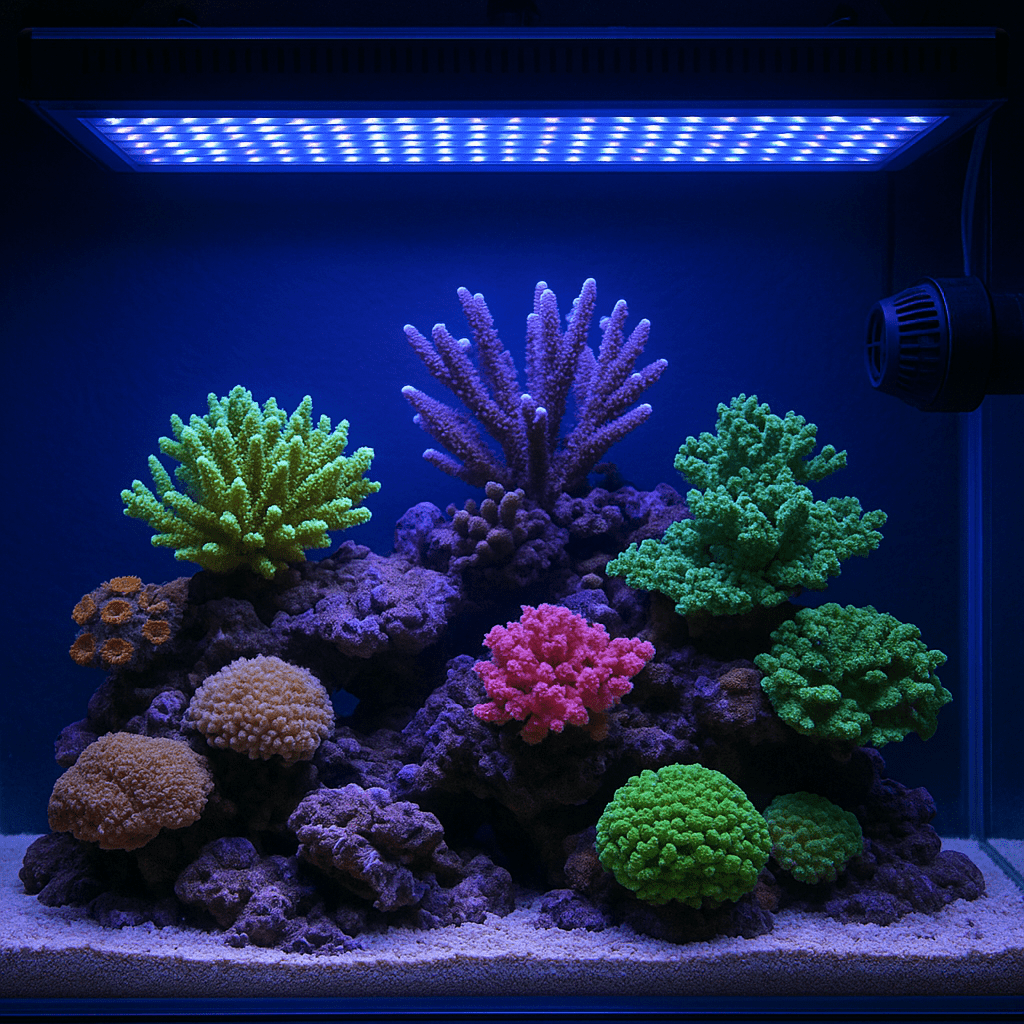
If you want healthier corals, think in zones. Build gentle areas for fleshy corals. Build energetic areas for branching SPS. A mixed reef works best when each coral gets the flow style it evolved to handle.
How to Identify Low Flow and High Flow Zones in Your Tank
You do not need expensive tools to map flow. Start by watching particles in the water. Feed a small amount of fine food. Then observe where it settles and where it moves quickly. Areas where food drops straight down are usually low flow. Areas where particles swirl and stay suspended are higher flow.
Look at your sand bed too. Bare spots often indicate strong current. Dirty corners suggest weak circulation. Coral behavior gives more clues. Euphyllia should sway gently. Acropora should receive brisk, changing flow. Mushrooms should not fold over from blast pressure.
Rockwork creates shadows and eddies. Behind large structures, flow often drops sharply. Near pump outlets, flow can become too direct. The top third of the tank usually has stronger movement. The lower back corners often have less. Still, every aquascape is unique.
A simple trick helps a lot. Place a few test frags in different areas. Observe them for several days. Check extension, inflation, and tissue response. Move them if needed. This careful approach prevents losses and teaches you how your tank really works.
Natural Habitat and What It Tells You
Coral placement becomes easier when you think about natural habitat. Corals from shallow reef crests often receive intense, chaotic wave action. These species usually tolerate or require high flow. Acropora, Stylophora, and Birdsnest fit this pattern well. They grow in exposed zones where water movement stays strong.
Other corals come from lagoons, protected reef slopes, or shaded crevices. These areas still have flow, but it is gentler. Mushrooms, many zoanthids, and fleshy LPS often prefer these calmer conditions. They can be damaged by constant direct current.
Natural habitat also explains coral shape. Branching SPS are built to handle water rushing around thin branches. Fleshy corals have large exposed tissue that can tear under harsh flow. Plate and encrusting forms may collect sediment if placed too low in stagnant areas.
You do not need to copy the ocean exactly. Few tanks can. But habitat clues help you make smarter choices. When in doubt, research where the coral grows in the wild. That often tells you whether to place it in a low flow pocket or a high energy zone.
Aquarium Setup and Aquascaping for Better Flow Zones
Good coral placement starts with good aquascaping. A solid wall of rock blocks circulation. It creates dead spots behind the structure. An open scape works better. Leave channels between rocks. Build arches and islands. This allows water to move around and through the reef.
Tank size matters too. Small tanks can have strong flow, but it is harder to make it gentle and random. In larger tanks, you have more room to create distinct zones. One side can support SPS. Another can hold fleshy LPS and soft corals.
Pump placement is critical. Two pumps facing each other can create chaotic movement. A single pump pointed straight at a coral often causes damage. Aim pumps across the front glass or toward open water. Let the flow bounce and diffuse before it reaches the coral.
Return nozzles can help, but they rarely replace wavemakers. Use them to eliminate dead spots near the surface or behind rocks. Revisit your layout as corals grow. A colony that starts small can later block flow to everything behind it. Reef tanks change over time. Your flow plan should change too.
Best Corals for Low Flow Zones
Low flow does not mean no flow. Corals still need movement. The goal is gentle, indirect circulation. This suits corals with fleshy tissue or broad surfaces. Mushroom corals are classic low flow choices. They often expand better in calm areas. Too much current can make them detach or stay shrunken.
Many zoanthids also do well in lower to moderate flow. They like enough movement to keep debris off the colony. However, a constant blast may keep polyps closed. Fleshy LPS such as acans, blastomussa, and scolymia usually prefer gentler water. Their tissue can tear if flow is too aggressive.
Use low flow spots for corals that inflate. Watch for subtle movement, not whipping. If food and detritus collect on the coral, the area is too weak. If the tissue folds hard to one side, the area is too strong. Aim for a soft sway and clean surfaces.
These calmer zones often sit near the bottom, behind partial rock cover, or off to the sides. They are useful in mixed reefs. They give sensitive corals a safe place away from high-energy SPS areas.
Best Corals for High Flow Zones
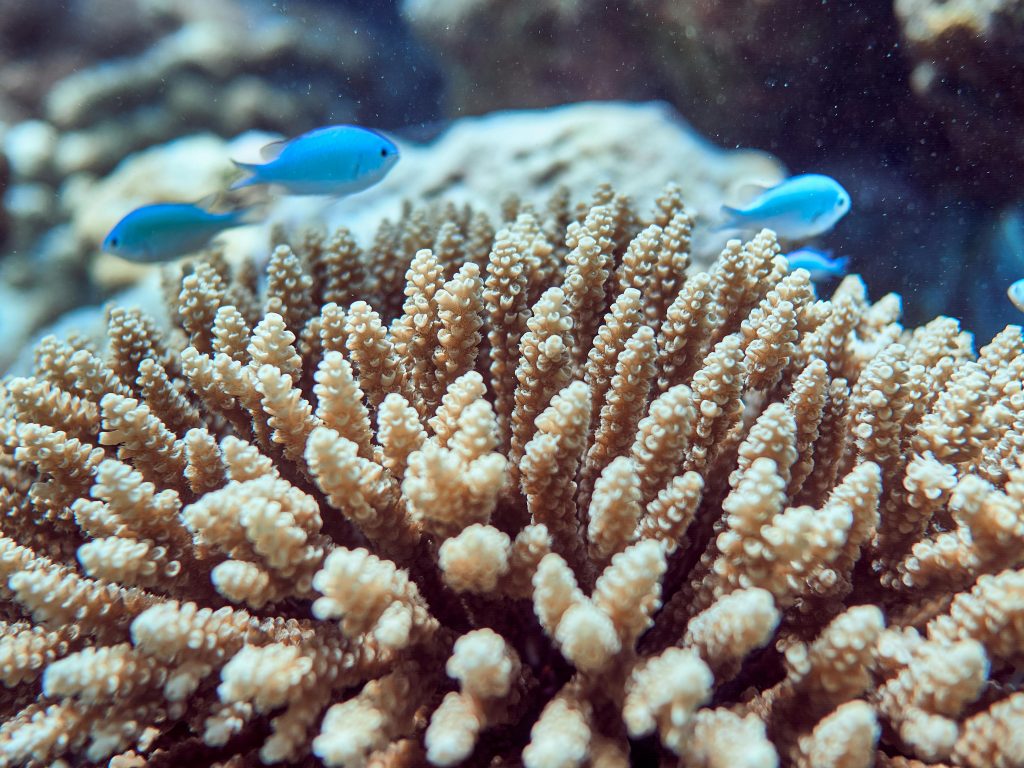
High flow zones are ideal for many SPS corals. Acropora is the best-known example. It thrives with strong, turbulent movement. High flow helps prevent detritus from settling between branches. It also supports gas exchange and nutrient delivery across the coral surface.
Montipora, Birdsnest, Stylophora, and Pocillopora also perform well in brisk flow. These corals usually live near the top or in exposed areas of the reef structure. They often color up better when flow is strong and random. Weak flow can lead to dull color, poor growth, and tissue loss in shaded areas.
High flow should feel energetic, not punishing. A direct laminar stream can strip tissue from SPS too. The best pattern is changing and multidirectional. This keeps all sides of the colony active. It also reduces dead spots within dense branching growth.
Place SPS where they receive both strong light and strong flow. The upper rockwork is often best. Leave enough space for growth. As colonies enlarge, they will alter flow around themselves and neighboring corals.
Lighting and Flow Work Together
Flow and lighting should be planned together. High light corals often need stronger flow. This is common with SPS. Strong light increases photosynthesis. That can raise oxygen and waste exchange demands at the coral surface. Good flow helps manage that load.
Lower light corals often tolerate gentler flow, but there are exceptions. Some LPS enjoy moderate light and moderate flow. Euphyllia is a good example. It usually prefers enough movement to sway, but not enough to whip violently. Matching both factors matters more than chasing a single number.
If a coral looks stressed, do not blame light alone. A coral under ideal PAR can still fail in poor flow. Likewise, a coral in perfect flow may still bleach under excessive lighting. Evaluate both together. This balanced approach solves many placement issues faster.
For more on reef planning, see: reef tank flow guide, PAR for coral, mixed reef aquarium setup, and best wavemakers for reef tanks.
Step-by-Step Coral Placement Guide
Start by identifying your strongest and weakest flow areas. Watch particles and coral movement. Then group your corals by need. Place SPS in the strongest turbulent zones. Place fleshy LPS and mushrooms in gentler areas. Keep moderate-flow corals between those extremes.
Next, secure new corals temporarily if possible. Test placement before permanent mounting. Observe them for several days. Look for full extension, stable tissue, and normal feeding response. If the coral retracts constantly, adjust its position.
Do not place corals too close together. Flow changes as colonies grow. Leave room for expansion and aggression. LPS sweepers can reach nearby frags. SPS colonies can block circulation around lower branches. Recheck placement every few months.
Finally, make one change at a time. Moving pumps, lights, and corals all at once creates confusion. Slow adjustments work best. Careful observation beats guesswork in reef keeping.
Common Problems
Why is detritus collecting around my coral?
This usually means the area has weak circulation. Debris settles where flow cannot keep particles suspended. Move the coral slightly higher or angle a pump to create indirect movement. Avoid blasting the coral directly. Also check if rockwork is blocking current behind the colony.
Why are my coral polyps staying closed?
Flow may be too strong, too weak, or too direct. Zoanthids often close under a constant jet. SPS may show poor extension in stagnant water. Check for pests and chemistry issues too. Then test a new placement with gentler or more random movement.
Why is my LPS coral tearing or shrinking?
Fleshy LPS often react badly to harsh current. Tissue can rub against skeleton edges under strong flow. Move the coral to a lower flow zone. Look for a gentle sway instead of whipping motion. Inspect nearby pumps for direct line-of-sight pressure.
Why is my SPS losing tissue at the base?
Base recession can involve many causes. Low flow around the lower colony is common. Dense growth blocks circulation over time. Increase random flow around the structure. Check nutrients, alkalinity stability, and shading too. Coral placement problems often combine with chemistry issues.
Frequently Asked Questions
Do corals prefer low flow or high flow?
It depends on the coral. SPS usually prefer high, turbulent flow. Mushrooms and many fleshy LPS prefer lower, gentler flow.
Can flow be too strong for SPS corals?
Yes. A direct jet can damage tissue. SPS want strong random flow, not constant laminar blast.
Where should I place zoanthids in a reef tank?
Most zoanthids do well in low to moderate flow. They need enough movement to stay clean, but not enough to stay closed.
How do I know if coral flow is too low?
Watch for detritus buildup, algae, weak extension, and poor feeding response. These often point to stagnant water.
Should I move a coral if it looks unhappy?
Yes, but make changes slowly. Move one coral at a time. Then observe for several days before adjusting again.
Smart coral placement makes reef keeping much easier. Build clear flow zones. Match each coral to the right area. Then let the coral tell you if the placement works. With stable chemistry, proper light, and well-planned flow, your reef will grow faster, look cleaner, and stay healthier.
Was this helpful?
Related Posts
What to Do During a Power Outage
A reef tank power outage demands fast action. Protect oxygen, temperature, and circulation first to keep fish and…
 By
By
What is Zooxanthellae, and What Role Does it Play in Coral Survival?
Zooxanthellae are symbiotic algae that power coral growth through photosynthesis. They are essential to coral color, health, and…
 By
By