Setting up a reef tank is exciting, but the sheer amount of gear can feel overwhelming. The good news: you don’t need every gadget on the market. Focus on the essential reef tank equipment that keeps your water stable, your corals growing, and your fish healthy, and you’ll be off to a strong start.
Core Life-Support Equipment for a Reef Tank
Display Tank & Stand
Your aquarium and stand form the foundation of the system. Choose a reef-ready tank with an overflow if possible—this makes plumbing to a sump far easier and safer. A sturdy, level stand prevents stress on the glass and helps avoid leaks or cracks over time.
Sump & Return Pump
A sump increases water volume, hides equipment, and improves gas exchange. In most modern reef systems, it’s nearly as important as the display tank itself. Inside the sump, you’ll typically place:
- Return pump – Circulates water back to the display. Look for a reliable, appropriately sized DC or AC pump.
- Heater – Keep reef temperatures stable, usually between 76–78°F (24–26°C).
- Filter socks or rollers – Trap large particles and keep the water clear.
For more on planning your system from the ground up, see our guide on beginner reef tank setup.
Protein Skimmer
A quality protein skimmer is one of the most important pieces of reef equipment. It removes dissolved organic waste before it breaks down, improving water clarity and stability. Choose a skimmer rated slightly above your total water volume, and place it in a sump chamber with a consistent water level.
Tip: Break-in time is normal. A new skimmer may behave unpredictably for a few days, so adjust slowly rather than constantly chasing the water level.
Lighting, Flow, and Filtration: Making Corals Thrive
Reef-Safe Lighting
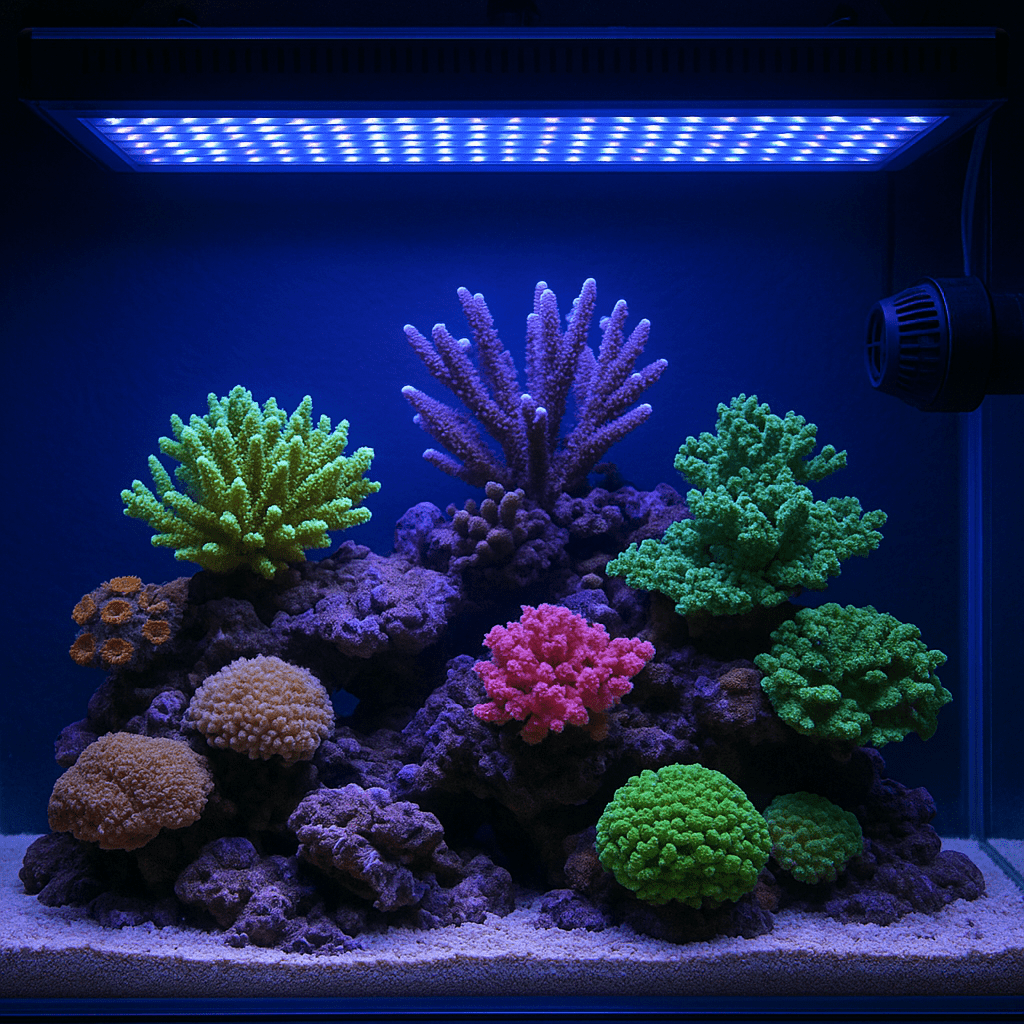
Corals rely on light for photosynthesis, so your lighting choice directly affects growth and color. Most reef keepers use LEDs because they’re efficient, controllable, and run cool. When choosing a light, look for:
- PAR and spectrum suitable for coral species you plan to keep.
- Programmable control for sunrise/sunset and acclimation.
- Coverage that matches your tank’s length and depth.
Start with a conservative light schedule and intensity, then increase slowly to avoid bleaching new corals.
Powerheads and Wave Makers
Strong, random water movement keeps detritus suspended, brings food to corals, and supports gas exchange. Powerheads or wave makers are essential to achieve this flow. Aim for:
- Multiple sources of flow instead of one strong jet.
- Adjustable modes (random, pulse, reef crest) to mimic natural currents.
- Flow rates of at least 20–40x your tank volume per hour, depending on coral types.
Additional Filtration and Monitoring
Beyond mechanical filtration and your skimmer, consider:
- Auto top-off (ATO) – Replaces evaporated water with fresh RO/DI, keeping salinity stable.
- RO/DI unit – Produces pure water for mixing saltwater and topping off.
- Test kits and refractometer – Monitor salinity, alkalinity, calcium, magnesium, nitrate, and phosphate regularly.
- Dosing equipment – As your coral load grows, automated dosing keeps parameters steady. Learn more in our article on reef tank parameter stability.
Putting It All Together
Essential reef tank equipment doesn’t have to be complicated, but it does need to be reliable. Prioritize a solid tank and stand, a well-designed sump with a dependable return pump, a properly sized skimmer, stable heating, quality lighting, and adequate flow. Layer in ATO, RO/DI, and dosing as your system matures and coral demand increases.
With these core components in place, you’ll spend less time fighting problems and more time enjoying your reef. When you’re ready to stock your tank, check out our guide to best beginner reef fish to build a peaceful, colorful community that thrives in the environment you’ve carefully created.
Sources
- Sprung, J. & Delbeek, J.C. The Reef Aquarium, Vol. 1–3.
- Borneman, E. Aquarium Corals: Selection, Husbandry, and Natural History.
- Holmes-Farley, R. “Reef Aquarium Water Parameters” – Advanced Aquarist Archives.
Was this helpful?
Related Posts
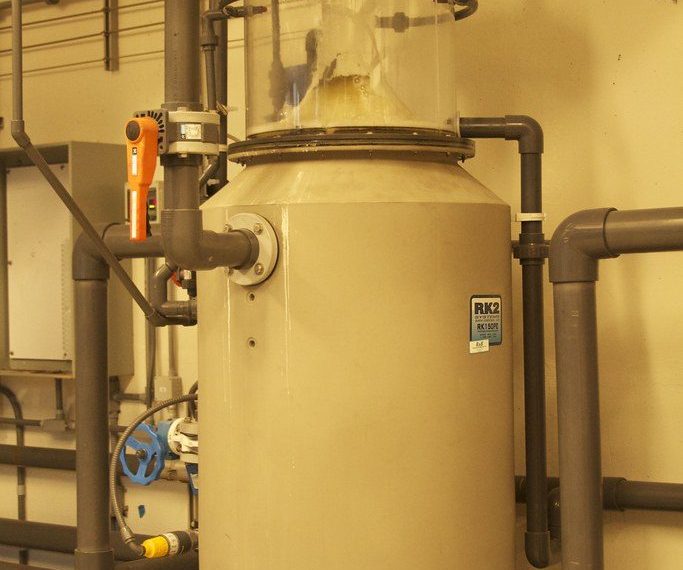
Reef Tank Filtration Options
Learn the best reef tank filtration options, how each method works, and how to build a stable system…
 By
By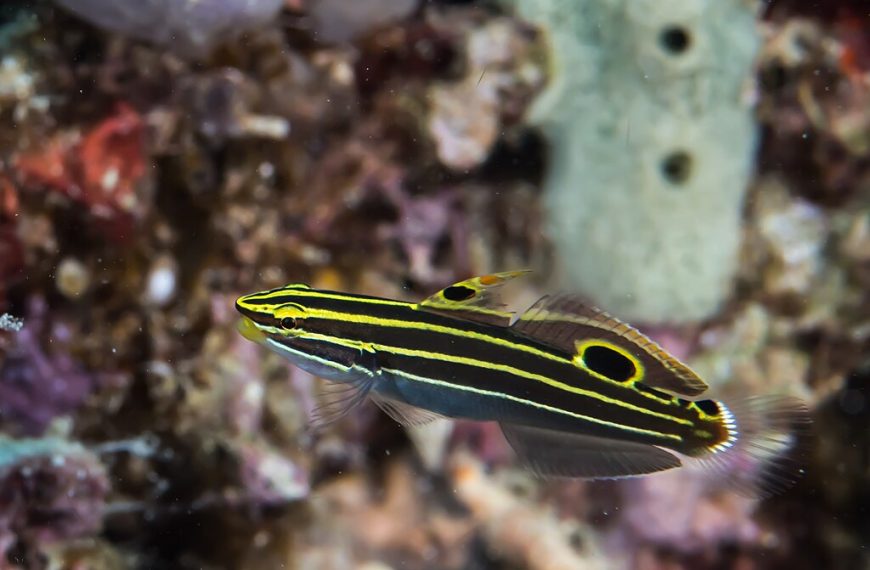
Hectors Goby (Koumansetta Hectori)
Hector’s goby is a peaceful, reef-safe sand sifter that thrives in mature tanks with fine sand, stable water,…