Designing a Smart Filtration and Flow Plan
A well-planned filtration and flow setup is the backbone of any successful saltwater aquarium. Good water movement keeps oxygen levels high, prevents detritus from settling, and delivers nutrients to corals. Smart filtration then removes waste before it can break down and pollute the tank. When you plan these together, your reef becomes more stable, easier to maintain, and far more enjoyable to watch.
If you’re still mapping out your system, it can help to review your aquarium equipment checklist first so your filtration and flow choices match your tank size and livestock goals.
Core Filtration: Building a Clean, Stable System
Think of filtration in three layers: mechanical, biological, and chemical. Each plays a different role, and balancing them is key.
Mechanical Filtration
Mechanical filtration physically traps particles like uneaten food and detritus so they can be removed from the system.
- Filter socks or cups: Great for sumps; change or rinse every 2–3 days to avoid nitrate spikes.
- Filter pads or sponges: Easy to add to hang-on-back filters; rinse in tank water during water changes.
- Protein skimmer: Technically more than mechanical, but it removes organics before they break down, reducing load on your biological filter.
Tip: If your nutrients are creeping up, check your mechanical filtration first—dirty socks and pads are often the hidden culprit.
Biological and Chemical Filtration
Biological filtration is your live rock, sand, and any bio-media that host beneficial bacteria. These bacteria convert toxic ammonia to nitrite and then to less harmful nitrate.
- Use quality live rock or seeded dry rock with plenty of porous surface area.
- Avoid over-cleaning rock and sand; you don’t want to strip away your bacterial colonies.
Chemical filtration adds extra polish and control:
- Activated carbon to remove toxins, yellowing compounds, and odors.
- GFO or other phosphate media if you struggle with algae and elevated phosphate.
Run chemical media in a reactor or media bag where flow is steady but not blasting, and replace it according to the manufacturer’s guidance.
Planning Flow for Corals and Fish
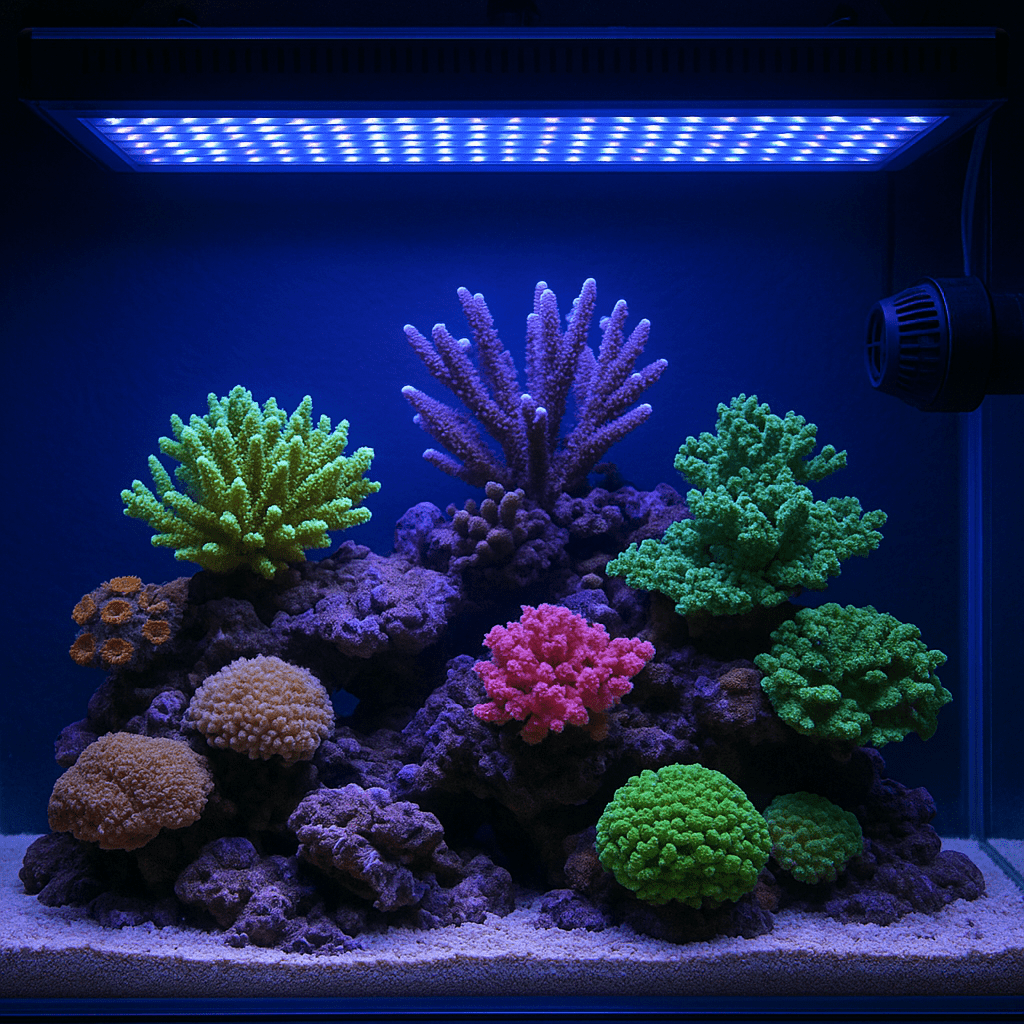
Once your filtration is sorted, you need a flow plan that keeps detritus suspended and corals happy without creating a washing machine. The right flow pattern depends on your tank dimensions and livestock.
Types and Placement of Powerheads
- Random, turbulent flow is ideal for most reef tanks; use wavemakers with multiple modes or alternating schedules.
- Gyre-style pumps can create a circular flow that sweeps detritus toward the overflow.
- Place pumps high enough to ripple the surface for gas exchange but angled to avoid sandstorms.
As you refine your setup, compare your flow and filtration choices to your broader reef tank maintenance schedule so everything works together instead of against you.
Matching Flow to Livestock
- Soft corals and LPS: Prefer moderate, indirect flow; look for gentle swaying, not whipping.
- SPS corals: Thrive in stronger, alternating flow that keeps their tissue clean and well-oxygenated.
- Fish: Many reef fish enjoy current, but provide calmer zones and caves where they can rest.
Watch your corals and fish. Their behavior is the best indicator of whether your filtration and flow plan is working.
Bringing It All Together
A solid filtration and flow plan doesn’t have to be complicated. Start with reliable mechanical and biological filtration, add targeted chemical media as needed, then design flow that keeps detritus moving and your animals comfortable. Test regularly, make small adjustments, and track changes in a simple log or alongside your new tank setup guide so you can see what’s working.
With a thoughtful plan and a bit of observation, your saltwater aquarium will reward you with clearer water, healthier corals, and a more stable, thriving reef.
Sources
- Sprung, J. & Delbeek, J. C. The Reef Aquarium, Vol. 1–3.
- Fossa, S. A. & Nilsen, A. J. The Modern Coral Reef Aquarium.
- Borneman, E. Aquarium Corals: Selection, Husbandry, and Natural History.
Was this helpful?
Related Posts
Dragonets Fish Care
Dragonets are beautiful reef fish, but they need mature tanks and steady food sources. Learn how to keep…
 By
By
Lighting For Aquarium
Lighting for Aquarium: Getting Saltwater Illumination Right Lighting for a saltwater aquarium is about much more than simply…