Planning a Large Reef Tank: Start with the End in Mind
A large reef tank is the dream centerpiece of many saltwater hobbyists’ homes, but it also multiplies the planning, cost, and responsibility. Before you buy glass or livestock, take time to design your system on paper. Thoughtful planning now will save you money, frustration, and livestock losses later.
If you’re brand new to saltwater tanks, you may want to review our Beginner Saltwater Aquarium Setup Guide first, then come back to this large-tank planning checklist.
Tank Size, Location, and Structural Support
Once you move past 120–150 gallons, water weight, floor strength, and access become critical.
Choosing the Right Dimensions
- Length and width over height: A 6-foot (72″) or 8-foot tank with a 24–30″ width gives fish more swimming room and better aquascaping options than a tall, narrow tank.
- Reach and maintenance: Anything deeper than 24–26″ becomes hard to clean and aquascape without getting your whole arm wet.
- Peninsula vs. standard: Peninsula tanks are stunning room dividers, but require extra planning for overflow placement and cable routing.
Stand and Floor Support
- Weight estimate: A fully stocked 180–240 gallon reef can easily exceed 2,000–2,500 lbs (tank, water, rock, stand, gear).
- Floor joists: Whenever possible, place the tank along a load-bearing wall and perpendicular to floor joists.
- Professional check: For anything over ~180 gallons on a wood floor, consider consulting a contractor or structural engineer.
Also think through access: you’ll want space behind or beside the tank for plumbing, cable management, and cleaning.
Equipment, Filtration, and Redundancy
Large reef tanks are more stable than nanos, but failures are more expensive. Build in redundancy and ease of maintenance from day one.
Sump, Filtration, and Plumbing
- Sump volume: Aim for a sump that’s 30–40% of your display volume to increase water stability and equipment space.
- Drain design: A Herbie or Bean Animal overflow is strongly recommended for quiet, safe operation on large systems.
- Filtration: Oversize your protein skimmer, and leave room in the sump for a refugium or media reactors if you add them later.
Lighting, Flow, and Power
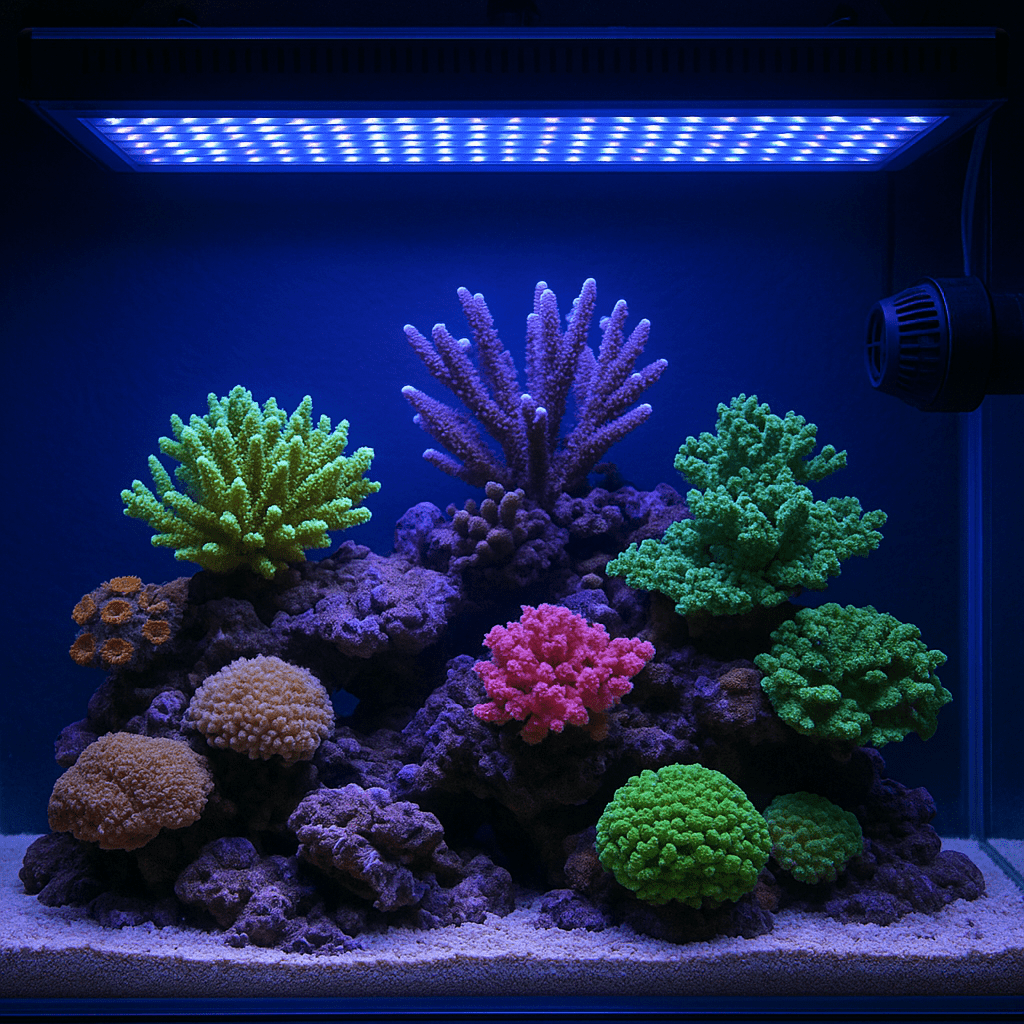
- Lighting spread: Plan PAR and coverage before buying fixtures. Long tanks may need 3–4 LED modules or a hybrid T5/LED setup.
- Flow planning: Use multiple powerheads or closed loops to eliminate dead spots. Opposing gyre-style flow works very well on 6–8 foot tanks.
- Redundancy: Duplicate critical gear where possible (extra return pump on hand, multiple heaters on controllers, battery backup for powerheads).
- Electrical: Dedicated circuits and GFCI outlets are highly recommended; label everything for quick troubleshooting.
For more detail on gear choices, see our Reef Tank Equipment Checklist.
Budget, Stocking Strategy, and Long-Term Care
Big reef tanks demand big, ongoing budgets. Planning your stocking and maintenance schedule ahead of time keeps the system sustainable.
Budgeting Beyond the Build
- Upfront costs: Tank, stand, sump, plumbing, skimmer, lights, rock, sand, and test kits.
- Ongoing costs: Salt mix, RO/DI filters, electricity, dosing supplements, food, and replacement bulbs or LEDs.
- Emergency fund: Set aside money for unplanned gear failures or disease treatment.
Stocking and Maintenance Plan
- Stock slowly: Even on a large system, add fish and corals in phases to allow the biofilter to adjust.
- Quarantine: QT is even more important on large tanks; one sick fish can mean treating hundreds of gallons.
- Maintenance schedule: Create weekly, monthly, and quarterly task lists (testing, water changes, pump cleaning, bulb replacement).
If you’re unsure how much time you can realistically commit, our Saltwater Aquarium Maintenance Schedule can help you plan.
Pro tip: Treat your large reef like a long-term project, not a weekend build. The slower you go, the more stable and rewarding the tank will be.
With a clear plan for size, structure, equipment, and long-term care, a large reef tank can become a thriving, low-stress centerpiece that you enjoy for years. Map out your system on paper, budget realistically, and build in redundancy from the start—you’ll thank yourself every time you sit back and watch your reef grow.
Sources
- Sprung, J. & Delbeek, J.C. The Reef Aquarium (Volumes 1–3).
- Borneman, E. Aquarium Corals: Selection, Husbandry, and Natural History.
- Fenner, R. The Conscientious Marine Aquarist.
Was this helpful?
Related Posts
Our Emergency Hospital Kit Checklist
Our emergency hospital kit checklist helps you act fast. Stock the right gear, meds, and tests to stabilize…
 By
By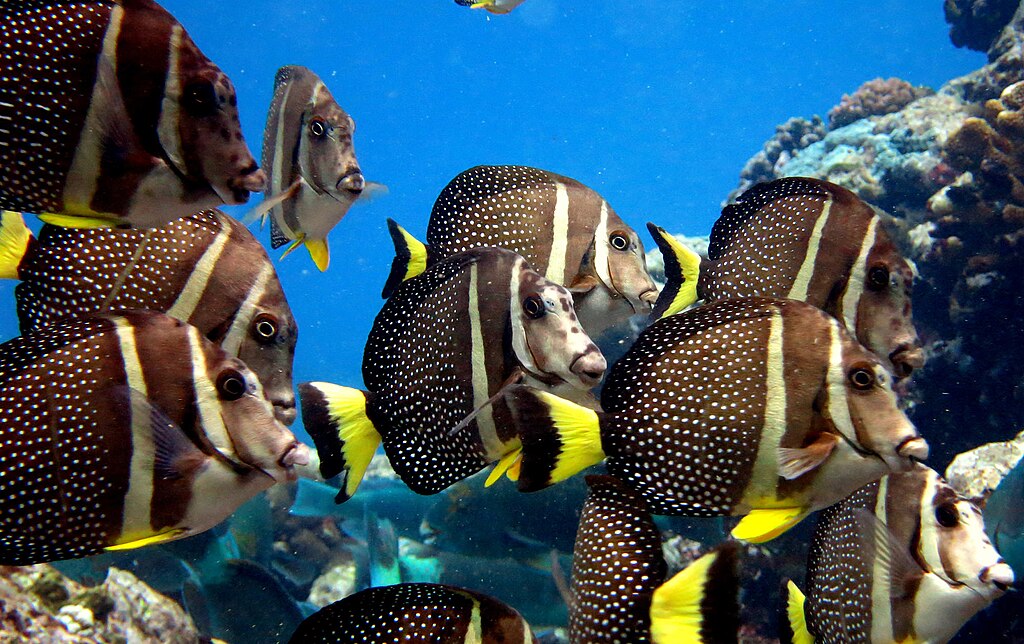
Mustard Guttatus (Acanthurus guttatus)
Mustard guttatus is a large, active tang that needs a 180-gallon tank, strong flow, and daily algae feeding…