
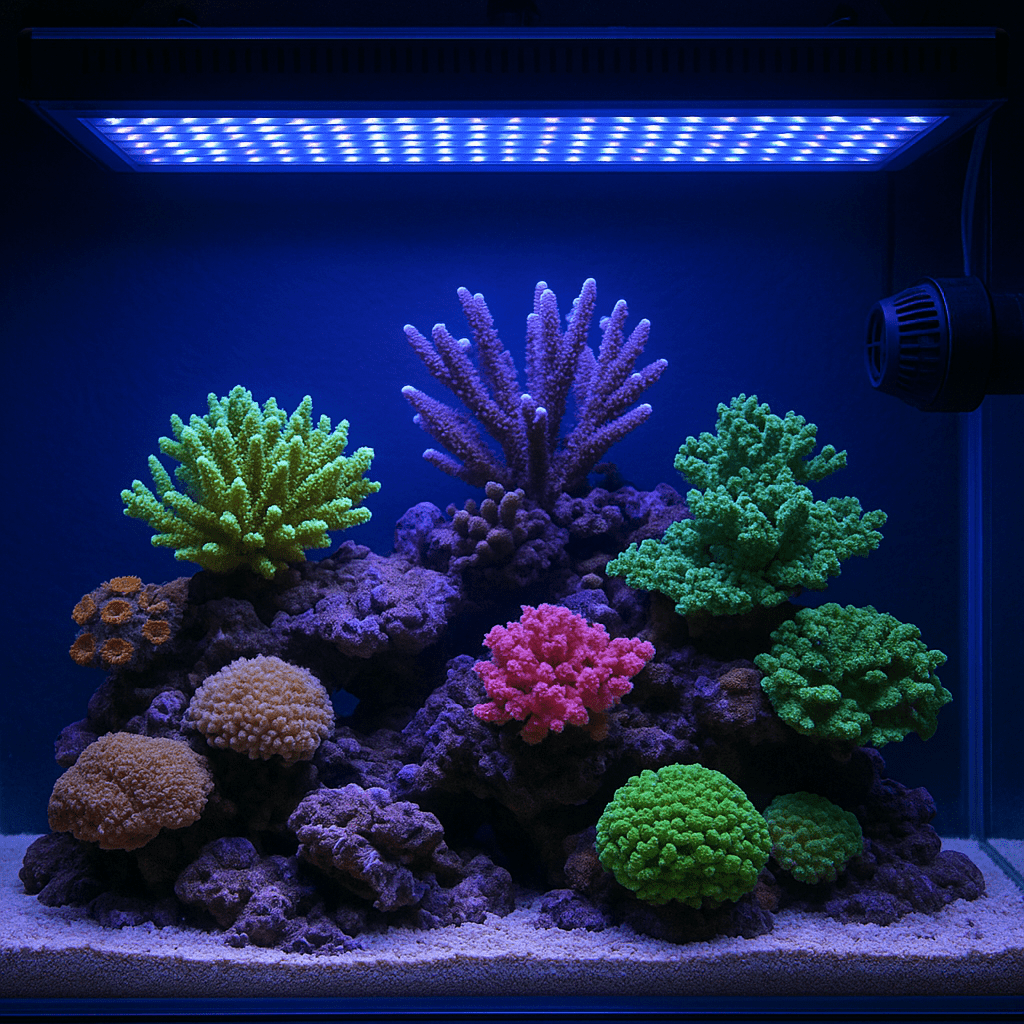
Reef LED lighting drives coral growth, color, and long-term stability. The best setup matches PAR, spectrum, spread, and schedule to your coral mix, tank depth, and aquascape rather than chasing raw wattage alone.
Choosing reef lighting can feel confusing at first. PAR charts, blue-heavy spectrum, mounting height, and acclimation all matter. This guide explains how reef LED lights work and how to use them well. You will learn how to match lights to your tank, set a practical schedule, avoid common mistakes, and improve coral health without guessing.
Quick Reference Table
| Topic | Recommended Range | Why It Matters |
|---|---|---|
| Soft coral PAR | 50–100 | Supports easy corals without excess stress |
| LPS coral PAR | 75–150 | Balances growth, color, and inflation |
| SPS coral PAR | 200–350+ | Needed for demanding acropora and montipora |
| Photoperiod | 8–10 hours peak | Gives corals useful light without overexposure |
| Ramp time | 1–2 hours up and down | Reduces shock and looks natural |
| Mounting height | 8–12 inches above water | Improves spread and reduces hot spots |
| Blue channels | Primary spectrum | Drives fluorescence and coral-friendly output |
| White channels | Moderate use | Adds visual balance but can increase glare |
Use these ranges as a starting point. Every tank is different. Rockwork, water clarity, mounting height, and coral placement all change real PAR at the coral surface.
What Reef LED Lighting Really Does
Corals rely on symbiotic algae called zooxanthellae. These algae use light to produce energy. That energy helps the coral grow and build skeleton. Good lighting also supports coloration. Poor lighting often causes browning, stretching, fading, or slow decline.
LED lights became popular because they are efficient and controllable. They run cooler than many older systems. They also let hobbyists adjust channels and schedules. This flexibility is useful, but it creates problems too. Many reef keepers run lights too strong or change settings too often.
The goal is not maximum brightness. The goal is stable, usable light across the whole reef. Corals need the right intensity, the right spectrum, and enough spread. When those three pieces line up, most tanks become easier to manage.
Understanding PAR, PUR, and Spectrum
PAR means photosynthetically active radiation. It measures usable light between 400 and 700 nanometers. In reef tanks, PAR is the easiest way to compare intensity at coral level. It does not tell the full story, but it is still very useful.
PUR means photosynthetically usable radiation. This refers to the wavelengths corals use most efficiently. Reef LEDs often focus on violet, royal blue, and blue output. These wavelengths support photosynthesis well and make coral pigments fluoresce.
Spectrum matters, but intensity still matters more than many people think. A perfect spectrum with weak PAR will not grow demanding corals. On the other hand, high PAR with poor spread can burn coral tops while leaving lower areas dim. Think in layers. First get enough spread. Then target proper PAR. Then fine-tune color channels for appearance.
How to Choose the Right Reef LED for Your Tank
Start with tank dimensions, not tank volume. A shallow 40 breeder needs different coverage than a tall cube. Length, width, and depth determine how many fixtures you need. Wider tanks often benefit from two smaller fixtures rather than one strong fixture.
Next, consider your coral plan. A mixed reef needs flexibility. Soft corals and many LPS do well under moderate light. SPS-heavy tanks need stronger and more even coverage. If you plan to keep acropora later, buy for that future now. Upgrading twice usually costs more.
Look for strong spread, reliable cooling, app control, and available PAR data. Brand reputation matters. So does customer support. Avoid buying by wattage alone. Wattage does not show how well a light covers the tank. It also does not reveal spectrum quality or lens design.
Helpful reading for new setups: best reef tank size for beginners, reef tank setup guide, and reef aquarium water parameters.
Aquarium Setup and Light Placement
Lighting works best when the aquascape supports it. Tall rock towers create shadows. Flat shelves can block lower corals. Open structures allow better spread and flow. This is one reason modern reef scapes often use arches, islands, and negative space.
Mount most reef LEDs 8 to 12 inches above the water. Lower mounting increases intensity but narrows spread. Higher mounting improves blending and coverage but lowers PAR. The best height depends on fixture design and tank depth. Check the manufacturer map, then confirm with observation or a PAR meter.
Try to avoid severe hot spots. Corals directly under the center can bleach while edge corals starve. If your tank has dark corners, raise the light slightly or add another fixture. Diffusers can also help. They soften harsh shadows and improve color blending, though they often reduce peak PAR.
Lighting Requirements by Coral Type
Soft corals usually prefer lower to moderate light. Mushrooms, leathers, and many zoanthids often thrive between 50 and 100 PAR. Too much light can make them shrink, detach, or stay closed. Start lower and adjust slowly.
LPS corals usually prefer moderate light. Many euphyllia, acans, favia, and blastomussa do well around 75 to 150 PAR. Some species tolerate more, but they often color best with moderate intensity and stable nutrients. Puffy tissue and good feeding response are good signs.
SPS corals need stronger light and better consistency. Montipora often do well from 150 to 250 PAR. Acropora usually perform best from 200 to 350 PAR or more, depending on species and nutrient balance. Sudden jumps can cause bleaching fast. Acclimation is critical with SPS.
For coral-specific placement ideas, see easy LPS corals for beginners and best soft corals for new reef tanks.
Step-by-Step Guide to Setting Up Reef LED Lighting
- Measure your tank length, width, and depth.
- Choose a fixture with enough spread for the full footprint.
- Mount the light 8 to 12 inches above the water.
- Start with a proven preset from the manufacturer.
- Keep blue and violet channels as the main output.
- Use white channels moderately for viewing balance.
- Set a peak photoperiod of 8 to 10 hours.
- Add 1 to 2 hours of ramp-up and ramp-down.
- Acclimate new corals or new lights over 2 to 4 weeks.
- Observe coral response before making any major changes.
This process prevents most lighting mistakes. It also gives corals time to adapt. Stability matters more than chasing perfect numbers on day one.
Best Reef LED Schedule for Most Tanks
A simple schedule works well for most mixed reefs. Ramp up for 1 to 2 hours. Run your main peak for 8 to 10 hours. Then ramp down for 1 to 2 hours. This creates a natural viewing window and avoids harsh on-off transitions.
Many hobbyists overdo the total day length. Corals do not need 14 hours of strong light. Long photoperiods can fuel algae and stress corals. Focus on quality light during a reasonable peak period. If you enjoy evening fluorescence, use a short low-intensity blue period rather than extending full power.
Keep your schedule consistent every day. Avoid frequent experiments. Corals react slowly. A tank may take weeks to show whether a lighting change helped or hurt. Make one change at a time and log it.
Water Quality and Flow Still Matter
Lighting does not work in isolation. Strong light increases coral demand for stable alkalinity, calcium, and nutrients. If you raise PAR without supporting water chemistry, corals can pale or stall. More light can also expose weak flow patterns.
Good flow helps corals exchange gases and remove waste. It also prevents detritus from settling on tissue. In higher light areas, random turbulent flow is especially important. SPS corals often struggle under strong light when flow is weak. LPS corals may recede if blasted directly.
Keep nitrate and phosphate stable. Ultra-low nutrients plus intense light often lead to pale coral. Excess nutrients plus weak export often lead to algae. Balance is the goal. Light, flow, and chemistry must work together.
Common Problems
Why are my corals turning brown?
Brown corals often point to low light, excess nutrients, or both. Zooxanthellae density can increase under weaker conditions. This makes the coral look darker. Check nitrate and phosphate first. Then review PAR and spread. Improve export slowly. Do not make sudden lighting jumps.
Why are my corals bleaching under LED lights?
Bleaching usually means too much light, too little acclimation, or unstable chemistry. New LEDs can be much stronger than expected. Raise the fixture, reduce intensity, or shorten the peak period. Confirm alkalinity stability. If only top surfaces bleach, hot spots are likely.
Why do my corals look good but not grow?
Growth can stall when light is adequate but chemistry is not. Check alkalinity, calcium, magnesium, and nutrient availability. Corals also need time. Some species encrust before branching. If color is solid and tissue is healthy, patience may be the answer.
Why is there too much shadowing in my reef tank?
LEDs are point-source lights. They can create sharp shadows. Raise the fixture, add more fixtures, or use diffusers or light bars. Rework dense rock structures if needed. Better spread usually improves both coral health and overall tank appearance.
Frequently Asked Questions
Are LED lights better than T5 for reef tanks?
LEDs offer control, efficiency, and shimmer. T5 offers very even spread. Both can grow coral well. Many advanced tanks combine them for the best of both styles.
How much PAR do beginner corals need?
Most beginner soft corals and many LPS do well between 50 and 150 PAR. Start lower if unsure. Then move corals or adjust intensity gradually.
Should I run white channels at 100 percent?
Usually no. Most reef keepers use blue-heavy settings and moderate white output. Too much white can increase glare and make the tank look washed out.
How long should reef lights stay on each day?
A peak period of 8 to 10 hours works for most tanks. Add ramp time before and after. Longer is not always better.
Do I need a PAR meter?
It helps a lot, especially for SPS tanks. Still, you can succeed without one by using proven presets, careful placement, and slow acclimation.
Final Tips for Long-Term Success
Keep your lighting simple. Start with a proven schedule. Make small changes only. Match intensity to coral type. Watch the corals more than the app. Healthy tissue, strong polyp extension, and steady growth matter most.
The best reef LED lighting setup is not the brightest one. It is the one your corals can use every day without stress. When spread, PAR, spectrum, and stability come together, reef keeping gets much easier.
Was this helpful?
Related Posts
Best Filtration Systems
Best Filtration Systems for a Healthy Saltwater Aquarium Choosing the best filtration system for your saltwater aquarium is…
 By
By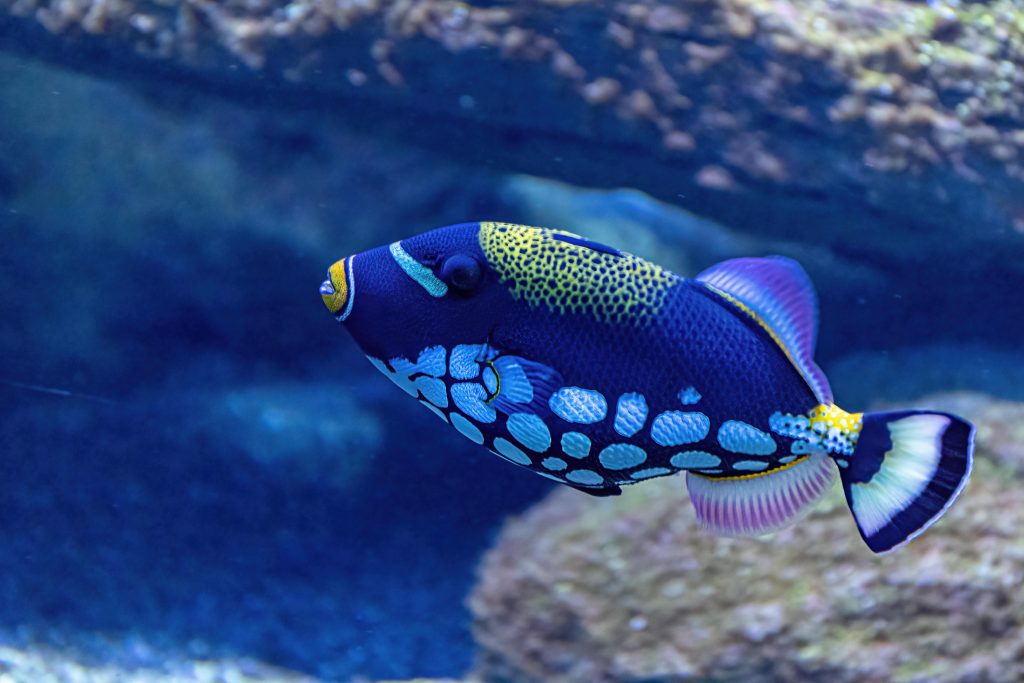
Clown Triggerfish (Balistoides Conspicillum)
Clown triggerfish are stunning but aggressive marine fish that need very large tanks, strong filtration, and careful tankmate…
[favorite_button]
My Bookmarks:
To see full list click here
[user_favorites user_id="" include_links="true" site_id="" post_types="" include_thumbnails="true" thumbnail_size="thumbnail" include_excerpt="false"]