
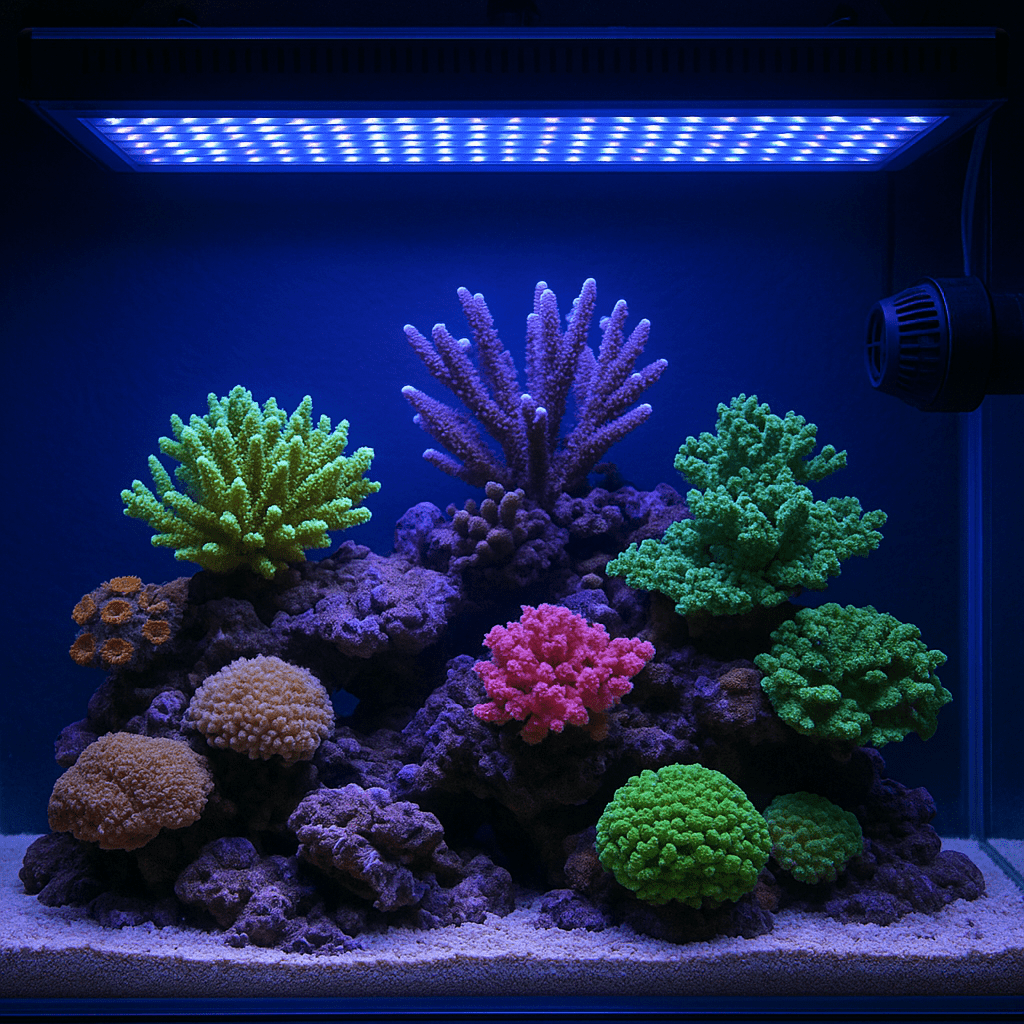
Reef lighting acclimation helps corals adjust to new or stronger lights without stress. A slow, planned increase in intensity prevents bleaching, improves polyp extension, and gives new corals time to adapt safely.
Many coral losses happen after a lighting change. The tank may look brighter and better to us. Corals often disagree. New LEDs, fresh bulbs, raised rockwork, or recently added frags can all create sudden light shock. This is why reef lighting acclimation matters. In this guide, you will learn how to acclimate corals to aquarium lighting, how long the process should take, what warning signs to watch for, and how to troubleshoot common problems before they become serious.
Quick Reference Table
| Situation | Recommended Action | Typical Timeline |
|---|---|---|
| Adding a new coral | Start lower in the tank or reduce intensity 20% to 40% | 2 to 4 weeks |
| Installing new LED lights | Use acclimation mode or manual ramp schedule | 3 to 6 weeks |
| Replacing old T5 or halide bulbs | Shorten photoperiod or raise fixture | 2 to 3 weeks |
| Moving coral higher | Shift upward in stages every few days | 1 to 3 weeks |
| Bleaching signs appear | Reduce PAR immediately and stabilize tank | Review daily |
What Reef Lighting Acclimation Means
Corals depend on light for energy. Their zooxanthellae use light to produce food. Too little light slows growth. Too much light causes stress. That stress can lead to faded color, closed polyps, or bleaching. Lighting acclimation is the process of increasing light exposure slowly. This gives coral tissue and symbiotic algae time to adjust.
Acclimation is not only for brand new corals. It also matters after changing fixtures, replacing bulbs, cleaning salt creep from lenses, or altering aquascape height. Even switching from one spectrum to another can affect a coral’s response. Blue-heavy light may appear dim to your eyes. It can still deliver strong usable energy to corals. The safest approach is always gradual. Reef tanks reward patience. Fast changes often create problems that take weeks to reverse.
Why Corals Need Time to Adjust
In nature, corals do not experience sudden jumps in intensity. Light changes with season, depth, water clarity, and cloud cover. These shifts happen over time. In aquariums, changes can be instant. A new LED fixture can double PAR in one afternoon. A coral moved from the sand bed to the top rock may go from moderate light to intense exposure in minutes.
Corals react by changing pigment density and managing how much light reaches their symbiotic algae. That process takes time. If the change is too fast, the coral expels algae or suffers tissue stress. Some species recover well. Others decline quickly. SPS corals often react faster to excessive light. Many LPS corals show stress through retraction and fading. Soft corals may stay closed or slump. Slow acclimation reduces all of these risks.
Natural Habitat and Light Variation
Corals come from different reef zones. This matters when planning acclimation. Shallow water Acropora often receive intense tropical sunlight and strong flow. Many Euphyllia, Favia, and soft corals come from slightly deeper or more sheltered areas. Mushrooms and some zoanthids often thrive in lower light zones or shaded crevices.
Wild reefs also filter and scatter light through moving water. Aquarium light can be more direct. LEDs often create hotspots under clusters. That means a coral from a lower light habitat may bleach under a fixture that seems modest on paper. Knowing the coral’s natural placement helps you choose a safer starting point. When in doubt, begin with less light. You can always increase intensity later. Recovering a bleached coral is much harder than slowly brightening a healthy one.
Aquarium Setup Factors That Affect Acclimation
Lighting acclimation is not only about the fixture setting. Tank depth matters. Water clarity matters. Rock placement matters. A 200 PAR zone in one tank may behave differently in another because of flow, nutrient level, and shading. Clean glass and polished lenses can also raise actual light reaching corals. Many reef keepers forget this after maintenance.
Aquascaping plays a major role. Overhangs create natural shade. Open top shelves receive much stronger exposure. If you keep mixed reefs, use the layout to your advantage. Place lower light corals in protected areas first. Move them upward only after they show healthy extension and color. If possible, use a PAR meter. It removes guesswork. If you do not own one, ask your local reef club or store. Measured light is far better than visual estimates.
Lighting Requirements by Coral Type
Different corals need different light levels. Many soft corals and mushrooms do well in low to moderate PAR. Zoanthids often adapt to a wide range, but should still be acclimated carefully. LPS corals usually prefer moderate light, though some can handle more. SPS corals usually demand moderate to high PAR and stable conditions.
Do not use broad categories as fixed rules. One torch coral may love brighter placement. Another may recede there. The same applies to chalices, acans, and montipora. Start with the vendor’s guidance, then adjust based on coral response. Good color, normal extension, and steady growth are better indicators than internet numbers alone. If your nutrients are very low, strong light can become more dangerous. Corals under ultra-clean conditions often bleach faster if intensity rises too quickly.
Step-by-Step Reef Lighting Acclimation Guide
- Inspect the coral first. Do not acclimate a stressed coral under strong light.
- Start low. Place new corals on the sand bed or in partial shade.
- Reduce intensity if needed. A 20% to 40% cut is common for new additions.
- Use acclimation mode if your fixture offers it. Set a 2 to 6 week schedule.
- Increase slowly. Raise intensity by 3% to 5% every few days.
- Watch the coral daily. Check color, extension, and tissue fullness.
- Move upward in stages if using placement instead of dimming.
- Pause if stress appears. Do not keep increasing on a fixed schedule.
- Stabilize other parameters. Alk swings can worsen light stress.
- Reach the final target only when the coral looks fully adjusted.
This process works for most reef tanks. Sensitive corals may need longer. Fresh imports often need extra time. Wild colonies can be less forgiving than aquacultured frags. If you changed both light and flow, go even slower. Too many changes at once make it hard to identify the real problem.
Photoperiod, Intensity, and Spectrum
Many hobbyists focus only on brightness. Corals respond to several parts of the lighting plan. Intensity is the strongest factor. Photoperiod also matters. A long day under moderate light can still stress a coral. Spectrum matters too, especially when switching fixture brands or bulb combinations.
If you replace old bulbs, remember that new bulbs are often much stronger. Shorten the daily schedule first. You can slowly extend it later. With LEDs, use lower peak intensity and keep the photoperiod stable during acclimation. Avoid changing spectrum and intensity at the same time unless necessary. Blue channels can stay relatively stronger for viewing, but total output still needs control. Consistency is key. Corals adapt best when changes are small and predictable.
Water Flow and Feeding During Acclimation
Good flow helps corals handle light better. Water movement removes waste and brings oxygen to tissue. It also helps carry away excess heat and metabolic byproducts. During acclimation, aim for steady, indirect flow for most corals. Do not blast a stressed coral with direct current. That often causes more retraction.
Feeding can support recovery and adjustment. LPS corals often benefit from occasional target feeding. Soft corals and SPS gain more from stable nutrients and suspended food in the water column. Avoid overfeeding to compensate for stress. Poor water quality creates a new problem. Keep nitrate and phosphate in a healthy range. Corals under zero nutrients often struggle under bright light. Balanced nutrition and stable flow make acclimation smoother and safer.
Common Problems
Coral Bleaching After New Lights
This is the most common lighting mistake. The likely cause is too much PAR too fast. Reduce intensity right away. Move the coral lower if needed. Shorten the photoperiod for several days. Check alkalinity and temperature too. Instability makes bleaching worse. Recovery can take weeks. Do not chase color with additives. Fix the light first.
Corals Turning Brown
Brown corals often indicate lower light, elevated nutrients, or both. If the coral is healthy and expanded, this is usually less urgent than bleaching. Increase light slowly. Review nutrient levels. Make sure lenses and covers are clean. Also consider spectrum. Some corals darken under lower blue balance or weaker overall output.
Polyps Stay Closed
Closed polyps can signal light stress, but not always. Check for pests, flow issues, and nearby aggression. If the problem began after a lighting change, reduce intensity and observe for improvement. Newly added frags may stay closed for several days. Patience matters. Sudden repeated moves usually make things worse.
Color Fading Without Full Bleaching
Fading often appears before severe damage. This is an early warning sign. Slow the acclimation schedule. Hold intensity steady for a week. Verify nutrients are not bottomed out. Many pastel, washed-out corals are receiving too much light for their nutrient level. Small adjustments now can prevent major loss later.
Propagation and Fragging Considerations
Fresh Frags Need Lower Initial Light
Fragged corals are stressed corals. Even hardy species should begin lower in the tank after cutting. Fresh cuts need energy for healing. Strong light can increase stress during this period. Give frags moderate flow and stable parameters. Once tissue looks settled and polyps extend normally, begin gradual light increases.
Aquacultured Versus Wild Corals
Aquacultured frags usually adapt better to aquarium lighting. They have already lived under artificial systems. Wild colonies can be less predictable. They often arrive stressed from collection and shipping. Start them conservatively. Extend the acclimation timeline. Watch for tissue recession at the base or on exposed edges.
Frequently Asked Questions
How long should reef lighting acclimation take?
Most corals need two to four weeks. Sensitive species may need six weeks. Go slower after major lighting upgrades.
Can I acclimate corals by moving them up the rockwork?
Yes. This works well if your light cannot dim easily. Move the coral upward in small stages every few days.
Is blue light safer than white light?
Not automatically. Blue-heavy settings can still deliver strong PAR. Always judge the full output, not just appearance.
Should I reduce photoperiod or intensity first?
Intensity is usually the first lever. For new bulbs or severe stress, reduce both intensity and photoperiod temporarily.
What is the fastest sign of too much light?
Rapid fading, tissue lightening, and reduced extension are common early signs. Act before full bleaching develops.
Final Tips for Safer Coral Light Acclimation
The best reef lighting acclimation plan is simple. Start lower. Increase slowly. Watch the coral, not your impatience. Stable alkalinity, temperature, and nutrients make light changes much safer. Every coral is an individual. Use general rules, but trust real response in your tank. If you want a stronger reef long term, slow changes will always beat sudden upgrades.
For more help, read our guides on how to use a PAR meter, reef tank lighting guide, coral bleaching causes, and ideal reef tank parameters.
Was this helpful?
Related Posts
Reef Tank Basics
Learn reef tank basics, from setup and cycling to lighting, flow, and water chemistry, so your first reef…
 By
By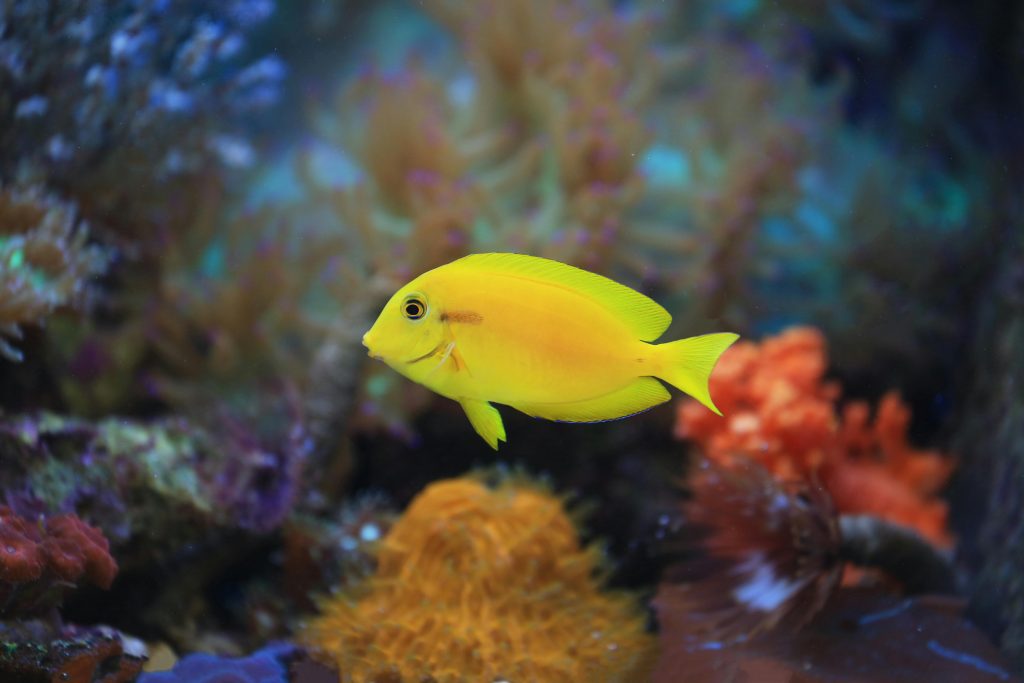
Juvenile Orange Shoulder (acanthurus Olivaceus)
Juvenile orange shoulder tangs are bright, hardy, and reef safe, but they grow large and need a spacious…
[favorite_button]
My Bookmarks:
To see full list click here
[user_favorites user_id="" include_links="true" site_id="" post_types="" include_thumbnails="true" thumbnail_size="thumbnail" include_excerpt="false"]