

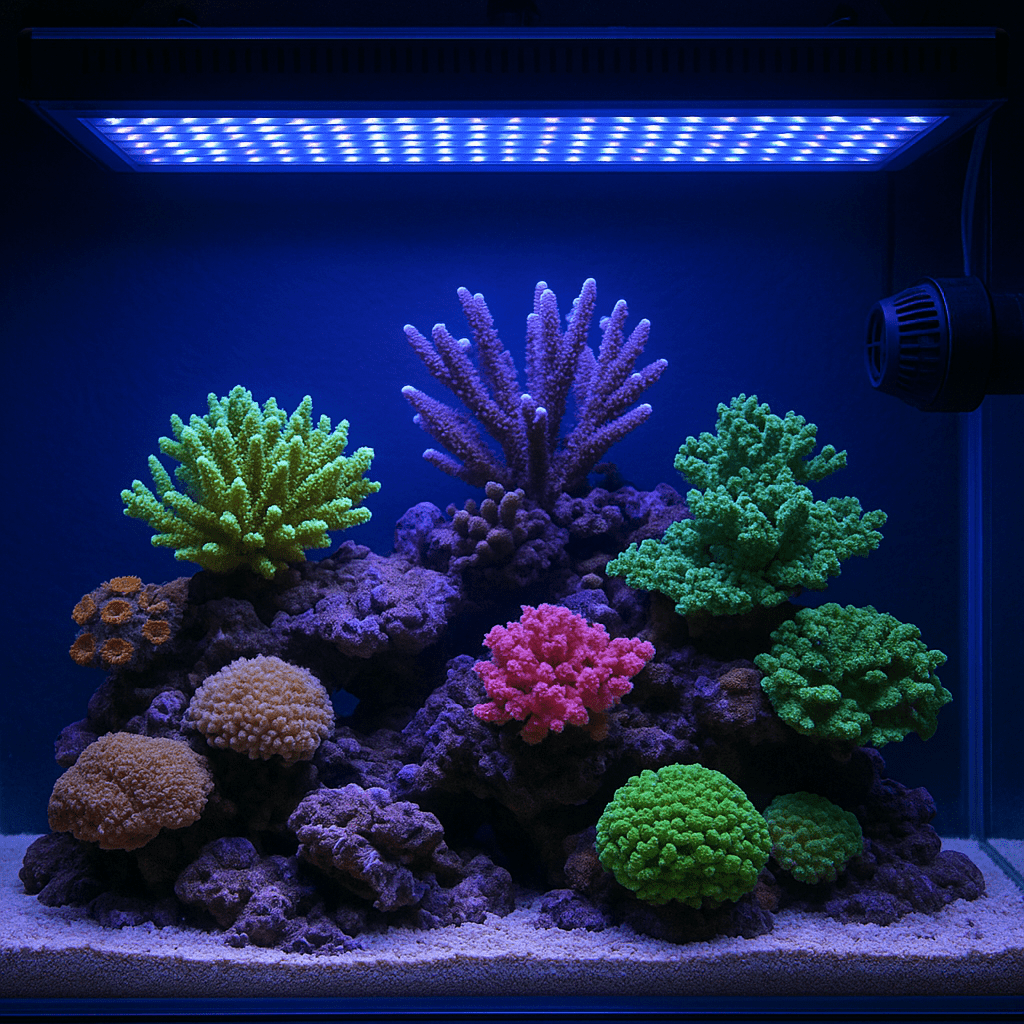
Reef tank automation makes daily care easier and more consistent. The best systems handle repetitive tasks, reduce human error, and protect stability. Start with the basics first. Then add smart equipment that solves real problems in your tank.
Automation is one of the fastest ways to improve reef husbandry. It helps keep salinity stable. It keeps temperature steady. It can also prevent missed dosing, overfeeding, and dangerous equipment failures. For beginners, automation can feel overwhelming. There are many devices, apps, and controllers on the market. This guide explains what reef tank automation really means, which tools matter most, and how to build a reliable system without wasting money. You will learn what to automate first, how to avoid common mistakes, and how to create a safer and easier reef aquarium routine.
Quick Reference Table
| Automation Tool | Main Job | Best For | Priority |
|---|---|---|---|
| Auto top off | Replaces evaporated water | All reef tanks | Essential |
| Heater controller | Prevents temperature swings | All reef tanks | Essential |
| Dosing pump | Adds alkalinity, calcium, or magnesium | Mixed reefs and SPS tanks | High |
| Auto feeder | Feeds fish on schedule | Busy hobbyists and travel | Medium |
| Aquarium controller | Monitors and controls equipment | Advanced systems | Medium to High |
| Leak detector | Alerts to spills or overflows | Tanks with sumps | High |
| Battery backup | Keeps flow during outages | All reef tanks | High |
Use this table as a starting point. Not every reef needs every device. Focus on stability first. Then build from there.
What Reef Tank Automation Actually Means
Automation does not mean removing yourself from the hobby. It means removing inconsistency. Reef tanks do best when key parameters stay stable every day. Manual routines often drift over time. Life gets busy. Doses get missed. Evaporation gets ignored. Feedings happen late. Automation fills those gaps.
A good automated reef system still needs regular observation. You must test water. You must inspect pumps. You must clean sensors. Automation is not a replacement for reef knowledge. It is a tool that supports good habits. The goal is to automate repetitive tasks while keeping critical decisions in your hands.
Think of automation in three layers. The first layer is stability. This includes top off systems and temperature control. The second layer is convenience. This includes feeders and scheduled lighting. The third layer is protection. This includes alerts, leak sensors, and controller-based shutdowns. The best setups use all three layers in a simple, reliable way.
What to Automate First
If you are new to automation, start with the devices that prevent the biggest swings. The first upgrade should usually be an auto top off system. Salinity changes fast in reef tanks, especially small ones. Daily evaporation leaves salt behind. That raises salinity. An auto top off adds fresh water slowly and keeps salinity stable.
The second priority is temperature control. Many hobbyists trust the thermostat inside a heater. That is risky. Heaters can stick on or fail off. A separate heater controller adds a second layer of protection. This can save a reef during winter or summer spikes.
After those two, consider dosing pumps if your tank consumes alkalinity and calcium daily. Mixed reefs with LPS and SPS corals often benefit from this early. Fish-only systems usually do not. Then add an auto feeder if your schedule is inconsistent. Finally, add a controller if you want centralized monitoring, alerts, and smart programming. Build slowly. Test each device before adding another.
Auto Top Off Systems
An auto top off, or ATO, is the most useful reef automation tool for most tanks. It replaces evaporated water with fresh RO/DI water. This keeps salinity stable. Corals respond well to that consistency. Fish also handle stable salinity better over time.
Choose an ATO with reliable sensors and built-in safety features. Optical sensors are common. Float switches often serve as backups. Good units also limit pump run time. That reduces flood risk if a sensor fails. Place the sensor in a stable sump chamber. Avoid areas with bubbles or splashing. Those can cause false readings.
Keep the reservoir size reasonable. A giant reservoir can be dangerous. If the unit fails on, it can dump too much fresh water into the system. Many reef keepers prefer a container that holds only a few days of top off water. Clean sensors often. Salt creep, film algae, and snails can interfere with performance. If your salinity drifts despite an ATO, inspect placement first. Then check for siphoning, blocked tubing, or sensor buildup.
Temperature Automation and Safety
Stable temperature matters more than chasing a perfect number. Most reef tanks do well between 77 and 79 degrees Fahrenheit. Sudden swings stress fish and corals. Automation helps avoid those swings. It also reduces the chance of a heater disaster.
Use a quality heater controller with its own temperature probe. Set the heater itself slightly above the controller setpoint. This way, the controller does the actual switching. Many hobbyists also split wattage across two smaller heaters. That lowers the risk of overheating if one sticks on. It also adds redundancy if one fails.
Cooling can also be automated. Clip-on fans are affordable and effective. They increase evaporation, so your ATO must keep up. Chillers are useful in hot rooms or enclosed cabinets. If you use a controller, set high and low alarms. Alerts can save livestock during a failed heater, a hot summer day, or a return pump issue that affects sump probe readings.
Dosing Pumps and Chemical Stability
Dosing pumps automate the addition of supplements. These usually include alkalinity, calcium, and magnesium. In some tanks, they also dose trace elements, amino acids, or nitrate and phosphate solutions. The main benefit is consistency. Small daily doses are safer than large manual additions.
Before buying a doser, test your tank for a week. Measure alkalinity at the same time each day. This shows real consumption. Then calculate how much additive your tank needs daily. Start with conservative settings. Spread doses across the day. This reduces pH swings and prevents precipitation.
Never automate what you do not understand. If your alkalinity is unstable because test results are inconsistent, solve that first. If nutrient levels are already low, avoid blindly dosing extras. Label every line clearly. Secure tubing ends above high-flow areas. Recalibrate pumps regularly. A drifted doser can cause major problems over time. For many reef keepers, dosing automation is the point where coral growth becomes much more predictable.
Lighting, Feeding, and Daily Convenience
Lighting is one of the easiest things to automate. Most modern reef lights include built-in scheduling. This keeps your photoperiod consistent and reduces stress on corals. It also prevents the common mistake of leaving lights on too long. Start with a simple schedule. Avoid constant tinkering. Corals need time to adapt.
Auto feeders are useful for fish-heavy tanks and busy schedules. They work best with dry pellet or flake foods. Feed small amounts once or twice daily. Test the feeder for several days before trusting it during travel. Humidity can cause clumping. Some foods also swell and jam. Keep the feeder dry and refill it often.
Convenience automation should support animal health, not just your routine. If your fish need frozen foods, an auto feeder may only cover part of the plan. If your corals react badly to frequent lighting changes, do not chase app-based presets every week. Simple schedules usually outperform complex ones. Reliable automation is boring. That is exactly why it works.
Aquarium Controllers: Do You Need One?
A full aquarium controller can manage outlets, monitor probes, and send alerts. These systems can be powerful. They can also be expensive. Not every reef tank needs one. A small soft coral tank may run perfectly with an ATO, a heater controller, and timed lights. A controller becomes more useful as the system grows more complex.
Controllers shine when you want remote monitoring and layered safety. They can shut off a skimmer if the sump level rises. They can turn off a heater if the water gets too warm. They can alert you if pH drops, power fails, or a leak sensor gets wet. These features matter most for larger reefs, valuable coral collections, and frequent travelers.
Still, controllers are not magic. Bad programming can create new problems. Probe drift can trigger false alarms. Too much dependence on apps can reduce direct observation. If you buy a controller, keep the logic simple. Add one rule at a time. Test every fail-safe manually. The best controller setup is easy to understand at a glance.
Step-by-Step: Building a Smart Automation Plan
Start by listing your daily and weekly tasks. Mark which ones are repetitive and which ones are critical. Top off, heating, and dosing usually rank highest. Next, identify your biggest risk. In some tanks, that is salinity drift. In others, it is heater failure or missed alkalinity dosing.
Then choose one device at a time. Install it carefully. Watch it for at least a week. Confirm that it works as expected. Only after that should you add another automated tool. This slow approach makes troubleshooting much easier. If something goes wrong, you know where to look.
Finally, create a maintenance schedule for the automation itself. Clean ATO sensors monthly. Recalibrate dosing pumps regularly. Replace worn tubing. Test alarms. Simulate a leak sensor. Unplug and restore power to see how equipment responds. Automation needs maintenance just like pumps and skimmers do. A neglected system becomes unreliable fast.
Common Problems
ATO keeps overfilling the sump
This usually points to a dirty sensor, bad placement, or a siphon issue. Clean the sensor first. Then make sure it sits in a chamber with stable water level. Check the top off tubing. If the outlet sits below reservoir level, it may siphon. Add an anti-siphon break or move the line.
Dosing pump causes alkalinity swings
The dose may be too large, too infrequent, or incorrectly calibrated. Recalibrate the pump. Divide the daily dose into smaller portions. Test alkalinity at the same time daily for several days. Also confirm that coral demand has not changed due to growth or new frags.
Controller sends too many false alarms
Probe placement is often the cause. Bubbles, electrical noise, and unstable sump compartments can affect readings. Clean and recalibrate probes. Add alarm delays where appropriate. Keep your rules simple. Too many triggers create alert fatigue. Then real emergencies get ignored.
Auto feeder pollutes the tank
The feed amount is likely too high. Reduce the portion size. Watch fish consume everything within a minute or two. Also inspect food type. Some pellets break apart quickly and raise nutrients. Test nitrate and phosphate after changing the feeding schedule.
Frequently Asked Questions
Is reef tank automation worth it for beginners?
Yes, if you start with the right tools. An ATO and heater controller help beginners most. They improve stability and reduce common mistakes.
What is the most important reef tank automation device?
For most tanks, it is the auto top off system. Salinity stability affects everything in a reef aquarium.
Can automation replace regular testing?
No. Automation reduces manual work, but it does not replace testing or observation. You still need to verify results.
Should I automate water changes?
Automated water changes can work very well. They are best for advanced hobbyists who understand salinity matching and fail-safes.
How often should I check automated equipment?
Look at it daily. Clean and test it on a schedule. Even great equipment can fail if ignored.
Final Thoughts
The best reef tank automation plan is simple, safe, and easy to maintain. Start with salinity and temperature. Add dosing when coral demand requires it. Use alerts and controllers to add protection, not complexity. Every device should solve a real problem in your system. When done well, automation gives you more time to enjoy your reef and less time fixing preventable mistakes.
Related reading: reef tank parameters, best reef tank lighting, reef tank dosing guide, auto top off guide, reef tank maintenance schedule
Was this helpful?
Related Posts
Sohal Tang (Acanthurus Sohal)
Sohal Tang care centers on space, heavy feeding, and aggression control. Learn tank size, diet, compatibility, and common…
 By
By
Half Black Angelfish (Centropyge Vrolikii)
Half Black Angelfish care is straightforward in mature tanks, but reef safety is never guaranteed. Learn feeding, tank…
[favorite_button]
My Bookmarks:
To see full list click here
[user_favorites user_id="" include_links="true" site_id="" post_types="" include_thumbnails="true" thumbnail_size="thumbnail" include_excerpt="false"]