

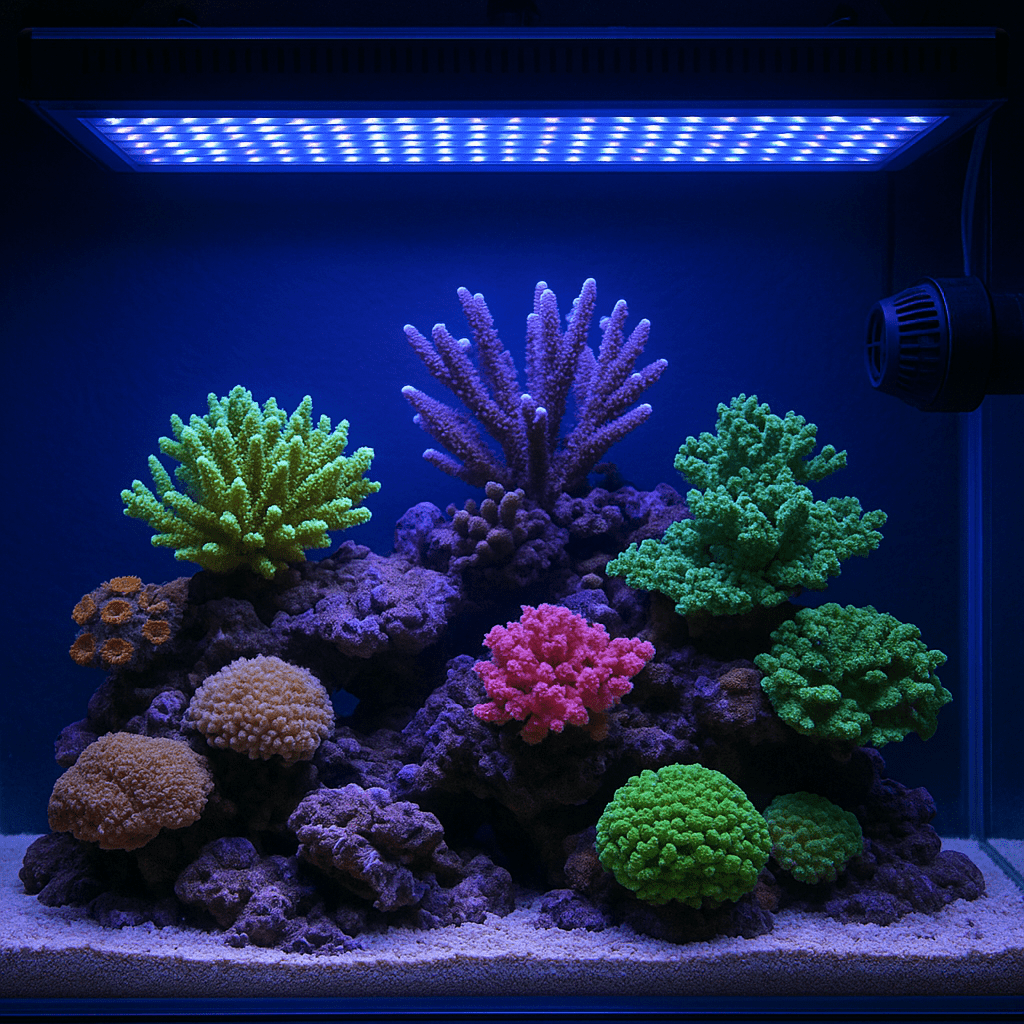
Reef tank temperature swings stress fish, corals, and beneficial bacteria fast. Most problems come from room temperature changes, undersized heaters, poor controller settings, or strong lighting heat. The fix is usually simple. Stabilize equipment, improve monitoring, and keep daily temperature changes very small.
Temperature stability is one of the most overlooked parts of reef keeping. Many hobbyists focus on salinity, alkalinity, and nutrients first. Those matter a lot. But unstable heat can quietly cause coral recession, fish stress, low oxygen, and bacterial imbalance. In this guide, you will learn what causes reef tank temperature swings, how much fluctuation is safe, and how to fix both overheating and cooling problems. You will also learn how to choose heaters, chillers, and controllers that actually keep a reef stable long term.
Quick Reference Table
| Topic | Recommended Range | Notes |
|---|---|---|
| Ideal reef temperature | 77–79°F | Stability matters more than chasing one exact number. |
| Acceptable daily swing | 1–2°F maximum | Smaller swings are better for sensitive corals. |
| Danger zone low | Below 75°F | Metabolism slows. Some corals stay closed. |
| Danger zone high | Above 82°F | Oxygen drops and coral stress rises quickly. |
| Best heater setup | Two smaller heaters | Safer than one oversized heater. |
| Best monitoring method | Controller plus thermometer | Always verify probe accuracy. |
| Common heat sources | Lights, pumps, room heat | Lids and poor ventilation trap heat. |
| Common cooling causes | Cold rooms, weak heater | Sumps lose heat fast in winter. |
Why Temperature Stability Matters in a Reef Tank
Corals do not like rapid change. Fish do not either. In the ocean, temperature shifts happen slowly in most reef zones. Your aquarium is different. It has pumps, glass walls, lights, and room air working against stability all day.
When temperature rises too high, oxygen levels fall. Fish breathe harder. Corals produce more stress mucus. Bacterial activity can speed up. This may cloud the water or worsen nutrient problems. High heat also increases the risk of bleaching in already stressed corals.
When temperature drops too low, coral metabolism slows. Polyps may stay closed. Fish often become less active. Digestion slows too. That can reduce feeding response and weaken immune function over time.
The real danger is repeated swinging. A reef that moves from 76°F at night to 82°F by afternoon is not stable. Even if livestock survives, growth often slows. Color can fade. Tissue recession may start on sensitive SPS and LPS corals. Stability supports every other parameter you manage.
How Much Temperature Swing Is Safe?
Most reef tanks do best between 77°F and 79°F. Some hobbyists run slightly cooler. Others run slightly warmer. Both can work if the temperature stays steady.
A daily swing of 1°F is excellent. A swing of 2°F is usually acceptable. More than that should get your attention. Sensitive acropora, euphyllia, and some invertebrates often react first. Soft corals may tolerate more, but tolerance is not the same as thriving.
Short spikes can happen during maintenance or hot weather. That does not always mean disaster. The problem is repeated exposure. If your tank overheats every afternoon or cools sharply each night, livestock remains under constant stress.
Do not chase tiny decimal changes. Instead, aim for a narrow and repeatable range. If your reef stays between 78.0°F and 78.8°F every day, that is excellent. If it jumps from 77°F to 81°F, you need to correct the cause.
Common Causes of Reef Tank Temperature Swings
The most common cause is an undersized or failing heater. Many budget heaters lose accuracy with age. Some stick on. Others fail to turn on at all. A single heater also creates a single point of failure.
Room temperature swings are another major cause. If your home gets cool at night and hot by afternoon, your tank will follow. This is common in rooms with large windows, weak insulation, or seasonal HVAC changes.
Lighting can add a surprising amount of heat. Powerful LEDs, T5 fixtures, and metal halides all warm the water indirectly. Enclosed canopies trap that heat. So do tight-fitting lids with poor airflow.
Return pumps, powerheads, and skimmer pumps also add heat. Older pumps often run hotter. Small systems feel this more than large tanks. A nano reef can swing fast because total water volume is low.
Controller probe placement matters too. A probe near a heater, return line, or light-warmed chamber may read incorrectly. That causes false heater cycling. Finally, simple thermometer error is common. Many hobbyists troubleshoot a problem that is really a bad reading.
Step-by-Step: How to Diagnose Temperature Swings
Start with verification. Check your tank temperature using two separate devices. Use a trusted digital thermometer and compare it to your controller or heater display. If they disagree, calibrate or replace the inaccurate device first.
Next, track the swing pattern for several days. Record the highest and lowest temperature each day. Note when the tank gets warmest and coolest. This tells you whether the problem is tied to lights, room temperature, or heater cycles.
Then inspect equipment. Check the heater wattage. Look for condensation inside the heater tube. Make sure pumps are clean and ventilated. Dirty pumps can run hotter. Confirm that cooling fans, if used, are actually turning on.
After that, review placement. Keep heaters in a high-flow area. Place probes where water mixes well. Avoid dead spots and isolated chambers. In sumps, the return section often works well if water level stays stable.
Finally, compare tank changes to room conditions. If the room climbs five degrees every afternoon, your tank likely will too. Solving the room issue often solves the aquarium issue.
Aquarium Setup Factors That Affect Temperature
Tank size plays a huge role. Larger systems change temperature more slowly. Small reefs react fast. A 20-gallon tank can heat or cool quickly. A 120-gallon tank has much more thermal stability.
Sumps increase total water volume, which helps. They also expose more water to room air. That can be good or bad. In summer, evaporation may cool the tank. In winter, an open sump may lose heat rapidly.
Lids trap heat and humidity. Mesh tops allow better gas exchange and cooling. Closed canopies look clean, but they often collect hot air around lights and pumps. Adding ventilation fans can make a big difference.
Aquascape also affects flow around heaters and probes. Dense rockwork can create stagnant pockets. If warm water stays trapped near the heater, the heater may shut off early while the display remains cool.
If you are planning a new build, think about temperature before livestock arrives. Good circulation, easy equipment access, and room for redundant heaters make long-term stability much easier.
Heating Solutions That Actually Work
The safest approach is usually two smaller heaters instead of one large heater. If one fails off, the other helps hold temperature. If one sticks on, it has less power to overheat the tank quickly.
Use a quality external temperature controller whenever possible. Heater thermostats are often inaccurate over time. A controller adds a second layer of protection. Set the heater slightly above the controller set point. This lets the controller do the real work.
Choose heater wattage based on total system volume and room conditions. Colder homes need more wattage. Open-top systems lose more heat too. In many reef tanks, 3 to 5 watts per gallon is a useful starting point. Always adjust for your environment.
Place heaters in strong flow. The sump is often ideal. Keep them submerged correctly and inspect them often. Replace aging heaters before they fail. Many reef keepers treat heaters as consumable equipment for good reason.
If you want more equipment guidance, see: best reef tank heaters and reef tank controller guide.
Cooling Solutions for Overheating Tanks
For mild overheating, fans are often enough. A small clip-on fan across the sump or display increases evaporation and cools the water well. This is affordable and effective. It also increases top-off demand, so monitor salinity closely.
Improve room ventilation next. Close blinds during hot afternoons. Keep the tank away from windows. Run home air conditioning consistently during heat waves. Even one hot room can push a reef above safe limits.
Raise lights if they are too close to the water. Reduce photoperiod slightly during extreme heat. Clean pump intakes and impellers. Old or clogged pumps waste energy as heat.
For severe or repeated overheating, a chiller may be necessary. This is most common with warm climates, enclosed cabinetry, or high-powered lighting systems. Size the chiller to your actual water volume and heat load. Undersized chillers run constantly and wear out early.
For more help with stable evaporation and salinity, read: auto top off guide.
Common Problems
Why does my reef tank get hot during the day?
This usually points to lighting, room heat, or trapped canopy air. Check the highest temperature before lights turn off. If that is the hottest point, your lighting system is likely involved. Add airflow first. Then review room temperature and pump heat.
Why does my tank cool down too much at night?
This often means the heater is undersized, poorly placed, or failing. Nighttime room cooling can also be the cause. Track room temperature overnight. If the room drops sharply, increase heating capacity or improve insulation around the system.
My heater says 78°F, but the tank reads 76°F
Built-in heater dials are often inaccurate. Verify with a second thermometer. Then recalibrate if possible. If not, replace the heater or control it with an external thermostat. Never trust one reading without confirmation.
Can temperature swings cause coral recession?
Yes. Repeated swings can trigger polyp closure, tissue recession, color loss, and poor growth. SPS corals often show stress first. LPS corals may stay inflated less often. Fix the swing before changing many other parameters at once.
What should I do if my tank overheats suddenly?
Turn off heat sources if needed. Increase surface agitation. Use a fan across the water. Float sealed ice packs only in emergencies. Do not drop temperature too fast. A gradual reduction is safer than a rapid crash.
Preventing Future Temperature Swings
Prevention is easier than emergency correction. Use redundant heaters and a controller. Clean pumps often. Verify thermometer accuracy every few months. Watch seasonal room changes before they become tank problems.
Set alerts if your controller allows them. A text warning at 81°F can save a reef. Keep spare equipment ready. A backup heater, fan, and thermometer are cheap insurance compared to replacing coral colonies.
Try to keep your reef in a climate-stable room. Avoid direct sunlight. Avoid placing the tank near doors, radiators, or drafty windows. If your system is in a cabinet, make sure warm air can escape.
Most important, change one thing at a time. If you add fans, raise lights, and replace heaters on the same day, it becomes harder to identify what worked. Slow, measured adjustments usually create the most stable reef.
You may also find these helpful: ideal reef tank parameters and why corals are closing up.
Frequently Asked Questions
What is the best temperature for a reef tank?
Most reef tanks do well at 77°F to 79°F. Pick a stable target within that range and hold it consistently.
Is a 2 degree temperature swing bad?
A 2°F daily swing is usually manageable. Less is better. Repeated swings above 2°F should be corrected.
Do LED lights heat a reef tank?
Yes. LEDs add less heat than some older lighting, but they still warm water and surrounding air.
Should I use one heater or two?
Two smaller heaters are safer for most reef tanks. They provide redundancy and reduce overheating risk.
Can a temperature swing cause fish stress?
Yes. Fish may breathe faster, hide more, eat less, and become more vulnerable to disease.
Was this helpful?
Related Posts
Cuban Hogfish (bodianus Pulchellus)
Cuban Hogfish care is straightforward in larger reef tanks. Learn tank size, diet, compatibility, and reef safety before…
 By
ByWhat to Do During a Power Outage
A reef tank power outage demands fast action. Protect oxygen, temperature, and circulation first to keep fish and…
 By
By[favorite_button]
My Bookmarks:
To see full list click here
[user_favorites user_id="" include_links="true" site_id="" post_types="" include_thumbnails="true" thumbnail_size="thumbnail" include_excerpt="false"]