

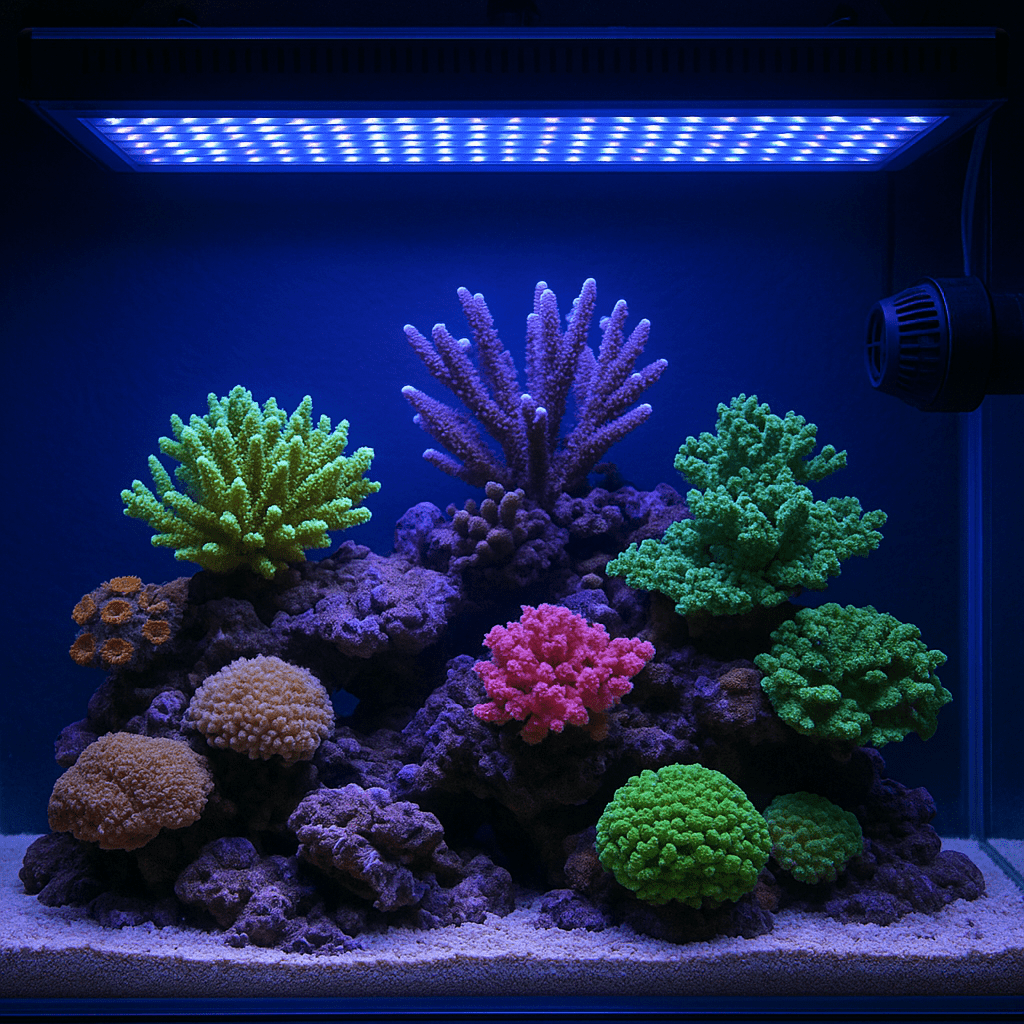
Reef tank water chemistry basics come down to stability, balance, and testing. You do not need perfect numbers every day. You need consistent numbers that stay within safe ranges. When salinity, alkalinity, calcium, magnesium, nitrate, and phosphate stay stable, corals grow better, fish stay healthier, and nuisance algae becomes easier to control.
Many beginners feel overwhelmed by reef chemistry. That is normal. Saltwater tanks use more parameters than freshwater systems. Corals, coralline algae, and other invertebrates constantly consume minerals from the water. Fish also add waste that changes nutrient levels over time. This guide explains the most important reef tank water parameters, what each one does, how to test them, and how to correct common problems without chasing numbers. By the end, you will understand which values matter most, which mistakes to avoid, and how to build a simple routine that keeps your reef stable.
Quick Reference Table
| Parameter | Recommended Range | Why It Matters |
|---|---|---|
| Salinity | 1.025–1.026 SG | Supports coral health and osmotic balance |
| Temperature | 77–79°F | Keeps metabolism and oxygen levels stable |
| pH | 7.8–8.4 | Affects coral calcification and biology |
| Alkalinity | 7–9 dKH | Buffers pH and supports skeleton growth |
| Calcium | 400–450 ppm | Needed for coral and coralline growth |
| Magnesium | 1250–1400 ppm | Helps stabilize calcium and alkalinity |
| Nitrate | 2–15 ppm | Provides nutrients without excess pollution |
| Phosphate | 0.03–0.10 ppm | Supports coral function in small amounts |
| Ammonia | 0 ppm | Toxic to fish and invertebrates |
| Nitrite | 0 ppm | Should be undetectable in mature reefs |
Use this chart as a starting point. Different successful reefs run slightly different numbers. Soft coral tanks often tolerate higher nutrients. SPS tanks usually demand tighter stability. The key is avoiding fast swings.
Why Water Chemistry Matters in a Reef Tank
Reef aquariums are closed systems. In the ocean, water volume is massive. Waste gets diluted quickly. In your tank, every feeding, water change, and dosing error has a bigger effect. Corals react strongly to unstable chemistry. Fish often handle minor issues better, but invertebrates usually do not.
Water chemistry affects coral color, growth, and tissue health. It also affects algae growth, bacterial balance, and oxygen exchange. Low alkalinity can slow coral skeleton growth. High salinity can stress fish and shrimp. Excess nutrients can fuel nuisance algae. Zero nutrients can also harm corals over time. That is why reef chemistry is about balance, not extremes.
Beginners often focus on chasing exact numbers. That approach causes trouble. A stable alkalinity of 8.5 dKH is better than daily swings between 7 and 10. A consistent nitrate level of 10 ppm is often safer than bouncing between zero and twenty. Stability builds trust in your system. Corals reward that patience.
The Core Reef Tank Parameters
Start with the parameters that matter most. Salinity is the first one. Measure it with a calibrated refractometer or a high-quality digital meter. Swing-arm hydrometers can work, but they are less reliable. Top off evaporated water with fresh RO/DI water, not saltwater. Salt stays behind when water evaporates.
Alkalinity, calcium, and magnesium form the backbone of coral growth. Stony corals and coralline algae consume these constantly. Alkalinity usually changes fastest. Test it often. Calcium drops more slowly in many tanks. Magnesium usually changes the slowest. Keep all three in balance before increasing dosing.
Nitrate and phosphate are your main nutrient readings. Corals need some available nutrients. Ultra-low nutrient tanks can look clean but still struggle. Pale corals, weak polyp extension, and slow growth can follow. On the other hand, very high nutrients can fuel algae and reduce coral color. Aim for a middle ground.
pH matters too, but many hobbyists overreact to it. If alkalinity is stable and gas exchange is good, pH usually stays acceptable. Chasing pH with quick fixes often creates bigger problems.
How to Test Reef Tank Water Correctly
Good testing habits matter as much as the numbers themselves. Always test with clean vials and follow the instructions exactly. Small mistakes can change the result. Use the same test kit brand consistently when possible. That makes trends easier to read.
Test salinity weekly, and any time you mix new saltwater. Test alkalinity two to four times per week in tanks with stony corals. Test calcium and magnesium weekly or biweekly. Test nitrate and phosphate weekly. Test ammonia and nitrite during cycling, after livestock losses, or when something seems wrong.
Write your results down. A logbook helps more than memory. Trends tell the real story. If alkalinity falls by 0.3 dKH every day, you know your tank needs regular supplementation. If phosphate rises after heavy feeding, you can adjust feeding or export methods. Testing without tracking wastes useful information.
For more on stable starts, see how to cycle a reef tank and reef tank parameters chart.
Step-by-Step: Building a Simple Chemistry Routine
Keep your routine simple at first. Complexity causes mistakes. A repeatable schedule works better than random testing and reactive dosing.
- Mix all new saltwater to 1.025–1.026 salinity.
- Match temperature before each water change.
- Test alkalinity twice weekly at the same time of day.
- Test calcium, magnesium, nitrate, and phosphate weekly.
- Top off evaporation daily with RO/DI water.
- Perform regular water changes, usually 10 percent weekly or 15–20 percent biweekly.
- Only dose what your tank actually consumes.
- Make corrections slowly over several days.
This routine covers most beginner and intermediate systems. As coral demand grows, you may add two-part dosing, kalkwasser, or a calcium reactor. Do not rush there. Many new tanks need only water changes at first. Let testing guide your decisions.
Understanding Alkalinity, Calcium, and Magnesium
These three parameters work together. Alkalinity supports coral skeleton formation and helps buffer pH. Calcium provides the raw material for calcification. Magnesium helps prevent calcium and carbonate from precipitating too easily. When magnesium is too low, calcium and alkalinity become harder to maintain.
Alkalinity is usually the most sensitive parameter in a growing reef. SPS corals can react quickly to sudden alkalinity swings. Burnt tips, tissue recession, and poor polyp extension can follow. Soft corals are often more forgiving, but they still prefer stability.
If alkalinity is low, raise it slowly. Large jumps can stress corals. If calcium is low, correct it gradually as well. If both alkalinity and calcium are low, check magnesium before making aggressive changes. Low magnesium often sits behind unstable dosing results. For deeper coral care topics, visit best beginner corals.
Nutrients: Nitrate and Phosphate Without Fear
Many reef keepers fear any measurable nitrate or phosphate. That old mindset causes problems. Corals are animals with symbiotic algae. They benefit from some available nutrients. A tank with zero nitrate and zero phosphate may look clean, but corals can become pale and stop growing.
Nitrate between 2 and 15 ppm works well in many mixed reefs. Phosphate between 0.03 and 0.10 ppm is also a practical target. Exact numbers vary by system. What matters most is consistency and observable coral response. If nutrients are too high, reduce feeding slightly, improve skimming, siphon detritus, and consider media or refugium support. If nutrients are too low, feed a bit more and avoid overusing removers.
Do not strip nutrients overnight. Fast drops can shock corals. Slow corrections are safer. Strong export methods should be adjusted in small steps.
Common Problems
Why is my alkalinity always dropping?
This usually means your corals, coralline algae, or other calcifiers are consuming it. It can also happen if your salt mix has lower alkalinity than your display tank. Test your freshly mixed saltwater. If tank demand is real, begin a measured dosing plan based on daily consumption.
Why are my corals pale even though the water looks clean?
Pale corals often point to low nutrients, excessive light, or unstable alkalinity. Check nitrate and phosphate first. If both are near zero, your tank may be too clean. Feed more, reduce nutrient export slightly, and avoid sudden chemistry changes.
Why is my pH low?
Low pH often comes from high indoor carbon dioxide, limited gas exchange, or chronically low alkalinity. Open a window, improve surface agitation, clean the skimmer air intake, and verify alkalinity. Focus on the cause, not quick pH boosters.
Why do I have algae if my test kits read zero nutrients?
Algae can consume nitrate and phosphate as fast as they appear. The test kit may read low because the algae is using the nutrients immediately. Check feeding, detritus buildup, old filter media, and source water quality. Manual removal and export improvements usually help.
Can water changes fix most chemistry issues?
Yes, especially in newer tanks. Water changes can restore trace elements, reduce excess nutrients, and correct mild imbalances. They will not always keep up with heavy SPS demand, but they remain one of the safest tools in reef keeping.
Frequently Asked Questions
What is the most important reef tank parameter?
Stability is the most important factor overall. If choosing one parameter to watch closely, alkalinity is often the most useful for coral health.
How often should I test reef tank water?
Test alkalinity several times per week in coral-heavy tanks. Test most other key parameters weekly. Increase testing when making changes.
Do I need to dose a new reef tank?
Usually not right away. Many new tanks can maintain chemistry with regular water changes until coral demand increases.
Is zero nitrate good for a reef tank?
Not always. Many reefs do better with a small measurable nitrate level. Zero nutrients can lead to pale or stressed corals.
What source water should I use?
RO/DI water is best for mixing saltwater and topping off evaporation. It reduces unwanted nutrients, metals, and contaminants.
Final Tips for Long-Term Reef Stability
Keep your reef chemistry routine boring. That is a good thing. Test consistently. Dose slowly. Match salinity carefully. Avoid large swings. Resist the urge to fix every number in one day. Healthy reef tanks are built through small, repeatable habits.
As your tank matures, coral demand will change. Re-test your assumptions every few months. What worked in a soft coral tank may not work after adding fast-growing stony corals. Let your animals guide you. Good extension, steady growth, and stable numbers usually mean you are on the right path. For more help with nutrient control and maintenance, read reef tank water change guide and how to lower nitrate in a reef tank.
Was this helpful?
Related Posts
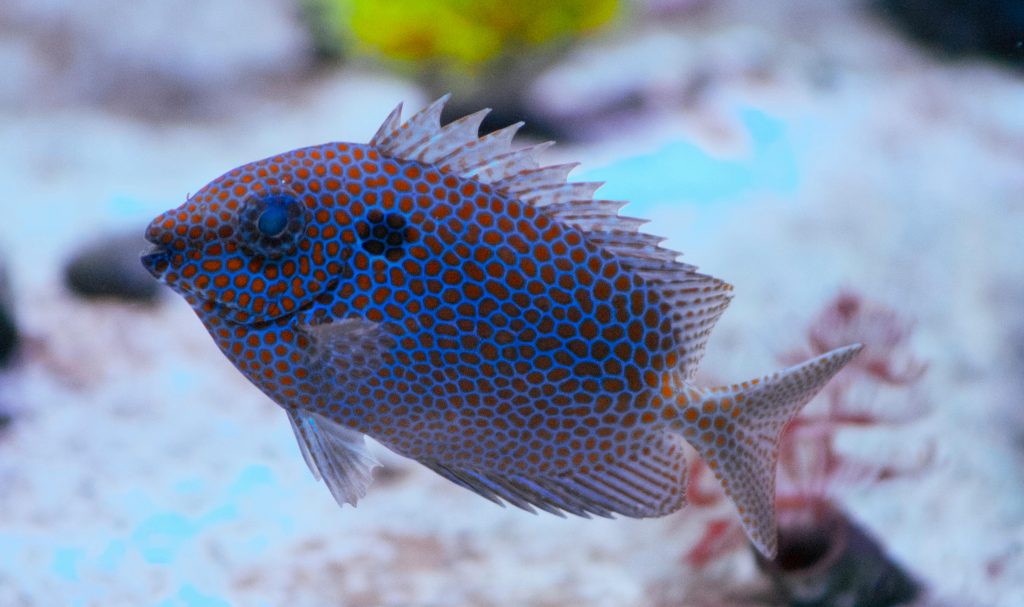
Gold Spotted Rabbitfish (Siganus Punctatus)
Gold Spotted Rabbitfish care includes large tanks, heavy algae feeding, and caution with corals. Learn tank size, diet,…
 By
By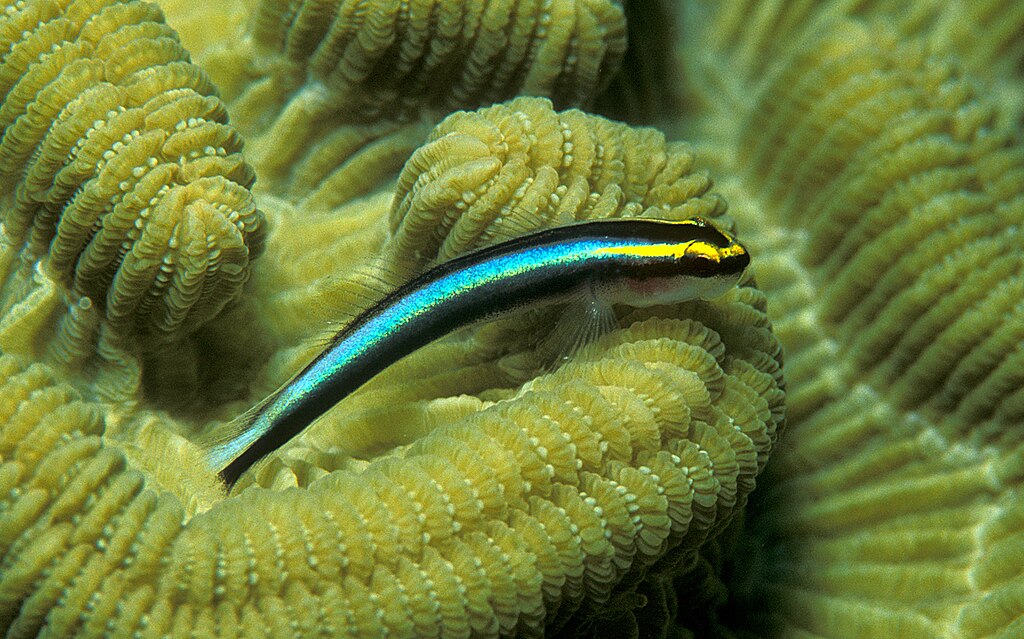
Sharknose Goby (Elacatinus evelynae)
Sharknose Goby care is simple in stable reef tanks. Learn feeding, tank setup, compatibility, and common problems for…
[favorite_button]
My Bookmarks:
To see full list click here
[user_favorites user_id="" include_links="true" site_id="" post_types="" include_thumbnails="true" thumbnail_size="thumbnail" include_excerpt="false"]