Sump vs Canister Filter: Which Is Better for Your Saltwater Tank?
Choosing between a sump and a canister filter is one of the biggest early decisions in the saltwater aquarium hobby. Both can keep your water clear and your fish healthy, but they do it in very different ways. Understanding the pros and cons of each will help you match your filtration to your reef goals, budget, and maintenance style.
How Sumps and Canister Filters Work
What Is a Sump?
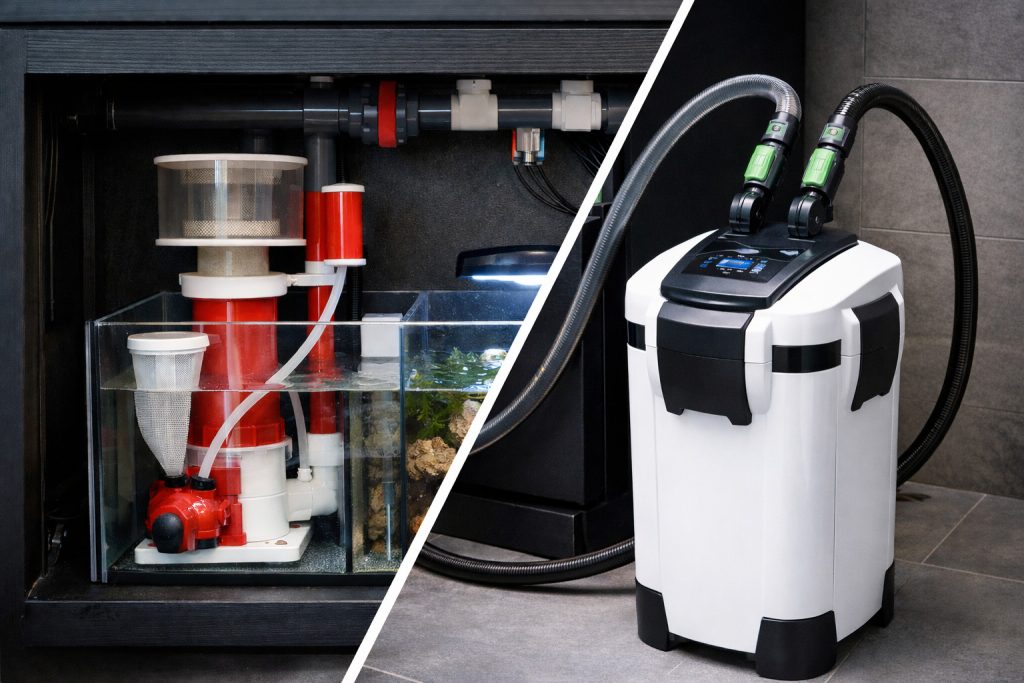
A sump is an additional tank (usually in the stand) plumbed to your display. Water drains down, passes through various filtration stages, then is pumped back up. Sumps are highly customizable and can house:
- Filter socks or roller mats for mechanical filtration
- Protein skimmer for organic waste removal
- Heaters, probes, and dosing lines to keep equipment out of the display
- Refugium section for macroalgae and pods
- Extra live rock for biological filtration
Because of this flexibility, sumps are usually the top choice for reef tanks and larger marine systems. If you’re planning a full reef, you’ll also want to read our guide on setting up a saltwater aquarium to see how a sump fits into the whole build.
What Is a Canister Filter?
A canister filter is a sealed unit that sits below or beside your tank. Water is pulled from the display, pushed through media baskets, and returned via tubing. Canisters typically use:
- Sponges or floss for mechanical filtration
- Ceramic rings or bio-balls for biological filtration
- Carbon or specialty resins for chemical filtration
Canister filters are compact and easy to add to an existing tank without drilling. They can work on fish-only saltwater tanks or smaller systems, especially when paired with live rock and regular water changes.
Pros and Cons: Sump vs Canister Filter
Why Many Reefers Prefer Sumps
- More water volume: The extra water in the sump increases stability in salinity, temperature, and nutrients.
- Cleaner display: Overflows, returns, and surface skimming keep equipment and film off the main viewing area.
- Better gas exchange: Turbulence in the sump helps oxygenate the water.
- Room for upgrades: Easy to add reactors, refugiums, or larger skimmers as your reef grows.
The main downsides are higher initial cost, more plumbing work, and the need to plan for overflow safety. Our article on saltwater aquarium equipment covers what you’ll need if you go the sump route.
When a Canister Filter Makes Sense
- Simple installation: No drilling or overflow box required.
- Compact footprint: Fits easily in small stands or beside nano systems.
- All-in-one media: Mechanical, biological, and chemical filtration in one unit.
However, canisters can become nitrate factories if not cleaned frequently. Trapped detritus breaks down and fuels algae. For saltwater use, you must be disciplined about maintenance.
Hobbyist Tip: If you rely on a canister, treat it like a mechanical filter first. Rinse sponges and floss weekly and avoid over-packing with biomedia if you already have plenty of live rock.
Which Is Right for Your Saltwater Aquarium?
For most reef-focused hobbyists, a sump is the better long-term choice. It offers stability, flexibility, and room to grow as you add corals and more sensitive livestock. If your goal is a serious reef, plan around a sump from the start.
A canister filter can still be a useful tool for:
- Fish-only or fish-only-with-live-rock (FOWLR) tanks
- Smaller or temporary setups
- Running carbon or phosphate remover on an as-needed basis
Ultimately, think about your dream tank, not just your first tank. If you envision a thriving reef full of corals, a sump will make your life easier. If you just want a simple fish display and don’t mind regular canister cleaning, that route can work too. For more planning help, check out our overview of beginner saltwater aquarium setup so you can build a system that fits your goals from day one.
Sources
- Sprung, J. & Delbeek, J. C. The Reef Aquarium (Volumes 1–3).
- Fenner, R. The Conscientious Marine Aquarist.
- Manufacturer documentation from common sump and canister brands (Eshopps, Trigger Systems, Fluval, Eheim).
Was this helpful?
Related Posts
Protein Skimmer Reef Tank Guide
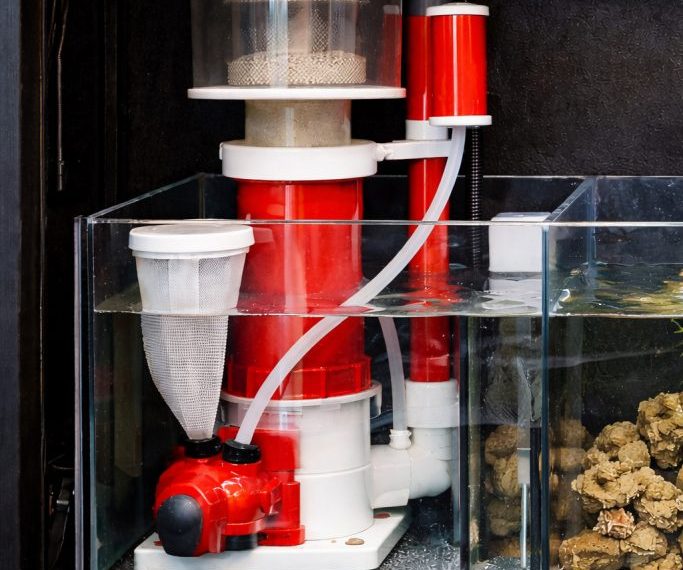
Learn how a protein skimmer works, how to size one, and how to tune it for a cleaner,…
 By
By
Reef Aquarium Water Parameters
Learn the ideal reef aquarium water parameters, safe ranges, and how to keep salinity, alkalinity, nutrients, and pH…