

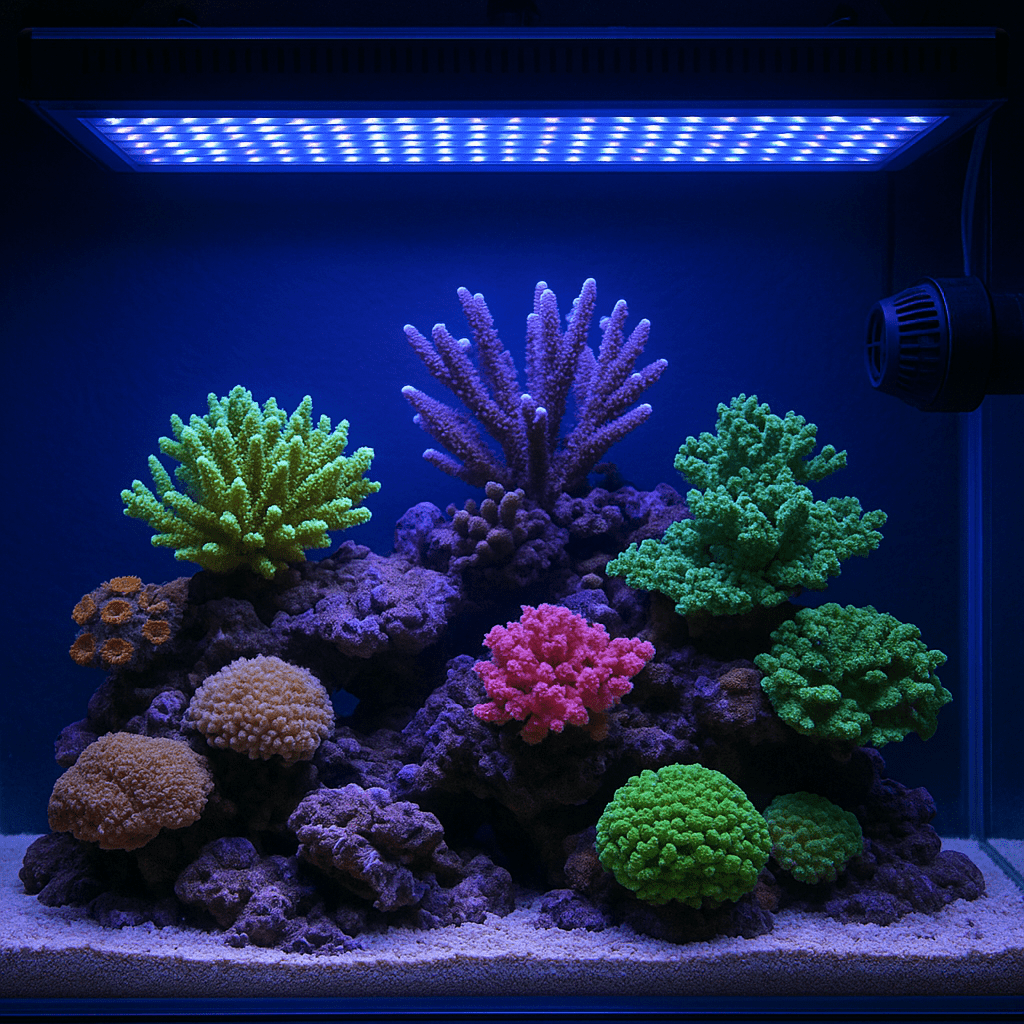
Water chemistry basics drive every successful reef tank. Stable salinity, temperature, alkalinity, calcium, and nutrients matter more than chasing perfect numbers. Learn what each parameter does, how to test it, and how to keep your reef stable for fish, corals, and invertebrates.
Many reef problems start with water chemistry. Corals close up. Algae spreads. Fish show stress. Growth slows down. New hobbyists often assume they need expensive gear first. In reality, they need to understand the water. That is the foundation of reef keeping. In this guide, you will learn the core reef parameters, safe target ranges, testing habits, and simple correction methods. You will also see how these values interact with each other. Once you understand that relationship, reef care becomes much easier and far less frustrating.
Quick Reference Table
| Parameter | Recommended Range | Why It Matters |
|---|---|---|
| Temperature | 76–79°F | Supports stable metabolism and coral health |
| Salinity | 1.025–1.026 SG | Matches natural reef conditions |
| pH | 7.8–8.4 | Affects coral calcification and gas exchange |
| Alkalinity | 7–9 dKH | Buffers pH and supports skeleton growth |
| Calcium | 400–450 ppm | Needed for coral skeleton formation |
| Magnesium | 1250–1400 ppm | Helps stabilize calcium and alkalinity |
| Nitrate | 2–15 ppm | Supports coral nutrition in balanced amounts |
| Phosphate | 0.03–0.10 ppm | Needed in small amounts, harmful in excess |
| Ammonia | 0 ppm | Toxic to fish and invertebrates |
| Nitrite | 0 ppm | Should remain undetectable in mature tanks |
Use these ranges as a guide, not a strict rulebook. Stability matters more than tiny differences inside the safe range. A reef tank that holds steady at 8 dKH usually does better than one that swings between 7 and 10 dKH each week.
Why Water Chemistry Matters in a Reef Tank
Reef aquariums are closed systems. Nothing leaves unless you remove it. Nothing enters unless you add it. Fish waste, uneaten food, coral growth, evaporation, and dosing all change the water over time. In the ocean, huge water volume keeps conditions stable. In your tank, small changes can happen fast.
Corals are especially sensitive to swings. Stony corals use calcium and alkalinity every day. Fish need stable salinity and temperature. Beneficial bacteria need oxygen and consistent conditions. Even soft corals, which seem hardy, react poorly to rapid shifts. That is why experienced reef keepers focus on trends. They test often. They make small adjustments. They avoid sudden corrections.
Good chemistry also helps with pest control. Stable nutrients reduce stress. Healthy corals resist algae better. Balanced water supports beneficial microbes. If your reef looks off, test the water before changing lights, flow, or livestock.
The Core Water Parameters Every Reefer Should Know
Start with the basics. Temperature and salinity are the first two. They affect every animal in the tank. Use a reliable heater controller and a calibrated refractometer. Top off evaporated water with fresh RO/DI water, not saltwater. Salt does not evaporate.
Next comes pH, alkalinity, calcium, and magnesium. These four are tied together. Alkalinity supports pH stability. Calcium and alkalinity fuel coral skeleton growth. Magnesium helps keep both in solution. If magnesium gets too low, calcium and alkalinity become harder to maintain.
Then look at nutrients. Nitrate and phosphate are not the enemy. Corals need some available nutrients. A tank with zero nitrate and zero phosphate can look pale and struggle. A tank with excessive nutrients can grow nuisance algae and brown corals. The goal is balance, not starvation.
Finally, ammonia and nitrite should stay at zero in mature systems. If either appears, something is wrong. Check for die-off, overfeeding, failed filtration, or a new tank that has not fully cycled.
Understanding Alkalinity, Calcium, and Magnesium
This trio confuses many beginners. Keep it simple. Alkalinity is the water’s buffering capacity. It helps resist pH drops. Corals also use carbonate from alkalinity to build skeletons. Calcium supplies the other major building block. Magnesium helps prevent calcium carbonate from precipitating too quickly.
If alkalinity drops fast, stony corals often show stress first. Tips may burn. Polyps may retract. Growth can stall. If calcium is low, coral growth slows over time. If magnesium is low, both calcium and alkalinity become unstable. That often leads to endless corrections.
For most mixed reefs, aim for 7 to 9 dKH alkalinity, 400 to 450 ppm calcium, and 1250 to 1400 ppm magnesium. Pick a target and hold it there. Do not copy another reefer’s numbers without context. A low-nutrient SPS tank may run differently than a soft coral reef. Stability still wins.
Water changes may cover demand in small tanks. Heavily stocked reefs often need two-part dosing, kalkwasser, or a calcium reactor. Increase supplementation slowly. Test before and after changes.
Nutrients, the Nitrogen Cycle, and Reef Balance
The nitrogen cycle begins with waste. Fish release ammonia. Uneaten food breaks down into ammonia too. Beneficial bacteria convert ammonia into nitrite, then nitrate. In a healthy reef tank, ammonia and nitrite stay at zero because bacteria process them quickly.
Nitrate is less toxic than ammonia, but it still matters. Very high nitrate can stress corals and encourage algae. Very low nitrate can starve corals, especially in ultra-clean systems. Many reef keepers see good results around 2 to 15 ppm. Some tanks run lower or higher, but sudden shifts cause trouble.
Phosphate works the same way. Corals and microbes need a little. Too much can fuel algae and reduce calcification. Too little can pale corals and stall growth. A common target is 0.03 to 0.10 ppm. Keep nitrate and phosphate in proportion. If one bottoms out while the other stays high, the tank often looks unstable.
Good export methods include protein skimming, water changes, refugiums, roller mats, and careful feeding. Avoid aggressive nutrient stripping unless you know why you are doing it.
How to Test Reef Water Correctly
Testing matters only if your method is consistent. Use quality kits. Check expiration dates. Follow instructions exactly. Read colors under good light. Rinse vials with tank water before use. Keep syringes and spoons clean. Small errors create false trends.
Test salinity with a calibrated refractometer or digital meter. Test alkalinity at least weekly in most reefs. Fast-growing stony coral tanks may need testing several times each week. Calcium and magnesium can be tested weekly or biweekly, depending on demand. Nitrate and phosphate should be checked often enough to catch trends before they become problems.
Write down every result. A reef journal helps more than memory. If alkalinity drops from 8.5 to 7.8 every week, that tells you the tank’s consumption. If phosphate climbs after heavier feeding, you have useful data. Testing is not about a single number. It is about understanding direction and rate of change.
For more help, see our guides on how to cycle a reef tank, reef tank parameters, best salt mix for reef tanks, and reef tank water changes.
Step-by-Step: How to Stabilize Water Chemistry
- Test salinity, temperature, alkalinity, nitrate, and phosphate first.
- Compare results to your normal range, not just online charts.
- Fix salinity slowly if it drifted from evaporation or mixing errors.
- Correct alkalinity in small steps. Avoid large one-day jumps.
- Check calcium and magnesium before increasing coral supplements.
- Review feeding, filtration, and stocking if nutrients are off.
- Perform a water change if several parameters look unstable.
- Retest after 24 hours and track the trend.
- Automate top-off and dosing if swings happen often.
This simple process solves many common reef issues. New hobbyists often dose first and ask questions later. That creates bigger swings. Always test before adding chemicals. If you do not know what changed, start with salinity and alkalinity. Those two cause many visible problems.
Common Problems
Why is my pH low?
Low pH often comes from excess indoor carbon dioxide. Open a window and compare results. Improve surface agitation. Clean your skimmer air intake. Check alkalinity too. Low alkalinity can worsen pH swings. Avoid chasing pH with quick-fix additives unless you know the cause.
Why does alkalinity keep dropping?
Corals, coralline algae, and clams consume alkalinity daily. If demand is rising, your water changes may no longer keep up. Measure daily for several days. Then match that consumption with two-part dosing or kalkwasser. Also check magnesium if alkalinity seems impossible to hold.
Why are nitrate and phosphate both zero?
Your tank may be too nutrient poor. Corals can become pale, weak, or slow growing. Feed fish a bit more. Reduce aggressive media use. Consider amino acids or coral foods with caution. The goal is measurable nutrients, not dirty water.
Why is algae growing if my tests look fine?
Algae can consume nutrients before tests detect them. Old rock can also leach phosphate. Check feeding habits, detritus buildup, and source water quality. Replace exhausted phosphate media if needed. Improve flow in dead spots. Manual removal helps while you solve the cause.
Why are my corals closed after a water change?
New saltwater may not match the tank. Check temperature, salinity, and alkalinity of the fresh mix. Large chemistry differences stress corals quickly. Mix salt fully, heat it, aerate it, and test it before use. Smaller water changes are safer when parameters are far apart.
Best Practices for Long-Term Stability
Use RO/DI water for mixing salt and topping off evaporation. Calibrate your salinity tools often. Mix saltwater the same way every time. Keep a regular water change schedule. Feed consistently. Avoid adding too many animals at once. Quarantine fish when possible. Every new addition changes the system.
Automation helps, but it does not replace observation. Auto top-off systems prevent salinity swings. Dosing pumps improve consistency. Controllers can alert you to heater failures. Still, you should look at the tank daily. Corals often show chemistry issues before tests do.
Most reef success comes from patience. Make one change at a time. Give the tank time to respond. If you stack several fixes together, you will not know which one worked. That slows learning and creates instability.
Frequently Asked Questions
What is the most important water parameter in a reef tank?
Stability is most important. After that, salinity and alkalinity are usually the top priorities. Both affect corals and fish quickly.
How often should I test my reef tank water?
Test weekly at minimum for a stable mixed reef. Test more often when the tank is new, heavily stocked, or showing problems.
Can I rely on water changes alone?
Yes, in lightly stocked or new tanks. No, in many mature SPS or heavy-coral systems. Coral demand often outgrows basic water changes.
Should nitrate and phosphate always be zero?
No. Corals usually do better with low but measurable nutrients. Zero nutrients can lead to pale color and poor growth.
Why does my salinity keep rising?
Evaporation removes freshwater, not salt. Without proper top-off, salinity rises. Use an auto top-off with RO/DI water to prevent drift.
Water chemistry basics may seem overwhelming at first. They become simple with routine and observation. Learn the main parameters. Track trends. Correct problems slowly. That approach builds a healthier reef and a more confident reef keeper.
Was this helpful?
Related Posts
Reef Tank Plumbing Basics
Learn reef tank plumbing basics, including drains, return pumps, sump flow, noise control, and flood prevention for a…
 By
ByOur Reef Emergency Plan
A reef emergency plan helps you act fast during outages, leaks, and water quality crashes. Here is the…
[favorite_button]
My Bookmarks:
To see full list click here
[user_favorites user_id="" include_links="true" site_id="" post_types="" include_thumbnails="true" thumbnail_size="thumbnail" include_excerpt="false"]