
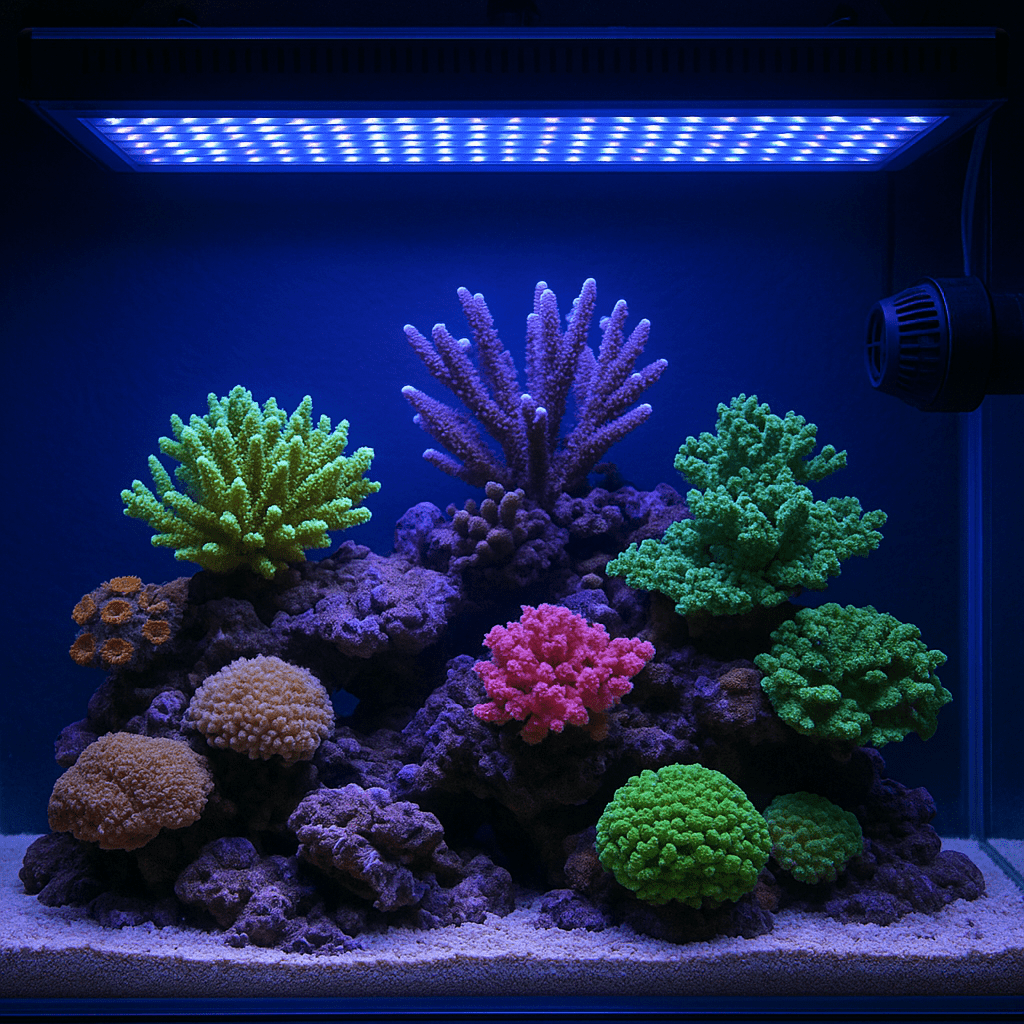
A reef aquarium is a saltwater tank that keeps live corals, reef-safe fish, and helpful invertebrates together in stable conditions. It aims to copy key parts of a natural coral reef. Success depends on strong filtration, stable water chemistry, proper lighting, and patient husbandry.
Many beginners hear the term reef tank and assume it only means a pretty saltwater aquarium. In practice, it means much more. A reef aquarium is a living ecosystem. Corals are animals. They react quickly to poor water quality and sudden change. That makes reef keeping both rewarding and demanding. In this guide, you will learn what a reef aquarium is, how it differs from a fish-only system, what equipment matters most, and how to build one with fewer mistakes. You will also learn the basic water parameters, livestock choices, and common problems that shape long-term success.
Quick Reference: Reef Aquarium Basics
| Category | Typical Recommendation |
|---|---|
| Tank Type | Saltwater aquarium with corals and reef-safe livestock |
| Best Beginner Size | 40 to 75 gallons |
| Salinity | 1.025 to 1.026 specific gravity |
| Temperature | 76 to 78°F |
| Primary Filtration | Live rock, protein skimmer, biological filtration |
| Lighting | Reef-capable LED, T5, or hybrid system |
| Water Flow | Moderate to high, varied and turbulent |
| Common Livestock | Soft corals, LPS corals, snails, clownfish, gobies |
| Main Challenge | Keeping parameters stable over time |
| Best First Corals | Mushrooms, zoanthids, leather corals, some hardy LPS |
This table gives a simple overview. The details below matter even more. Reef tanks thrive on consistency, not shortcuts.
What Makes a Reef Aquarium Different?
A reef aquarium is different from a standard marine tank because corals set the rules. Fish can handle some variation. Corals usually cannot. They need stable salinity, strong light, clean water, and balanced nutrients. They also need calcium, alkalinity, and magnesium to build skeletons and grow well.
Most reef tanks include live rock, a protein skimmer, flow pumps, and reef lighting. Many also use a sump. The sump adds water volume and hides equipment. Some hobbyists keep only soft corals. Others keep LPS or SPS corals. As coral demands increase, the tank becomes less forgiving.
Reef aquariums also focus heavily on compatibility. Not every fish is reef safe. Some nip corals. Some eat shrimp or snails. Some disturb sand beds or topple frags. A good reef setup balances beauty with behavior. That is why planning matters before buying livestock.
Natural Habitat
Coral reefs occur in warm, shallow, sunlit seas. Most form in tropical regions. Famous reef areas include the Indo-Pacific, Red Sea, Caribbean, and Great Barrier Reef. These habitats have stable salinity, intense light, and constant water motion. Waves and currents deliver oxygen and food while removing waste.
Corals live with microscopic algae called zooxanthellae. These algae use light to produce energy. In return, the coral gives them shelter and nutrients. This partnership explains why light is so important in reef aquariums. It also explains why poor water quality can cause bleaching, browning, or tissue loss.
Natural reefs also contain fish, crustaceans, snails, worms, and bacteria. Each plays a role. A home reef tank cannot copy the ocean fully. Still, it can mimic key functions. Good filtration, proper flow, and careful stocking help create a small but stable version of that ecosystem.
Aquarium Setup
Most beginners do best with a tank between 40 and 75 gallons. Small nano reefs look attractive, but they change quickly. Salinity swings faster. Temperature shifts faster. Nutrient spikes happen faster. More water volume gives you more stability and more time to react.
Start with a quality tank, stand, heater, return pump, and flow pumps. Add a reef-capable light. Use reverse osmosis deionized water if possible. Tap water often brings phosphate, nitrate, and unwanted metals. Build your aquascape with porous rock. Leave open swimming space and room for corals to grow.
Many reef keepers use a sump. It improves gas exchange and hides equipment. A protein skimmer helps remove organic waste before it breaks down. Mechanical filtration catches debris. Biological filtration handles ammonia and nitrite. Keep the layout simple and easy to maintain. Fancy gear helps, but stable basics matter more.
Water Parameters
| Parameter | Recommended Range |
|---|---|
| Temperature | 76 to 78°F |
| Salinity | 1.025 to 1.026 SG |
| pH | 8.1 to 8.4 |
| Alkalinity | 8 to 9 dKH |
| Calcium | 400 to 450 ppm |
| Magnesium | 1250 to 1350 ppm |
| Nitrate | 2 to 15 ppm for many mixed reefs |
| Phosphate | 0.03 to 0.10 ppm |
| Ammonia | 0 ppm |
| Nitrite | 0 ppm |
Stable numbers matter more than chasing perfect numbers. Many problems start when hobbyists overcorrect. Test regularly. Dose only what the tank consumes. Sudden swings in alkalinity are especially hard on corals. Salinity drift is another common issue. Top off evaporated water with fresh water, not saltwater.
Lighting Requirements
Lighting powers coral growth. Most corals depend on photosynthesis from their symbiotic algae. That means a reef aquarium needs stronger lighting than a fish-only marine tank. Modern reef LEDs are popular because they run cool and allow easy control. T5 and hybrid systems also work very well.
Different corals need different light levels. Many soft corals do well in low to moderate light. Many LPS corals prefer moderate light. SPS corals often need moderate to high light with strong stability. Beginners should avoid changing light intensity too fast. New corals can bleach under sudden exposure.
Use a steady schedule. Eight to ten hours of full lighting is common. Acclimate new corals slowly. Raise the fixture, reduce intensity, or use acclimation mode if your light offers it. Good lighting is not just about brightness. Spectrum, spread, and consistency matter just as much.
Water Flow
Water movement is critical in reef aquariums. Corals need flow to bring oxygen and food. Flow also carries away mucus, waste, and dead spots where detritus collects. In nature, reefs experience constant surge and turbulence. A home tank should aim for varied, indirect flow rather than one harsh stream.
Soft corals usually enjoy moderate, random flow. Many LPS corals prefer moderate flow that does not blast their fleshy tissue. SPS corals often need stronger, more chaotic flow. Use wavemakers or controllable pumps to create movement from different directions. Watch how corals respond. Extended polyps and gentle sway are good signs.
If detritus settles on the sand or behind rocks, flow may be too weak. If coral tissue looks torn or retracted, flow may be too direct. Adjust pump angle and intensity slowly. Good flow improves coral health, gas exchange, and overall tank cleanliness.
Feeding
Reef tanks need balanced feeding. Fish need regular meals. Corals benefit from dissolved nutrients and, in some cases, direct feeding. Overfeeding causes algae and poor water quality. Underfeeding can lead to pale corals and thin fish. The goal is steady nutrition without excess waste.
Feed fish once or twice daily. Offer varied foods. Use frozen mysis, pellets, flakes, and algae-based foods where appropriate. Some corals capture meaty foods such as mysis or reef blends. Others rely more on light and dissolved nutrients. Target feeding can help certain LPS corals, but it is not always required.
Watch nutrient levels after changing your feeding routine. If nitrate and phosphate bottom out, corals may lose color. If they climb too high, algae may take over. A healthy reef often runs with measurable nutrients, not zero nutrients. Balance is the key.
Compatibility
Compatibility is one of the biggest parts of reef keeping. Reef-safe fish generally ignore corals and leave clean-up crew animals alone. Good beginner choices include clownfish, gobies, blennies, firefish, and many small wrasses. More risky fish include some angelfish, butterflyfish, puffers, and triggers.
Corals also interact with each other. Some sting nearby corals with sweeper tentacles. Others release chemicals into the water. Leave space between colonies. Use activated carbon if needed in mixed coral systems. Invertebrates such as snails, hermits, shrimp, and urchins can help with algae and detritus, but they must match the tank’s needs.
Research every animal before purchase. A fish that is safe in one tank may become aggressive in another. A coral that looks small today may dominate the rockwork later. Good stocking plans prevent many future problems.
Step-by-Step: How to Start a Reef Aquarium
- Choose a tank size that offers stability. Bigger is usually easier.
- Buy reliable equipment first. Prioritize heater, flow, filtration, and light.
- Use RO/DI water and a quality reef salt mix.
- Aquascape with stable rockwork and open flow paths.
- Cycle the tank fully before adding fish or corals.
- Test ammonia, nitrite, nitrate, salinity, and temperature often.
- Add a clean-up crew after the cycle completes.
- Add hardy fish slowly. Quarantine if possible.
- Start with beginner corals such as mushrooms or zoanthids.
- Perform regular maintenance and avoid sudden changes.
This slow approach works. Most reef failures come from rushing. Let the tank mature before trying demanding corals. Stability improves with time.
Common Problems
Why is my reef tank growing algae?
Algae blooms usually come from excess nutrients, immature systems, weak export, or poor source water. Check nitrate and phosphate. Reduce overfeeding. Clean detritus traps. Use RO/DI water. Increase maintenance. In new tanks, some algae is normal and often fades as the system matures.
Why are my corals closed or shrinking?
Closed corals often point to stress. Common causes include unstable alkalinity, salinity swings, poor flow, pests, or lighting shock. Test key parameters first. Then inspect the coral for tissue damage or predators. Make changes slowly. Corals often need time to adjust after transport.
Why is my tank cloudy?
Cloudiness can come from bacterial blooms, sand disturbance, poor mechanical filtration, or a new tank cycle. Check recent changes. Did you overfeed or stir the substrate? Use filter floss, improve flow, and avoid adding chemicals blindly. Most bacterial blooms clear with time and stable oxygen levels.
Why do my parameters keep swinging?
Parameter swings are common in small tanks and tanks with inconsistent top-off or dosing. Measure evaporation. Use an auto top-off system if possible. Dose based on test results, not guesswork. Keep water changes regular. Stability comes from routine, not constant adjustment.
Frequently Asked Questions
Is a reef aquarium hard to keep?
It can be challenging, but it is manageable with planning. Beginners succeed when they keep things simple and stay patient.
What is the difference between a reef tank and a saltwater tank?
All reef tanks are saltwater tanks, but not all saltwater tanks are reef tanks. Reef tanks keep corals and need stronger lighting and tighter stability.
What is the best first reef tank size?
A 40 to 75 gallon tank is often the best starting range. It offers better stability than a nano reef.
Can I keep a reef aquarium without a sump?
Yes. Many successful reef tanks run without a sump. You still need strong filtration, flow, and maintenance habits.
What are the best beginner corals?
Mushrooms, zoanthids, green star polyps, and leather corals are common starter choices. Always research growth and aggression before adding them.
Final Thoughts
A reef aquarium is more than a decorative tank. It is a carefully managed marine ecosystem. The goal is not perfection on day one. The goal is stability over time. Start with solid equipment, simple livestock, and realistic expectations. Learn your tank’s patterns before adding demanding corals. If you stay patient, test regularly, and avoid quick fixes, a reef aquarium can become one of the most rewarding projects in the hobby.
Related reading: reef tank setup guide | best beginner corals | reef tank water parameters | reef-safe fish guide | protein skimmer basics
Was this helpful?
Related Posts
Reef Tank Plumbing Basics
Learn reef tank plumbing basics, including drains, return pumps, sump flow, noise control, and flood prevention for a…
 By
ByOur Reef Emergency Plan
A reef emergency plan helps you act fast during outages, leaks, and water quality crashes. Here is the…
[favorite_button]
My Bookmarks:
To see full list click here
[user_favorites user_id="" include_links="true" site_id="" post_types="" include_thumbnails="true" thumbnail_size="thumbnail" include_excerpt="false"]