

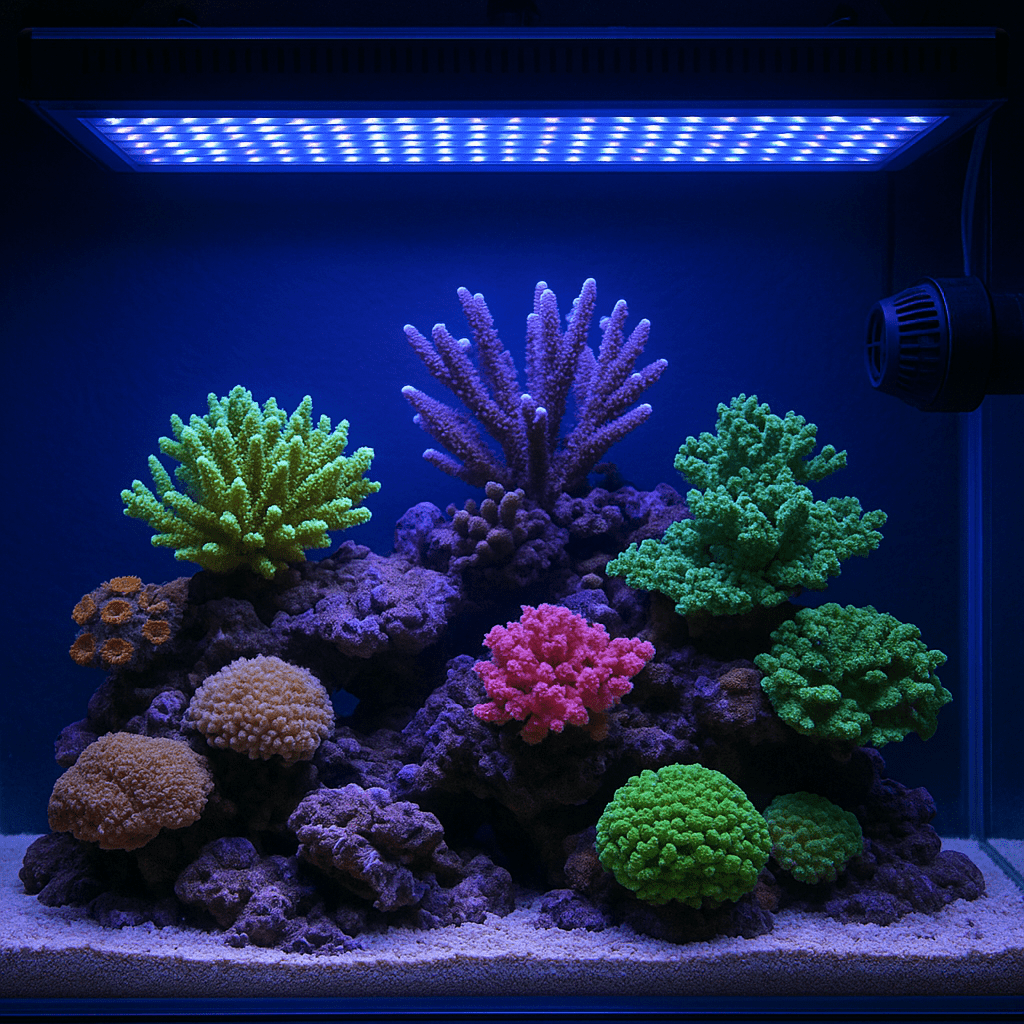
Lowering phosphate in a reef tank takes patience. Fast drops can shock coral, strip nutrients, and trigger instability. The safest approach is to confirm your reading, reduce inputs, improve export, and lower phosphate in small steps while watching coral response every few days.
Phosphate is one of the most misunderstood reef parameters. Many hobbyists see a high test result and react hard. That often creates bigger problems than the phosphate itself. Corals need some nutrients to function well. Zero phosphate is not the goal. Stability is the goal. In this guide, you will learn safe target ranges, why phosphate rises, and how to lower it without harming coral. We will cover media, refugiums, water changes, feeding control, and common mistakes. You will also learn how to troubleshoot stubborn phosphate and avoid sudden nutrient swings that can lead to pale tissue, algae shifts, or coral recession.
Quick Reference Table
| Topic | Recommended Range or Action | Notes |
|---|---|---|
| Safe phosphate range | 0.03 to 0.10 ppm | Many mixed reefs do well here |
| Upper range for some tanks | 0.10 to 0.20 ppm | Can still work if coral look healthy |
| Dangerous drop speed | Avoid large changes in days | Lower gradually over 2 to 6 weeks |
| Best testing habit | 2 to 3 times weekly | Test at the same time of day |
| Common removal tools | GFO, refugium, macroalgae, water changes | Use one major change at a time |
| Feeding adjustment | Reduce excess, do not starve tank | Rinse frozen food if needed |
| Coral warning signs | Paling, closed polyps, tissue loss | Often linked to fast nutrient reduction |
What Phosphate Does in a Reef Tank
Phosphate is not automatically bad. Coral, bacteria, algae, and other life use it. Problems start when phosphate climbs too high for too long. Elevated levels can fuel nuisance algae. They can also slow skeletal growth in stony corals. Some tanks show dull color, reduced calcification, and dirty surfaces when phosphate stays high.
At the same time, phosphate that is too low can be just as harmful. Corals may pale. Growth can stall. Tissue can thin out. This is common in tanks that use aggressive media or oversized nutrient export. Reef keepers often chase a number instead of reading the tank. A healthy reef usually looks stable before it looks perfect on paper.
For most mixed reefs, a phosphate level between 0.03 and 0.10 ppm is a solid target. Some successful tanks run higher. The key is consistency. If your reef sits at 0.12 ppm and corals look great, you may not need a dramatic correction.
Why Phosphate Gets Too High
Most phosphate enters through food. Frozen foods, pellets, and heavy coral feeding all add nutrients. Fish waste adds more. Dead algae, trapped detritus, and dirty filter media also release phosphate back into the system. Old rock can become a hidden source too. Dry rock and old live rock often absorb phosphate over time. Later, they leach it back into the water.
Source water is another common issue. If your RO/DI system is not working well, phosphate may enter with top-off or saltwater. Some salt mixes also test slightly different, though source water matters more in most cases. Weak export can make the problem worse. A small skimmer, poor flow, dirty sump zones, or an undersized refugium all allow phosphate to build.
Before you try to lower phosphate, identify the likely source. If you only use remover media, but keep overfeeding and trapping waste, the problem will return.
Test First and Confirm the Number
Do not act on one test alone. Phosphate testing can be tricky. Low-range kits are more useful for reef tanks than broad color charts. A digital checker often gives clearer readings. Test the display tank, fresh mixed saltwater, and RO/DI water. That gives you a better picture.
Repeat the test the next day. If possible, test at the same time. Feeding, dosing, and daily biological activity can shift readings slightly. Clean glass vials well. Fingerprints and residue can affect digital results. If the number still looks high, then make a plan.
Also compare phosphate with nitrate. Corals respond to nutrient balance, not just one number. Very low nitrate with moderate phosphate can create stress. So can very low phosphate with moderate nitrate. If you lower phosphate too hard while nitrate is already low, coral often react poorly.
Step-by-Step: How to Lower Phosphate Safely
Start with the least aggressive fixes. Clean trapped detritus from the sump, socks, and back chambers. Siphon waste from low-flow areas. Replace or rinse mechanical filtration more often. This alone can lower phosphate in many tanks.
Next, review feeding. Feed enough to keep fish healthy, but remove obvious excess. Rinse frozen foods if they release heavy juice. Target feed coral carefully. Broadcast feeding every night often pushes nutrients up fast.
Then improve export. A healthy skimmer helps remove organics before they break down. A refugium with growing macroalgae can export nutrients steadily. Water changes help too, though they rarely solve chronic phosphate alone unless the source is fixed.
If phosphate remains high, add a remover media slowly. Granular ferric oxide, or GFO, is the most common choice. Use a small amount first. Start with about one-quarter to one-half of the recommended dose. Test every few days. If corals look normal and phosphate declines gently, continue. If coral pale or close up, remove some media and slow down.
The safest method is one major change at a time. That lets you see what actually works.
Using GFO Without Hurting Coral
GFO works well, but it is easy to overdo. It can pull phosphate down fast, especially in smaller tanks. That speed is what causes problems. Corals adapted to higher nutrients may respond with lighter color, reduced polyp extension, or tissue recession.
Use a small amount in a reactor or media bag. A reactor is more efficient, but tumble the media gently. Too much motion can grind it into dust. In a media bag, place it in moderate flow. Do not pack a large amount into the system all at once.
Test phosphate after two or three days. Then test again in a week. If levels are dropping steadily, stay the course. If they crash near zero, remove the media. Replace exhausted media only when phosphate starts rising again. Running fresh GFO continuously in a low-nutrient tank often strips phosphate too far.
When in doubt, go slower. Corals usually tolerate high phosphate longer than a rapid phosphate crash.
Refugiums and Natural Export Methods
A refugium is one of the gentlest ways to lower phosphate. Macroalgae such as chaetomorpha absorb nutrients as they grow. This method is slower than GFO, but often safer for coral. It also supports pods and helps overall system stability.
For a refugium to work, it needs strong light, good flow, and regular harvesting. If macroalgae stops growing, export stops too. In some tanks, low iron or poor lighting limits growth. A dirty refugium can also trap detritus and become less effective over time.
Other natural methods help as well. Better flow keeps waste suspended for removal. Strong husbandry prevents nutrient pockets. A deep clean of neglected rockwork, sumps, and old sponges can reduce phosphate release. These methods take more effort, but they improve the whole system instead of masking one symptom.
Water Changes, Rock Leaching, and Source Water
Water changes help dilute phosphate, but they are rarely enough on their own. If your tank reads 0.30 ppm, a modest water change may only lower it slightly. Still, water changes are useful when combined with better export and feeding control.
If phosphate keeps rebounding, suspect the rock. Old rock can store phosphate for months. When water levels drop, the rock releases more. This is why some tanks seem stuck. In these cases, slow export is still the best strategy. Over time, the reservoir shrinks. Patience matters.
Always check your source water. RO/DI water should read clean on a TDS meter, but TDS alone does not confirm zero phosphate. If needed, test the product water directly. Replace exhausted DI resin and worn membranes on schedule. Starting with clean water prevents endless frustration later.
Compatibility With Coral Health and Nutrient Balance
Lowering phosphate affects more than algae. It changes how coral, bacteria, and even pest organisms compete. SPS corals often react fastest to sharp nutrient changes. LPS and soft corals can also sulk if phosphate falls too fast. Zoanthids may stay closed. Euphyllia may lose extension. Acropora may pale within days.
Watch nitrate during this process. If nitrate is already near zero, be extra careful. Corals need available nutrients. A tank with phosphate at 0.20 ppm and nitrate at 10 ppm may handle gradual reduction well. A tank with phosphate at 0.12 ppm and nitrate at 0.2 ppm may not.
Do not try to force an ultra-low nutrient system unless your tank is built for it. Many modern reefs color up best with measurable nitrate and phosphate. Healthy tissue, good extension, and steady growth are better signs than chasing zeros.
Common Problems
Phosphate Drops Fast and Coral Turn Pale
This usually means export was too aggressive. Remove some GFO or reduce reactor flow. Feed normally. Test nitrate too. If both nutrients are very low, coral may be starving. Stability should return over several days.
Phosphate Will Not Go Down
Check for rock leaching, overfeeding, dirty mechanical media, and weak skimming. Test RO/DI water. Replace exhausted remover media. Clean detritus traps. Stubborn phosphate often has multiple sources at once.
Algae Gets Worse After Lowering Phosphate
This can happen when stored nutrients release from rock or dying algae. Keep export steady. Remove algae manually. Improve flow. Do not swing nutrients wildly. Algae control usually improves with time and consistency.
Coral Look Fine but the Number Seems High
Do not panic. Confirm the test. If coral growth and color are good, lower phosphate slowly. A stable tank at 0.12 ppm is often safer than a stressed tank at 0.01 ppm.
Frequently Asked Questions
What phosphate level is too high for a reef tank?
Many reefs start showing issues above 0.10 to 0.20 ppm. Still, the exact threshold varies. Coral health and stability matter more than one fixed number.
Can zero phosphate kill coral?
Yes. Corals need some available phosphate. Near-zero levels can lead to pale tissue, weak growth, and stress, especially if nitrate is also very low.
How fast should I lower phosphate?
Lower it gradually over weeks, not days. Slow changes are much safer. Test often and watch coral response before making another adjustment.
Is GFO better than a refugium?
GFO works faster. A refugium works more gently. Many reef keepers prefer a refugium for long-term stability and use small GFO amounts only when needed.
Should I feed less to lower phosphate?
Reduce waste, not nutrition. Feed fish properly. Avoid excess. Rinse rich frozen foods if needed. Starving the tank often causes more coral problems.
Final Tips for Safe Phosphate Control
The best reef keepers move slowly. Confirm the reading first. Fix the source next. Improve export with simple husbandry. Use remover media carefully. Watch coral every step of the way. If your tank is healthy at a slightly elevated phosphate level, do not force a crash just to match a chart online.
Think in trends, not single tests. Aim for stable nutrients, clean export, and consistent feeding. That approach lowers phosphate without killing coral. It also builds a healthier reef over the long term.
reef tank water parameters
best refugium macroalgae
how to use GFO in a reef tank
why corals lose color
reef tank algae control
Was this helpful?
Related Posts
Cuban Hogfish (bodianus Pulchellus)
Cuban Hogfish care is straightforward in larger reef tanks. Learn tank size, diet, compatibility, and reef safety before…
 By
ByWhat to Do During a Power Outage
A reef tank power outage demands fast action. Protect oxygen, temperature, and circulation first to keep fish and…
 By
By[favorite_button]
My Bookmarks:
To see full list click here
[user_favorites user_id="" include_links="true" site_id="" post_types="" include_thumbnails="true" thumbnail_size="thumbnail" include_excerpt="false"]