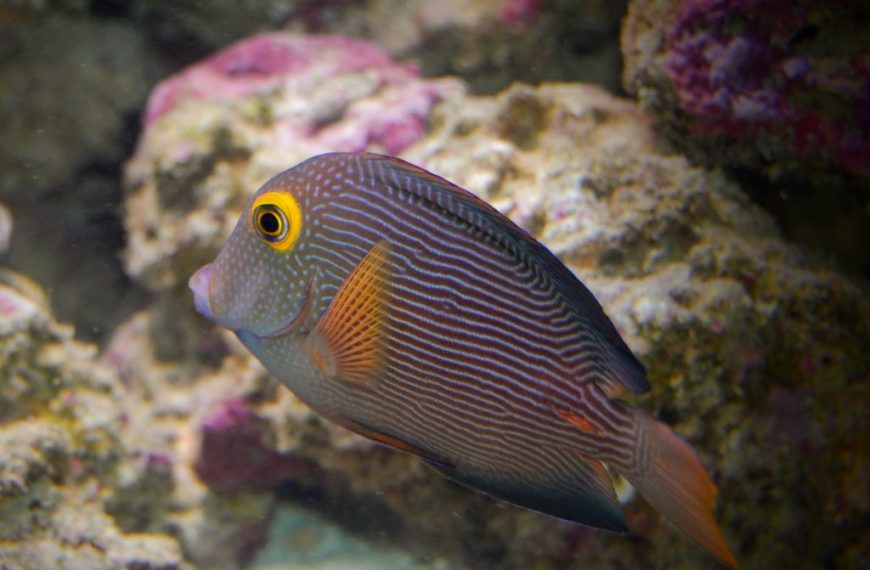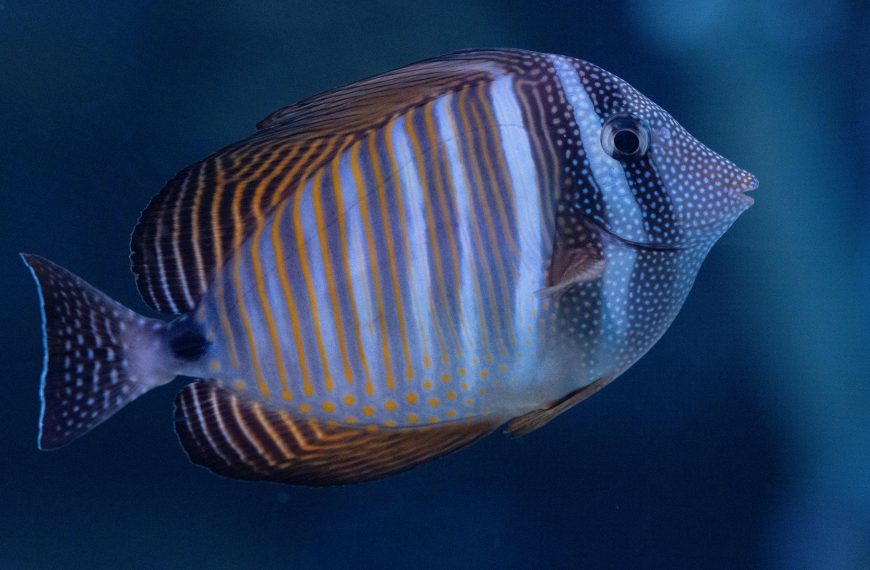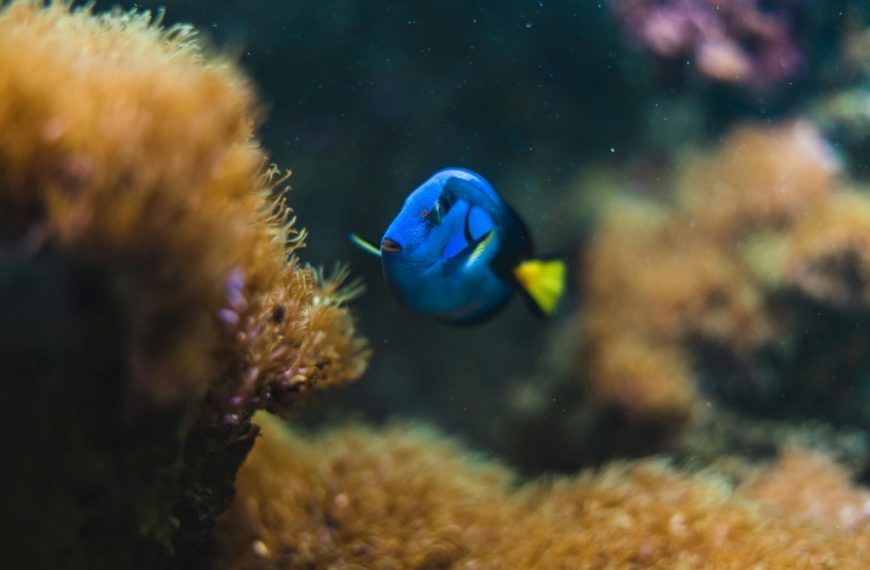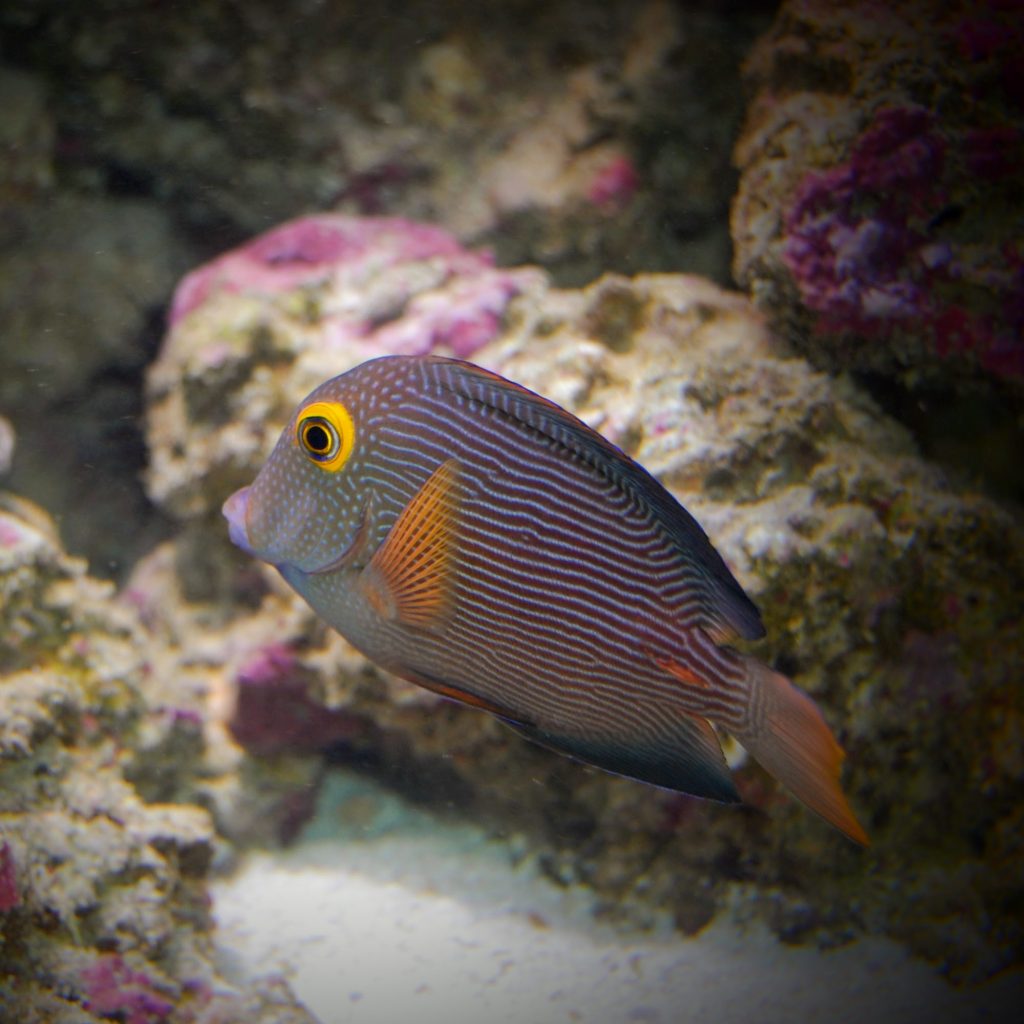
The Kole Tang (Ctenochaetus strigosus) is a favorite among reef keepers who want a hardworking algae grazer that stays relatively small and shows off subtle, beautiful coloration. Also known as the Yellow Eye Kole Tang or Bristletooth Tang, this fish combines utility and personality, making it a top choice for many saltwater aquariums.
Natural Behavior & Reef-Safe Reputation
Kole Tangs come from the reefs of Hawaii and the central Pacific, where they spend their day constantly grazing on film algae and detritus. In the aquarium, you’ll see similar behavior as they pick at rockwork and glass with their specialized, comb-like teeth.
They are generally considered reef-safe because they focus on:
- Film algae and diatoms on rock and glass
- Detritus trapped in rock pores and low-flow areas
- Occasional nibbles on nori or macroalgae offered by the aquarist
Unlike some larger tangs, the Kole Tang rarely bothers corals, making it a good companion for mixed reefs and SPS-dominated systems. For a deeper dive into choosing compatible fish, see our guide on reef-safe fish stocking.
Tank Size, Aquascape & Care Requirements
Although the Kole Tang tops out around 7 inches, it is still an active swimmer that needs horizontal space. A minimum tank size of 70–80 gallons is recommended, with larger systems always preferred for long-term success.
Ideal Environment
- Tank size: 70+ gallons, 4-foot length or more
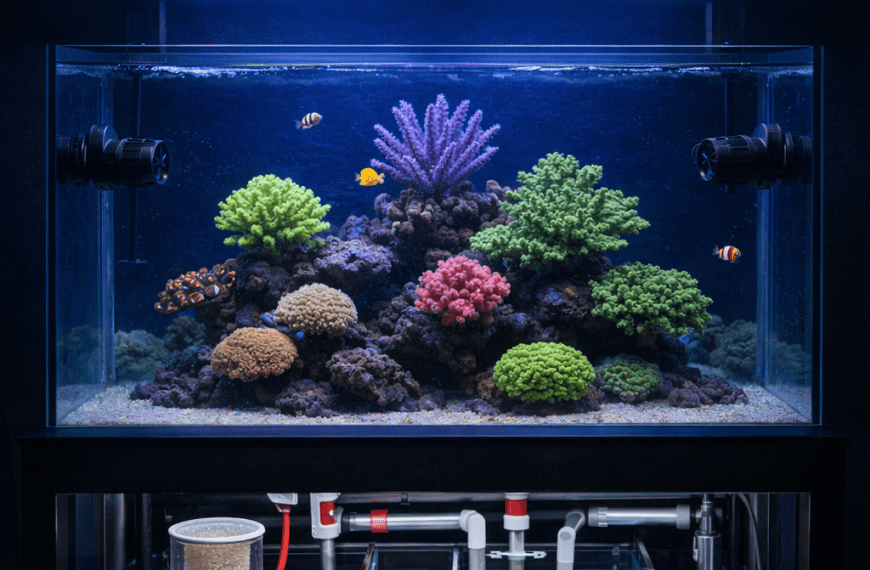
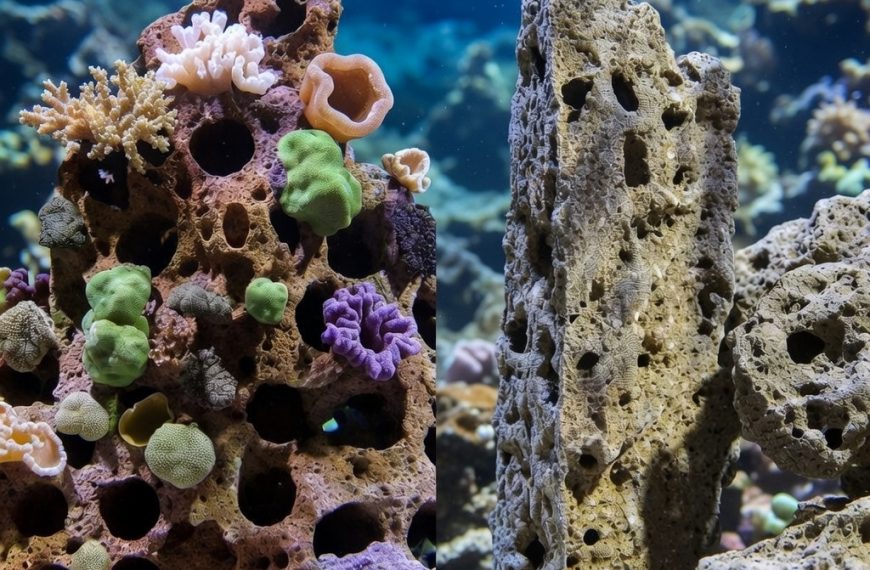
- Aquascape: Plenty of live rock with caves, arches, and open swimming lanes
- Water parameters: 1.024–1.026 salinity, 76–79°F, stable alkalinity and pH
- Flow: Moderate to strong, with good surface agitation
Because they constantly graze, Kole Tangs thrive in established tanks with mature rock and a healthy film algae community. If you’re still building out your rockwork, our article on live rock aquascape ideas can help you create a tang-friendly layout.
Feeding & Nutrition
Even though they eat algae all day, supplemental feeding is essential. Aim for a varied, plant-forward diet:
- Dried nori sheets clipped to the glass
- Spirulina-based pellets and flakes
- Frozen herbivore blends
- Occasional meaty foods (mysis, brine) as a treat, not a staple
Tip: Offer smaller, more frequent feedings. Well-fed Kole Tangs are less likely to show aggression toward tankmates and are more resilient to stress.
Temperament, Tankmates & Health
Kole Tangs are usually peaceful toward other species but can be territorial with similar-shaped tangs, especially other bristletooth varieties. They do best with:
- Peaceful community fish (wrasses, gobies, clownfish, chromis)
- Non-aggressive dwarf angels
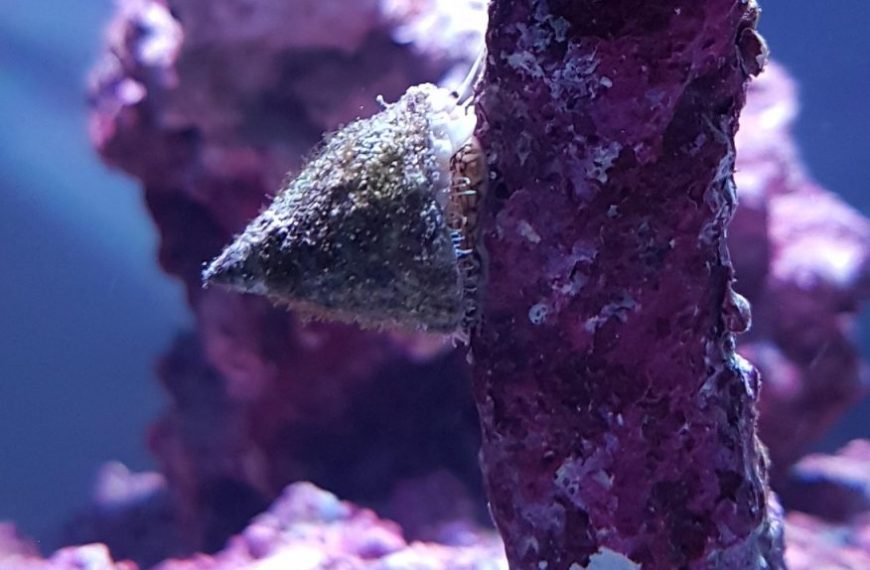
- Invertebrates like snails, hermits, and cleaner shrimp
Try to avoid housing them with multiple tangs in smaller tanks unless you have a well-planned stocking strategy. For more on building a balanced community, check out our saltwater fish compatibility chart.
Common Health Concerns
Like many tangs, Kole Tangs can be prone to marine ich and other external parasites, especially when first introduced:
- Quarantine new arrivals for observation and treatment if needed.
- Keep water quality high and parameters stable to reduce stress.
- Provide a vitamin-rich, algae-based diet to support immunity.
With proper care, a Kole Tang can become one of the most active and useful residents in your reef, constantly cleaning rock and glass while adding movement and subtle color. If you’re looking for an algae grazer that fits well in medium-sized reefs and doesn’t overshadow your corals, the Kole Tang is an excellent, long-term choice.
Sources
- Michael, S. (2001). Reef Fishes Volume 1. Microcosm.
- Fenner, R. (2008). The Conscientious Marine Aquarist. TFH Publications.
- FishBase: Ctenochaetus strigosus species profile (accessed 2024).
 By
By