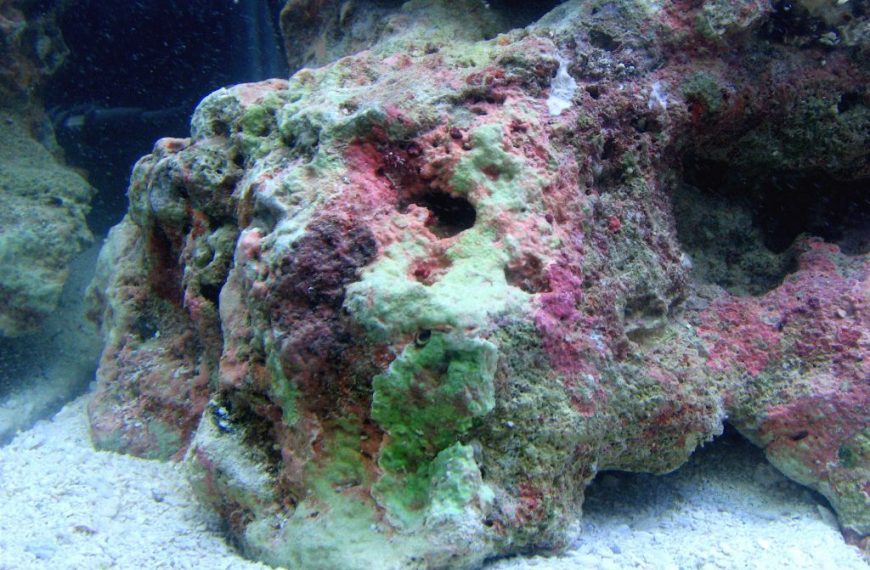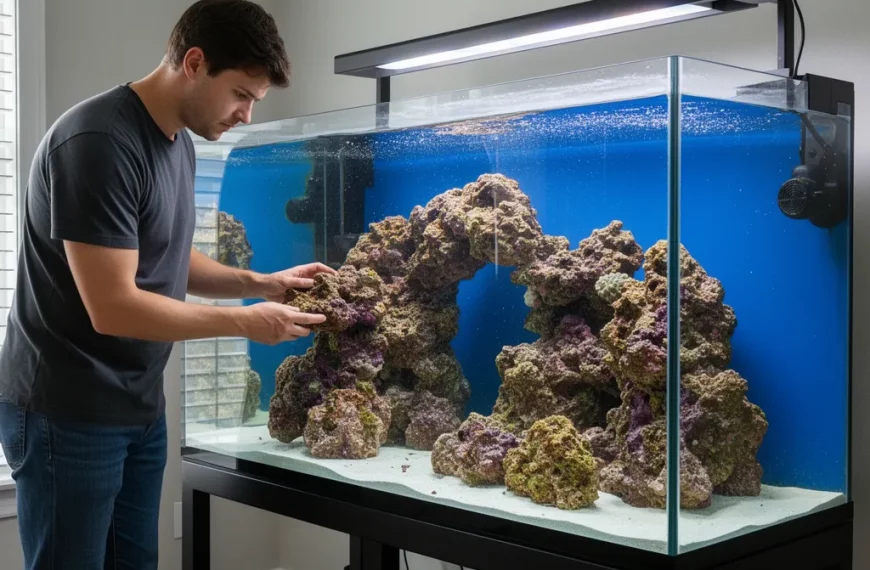
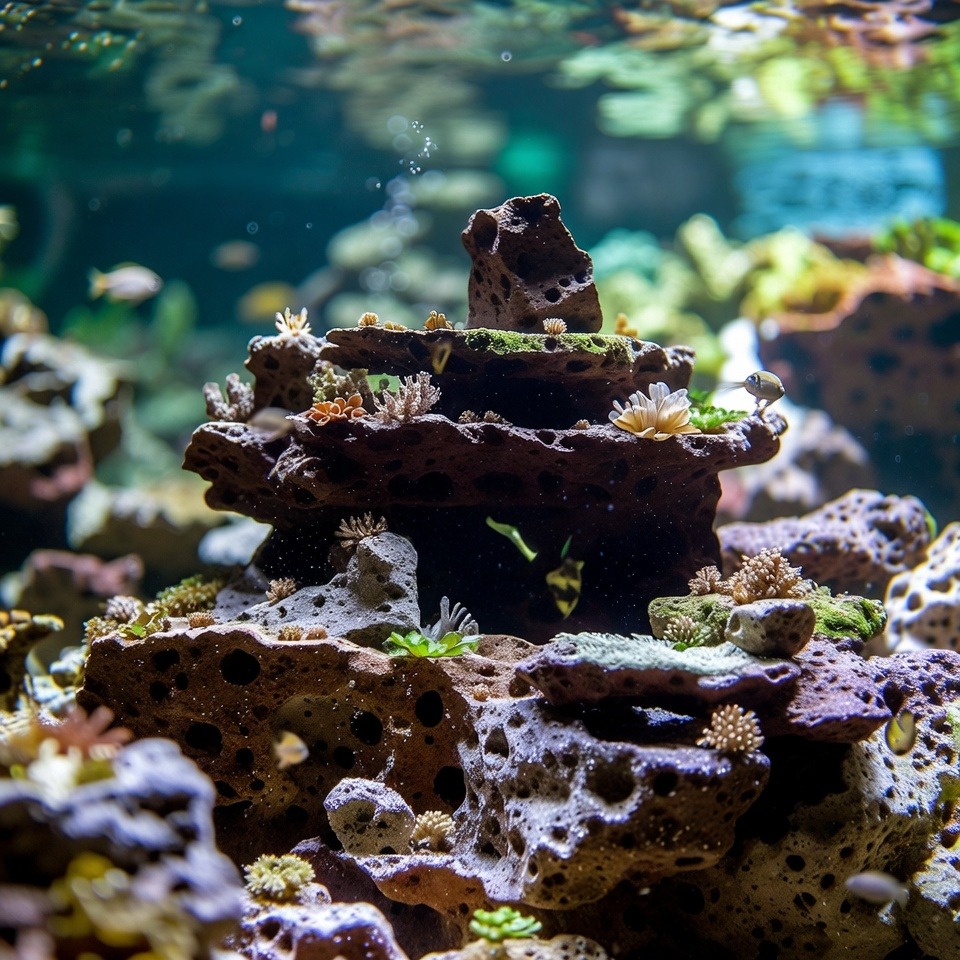
Live rock aquascaping is one of the most creative and rewarding parts of building a reef tank. The way you stack and shape your rockwork affects everything: water flow, territory for fish, coral placement, and even how easy the tank is to maintain. Below are practical live rock aquascape ideas you can use whether you’re setting up your first nano reef or redesigning a mature system.
Planning Your Live Rock Aquascape
Before you start stacking rock in the display, take a few minutes to plan. A thoughtful layout will look better and function better long term.
- Sketch your layout: Draw a side and top view of your tank and mark where you want high rock, open sand, and caves.
- Think like a fish: Plan hiding spots, swim-throughs, and shaded areas for shy species.
- Leave room for growth: Corals will add height and width, so avoid building rock all the way to the surface.
- Test stability: Dry-stack your design in a bin or on a towel first, then glue or epoxy key joints.
For more setup basics before you start stacking, see our guide on beginner saltwater tank setup.
Popular Live Rock Aquascape Styles
1. Minimalist Island Layout
The island style uses one or two main rock structures with plenty of open sand around them. It works especially well in modern rimless tanks and shallow reef layouts.
- How to build it: Create 1–3 separate mounds of rock, each with its own arches and caves.
- Benefits: Excellent water flow around the rock, easy detritus removal, and clear territories for fish.
- Best for: Showcasing a few standout coral colonies and active swimmers like wrasses and tangs.
Tip: Keep at least 2–3 inches of open space between the rock islands and the glass to make cleaning and viewing easier.
2. Open Arch and Cave Structures
Arches and caves add depth and drama to the aquascape while giving fish safe passageways. This approach uses fewer contact points with the sand, which helps prevent dead spots.
- How to build it: Use larger base pieces for stability, then bridge them with long, flat rocks to form arches.
- Benefits: Natural-looking swim-throughs and shaded areas that are perfect for lower-light corals.
- Best for: Reef-safe fish that love darting in and out of structure, like gobies and blennies.
If you plan to keep coral-heavy arch structures, check out our article on the best places to put corals in a reef tank for placement ideas.
3. Negative Space Reef (NSR)
The negative space reef style focuses on empty water and sand as much as rock. It uses tall, narrow rock pillars or shelves with large open areas between them.
- How to build it: Create a few vertical columns and ledges, securing them with acrylic rods or reef-safe mortar.
- Benefits: Superb flow, easy cleaning, and a very modern look that highlights coral shape and color.
- Best for: SPS-dominant tanks where strong, even flow and light are important.
For stocking ideas that match an open, high-flow layout, visit our guide to the best fish for reef tanks.
Practical Tips for Long-Lasting Rockwork
- Prioritize stability: If a rock wobbles now, it will wobble more once snails, urchins, and fish start exploring.
- Maximize flow: Aim powerheads so water can sweep behind and under rock structures to prevent detritus buildup.
- Use a mix of shapes: Combine shelves, branches, and chunky base pieces to create natural-looking depth.
- Think maintenance: Leave space for an algae scraper and your hand along all viewing panels.
A well-planned live rock aquascape is more than just decoration; it’s the backbone of a healthy reef system. By choosing a layout style that fits your tank size, livestock, and maintenance habits, you’ll create a display that looks great today and only gets better as the reef matures.
Sources
- Borneman, E. H. Aquarium Corals: Selection, Husbandry, and Natural History. TFH Publications.
- Sprung, J. & Delbeek, J. C. The Reef Aquarium series. Ricordea Publishing.
- Experienced hobbyist best practices and common aquascaping methods shared across reef aquarium communities.
 By
By