Scarlet Skunk Cleaner Shrimp: A Colorful Reef Helper
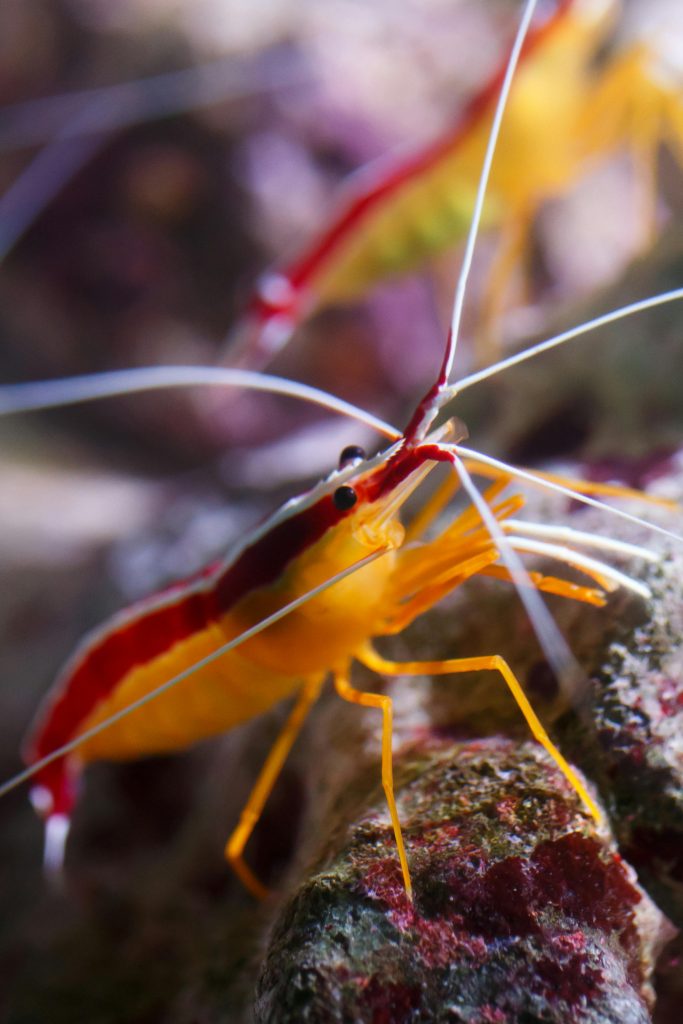
The Scarlet Skunk Cleaner Shrimp (Lysmata amboinensis) is one of the most popular invertebrates in the saltwater aquarium hobby. With its bright red and white stripes and helpful cleaning behavior, this shrimp adds both beauty and function to reef tanks. It’s often recommended for community reef setups and pairs well with many peaceful fish species.
If you’re already keeping peaceful nano fish or planning a mixed reef, the Scarlet Skunk Cleaner Shrimp can be an excellent addition alongside other inverts like hermit crabs and snails. Many hobbyists first encounter this shrimp in a fish store, watching it clean a customer’s hand—it’s that friendly and curious.
Care Requirements and Tank Setup
Before adding a Scarlet Skunk Cleaner Shrimp, make sure your tank is stable and fully cycled. Like most invertebrates, they are sensitive to sudden changes in water quality and do best in established systems.
- Tank size: 20 gallons or larger is recommended.
- Temperature: 76–80°F (24–27°C)
- Salinity: 1.024–1.026 specific gravity
- pH: 8.1–8.4
- Reef-safe: Yes, with caution around very small ornamental shrimp.
Provide plenty of live rock with caves and overhangs so your cleaner shrimp can establish a “cleaning station.” Good flow and strong biological filtration are essential, especially if you also keep other invertebrates and corals. For more guidance on building a stable ecosystem, see our post on beginner saltwater tank setup.
Tip: Always drip acclimate Scarlet Skunk Cleaner Shrimp for at least 45–60 minutes. Sudden changes in salinity are a common cause of early losses.
Feeding, Behavior, and Tank Mates
Scarlet Skunk Cleaner Shrimp are omnivores and will eat a mix of leftover fish food, meaty frozen foods, and prepared pellets or flakes. Although they are known for cleaning parasites and dead tissue from fish, you should never rely on that alone to feed them.
Feeding Tips
- Target feed small portions of mysis shrimp or finely chopped seafood 3–4 times per week.
- Offer high-quality pellets that sink to the rockwork where they can scavenge.
- Avoid overfeeding; remove uneaten food to protect water quality.
These shrimp are peaceful and social. Keeping a pair or small group can encourage more natural behavior, especially in larger tanks. They’ll often set up a cleaning station where fish voluntarily line up for a quick health check. Compatible tank mates include:
- Peaceful reef fish like clownfish, gobies, and wrasses
- Most soft and LPS corals
- Snails, small hermit crabs, and other peaceful invertebrates
Avoid aggressive fish such as large wrasses, triggers, and some hawkfish that may view shrimp as food. If you’re planning a mixed reef community, our guide to best reef-safe fish can help you choose compatible species.
Molting, Health, and Long-Term Success
Like all crustaceans, Scarlet Skunk Cleaner Shrimp molt as they grow, shedding their exoskeleton. You’ll often find what looks like a dead shrimp in the tank—it’s usually just the empty shell.
- Do not remove molts immediately: Shrimp will often eat them to recycle valuable minerals.
- Maintain stable calcium and alkalinity: This supports healthy shell development.
- Use a reef-safe iodine supplement if your tank is heavily skimmed and lightly fed, following manufacturer directions.
With stable parameters, careful acclimation, and appropriate tank mates, Scarlet Skunk Cleaner Shrimp can live several years in captivity. They add constant activity and visual interest, and their cleaning behavior can support overall fish health when combined with good quarantine practices. For a broader look at helpful inverts, check out our overview of reef clean-up crew options.
In a well-maintained reef tank, the Scarlet Skunk Cleaner Shrimp is more than just a colorful decoration—it’s an active participant in your aquarium’s miniature ecosystem, making it a rewarding choice for both new and experienced reef keepers.
Sources
- Michael S. Paletta, The New Marine Aquarium, Microcosm Ltd.
- Julian Sprung, Invertebrates: A Quick Reference Guide, Ricordea Publishing.
- Fenner, R., WetWebMedia archives on Lysmata species husbandry.
Was this helpful?
Related Posts
Dragonets Fish Care
Dragonets are beautiful reef fish, but they need mature tanks and steady food sources. Learn how to keep…
 By
By
Lighting For Aquarium
Lighting for Aquarium: Getting Saltwater Illumination Right Lighting for a saltwater aquarium is about much more than simply…