Aquarium Substrates for Saltwater Tanks
Choosing the right aquarium substrate is one of the most important decisions you’ll make when setting up a saltwater tank. The material you place on the bottom of your aquarium affects water chemistry, filtration, livestock options, and even how easy your tank is to maintain. Whether you’re building a fish-only system, a mixed reef, or a dedicated refugium, understanding substrate types will help you avoid headaches down the road.
Main Types of Saltwater Aquarium Substrates
Aragonite Sand
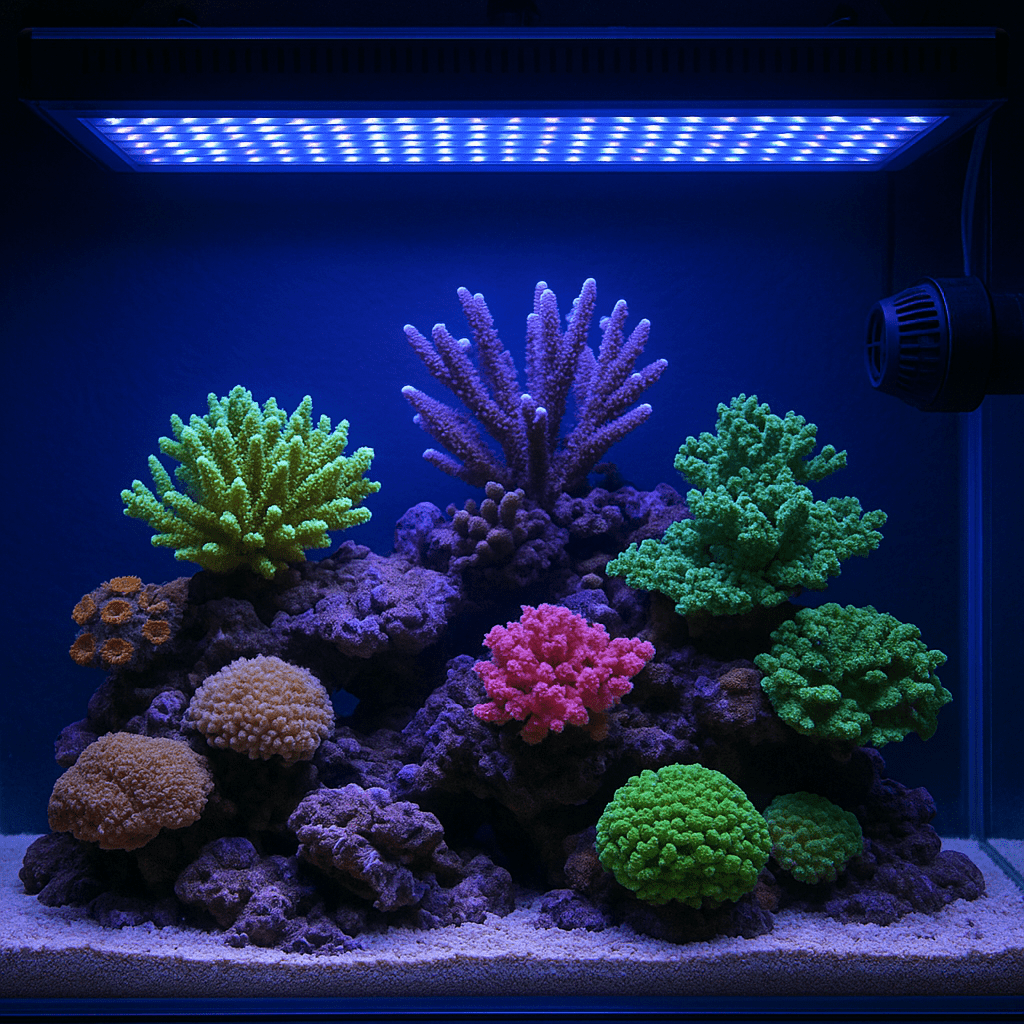
Aragonite is the most popular substrate for reef aquariums. Made from calcium carbonate, it can help stabilize pH and support beneficial bacteria.
- Benefits: Buffers pH toward natural seawater levels, looks natural, and provides surface area for nitrifying bacteria.
- Grain size: Fine “sugar sand” is ideal for sand-sifting fish but can blow around in high flow. Coarser grains stay put but are harder to keep clean.
- Best for: Reef tanks, especially when paired with live rock and moderate to strong flow.
For more on how substrate works with your rockwork, see our guide on aquascaping tips.
Crushed Coral and Coarse Substrates
Crushed coral and larger aragonite chips were once standard in marine tanks, but they have fallen out of favor for many reef keepers.
- Pros: Heavy, doesn’t blow around; provides lots of surface area for bacteria; easy to siphon without removing too much material.
- Cons: Traps detritus, can lead to elevated nitrates and phosphates if not vacuumed regularly.
- Best for: Fish-only or fish-only-with-live-rock (FOWLR) systems where aesthetics and ultra-low nutrients are less critical.
Bare-Bottom Systems
Some reefers skip substrate entirely and run a bare-bottom tank. The glass or starboard bottom is left exposed.
- Advantages: Very easy to siphon waste; supports high flow without sandstorms; great for high-nutrient export SPS systems.
- Disadvantages: Less natural look, no sand-sifting livestock, and no shallow sand bed denitrification.
- Best for: High-energy SPS reefs and tanks focused on ultra-clean water and strong mechanical/biological filtration.
How Deep Should Your Substrate Be?
Depth matters just as much as the type of substrate you choose. Most hobbyists fall into one of two camps: shallow sand beds or deep sand beds.
Shallow Sand Bed (SSB)
A shallow sand bed is typically 1–2 inches deep.
- Provides a natural look and habitat for wrasses, gobies, and nassarius snails.
- Easy to siphon the top layer during water changes.
- Minimal risk of anaerobic pockets if disturbed.
For stocking ideas that pair well with shallow beds, check out our article on best beginner saltwater fish.
Deep Sand Bed (DSB)
A deep sand bed is usually 4–6 inches of fine aragonite.
- Creates low-oxygen zones where denitrifying bacteria can convert nitrate to nitrogen gas.
- Can significantly aid in long-term nutrient control if maintained properly.
- Requires careful setup, good infauna (worms, pods, burrowing snails), and minimal deep stirring.
Deep sand beds are often used in refugiums rather than the display tank, where they can be managed separately. Learn how this fits into your overall system design in our guide to refugium setup.
Practical Tips for Choosing and Maintaining Substrate
- Rinse dry sand: Thoroughly rinse dry aragonite until the water runs mostly clear to reduce initial cloudiness.
- Add sand before filling completely: Place a plate or plastic bag on the sand and pour water onto it to avoid large sandstorms.
- Match substrate to livestock: Sand-sifting gobies, pistol shrimp, and many wrasses need fine sand; avoid coarse crushed coral for these species.
- Regular cleaning: Lightly siphon the top layer of a shallow bed during water changes; for deeper beds, only clean the surface and let infauna handle the rest.
The best substrate is the one that fits your tank’s goals, your maintenance style, and the animals you want to keep. Plan the substrate as part of your whole system, not an afterthought.
With the right substrate choice and a bit of regular maintenance, your saltwater aquarium will be more stable, easier to care for, and a better home for the fish and invertebrates you love.
Sources
- Sprung, J. & Delbeek, J. C. The Reef Aquarium, Vols. 1–3.
- Fenner, R. M. The Conscientious Marine Aquarist.
- Holmes-Farley, R. H. Articles on marine aquarium chemistry, Advanced Aquarist & Reefkeeping Magazine.
Was this helpful?
Related Posts
What is a Chaeto Reactor, and How Does it Help Control Nutrients?
A chaeto reactor grows macroalgae in a sealed chamber to remove nitrate and phosphate, helping reef tanks control…
 By
By
What is a Propagation Tank, and How Do Reef Hobbyists Use it to Grow Coral Frags?
A propagation tank is a dedicated coral grow-out system. It helps reef hobbyists heal, organize, and multiply coral…