Aquascaping for reef tanks is where art meets biology. The way you arrange your rockwork affects not only how your aquarium looks, but also how well your corals grow, how stable your rock structure is, and how easy the tank is to maintain. Thoughtful design from day one can save you months of frustration later.
Planning Your Reef Aquascape
Before stacking the first rock, take a step back and plan. Start by thinking about the type of reef you want to keep and how it fits into your overall system design, from lighting to water flow.
Define your goals
Ask yourself:
- What corals will I keep? SPS-heavy tanks need strong, even flow and high light, while soft coral and LPS systems can handle more shaded overhangs.
- What fish am I planning? Shy fish appreciate caves and arches; active swimmers want open areas.
- How much rock do I really need? Modern reefing often uses less rock in the display and supplements with media in the sump.
Core design principles
Use a few simple layout rules to create a natural, three-dimensional scape:
- Stability first: Place the largest, flattest pieces on the bottom. Test every section by gently pushing from multiple angles before adding sand.
- Rule of thirds: Avoid a single rock wall. Create one or two main structures offset from the center for a more dynamic look.
- Depth and layers: Build terraces and shelves at different heights to place corals with varying light needs.
- Negative space: Leave open sand and swim areas. Open space makes the tank feel larger and improves flow.
Tip: Sketch your aquascape or lay it out on cardboard with the same footprint as your tank before adding anything to the glass.
Building Strong, Functional Rockwork
Once you have a plan, it’s time to turn loose rock into a stable, reef-safe structure. This is where good technique and the right tools matter.
Choosing and assembling rock
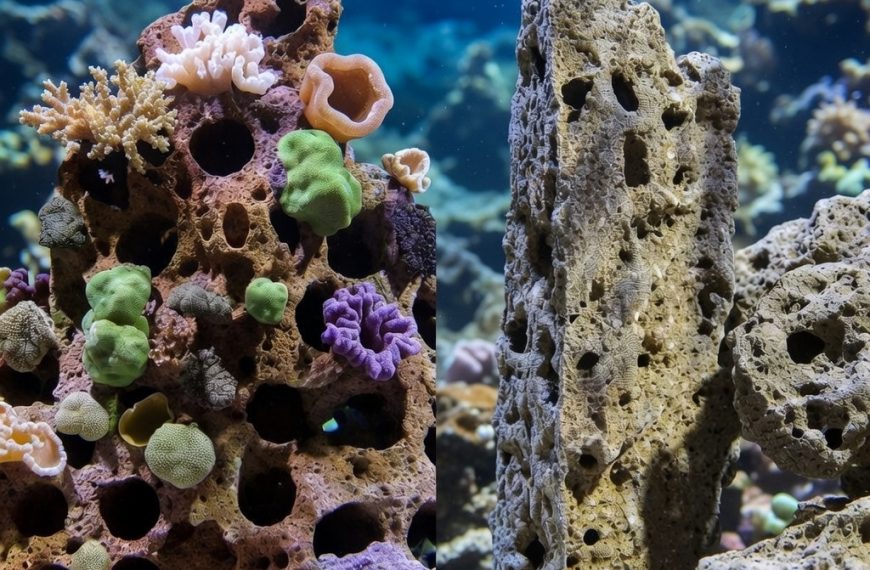
- Rock type: Porous, aragonite-based rock (live or dry) offers better biological filtration and is easier to shape.
- Bonding methods: Use reef-safe cement, epoxy, or acrylic rods to lock key joints. Build modules outside the tank when possible.
- Flow-friendly shapes: Arches, pillars, and islands help create natural channels for water movement from your flow and circulation setup.
As you build, constantly check:
- Access for maintenance: Can you reach the glass, sand, and back corners for cleaning?
- Future coral growth: Leave space between structures so colonies can expand without touching.
- Hiding spots: Incorporate caves and shaded areas for timid fish and invertebrates.
Finishing Touches and Long-Term Success
After the rockwork is in place and the tank is cycling, you can refine the layout and prepare for coral placement.
- Fine-tune flow: Adjust powerheads so detritus doesn’t collect behind rocks and polyps stay gently swaying, not blasted.
- Plan coral zones: Reserve upper shelves for high-light corals and create mid-level ledges and lower, shaded pockets for lower-light species.
- Think ahead: Leave open areas where you can later add new pieces without tearing down the structure.
Over time, corals, coralline algae, and beneficial bacteria will turn bare rock into a living reef. A well-thought-out aquascape creates natural flow patterns, stable rockwork, and visually pleasing lines that you’ll enjoy for years. Combine solid design, safe construction, and a long-term vision, and your aquascape will become the foundation of a thriving reef. For more system-wide planning ideas, check out our guide to reef tank setup checklists and tie your aquascape into your overall build.
Sources
- Sprung, J. & Delbeek, J. C. (1994–2005). The Reef Aquarium Vol. 1–3. Ricordea Publishing.
- Borneman, E. H. (2001). Aquarium Corals: Selection, Husbandry, and Natural History. TFH Publications.
- Fenner, R. (2001). The Conscientious Marine Aquarist. Microcosm.

 By
By