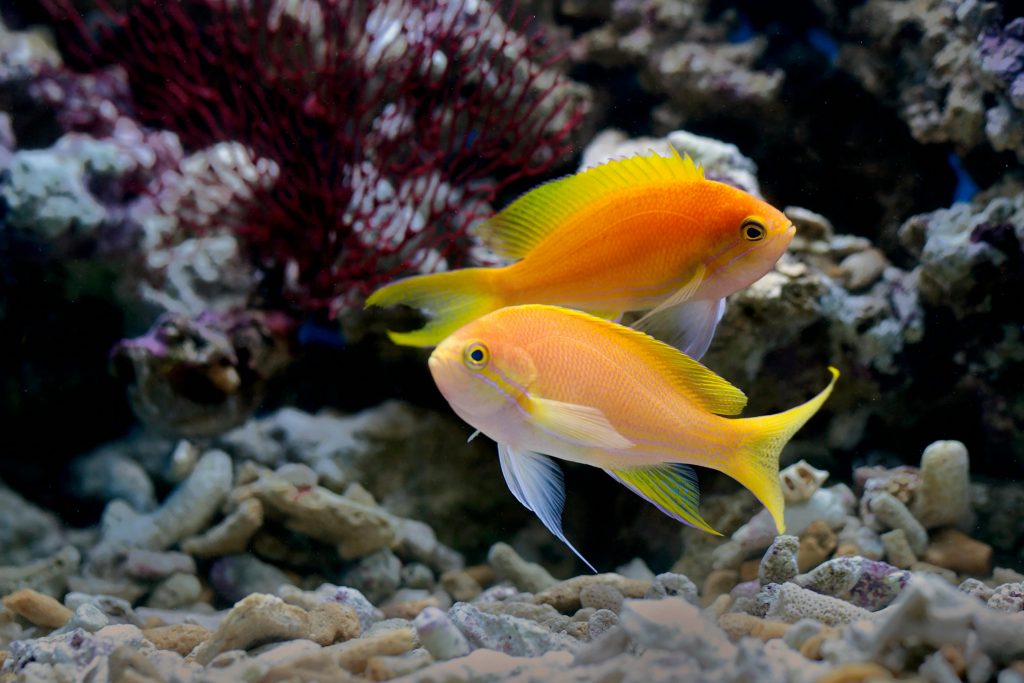
Lyretail Anthias (Pseudanthias squamipinnis): A Colorful Reef Favorite
The Lyretail Anthias (Pseudanthias squamipinnis) is one of the most popular schooling fish in the saltwater aquarium hobby. With their bright orange, pink, and purple tones and constant mid-water activity, they bring a natural reef look to almost any display. They’re hardy for an anthias, but they still have specific needs that aquarists should understand before adding a group to their tank.
Natural Behavior and Tank Requirements
In the wild, Lyretail Anthias live in large harems on reef slopes and drop-offs, with one dominant male and many females. This social structure is important to replicate in captivity for long-term success.
- Minimum tank size: 75 gallons for a small group; larger is better.
- Ideal group: 1 male with 4–8 females. Avoid mixing multiple males in small systems.
- Rockwork: Provide caves and overhangs for shelter and sleeping.
- Swimming space: Leave open areas in the middle and upper water column.
Lyretails appreciate strong, turbulent flow similar to a reef slope. If you’re still planning your system, you may find our saltwater aquarium setup guide helpful for designing a layout that suits active schooling fish.
Feeding Lyretail Anthias
One of the biggest challenges with anthias is their fast metabolism. Lyretail Anthias are constant pickers in the water column and do best with multiple small meals each day.
- Offer 2–4 feedings daily if possible.
- Use a mix of finely chopped frozen foods such as mysis shrimp, brine shrimp, and marine plankton.
- Supplement with high-quality marine pellets and flakes formulated for carnivores.
- Target feed shy individuals with a turkey baster or feeding tube.
Automatic feeders can be very helpful for maintaining frequent small feedings. For more ideas on what to feed a mixed reef community, check out our best foods for saltwater fish article.
Compatibility, Sexing, and Care Tips
Lyretail Anthias usually coexist well with peaceful community fish such as tangs, wrasses, and clownfish. Avoid overly aggressive tankmates that may outcompete them for food or cause constant stress.
- Reef-safe: Yes. They do not nip corals or invertebrates under normal conditions.
- Sex change: Females can turn into males if the dominant male is removed.
- Color differences: Males are more vibrant with elongated fins and a purple or reddish hue; females are typically bright orange.
- Acclimation: Use a drip acclimation and dim lights for the first day to reduce stress.
Tip: Introduce your Lyretail Anthias group at the same time into a mature aquarium. This reduces territorial issues and ensures there is enough natural microfauna to supplement their diet.
Stable water parameters are critical. Aim for:
- Temperature: 76–80°F (24–27°C)
- Salinity: 1.024–1.026 specific gravity
- pH: 8.1–8.4
- Low nitrate and phosphate, especially in reef systems
If you’re still deciding on your livestock plan, our beginner saltwater fish guide can help you see where Lyretail Anthias fit into your stocking list.
Are Lyretail Anthias Right for You?
Lyretail Anthias reward attentive aquarists with incredible color, natural schooling behavior, and nonstop motion in the water column. They’re a great choice for intermediate hobbyists who can provide a suitably large tank, strong filtration, and multiple daily feedings. If you’re prepared to meet their social and dietary needs, a harem of Lyretail Anthias can quickly become the centerpiece of your reef display.
Sources
- Michael, S. W. (2001). Reef Fishes: A Guide to Their Identification, Behavior, and Captive Care.
- Fenner, R. (2008). The Conscientious Marine Aquarist.
- FishBase & common hobbyist literature on Pseudanthias squamipinnis biology and care.
 By
By