Flow drives reef health. It carries oxygen, removes waste, and feeds corals. Many hobbyists ask one question first: powerhead vs wavemaker.
What each pump does in a real tank
A powerhead is a constant-flow pump. It pushes water in one direction. Many models also accept a basic controller. Most still run best at steady output.
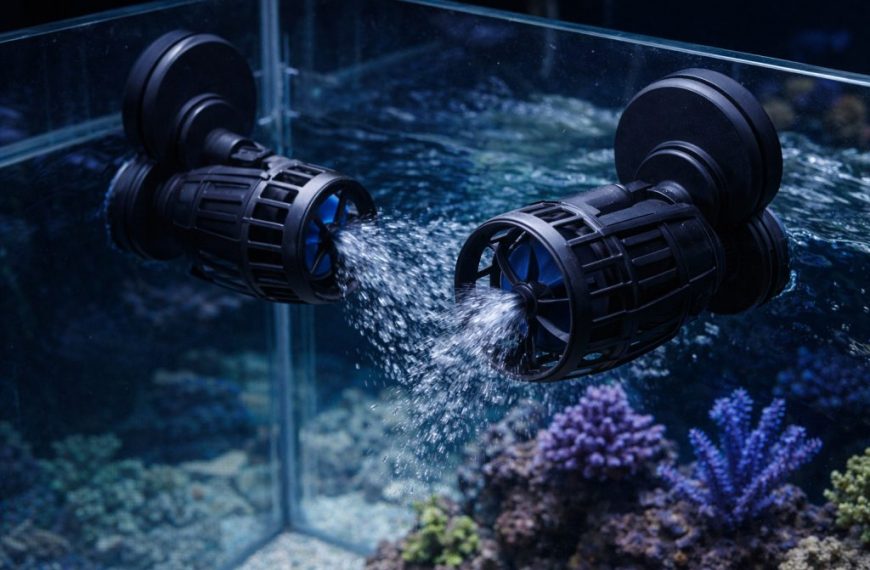
A wavemaker is a controllable pump system. It changes speed on a schedule. It can pulse, ramp, or alternate. That creates back-and-forth movement and random turbulence.
In practice, both can grow coral. The difference is control and pattern. A powerhead is simple and predictable. A wavemaker can match coral needs across the day.
Think about detritus and dead spots. Constant jets can carve a sand crater. Pulsed flow lifts waste into the water column. Your reef tank flow basics guide should start here.
- Soft corals: aim for 10–20x tank turnover per hour.
- LPS: aim for 20–30x with indirect, varied flow.
- SPS: aim for 30–50x with high randomness.
Choosing based on tank size, livestock, and budget
Start with tank volume and rockwork. A 40-gallon breeder often needs 800–1,200 GPH total. A 75-gallon reef often needs 2,000–3,500 GPH total. Split flow across two pumps for better coverage.
Powerheads fit smaller budgets and simple reefs. Use them for fish-only or soft coral tanks. Place one high and one mid-level. Aim streams across the front glass to diffuse force.
Wavemakers shine with mixed reefs and SPS. You can run a gentle night mode. You can ramp up after feeding. You can also sync two pumps for alternating gyres.
Noise and heat matter too. DC wavemakers tend to run quieter. They also use less power at lower speeds. Check wattage and controller features before buying. See our reef aquarium equipment checklist for planning.
- Budget tip: buy two mid-size pumps instead of one large unit.
- Placement tip: keep pumps 2–4 inches below the surface for gas exchange.
- Sand tip: point outlets slightly upward to avoid bare spots.
Setup steps, tuning, and common troubleshooting
Install pumps after your aquascape is stable. Start at 20–30% power. Watch sand and coral tissue for 24 hours. Increase flow in 5–10% steps each day.
For wavemakers, begin with a random or reef-crest style mode. Avoid fast pulses in small tanks. Fast pulses can slap water and stress fish. Use a 1–3 second pulse only if the tank handles it.
Use real signs to tune. Detritus collecting behind rocks means poor crossflow. LPS with retracted flesh often gets blasted. SPS with dull color may need more overall movement and oxygen.
Clean pumps on a schedule. Soak wet parts in 1:1 vinegar and water for 20 minutes. Rinse with RO water after. Do this every 4–8 weeks in reef tanks. Coralline and sand can stall impellers.
- Fish gasping at the surface: increase surface agitation and aim one pump upward.
- Cyano on sand: add crossflow and reduce dead zones behind rock.
- Sandstorms: lower output, raise the pump, or switch to wider flow.
Many hobbyists mix both tools. Use a wavemaker for primary random flow. Add a small powerhead behind rock for hidden circulation. That combo often fixes detritus traps fast. For more tuning, read how to stop dead spots in a reef tank.
Sources: Borneman, Eric H. “Aquarium Corals” (TFH); Delbeek, J. Charles & Sprung, Julian. “The Reef Aquarium” Vol. 1–3; Paletta, Michael. “The New Marine Aquarium.”
 By
By