Reef Care: Building a Healthy, Thriving Coral Aquarium
Reef care is more than keeping corals alive; it’s about creating a stable, miniature ecosystem where fish, invertebrates, and corals all thrive. With consistent maintenance, smart stocking, and good equipment choices, you can enjoy vibrant colors and natural behavior from your reef inhabitants for years.
Water Quality: The Foundation of Reef Care
Stable, clean water is the single most important part of reef care. Before adding sensitive corals, make sure your tank is fully cycled and parameters are steady. If you’re just starting out, review the basics of setup on your Saltwater Aquarium Setup guide to ensure your system is ready for reef life.
Key Reef Parameters
- Temperature: 24–26°C (75–78°F)
- Salinity: 1.025–1.026 specific gravity
- Alkalinity: 8–9.5 dKH
- Calcium: 400–450 ppm
- Magnesium: 1250–1350 ppm
- Nitrate: 2–15 ppm (not zero, but not excessive)
- Phosphate: 0.02–0.10 ppm
Test these parameters weekly and any time something looks “off.” Many reef keepers find it helpful to keep a simple logbook or spreadsheet. If you’re unsure about where your tank is in its life cycle, compare your readings to the stages described in your Nitrogen Cycle in Aquariums article.
Practical Water Maintenance Tips
- Perform 10–15% water changes weekly or biweekly using high-quality salt mix and RO/DI water.
- Mix new saltwater for at least 24 hours with a heater and powerhead before use.
- Top off evaporation with fresh RO/DI water only, not saltwater, to keep salinity stable.
- Clean skimmer cups, filter socks, and mechanical filters regularly to prevent nutrient buildup.
Consistency beats perfection in reef care. Small, regular maintenance prevents the big problems that are difficult to fix later.
Lighting, Flow, and Feeding for Corals
After water quality, lighting and flow are the next pillars of reef care. Corals rely on both for photosynthesis, waste removal, and feeding opportunities.
Lighting Basics
- Use a reef-capable LED, T5, or hybrid system with a proven spectrum for coral growth.
- Target 8–10 hours of main lighting per day with a gradual ramp-up and ramp-down if possible.
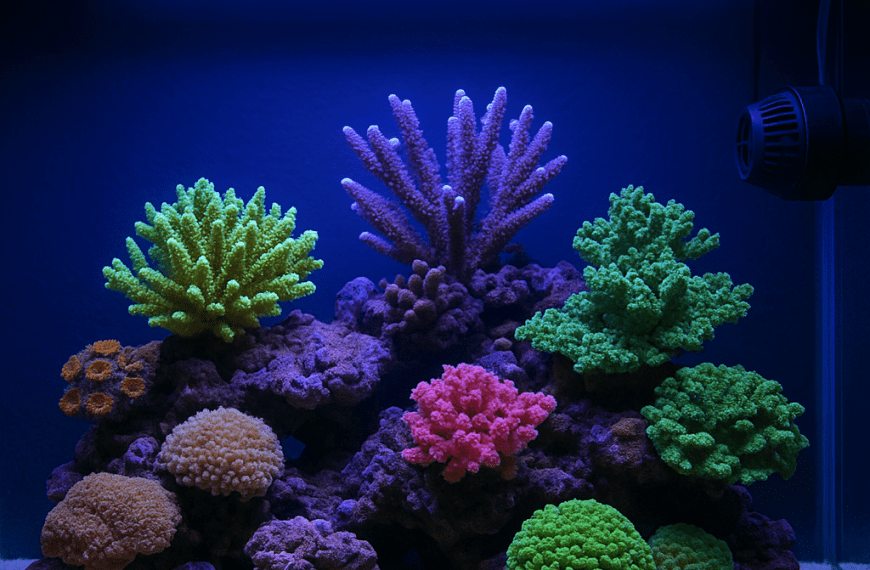
- Place light-demanding SPS and many LPS corals higher in the rockwork, and lower-light softies in more shaded areas.
Flow and Coral Placement
- Aim for random, turbulent flow, not a constant jet blasting directly at corals.
- Use multiple powerheads to eliminate dead spots where detritus can settle.
- Watch coral polyp extension and tissue movement; gently “waving” polyps usually indicate good flow.
Feeding Your Reef
- Feed fish small amounts 1–2 times daily; avoid overfeeding, which fuels algae and high nutrients.
- Target-feed LPS and non-photosynthetic corals with coral foods or fine meaty foods, 1–2 times per week.
- Turn off return pumps briefly during target feeding to keep food in the display.
For a deeper dive into choosing species that match your lighting and flow, check your Beginner Reef Corals guide before stocking new additions.
Routine Care and Long-Term Success
Successful reef care is about habits. Create a simple schedule that includes:
- Daily: Quick visual check of fish, corals, temperature, and equipment.
- Weekly: Testing key parameters, cleaning glass, and doing water changes.
- Monthly: Deeper equipment cleaning, checking pumps, and calibrating test gear if needed.
Over time, you’ll learn your reef’s “normal” look and behavior. When something changes—closed polyps, unusual algae, cloudy water—respond early with testing and small corrections rather than drastic changes. With patience and consistent care, your reef will reward you with growth, color, and a fascinating window into a living ocean ecosystem.
Sources
- Borneman, E. H. Aquarium Corals: Selection, Husbandry, and Natural History. TFH Publications.
- Sprung, J. Corals: A Quick Reference Guide. Ricordea Publishing.
- Delbeek, J. C., & Sprung, J. The Reef Aquarium (Vols. 1–3). Ricordea Publishing.
- Randy Holmes-Farley, “Reef Aquarium Water Parameters,” various articles and FAQs.
 By
By