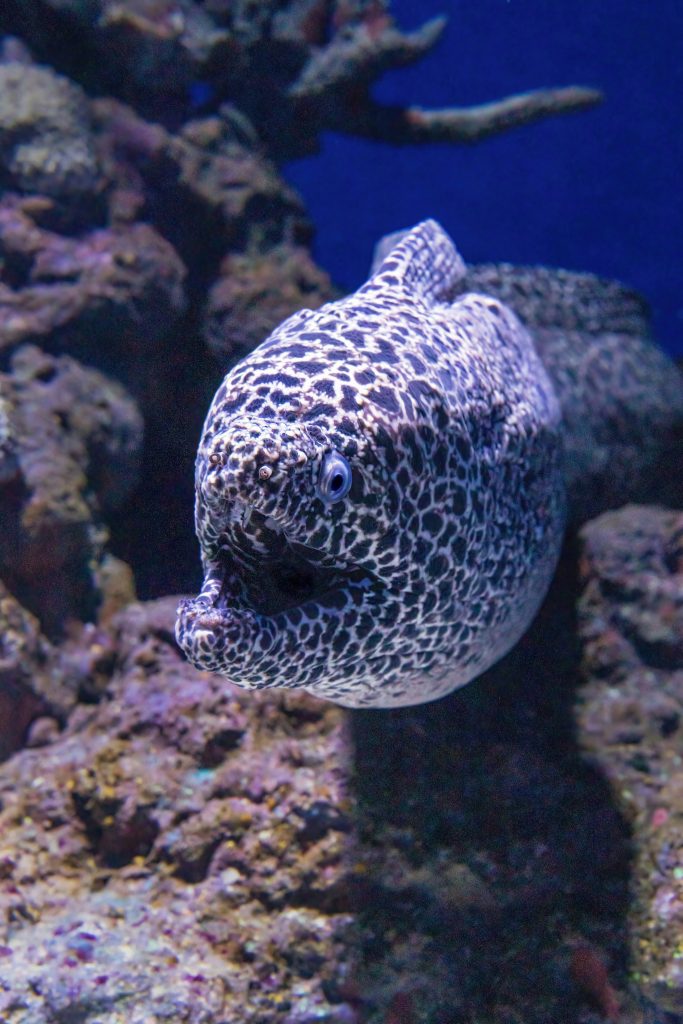
Tessalata Moray Eel (Gymnothorax favagineus) – A Spotted Giant for Advanced Keepers
The Tessalata Moray Eel, also called the Laced or Honeycomb Moray, is one of the most striking predators you can keep in a saltwater aquarium. Its bold black-and-white pattern and snake-like movements make it a true showpiece, but it also comes with serious size, strength, and feeding needs. This is a fish for experienced hobbyists with large systems and secure setups.
Tank Size, Aquascape, and Tank Mates
Before bringing home a Tessalata Moray, plan for its adult size. These eels can reach 5–6 feet (150–180 cm) in length, even in captivity, and they are thick-bodied. A small tank will quickly become cramped and stressful.
- Minimum tank size: 180–240 gallons for a juvenile, with a long-term goal of 300+ gallons.
- Footprint over volume: Choose a tank that is long and wide rather than just tall, so the eel can stretch out and turn easily.
- Rockwork: Build stable caves and tunnels using well-secured live rock. Tessalatas are powerful and can topple loose structures.
- Lid and escape-proofing: Use a tight-fitting, weight-bearing lid. Seal gaps around plumbing and cables; morays are expert escape artists.
Tank mates must be chosen with care. Tessalata Morays are predator fish that will eat anything they can fit in their mouths.
- Generally safe: Large, robust fish such as big tangs, large angelfish, and sizable triggers (with caution).
- Not safe: Small reef fish, crustaceans, and ornamental shrimp will be viewed as food.
- Risk of accidents: Even large tank mates can be bitten during feeding or nighttime activity.
For more on planning a system around a large predator, see our guide to saltwater predator fish tanks.
Feeding, Behavior, and Handling Safety
Like most morays, Tessalatas are carnivores with a powerful bite. In the wild, they hunt fish and crustaceans. In captivity, a varied, meaty diet is essential for long-term health.
Diet and Feeding Routine
- Offer frozen marine foods such as squid, silversides, shrimp, and pieces of fish.
- Use feeding tongs or a long feeding stick; never hand-feed.
- Feed juveniles every 2–3 days; large adults can often be fed 2–3 times per week.
- Soak foods in a vitamin supplement to help prevent nutritional deficiencies.
Tessalata Morays are mostly nocturnal but quickly learn to associate your presence with food. They may begin to poke their head out of caves and patrol the tank at feeding time.
Hobbyist tip: Always target-feed your eel in the same area of the tank. This helps reduce chaos at feeding time and can keep it from lunging at random tank mates.
Because of their size and power, respect around these eels is critical:
- Never place your hands near its face; moray bites are deep and can be serious.
- Turn off pumps during feeding to prevent food from scattering and triggering frenzied strikes.
- Plan ahead for transport and rehoming; moving a large moray is not simple.
For general eel care basics, you may also find our article on saltwater moray eel care helpful.
Water Quality, Compatibility With Reefs, and Long-Term Commitment
While Tessalata Morays are fairly hardy once established, they still require stable, high-quality water conditions:
- Temperature: 75–79°F (24–26°C)
- Salinity: 1.023–1.026 specific gravity
- Ammonia & nitrite: 0 ppm; nitrate as low as practical
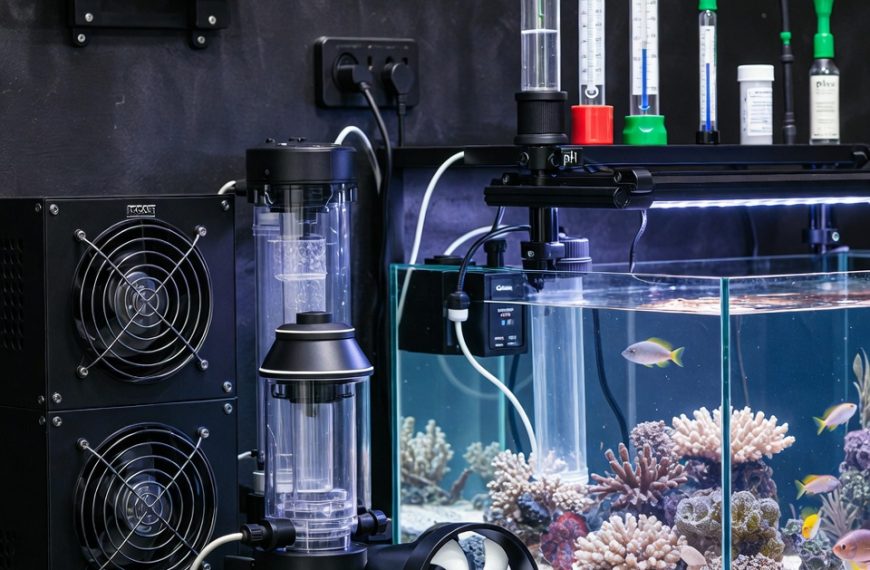
- Filtration: Oversized skimmer and strong biological filtration to handle heavy feeding.
Tessalata Morays are not reef-safe with invertebrates. Most ornamental shrimp, crabs, and smaller fish will eventually be eaten. However, they generally ignore corals, so a fish-only-with-live-rock (FOWLR) system or a coral tank without prized inverts can work. If you are deciding between reef-safe and predator setups, check out our overview of FOWLR vs. reef tanks.
Owning a Tessalata Moray is a long-term, high-commitment project. With good care, these eels can live well over a decade. They demand space, strong equipment, and a willingness to manage large, meaty feedings and heavy bioload. For advanced aquarists ready for a true centerpiece animal, though, Gymnothorax favagineus can be one of the most impressive and rewarding fish to keep.
Sources
- Michael, S. W. (2004). Reef Fishes Volume 1: A PocketExpert Guide to Their Identification, Behavior & Captive Care. Microcosm Ltd.
- Fenner, B. (2001). The Conscientious Marine Aquarist. TFH Publications.
- FishBase. Gymnothorax favagineus species summary and distribution notes.
- Common practices and collective experience from advanced marine aquarium hobby literature and public aquarium husbandry notes.
 By
By